


Victorian Pietra Dura Table
A victorian pietra dura table brings hardstone inlay into the nineteenth-century interior through polished surfaces and dense floral or geometric compositions.

Victorian Pietra Dura Table
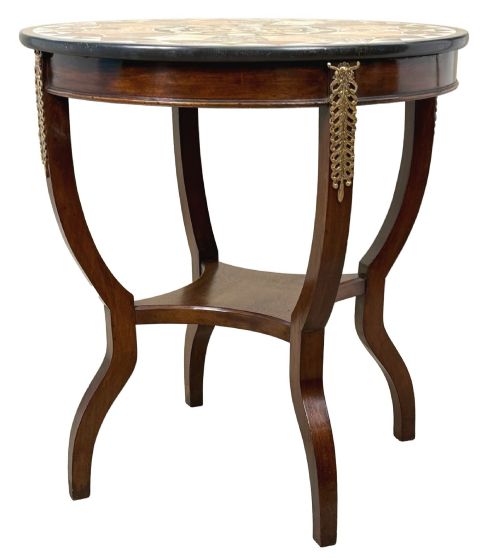
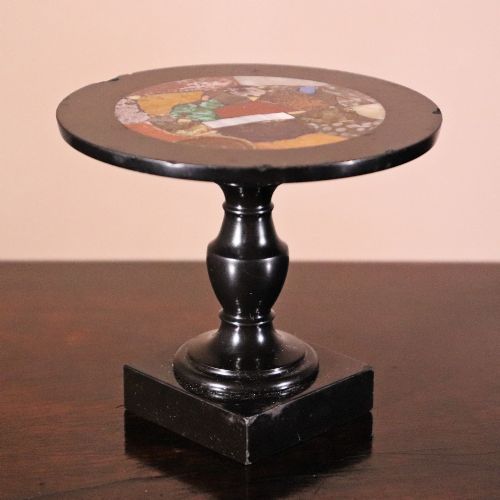
When you search for a victorian pietra dura table, you encounter nineteenth-century occasional, centre, and side tables topped with inlaid hardstones like marble and slate. These surfaces incorporate Florentine or English Ashford techniques, creating elaborate floral and geometric displays on solid wooden bases.
The most common forms on this page are occasional tables resting on mahogany, walnut, or ebonised wood frames. They combine the heavy geometric proportions of the period with meticulously pieced stone panels.
Originating from both British workshops and Italian Grand Tour imports, these pieces reflect a nineteenth-century fascination with mineral specimens and classical antiquity. They function equally as decorative centrepieces and functional surfaces.
How they were made
Cabinetmakers constructed the table bases using mahogany, walnut, ebonised wood, and occasionally rosewood, employing traditional turning and joinery to support heavy stone tops. Brass mounts and subtle inlay often accent the structural timber.
The tabletops utilise thin slices of specimen marble, slate, and assorted hardstones fitted closely together into a recessed stone base. Skilled artisans shaped each stone fragment by hand to achieve a seamless, flush pictorial surface before final polishing.
Listings feature occasional tables, centre tables, and side tables supported by walnut, mahogany, and ebonised wood frames.
What varies in quality
Quality rests primarily on the precision of the stone-cutter's fit and the variety of the mineral specimens utilised. Tighter joints between individual hardstones and more complex pictorial compositions elevate a table above standard production.
The stability and grain of the supporting timber also determine overall merit. Tables pairing finely figured walnut or ebonised frames with flawless specimen marble tops represent the pinnacle of nineteenth-century workshop output.
James Shoolbred·The Woodley family
The Victorian Pietra Dura Table Glossary
- Pietra dura
- Hardstone inlay technique using cut and fitted polished coloured stones to create pictorial designs. This Italian method produces durable surfaces resembling paintings made of stone.
- Specimen marble
- Assorted natural marbles and decorative stones collected for their distinct colours and veining. Artisans arranged these fragments into geometric or pictorial tabletop displays.
- Ebonised wood
- Timber treated to resemble ebony through staining and polishing. This dark finish provides a stark contrast against colourful inlaid stone tops.
- Grand Tour
- Eighteenth and nineteenth-century travels undertaken by upper-class Europeans to study classical antiquities and art. Travellers frequently acquired pietra dura plaques and tables as souvenirs of their journey.
- Occasional table
- A small, versatile table designed for specific, intermittent uses within a room. These pieces appear frequently in nineteenth-century interiors as display surfaces.
Victorian Pietra Dura Table: Frequently Asked Questions
Where were these tables made?
Production occurred across both British workshops and Italian studios, particularly during the nineteenth century. English makers in Ashford produced local interpretations using Derbyshire marbles, while others sourced panels directly from Italy during the Grand Tour.
Workshop origins often surface in the choice of timber and the specific mineral specimens utilised in the stone inlay. British pieces commonly employ mahogany or walnut frames alongside regional marbles.
How do I clean the stone top?
Dust the surface regularly with a soft, dry cloth to prevent abrasive particles from scratching the polished marble or hardstone inlay. Avoid using chemical cleaners, vinegar, or acidic solutions, which can etch the calcium-based stone.
For deeper cleaning, use a damp cloth with mild neutral soap, drying the surface immediately afterwards. Professional maintenance may occasionally be required to restore the high gloss finish.
Can I use it daily?
These tables function well for daily use as occasional or centre tables, provided you treat the stone top with reasonable care. Avoid placing unpadded heavy objects or hot vessels directly onto the polished surface to prevent scratching and thermal shock.
Using coasters and placemats helps protect the historical hardstone inlay from moisture rings and impact damage. With mindful placement, the sturdy wooden frames easily support everyday display requirements.
How do I date the piece?
Dating relies on examining the construction methods of the wooden base, the timber species, and stylistic cues associated with the nineteenth century. Aesthetic movement influences or specific Victorian turnery styles often help narrow the decade of manufacture.
Documentation, maker stamps, or historical labels inscribed on the underside provide further chronological context. Comparing the edge profiles and backing materials of the stone top also clarifies the period of assembly.