
Victorian Pedestal Writing Table
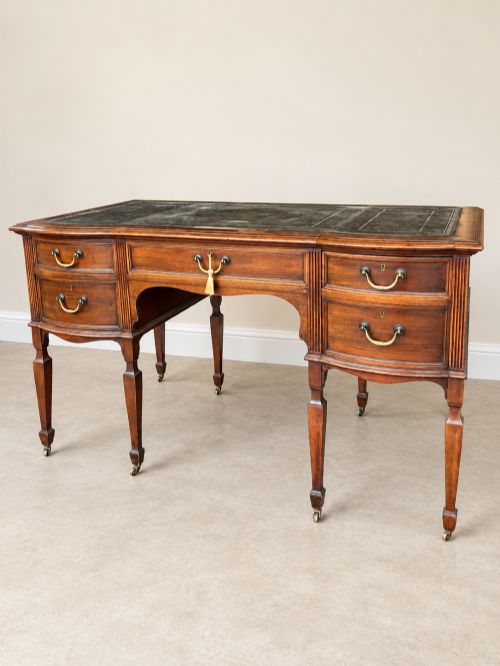
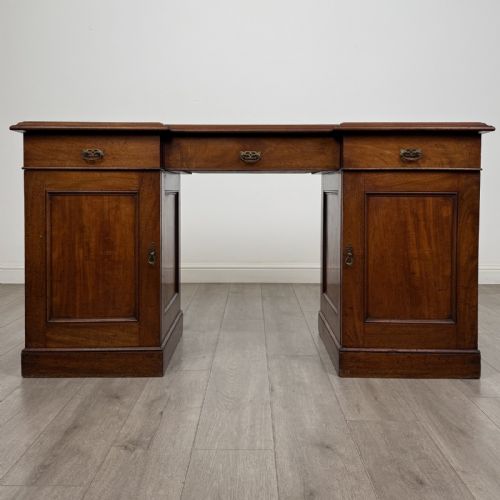
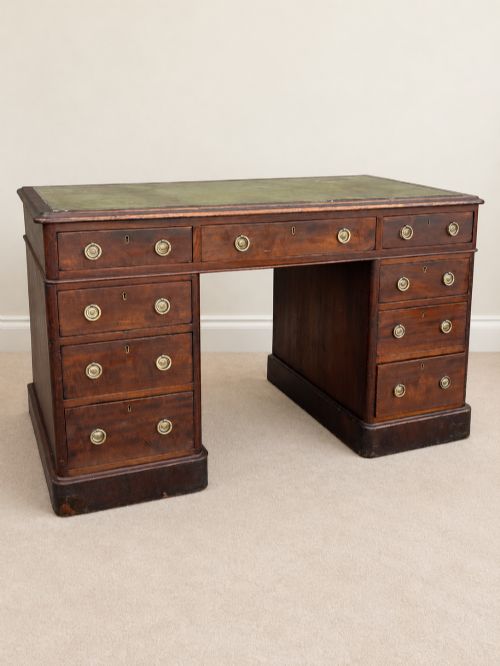
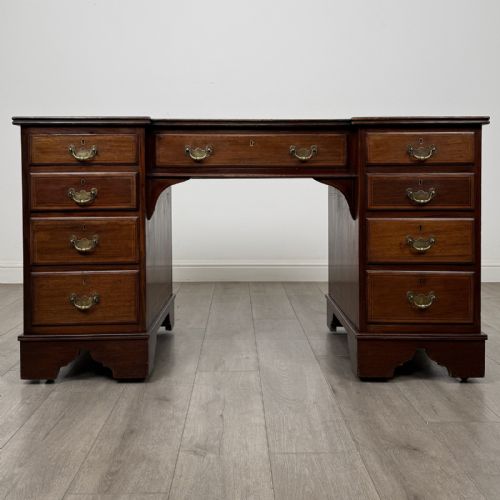
A victorian pedestal writing table offers a substantial working surface set above twin banks of drawers, combining practical utility with formal presence.
Victorian Pedestal Writing Table
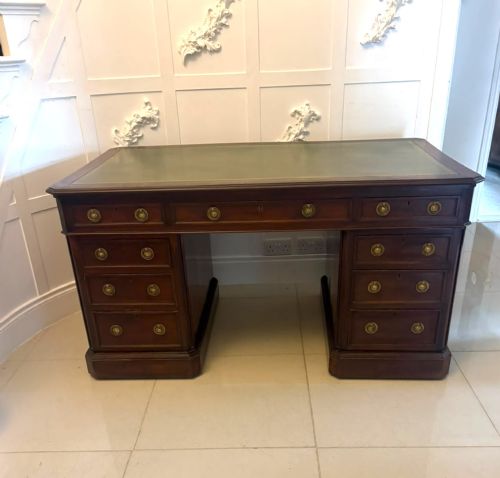
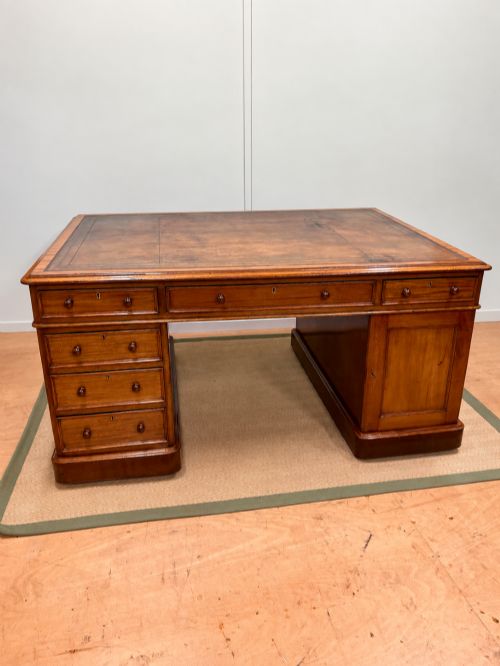
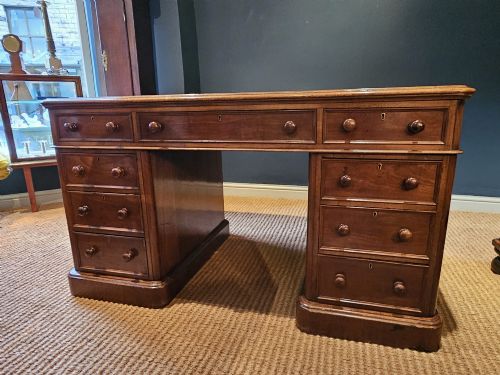
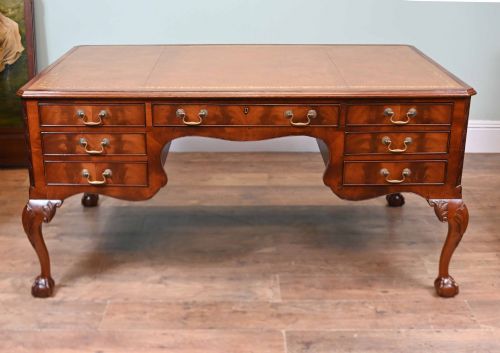
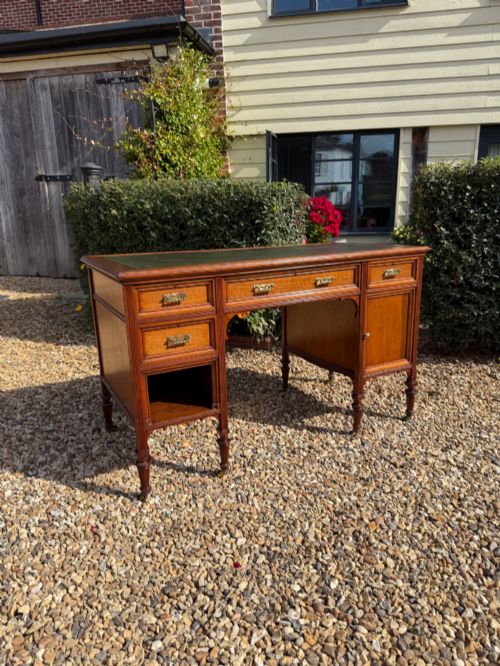
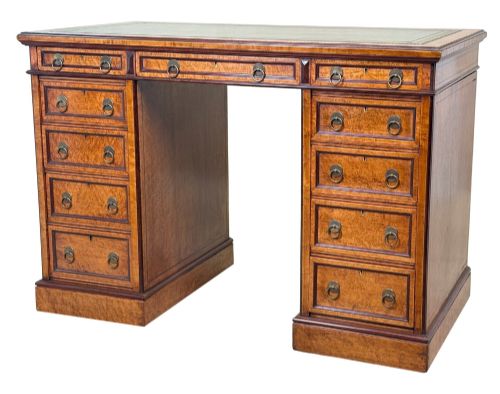
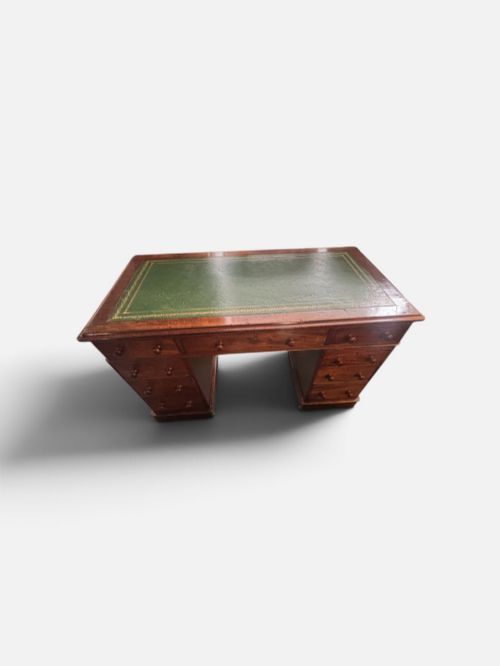
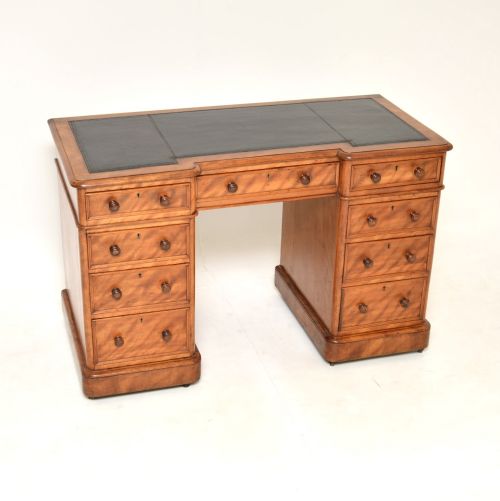
A victorian pedestal writing table typically comprises a rectangular top inset with leather, supported by two separate pedestals containing banks of drawers. These pieces served as functional workstations in studies, libraries, and offices throughout the nineteenth century.
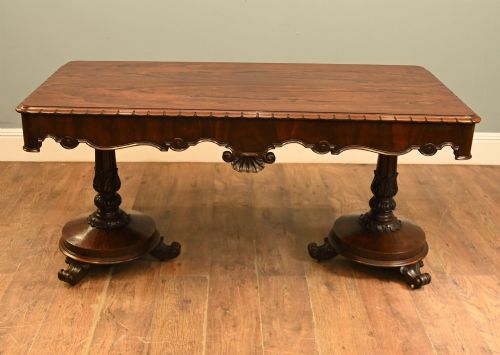
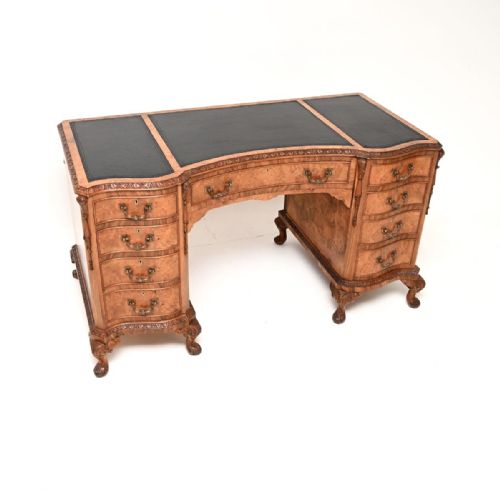
The form appears in various configurations, including single-sided pedestal desks, double-sided partners desks designed for two users, and kneehole desks with recessed central spaces. Examples range from compact mahogany or oak specimens to elaborate burr walnut or rosewood formats influenced by revival styles.
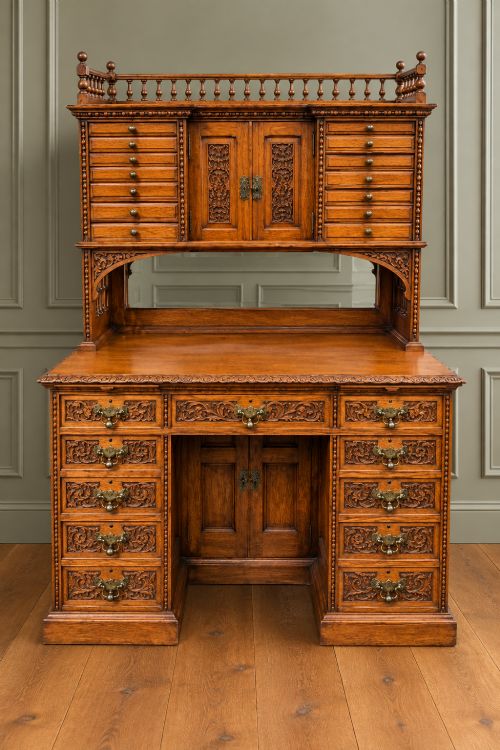
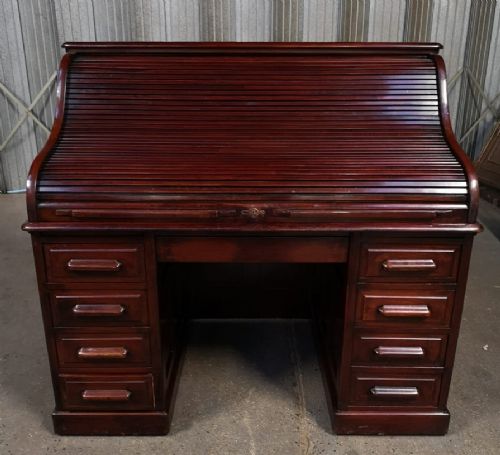
Makers adapted the classic pedestal layout to suit changing demands, producing roll top mechanisms, Dickens desks with superstructure pigeonholes, and library tables with drum or sofa variations. These configurations reflect the diverse requirements of Victorian administrative and domestic life.
How They Were Made
Cabinetmakers constructed these tables using solid foundational timbers such as oak or mahogany, frequently applying veneers of burr walnut, satinwood, or rosewood to prominent exterior surfaces. Drawer linings often utilised secondary woods like pine or mahogany, joined with hand-cut dovetails.
Writing surfaces incorporated inset panels of tooled leather, secured with blind tooling or gold leaf blocking around the borders. Brass hardware, including drop handles and locks, fastened drawers that were integrated into pedestals built to support heavy loads.
Listings feature oak, mahogany, burr walnut, rosewood, and satinwood across the Victorian period.
What Varies in Quality
Distinctions in quality arise from the selection of timber figures and the precision of cabinetwork, particularly in matched veneer layouts across drawer fronts and pedestals. Superior pieces demonstrate meticulous joinery, original brass hardware, and finished backs that allow the furniture to stand freely in a room.
Detailing such as hand-carved mouldings, inlaid contrasting woods, and fully panelled interiors distinguish workshop production from standard commercial output. The preservation of original tooled leather writing surfaces and working locks with functional keys further differentiates examples.
Trollope & sons·Edwards & Roberts·Maple and Co·Jackson & Graham·Hobbs & Co.·Charles Andrea Nosotti·Mein of Kelso·Shoolbred
The Victorian Pedestal Writing Table Glossary
- Pedestal desk
- A form of writing furniture comprising two supporting columns of drawers beneath a single top. This configuration provides substantial storage capacity while maintaining a formal architectural symmetry.
- Partners desk
- A double-sided variant designed to accommodate two users seated opposite one another. These pieces feature banks of drawers or cupboards on both sides.
- Kneehole desk
- A pedestal desk featuring a recessed central space between the drawer stacks for the user's legs. This form often includes a single shallow drawer positioned above the central opening.
- Roll top desk
- A writing table fitted with a flexible slatted cylinder tambour that pulls down to conceal the writing surface and interior pigeonholes. This mechanism secures correspondence and writing materials.
- Burr walnut
- A highly figured timber harvested from the excrescences of walnut trees. Cabinetmakers prized this material for its intricate grain patterns on drawer fronts and tabletops.
Victorian Pedestal Writing Table: Frequently Asked Questions
What is a pedestal writing table?
A pedestal writing table is a large freestanding desk featuring a top surface supported by two distinct pedestals containing drawers. These pieces provide a stable working area and considerable enclosed storage.
Cabinetmakers built them to anchor the centre of studies and libraries, using durable hardwoods and decorative veneers suited to formal interior spaces.
How were partners desks used?
Partners desks were designed for professional settings where two individuals needed to work opposite one another at the same piece of furniture. Both sides incorporate identical banks of drawers or kneehole openings.
This symmetrical layout allowed business associates or spouses to share a workspace without compromising on knee room or storage access.
Are these tables finished on the back?
Many pedestal desks and partners desks feature panelled or polished backs, allowing them to sit in the middle of a room rather than against a wall. Double-sided variations automatically display finished construction on all four elevations.
Single-sided models occasionally present plain secondary timber at the rear, intended to face a wall.
What woods appear most often?
Mahogany and oak serve as the primary structural and visible timbers across the majority of nineteenth-century examples. Walnut and burr walnut appear frequently in decorative formats from the mid-Victorian period onward.
Cabinetmakers also utilised rosewood, satinwood, and pitch pine depending on the stylistic requirements of the workshop and the specific commission.