

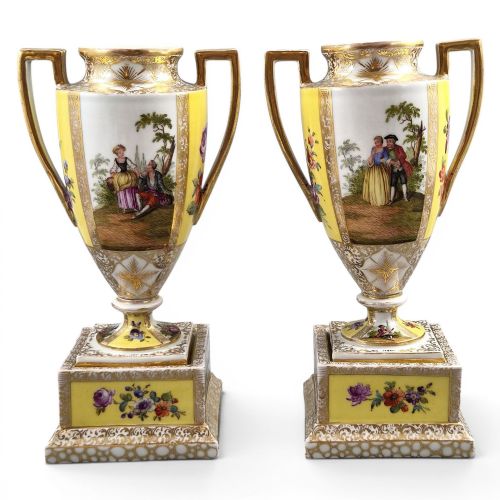
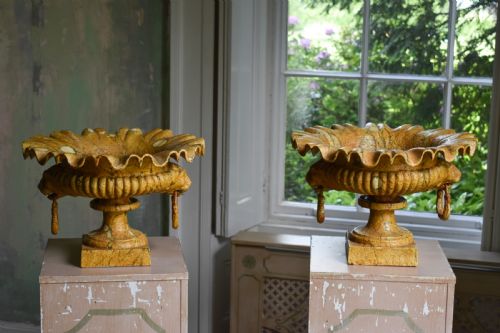
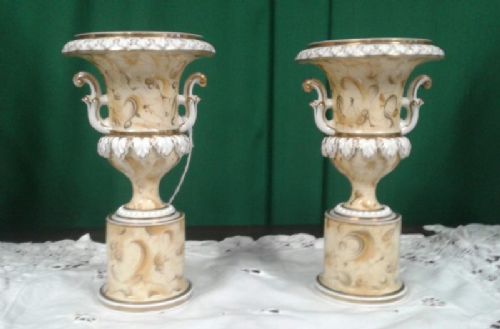


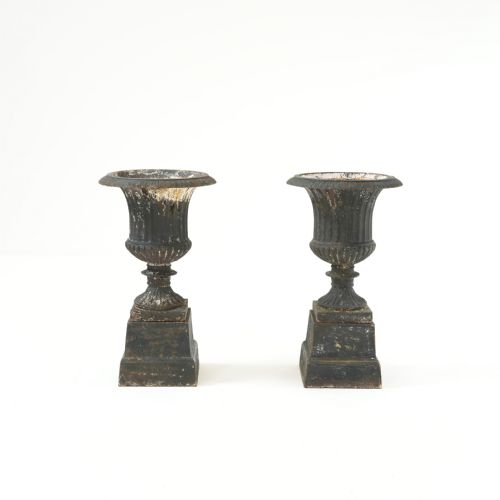


Victorian Pedestal Vases
Victorian pedestal vases are grand ornamental vessels raised on elevated bases, offering interior and garden displays striking height and architectural presence.
Victorian Pedestal Vases
Victorian pedestal vases encompass a diverse array of decorative urns, ewers, and campana forms designed to elevate floral displays or stand alone as sculptural focal points in nineteenth-century interiors and gardens.
Buyers encountering this search phrase will most frequently meet pairs of campana vases, lidded porcelain vessels, and heavy metal garden urns raised on dedicated plinths or stands.
The objects span from domestic mantel garnitures and porcelain pot pourri jars to monumental majolica pieces and cast iron garden ornaments produced across the nineteenth century.
How They Were Made
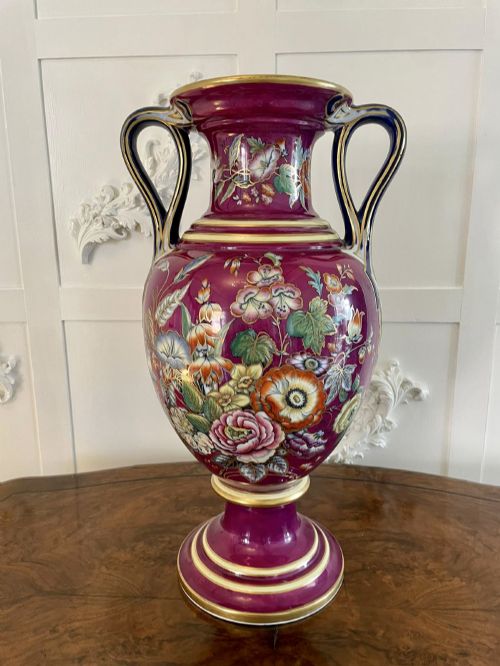
Maker's workshops utilised porcelain, earthenware, and glass, often enriched with hand-painted polychrome decoration, gilding, and raised enamel highlights.
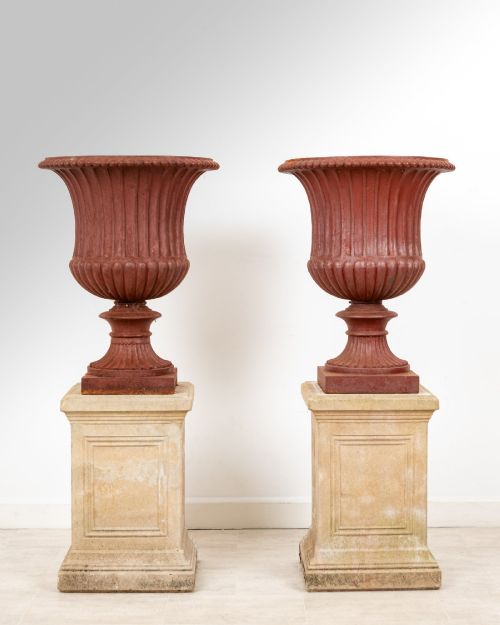
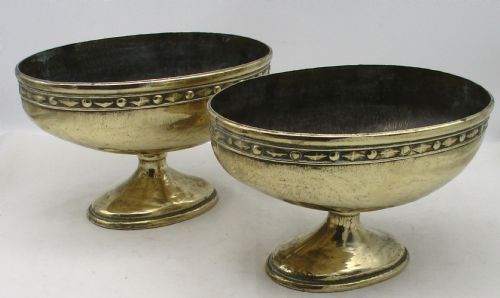
Metal versions relied on durable cast iron, bronze, brass, and silver, frequently cast with classical motifs and patinated or finished to resemble antiquity.
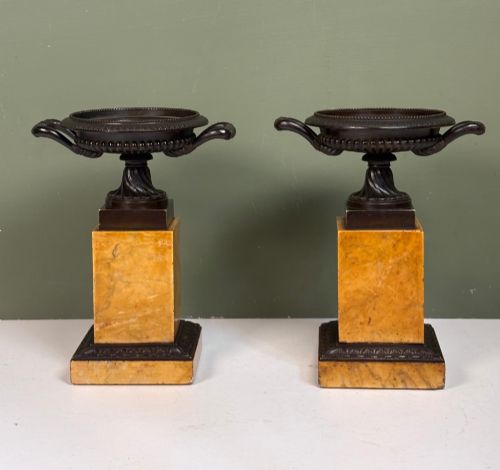
Certain pieces combined materials, mounting bronze vessels on marble plinths or pairing ceramic bodies with elaborate handles and decorative stands.
The listings demonstrate a strong presence of nineteenth-century ceramics, including earthenware, majolica, and porcelain from major English and continental makers.
What Varies in Quality
The distinction between ordinary production and superior work rests on the crispness of the casting, the precision of the hand-painting, and the ambition of the modelled detail.
Makers known for exceptional ceramic bodies and meticulous gilding achieved a refinement in their finished vases that lesser regional potteries could not match.
Proportion and structural harmony between the vessel and its pedestal also govern the visual success of the piece, separating balanced compositions from awkward assemblies.
Coalbrookdale·Helena Wolfsohn Dresden·Ridgeways·Wedgwood·Doulton Burslem·Minton·Hadley’s Worcester·Sevres·Royal Worcester·Royal Crown Derby
The Victorian Pedestal Vases Glossary
- Campana urn
- A bell-shaped vessel with a flaring rim and a footed base, heavily favoured in nineteenth-century gardens and neoclassical interiors.
- Ewer
- A large jug with a wide spout and an ornate handle, frequently produced as a decorative pedestal vase by major ceramic factories.
- Grand Tour
- A term describing items collected by wealthy travellers in Europe, typically featuring classical bronze or marble architectural forms.
- Majolica
- A colourful, tin-glazed earthenware developed with rich lead glazes, capable of high-relief modelling such as Bacchic motifs.
- Jasperware
- A fine-grained, unglazed stoneware pioneered by Wedgwood, characterised by contrasting white bas-relief figures against a coloured ground.
Victorian Pedestal Vases: Frequently Asked Questions
Where were Victorian pedestal vases displayed?
These vessels occupied prominent positions in nineteenth-century drawing rooms, entrance halls, and formal dining spaces as decorative centrepieces. Garden variants stood upon stone plinths along terraces or framed pathways.
Indoors, smaller ceramic or glass versions sat upon mantelpieces, console tables, and dedicated jardiniere stands to highlight architectural symmetry.
How do I care for antique porcelain and glass vases?
Gentle dusting with a soft, dry brush preserves delicate enamel work and gilt highlights without risking abrasion to the surface. Avoid harsh chemical cleaners and excessive moisture.
Metal and cast iron pieces benefit from occasional light cleaning appropriate to their specific patina or painted finish to prevent accumulation of dust.
How can I distinguish between iron and bronze garden urns?
Cast iron is heavier, magnetic, and often shows structural seams from industrial casting methods used during the nineteenth century. It frequently carries a painted finish or rusted patina.
Bronze exhibits a warmer metallic tone beneath its patination and lacks the magnetic properties found in iron vessels.
What is the purpose of a lidded pedestal vase?
Lidded vases, such as pot pourri jars, were designed to contain dried aromatic plant materials that refreshed the air in Victorian rooms. The pierced or solid covers controlled the release of fragrance.
When closed, the complete lidded silhouette presented a balanced, sculptural ornament suitable for prominent display.