






Victorian Campana Vases
Victorian campana vases bring classic classical urn forms into nineteenth-century interiors and gardens through cast iron, bronze, stone, marble, and porcelain.
Victorian Campana Vases
When you search for victorian campana vases, you encounter bell-shaped vessels inspired by ancient classical models and produced across the nineteenth century. These objects function primarily as decorative urns, garden urns, and planters designed to display plant life or stand alone as architectural ornaments.
The versions you meet most frequently on this page belong to the nineteenth century, including specific pieces from around eighteen fifty, eighteen sixty, eighteen seventy-one, and the late nineteenth century. They appear in pairs and single forms, often mounted on stone pedestals or plinths.
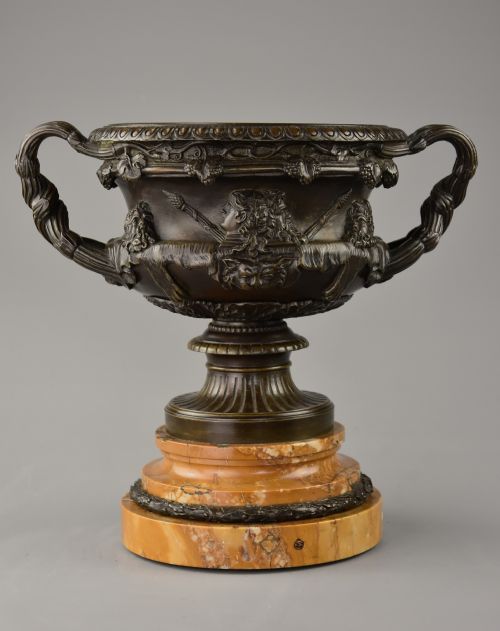
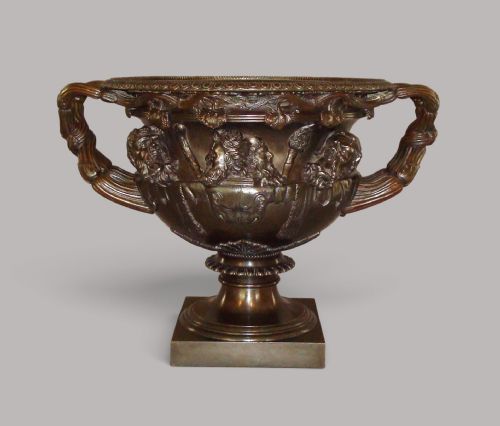
Makers and origins recorded in the listings span English potteries like Ridgeways and Wedgwood, alongside grand tour bronzes produced after ancient archetypes like the Warwick vase. Materials range from cast iron and stone to bronze, Ashford marble, and blue jasperware with white bas-reliefs.
Materials and construction methods
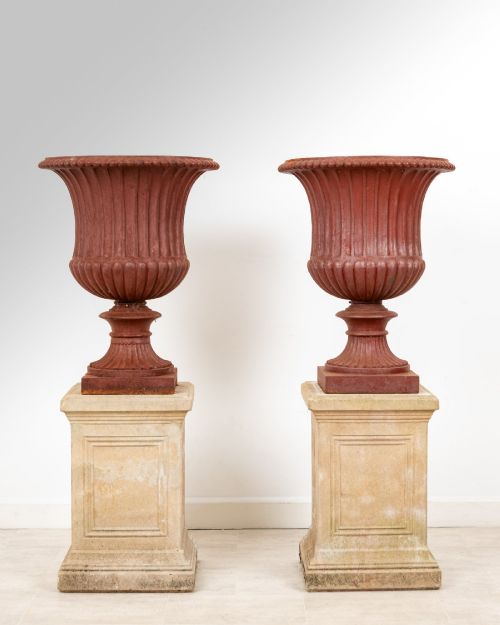
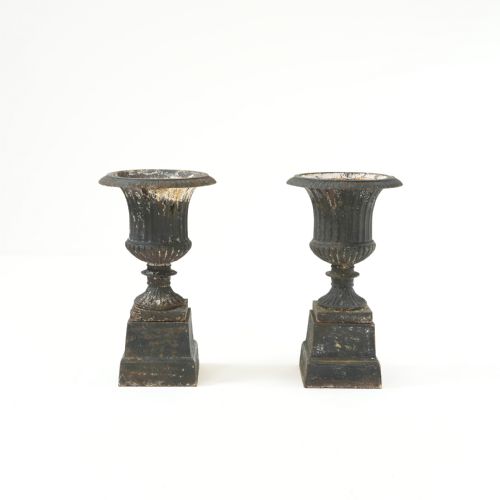
Metal versions utilise bronze and cast iron, often shaped through casting to achieve the flared profile of the campana shape. Grand tour bronzes capture fine classical detail, while heavy cast iron pieces provide durable forms suited for garden pedestals.
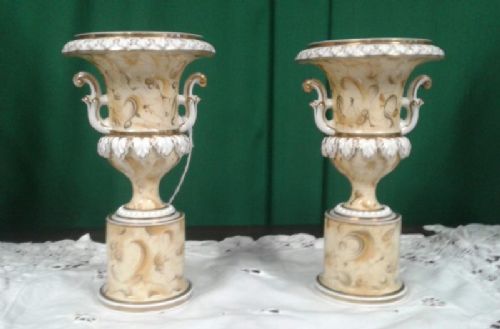
Ceramic examples employ porcelain and jasperware, incorporating white bas-reliefs and enamel details to create contrast on blue bodies. Stone and Ashford marble utilise natural mineral materials shaped into polished decorative urns.
Surface treatments include gilding to accent metallic surfaces and classical motifs. Pedestals and plinths of stone support heavy iron and ceramic urns, grounding the vessels structurally.
Victorian Campana Vases Retail Price Guide 2026
Typical asking prices for victorian campana vases among the pieces listed under this phrase on Sellingantiques today, from the lower quarter to the upper quarter. They describe what is for sale here now, not the wider market.
Travellers carried home miniature bronze wine-vessels in their luggage, ensuring ancient Roman drinking culture permanently colonized the Victorian mantelpiece as a flower planter.
Assessing quality in the pieces
Quality rests in the crispness of the casting and the definition of classical bas-reliefs, where sharper details indicate superior workmanship in bronze, iron, and jasperware. Finer ceramic examples display precise application of enamel and gilding.
Material selection dictates the character and weight of the object, distinguishing solid bronze grand tour reductions and Ashford marble from standard cast iron or ceramic productions. The presence of matching pedestals and original plinths completes the ensemble.
Ridgeways·Wedgwood·Selim Bright
The Victorian Campana Vases Glossary
- Campana
- A bell-shaped vessel form derived from classical antiquity with a flared rim and footed base. This profile defines the primary shape of these nineteenth-century urns.
- Grand Tour
- A nineteenth-century tradition where travellers collected bronze reductions of famous ancient sculptures and ruins. These miniature or scaled bronzes recreate notable archetypes like the Warwick vase.
- Jasperware
- A type of fine stoneware developed by Wedgwood featuring a matte surface and contrasting white bas-relief figures. Blue bodies with white classical motifs appear frequently in this category.
- Ashford Marble
- A Derbyshire black marble inlaid with colourful local fossils and minerals in geometric or floral patterns. Pieces utilise this polished stone for decorative table urns.
- Bas-Relief
- A sculptural technique where figures and motifs project slightly from a flat background. This method defines the white applied decoration on jasperware urns.
Victorian Campana Vases: Frequently Asked Questions
Where were these urns displayed?
Victorian households and gardens utilised these vessels in various settings, from grand drawing rooms to formal garden terraces. Heavy cast iron versions on stone pedestals stood outdoors on lawns and paths.
Smaller ceramic and bronze pieces occupied interior spaces such as mantelpieces, side tables, and cabinets. Grand tour bronzes specifically decorated studies and libraries as evidence of travel and classical education.
How do I identify grand tour bronzes?
Grand tour bronze pieces are reduced-scale models of famous ancient antiquities, such as the Warwick vase, produced during the nineteenth century. They exhibit dark patination and careful metal casting that mimics archaeological finds.
These bronzes often rest on wooden pedestals or stone plinths and reflect the educated taste of nineteenth-century collectors touring Italy. Their weight and metallic detail separate them from later reproductions.
What materials are common in these pieces?
The listings demonstrate a wide variety of materials utilised by nineteenth-century makers, including cast iron, bronze, and stone for architectural and garden use. Interior examples turn to porcelain, jasperware, and polished Ashford marble.
Many ceramic versions incorporate gilding and enamel details, while jasperware specifically pairs a coloured matte body with white classical bas-reliefs.