

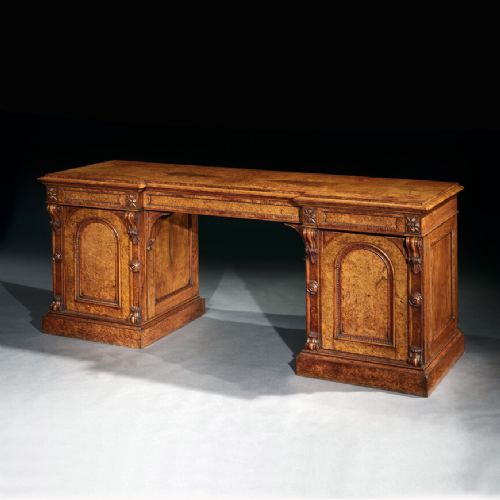
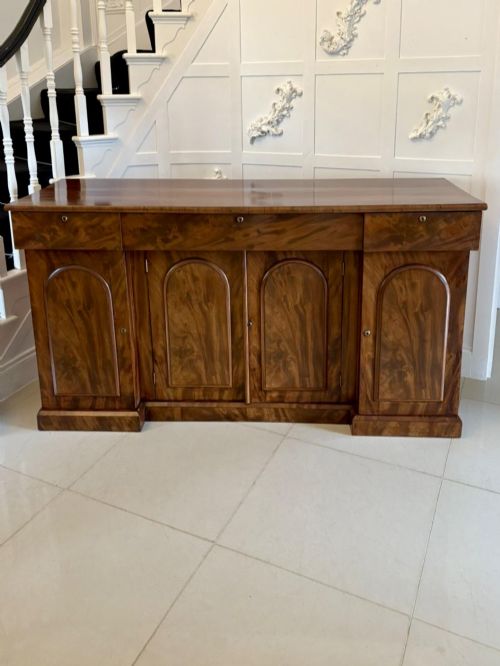
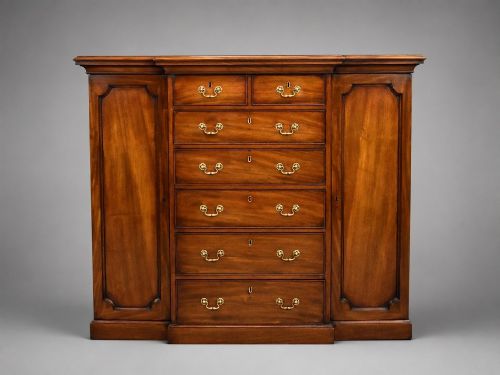


Victorian Pedestal Buffet
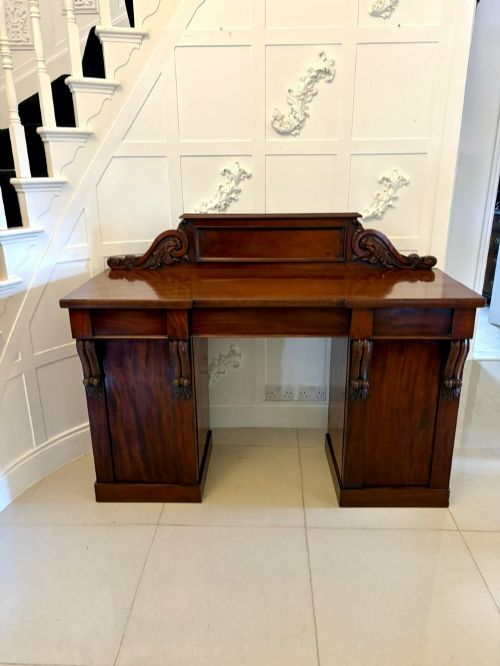
These Victorian pedestal buffet pieces are substantial dining room furniture built for storage and display, offering deep cupboards and heavy timber presence.
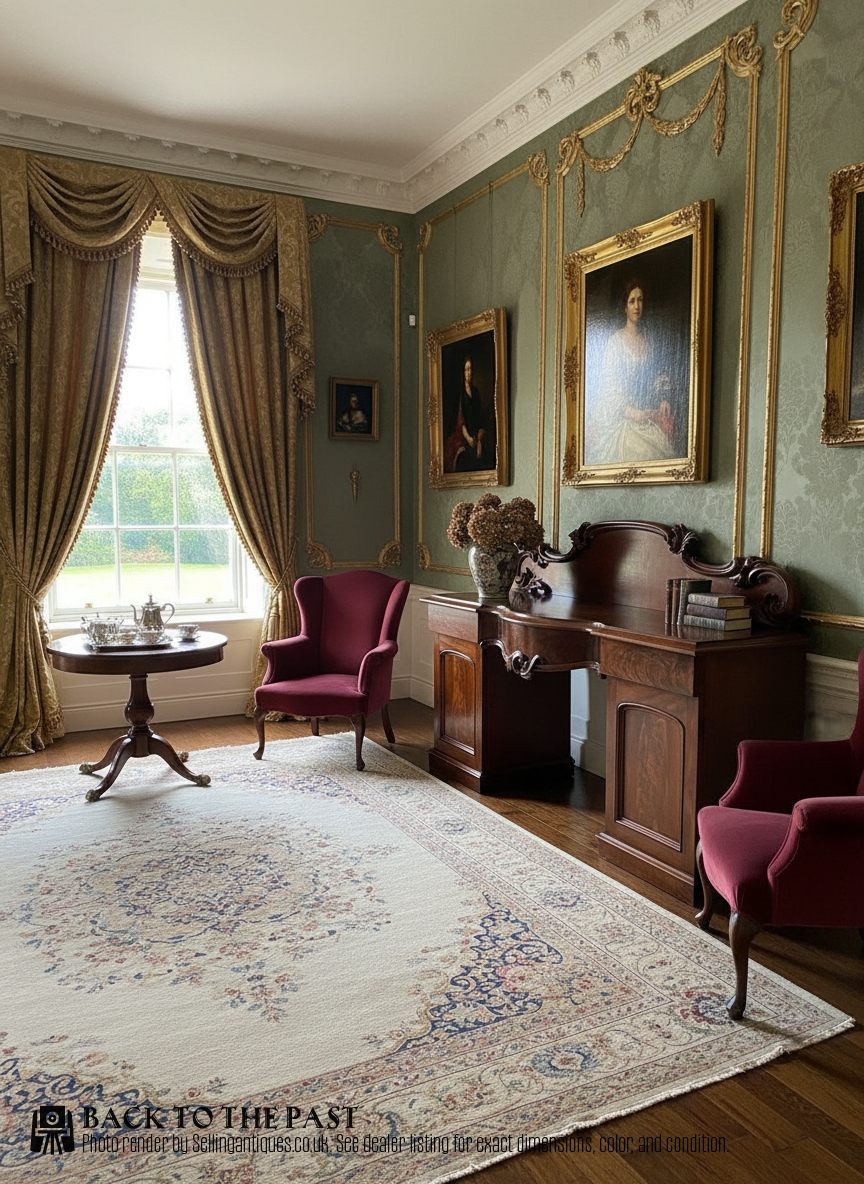
Victorian Pedestal Buffet
A Victorian pedestal buffet sits firmly in the dining room as a heavy storage piece, typically featuring flanking cupboards beneath a long serving surface. When searching for a Victorian pedestal buffet, buyers frequently encounter large mahogany or oak designs with carved details and optional mirror backs.
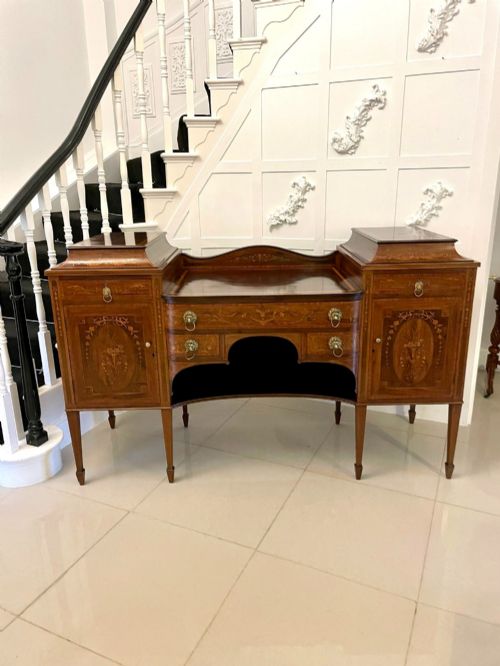
The layout relies on two architectural pedestals supporting a central section, occasionally configured with drawers or breakfront doors. Pieces range from modest proportions to monumental proportions suited to grand country houses.
Materials and construction methods
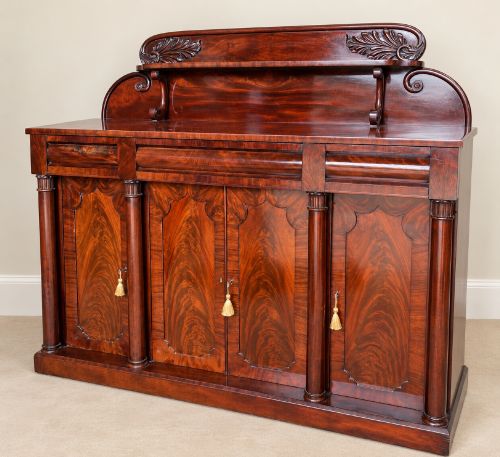
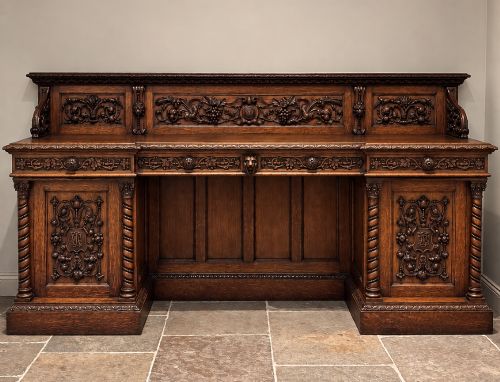
Cabinetmakers utilised solid timbers alongside flame mahogany veneers to create rich surface movement across the large doors and pedestals. Oak appears frequently in substantial carved iterations, while brass hardware and occasional marquetry inlay finish the structural work.
Construction involved heavy carcase framing to support the weight of marble or timber tops, alongside panelled doors fitted to pedestals designed to house dining silver and linen.
Listings feature mahogany, oak, padouk, and rosewood across nineteenth-century Victorian and William IV periods.
Factors determining quality
Quality rests upon the selection of figured timber veneers and the depth of hand-carved ornamentation applied to the mouldings and mirror frames. Superior examples display balanced proportions, tight joinery, and well-figured flame mahogany that catches the light across the broad surfaces.
Lesser pieces present plain timber grains with minimal detailing and simpler internal configurations lacking the robust construction seen in the top range.
Hewetsons London
The Victorian Pedestal Buffet Glossary
- Pedestal buffet
- A large dining room sideboard featuring twin cupboards or pedestals flanking a central recess or drawers. This form provides substantial interior storage.
- Flame mahogany
- A veneer cut from timber fork joints that produces a distinctive flickering flame pattern. It was widely utilised on prominent surfaces.
- Breakfront
- A cabinet front where the central section projects forward from the flanking pedestals. This configuration creates architectural depth.
- Chiffonier
- A compact sideboard or cabinet often fitted with a low shelf or mirror back. These pieces offer smaller storage alternatives.
- Marquetry
- Decorative inlay work using various coloured wood veneers to form pictorial designs. It appears on select refined surfaces.
Victorian Pedestal Buffet: Frequently Asked Questions
How were these buffets used?
These pieces functioned as dining room servers for storing heavy serving dishes, cutlery, and wine bottles. The top surface held food dishes and display items during meals.
Interior compartments kept dining linens and silver organised away from the main entertaining space.
Where should I place a pedestal buffet?
Dining rooms provide the most historically appropriate setting, positioned against a main wall to anchor the room. Their substantial depth requires adequate floor space.
Large entrance halls also accommodate these pieces well, utilising the surface for lamps and decorative items.
How do I identify a Victorian piece?
Victorian examples often display heavy carved ornamentation, dark mahogany or oak timbers, and sometimes arched mirror backs. Proportions tend to be solid and imposing.
Construction traits include hand-cut dovetails on drawer linings and dense secondary timbers behind the primary veneers.
Can I remove the mirror back?
Mirror backs are typically integrated into the structural frame and rear uprights of the sideboard during initial manufacture. Removing them alters the intended design balance.
Most buyers keep the mirror attached as it forms an integral part of the aesthetic.