

Victorian Pastoral Oil Canvas
A victorian pastoral oil canvas brings the quiet rhythms of nineteenth century farmland and livestock directly onto the wall.
Victorian Pastoral Oil Canvas
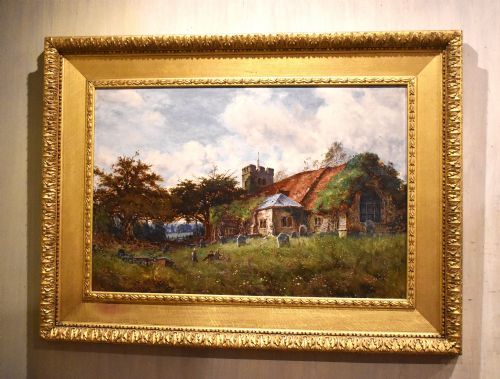
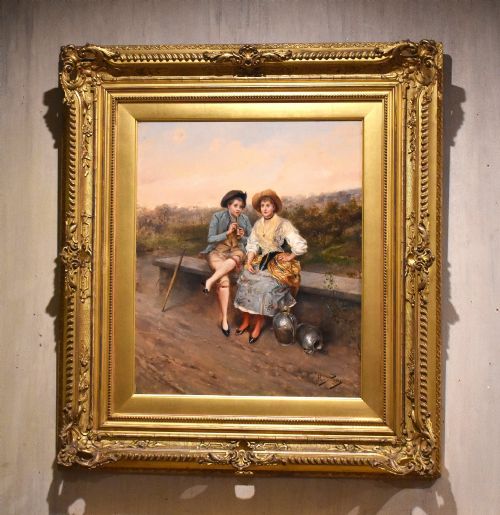
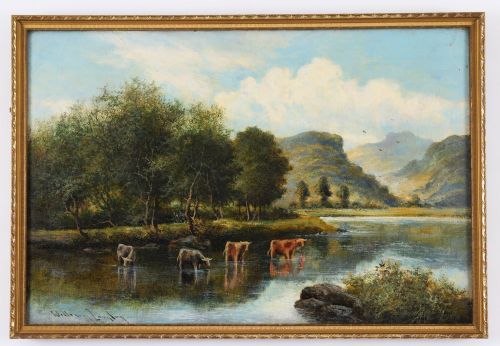
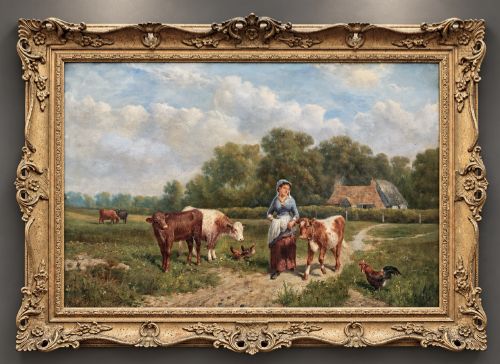
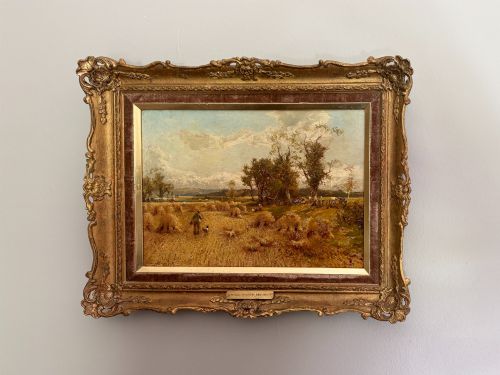
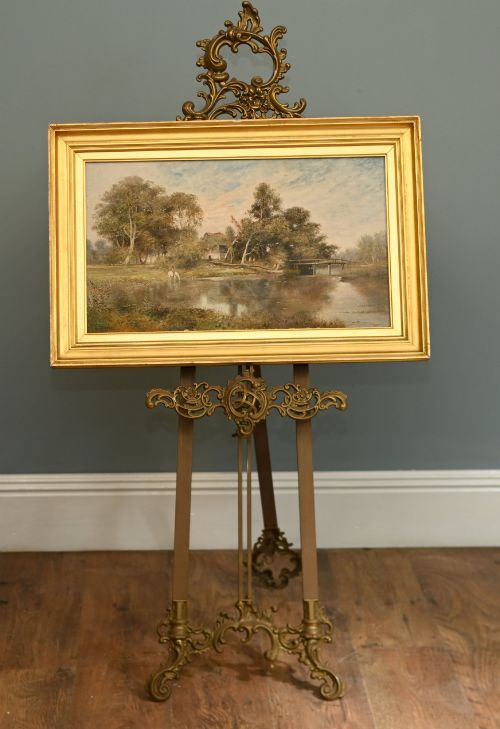
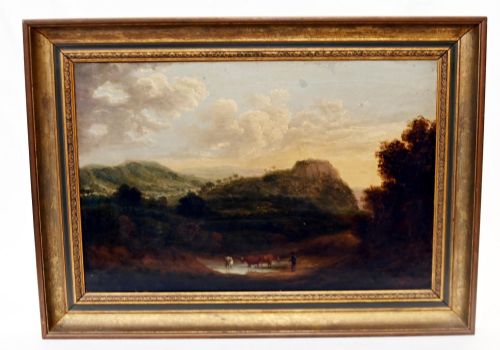
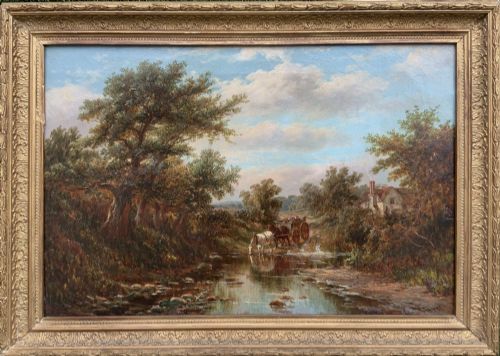
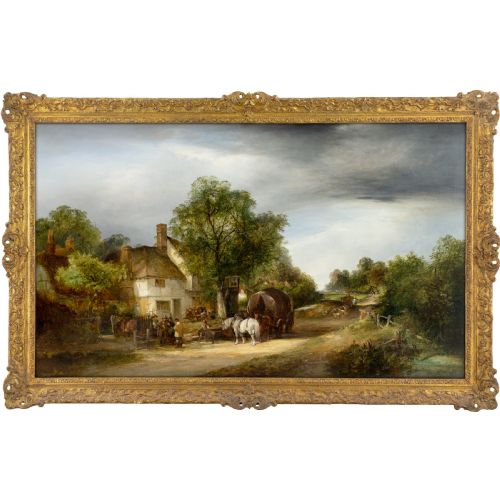
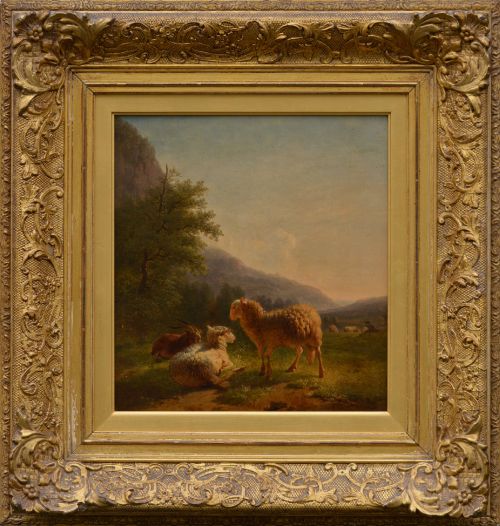
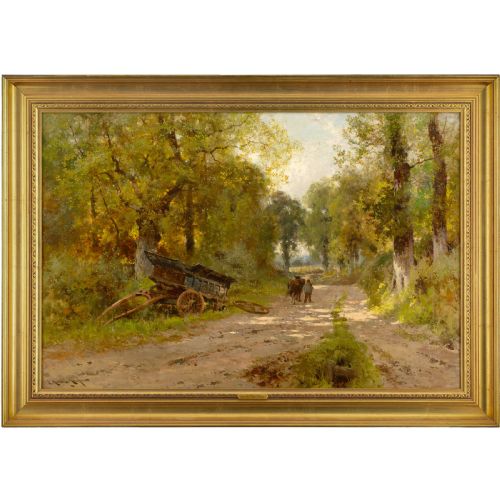
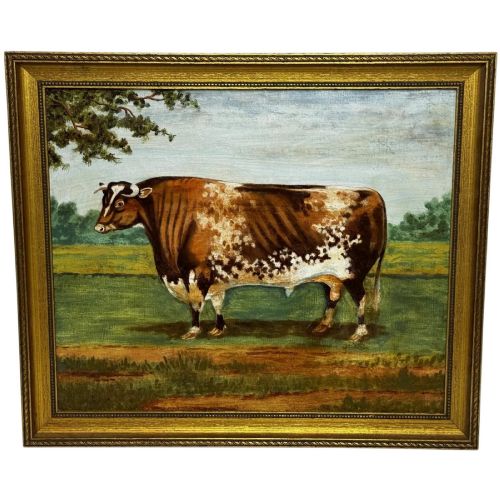
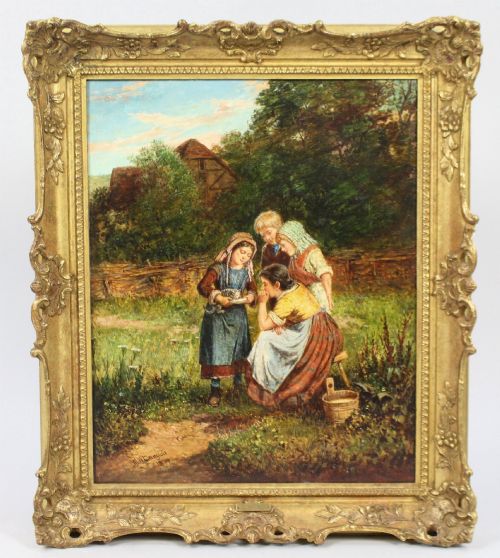
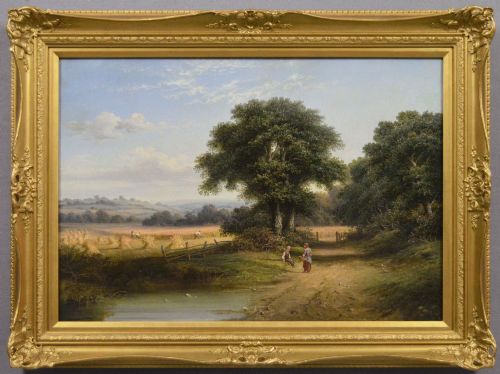
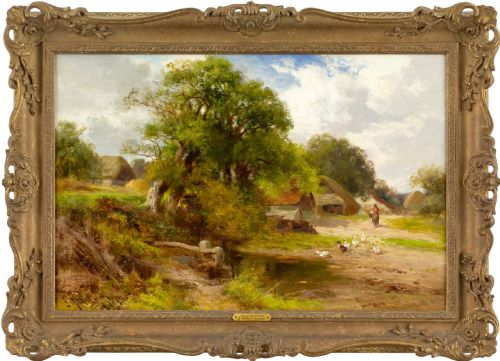
A victorian pastoral oil canvas portrays rural life, agricultural landscapes, and domesticated animals across the nineteenth and early twentieth centuries. These works frequently depict shepherds, milkmaids, cattle, sheep, and harvest fields rendered in realistic or romanticised styles. The version most commonly encountered on this page combines a British or European landscape with detailed studies of farm animals.
The selection ranges from intimate portrayals of single animals, such as prized shorthorn bulls and collies, to sweeping river valleys and mountain vistas. Painters of this genre worked within established traditions including 19th Century Realism, Romanticism, and the British School. Each canvas reflects a period when agrarian subjects held deep cultural resonance for collectors and urban buyers alike.
Materials and technique
Artists applied oil paint onto stretched canvas, utilising the medium's slow drying time to build rich layers of colour and subtle shifts in light. This technique allowed painters to capture the texture of wool, the sheen of cattle hides, and the atmospheric moisture of river valleys. Giltwood and gesso frames often enclose these works, providing the decorative ornamentation typical of the period.
Brushwork varies from the tight, highly detailed academic style seen in animal portraits to looser, Barbizon-influenced applications in landscape backgrounds. Pigments were layered over primed fabric to achieve depth in skies and foliage, while highlights on figures and animals received careful, opaque touches. The physical structure relies on traditional wooden stretcher frames supporting the woven canvas support.
The listings span the Victorian era, 1900, and 1910, utilising oil on canvas, giltwood, and gesso.
Assessing quality and execution
Quality rests primarily on the anatomical accuracy of the animals and the handling of natural light within the composition. Master painters rendered livestock with correct proportions and distinct textures, whereas lesser hands produced stiff or generic forms. The integration of the figures into the surrounding landscape also distinguishes superior canvases from routine studio output.
Condition and originality play a major role in establishing the merit of any given piece. Canvases retaining their original surface without heavy overpaint, paired with period-appropriate giltwood frames, represent the stronger examples. The reputation of the artist and the specific locality depicted further elevate the standing of individual works.
Eugène Verboeckhoven·John Horace Hooper·Mark William Langlois·David Bates·Walter Heath Williams·Thomas Sidney Cooper·Richard Redgrave·Robert Watson·Albert Rieger·William Watson Jnr·Johann Friedrich Voltz·Henry H Parker·Henry Schouten·John Emms·A M Gauci·William Henry Mander·Alfred Augustus Glendening Jnr·William Sydney Cooper·Samuel Joseph Clark·George Vicat Cole·Henry John Boddington·Andre de Moller·Robert John Hammond·Sidney Richard Percy·Frederick James Knowles
The Victorian Pastoral Oil Canvas Glossary
- Pastoral
- An artistic genre depicting rural life, shepherds, and agricultural landscapes in an idealized or realistic manner. These scenes emphasise harmony between humans, animals, and the countryside.
- Canvas
- A heavy woven fabric stretched across a wooden frame to serve as the foundation for oil paintings. It provides the texture and tension required for traditional painting techniques.
- Giltwood
- Wood carved and covered with a thin layer of gold leaf or metallic gilt, commonly used for nineteenth-century picture frames. It enhances the visual presence of the artwork.
- Gesso
- A traditional paint mixture consisting of a binder mixed with chalk, gypsum, or pigment, used to prepare wood and canvas surfaces. It creates a smooth base for oil application.
- Barbizon School
- A nineteenth-century art movement focused on realism in landscape painting, emphasising loose brushwork and direct observation of nature. This approach influenced many British rural painters.
Victorian Pastoral Oil Canvas: Frequently Asked Questions
What subjects appear in these paintings?
The works depict agricultural scenes, including herds of cattle, flocks of sheep, harvest fields, and river landscapes with figures. Animals such as shorthorn bulls, milk cows, and working collies are frequent focal points.
Artists also recorded specific regional views across Britain and Europe, capturing rural life before rapid industrialisation transformed the countryside.
How were these canvases framed originally?
Many nineteenth-century paintings retain ornate giltwood and gesso frames featuring moulded plaster ornamentation. These heavy frames were designed to complement the rich tones of oil paint and project status in a Victorian interior.
Surviving original frames often display corner ornaments and decorative leaf motifs characteristic of the period.
How can I date a nineteenth-century pastoral painting?
Dating relies on stylistic clues, artist signatures, biographical records, and the physical construction of the canvas and stretcher. Costume details on figures and agricultural practices depicted can also narrow down the execution period.
Exhibition labels or inscriptions on the reverse of the canvas frequently provide confirmed dates or locations.
How do I care for an oil painting on canvas?
Keep the canvas away from direct sunlight, high humidity, and rapid temperature fluctuations to prevent cracking in the paint layer. Dust the surface gently with a soft, dry brush without applying pressure.
Avoid using water or chemical cleaners on the paint surface, and consult a professional conservator for cleaning or repair work.