


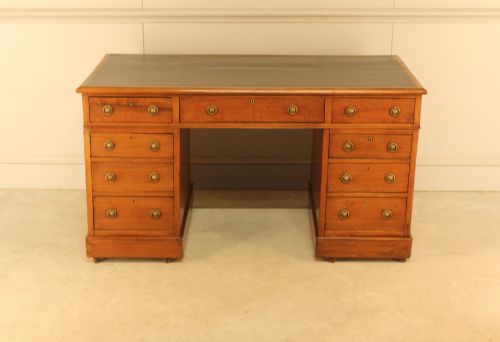
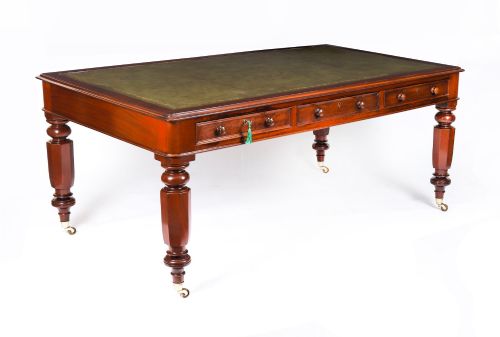
Victorian Partners Writing Desk
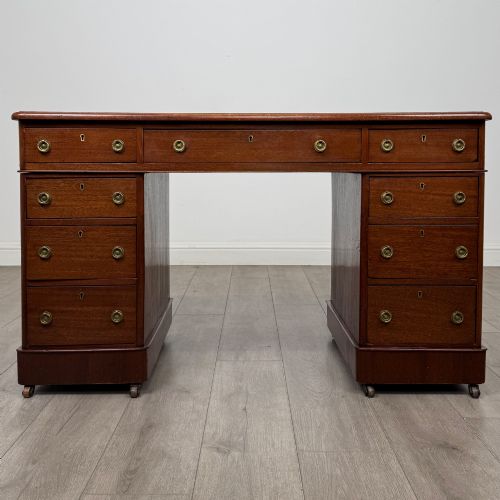
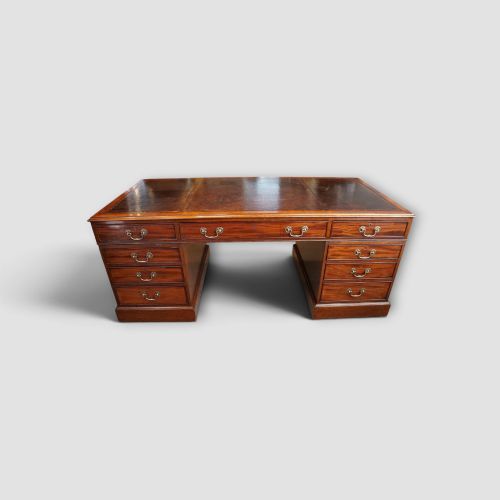
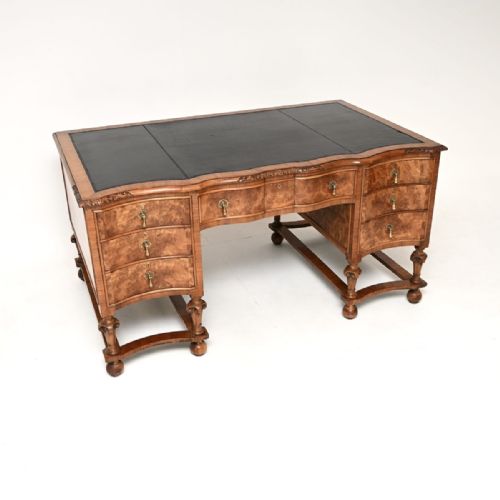
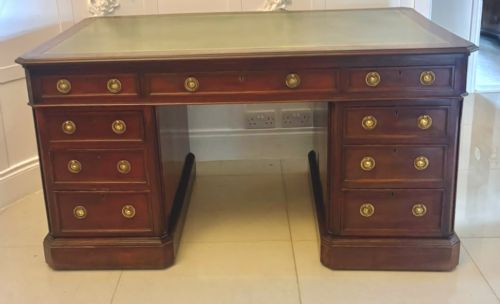
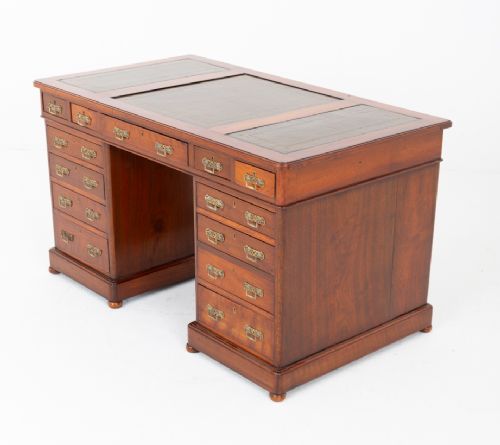
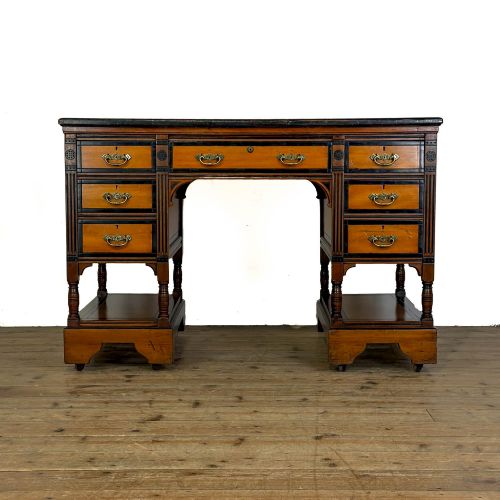
A victorian partners writing desk is a grand double-sided workspace designed for two users sitting opposite each other.
Victorian Partners Writing Desk
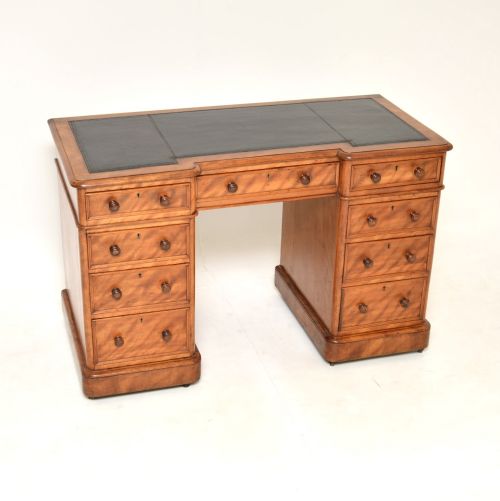
When searching for a victorian partners writing desk, buyers encounter large freestanding pieces designed with drawers and cupboards accessible from both sides. These heavy library and office tables predominantly date from the nineteenth century, spanning various decades from eighteen-fifty to nineteen-hundred.
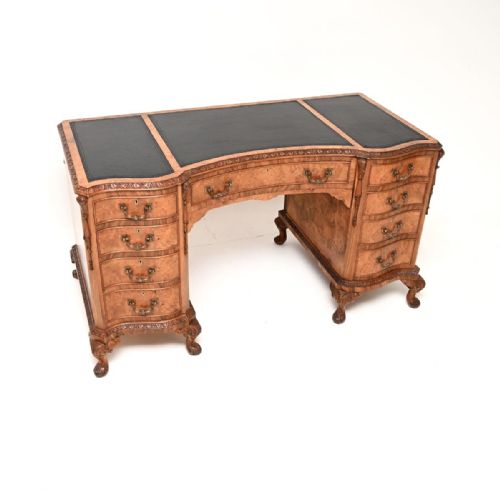
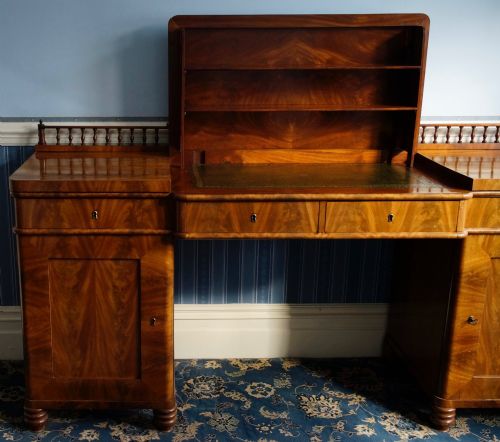
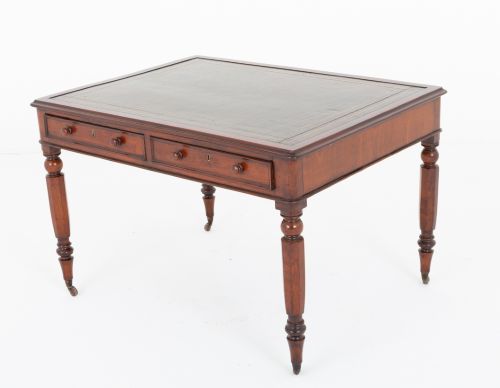
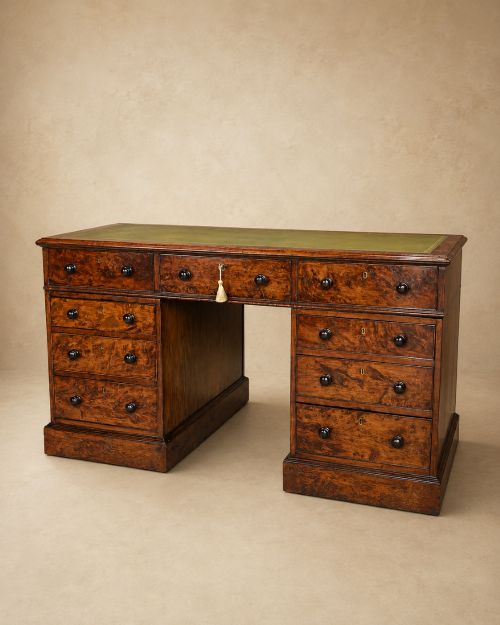
The most common forms on this page are double pedestal desks and large writing tables constructed in rich timbers. Many examples feature inset leather writing surfaces and multiple drawers facing outwards in opposing directions to accommodate two simultaneous users.
What Varies in Quality
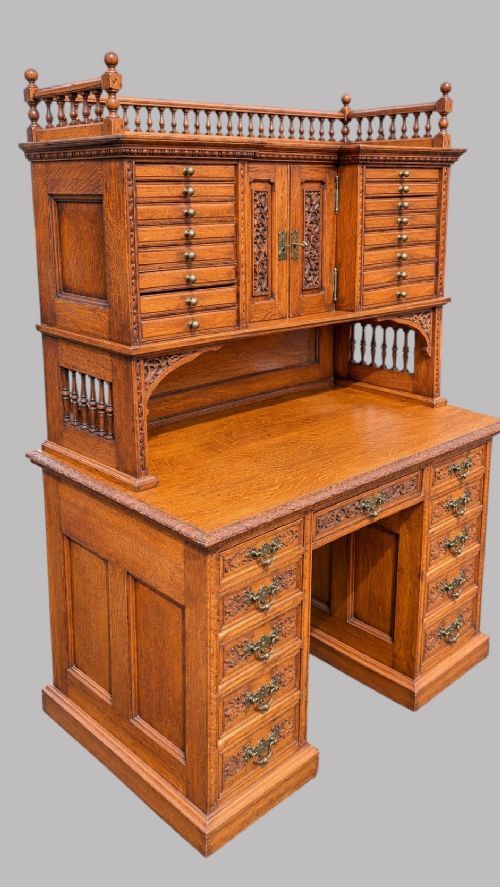
Quality rests heavily on the selection of timber veneers and the intricacy of secondary decorative elements like ivory inlay, Wedgwood plaques, or carved oak detailing. Finer pieces demonstrate superior timber matching across the double-sided exterior surfaces and pedestals.
Construction standards differ between standard utility models and high-end workshop productions bearing maker signatures. Superior examples maintain completely freestanding symmetry, finished drawers to both sides, and original fitted interiors.
Some nineteenth-century desks include hidden stationery drawers and secret compartments for keeping private correspondence safe.
Trollope and sons·Maple and Co·Charles Andrea Nosotti·Jackson and Graham·Edwards and Roberts·Bartholemew and Fletcher
The Victorian Partners Writing Desk Glossary
- Partners desk
- A large double-sided desk designed for two people to work opposite each other, featuring drawers and cupboards on both sides.
- Pedestal desk
- A heavy freestanding desk comprising a top surface supported by two independent columns of drawers.
- Kneehole desk
- A desk featuring a central recess for the user's legs, flanked by pedestals containing drawers.
- Leather top
- A writing surface inset with hide or leather, frequently decorated with gold tooling around the perimeter.
- Library table
- A large freestanding table utilised for reading and writing, often sharing proportions with partners desks.
- Writing slide
- A pull-out shelf housed beneath the desk top to provide additional temporary workspace.
Victorian Partners Writing Desk: Frequently Asked Questions
How do I arrange a partners desk?
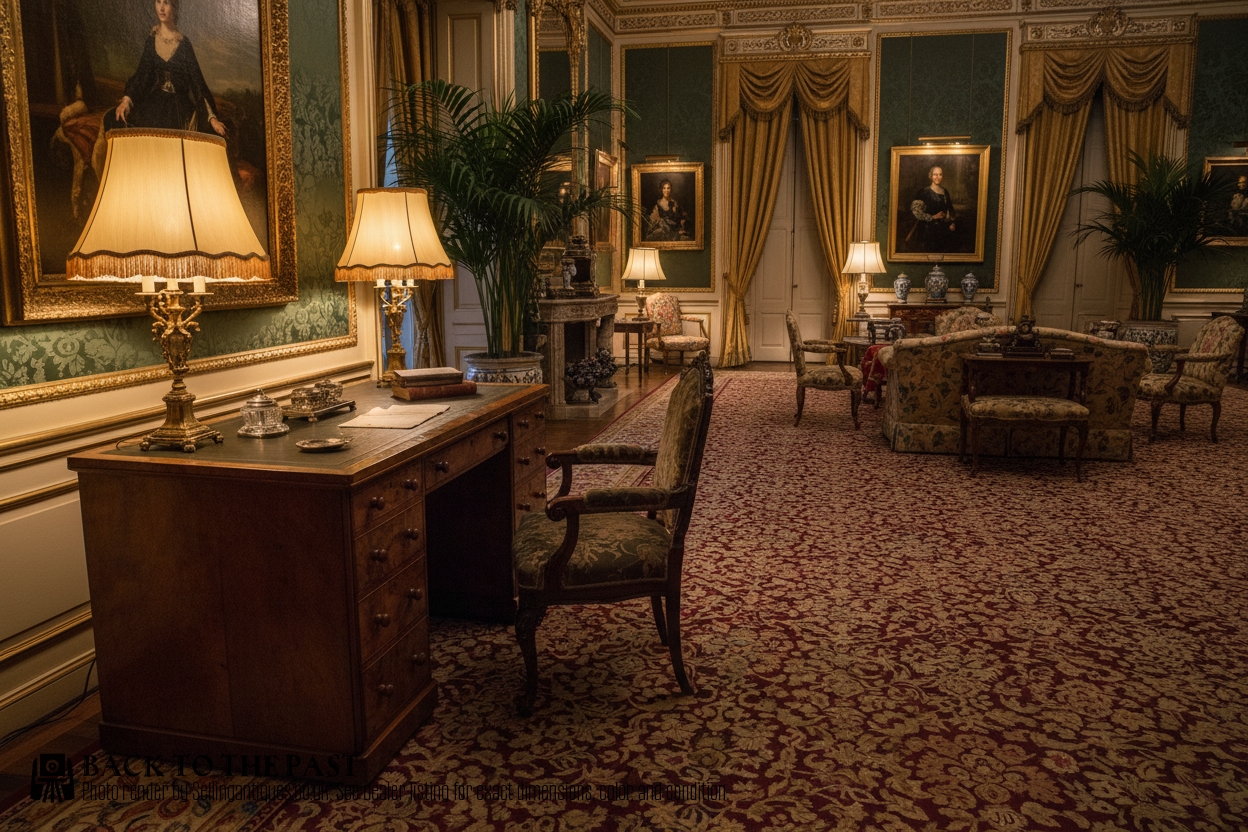
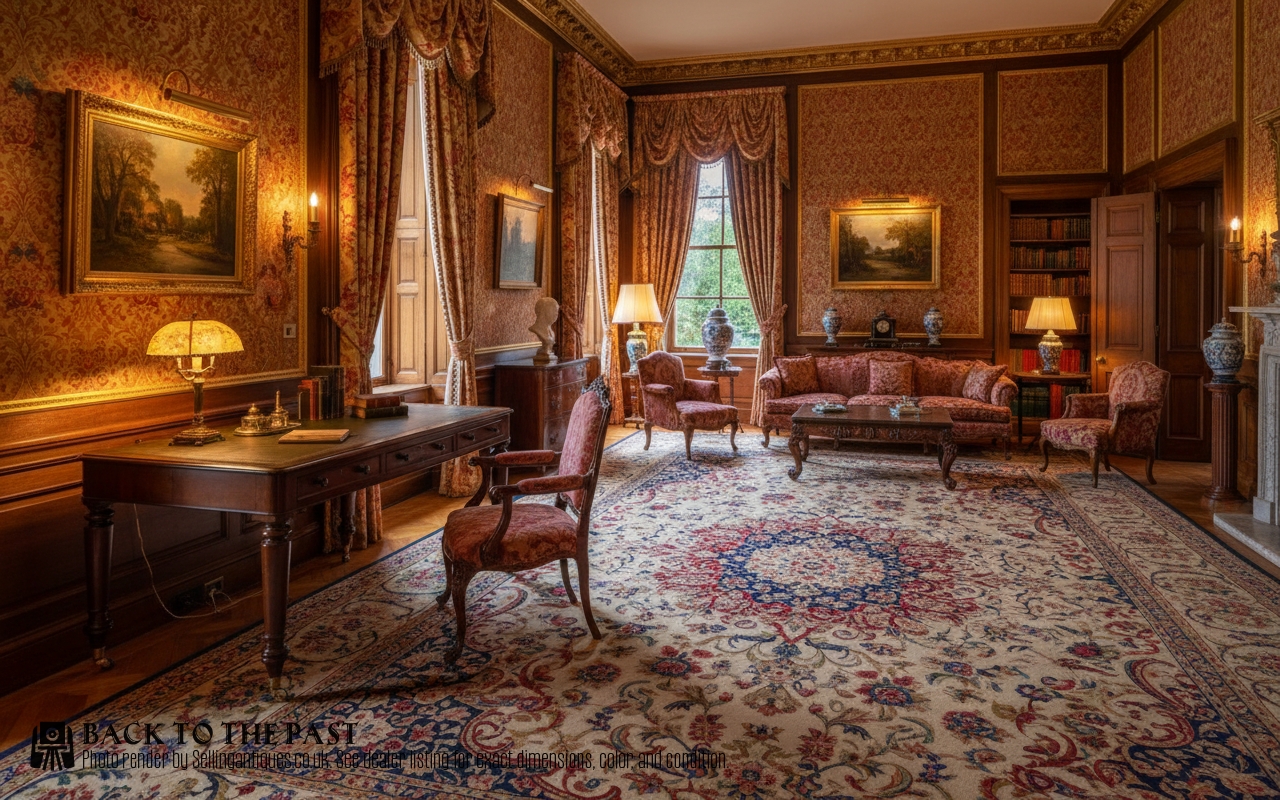
Because these desks are finished on all sides, they are designed to sit freestanding in the middle of a room rather than pushed against a wall. This allows both users to sit opposite each other with full access to the drawers.
Positioning the desk centrally also highlights the timber grain and double-sided configuration from every angle of the room.
What woods were used for these desks?
Cabinet makers predominantly used mahogany, oak, and walnut for the primary structure and carcase of these desks. Burr walnut, satinwood, and ebonised wood also appear as decorative veneers on finer examples.
Secondary woods like pine or oak were frequently used for internal drawer linings and hidden structural components.
How do I identify a Victorian desk?
Victorian desks are identified by nineteenth-century construction methods, specific revival styles such as Gothic or Louis XIV, and characteristic timber choices. They often incorporate dovetailed drawer construction and traditional hand-finishing.
Many examples also display maker stamps, brass locks, or stylistic traits associated with mid to late nineteenth-century British workshops.