

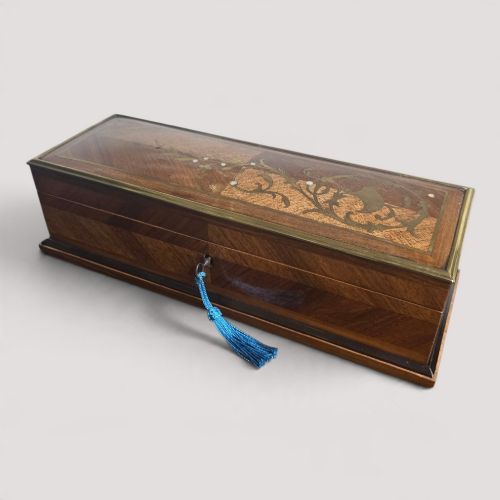
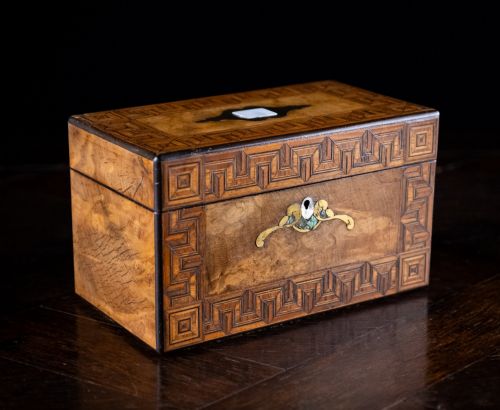

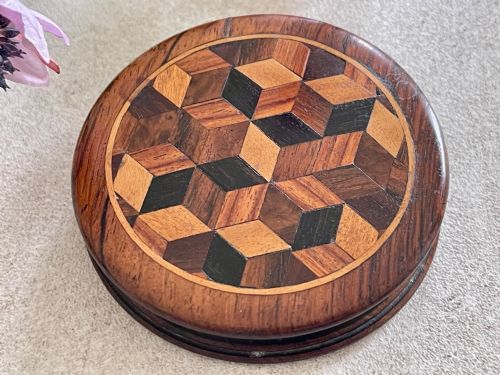


Victorian Parquetry Wooden Box
A victorian parquetry wooden box brings geometric precision and rich timber into a room, offering both practical storage and decorative appeal.
Victorian Parquetry Wooden Box
A victorian parquetry wooden box is a container formed from timber with geometric wood veneer patterns, spanning tea caddies, sewing boxes, writing slopes and stationery chests. These pieces emerge primarily from the nineteenth century, including Victorian and Regency eras.
The objects serve specific domestic duties, such as holding tea leaves, correspondence, sewing implements or small keepsakes. Many examples incorporate specialised internal compartments or lift-out trays designed for these exact tasks.
Aspects of quality
The precision of the wood mosaic work defines the tier of craftsmanship, where tighter joints and sharper geometric alignment separate standard items from superior pieces. Workshops utilising diverse specimen woods achieve greater visual depth in their parquetry patterns.
Completeness of internal fittings and original brass hardware heavily influences the character of a box. Retaining fitted trays, working locks and matching interior compartments demonstrates higher original status.
The choice of primary timber, particularly highly figured burr walnut or rich rosewood, elevates the physical presence of the object. Uniformity in the ageing of the French polish finish preserves the intended contrast between light and dark wood elements.
Victorian Parquetry Wooden Box Retail Price Guide 2026
Typical asking prices for victorian parquetry wooden box among the pieces listed under this phrase on Sellingantiques today, from the lower quarter to the upper quarter. They describe what is for sale here now, not the wider market.
Some nineteenth century boxes included hidden compartments operated by secret wooden spring latches for storing private correspondence.
Henry Hollamby·Edmund Nye
The Victorian Parquetry Wooden Box Glossary
- Parquetry
- Geometric mosaic woodwork formed by fitting small veneer pieces together to create patterns. This technique decorates the exterior surfaces of many nineteenth century boxes.
- Tunbridge Ware
- A specialised form of nineteenth century parquetry originating from Kent, featuring microscopic wood mosaic scenes and banding. Makers construct these using numerous natural specimen woods.
- Tea Caddy
- A container originally built for storing loose tea leaves securely inside compartments. These often feature internal mixing bowls or twin canisters.
- Writing Slope
- A portable desk opening on a hinged slant to reveal a sloping writing surface, inkwell holders and storage wells. Many examples incorporate leather inserts.
- Specimen Woods
- A collection of various native and exotic timber species selected for contrasting natural colours. Craftsmen utilise these unpainted woods to generate tone and pattern in mosaic inlays.
- Burr Walnut
- Timber harvested from walnut tree growths that produce swirling, highly decorative grain patterns. This material serves as a prized veneer on Victorian furniture and boxes.
Victorian Parquetry Wooden Box: Frequently Asked Questions
What were tea caddies used for?
Tea caddies served to store expensive tea leaves securely under lock and key in the nineteenth century household. Servants or homeowners portioned out daily amounts from these timber containers.
Inside, the boxes frequently feature divided compartments or metal canisters to keep different tea varieties separate and dry. Lined interiors helped preserve the aroma of the leaves before consumption in the parlour.
How do I identify Tunbridge Ware?
Tunbridge Ware is recognised by its microscopic mosaic wooden tiles arranged into geometric borders or pictorial representations of castles and flowers. These designs utilise natural coloured woods rather than painted details to achieve shading.
Look closely at the surface patterns to observe individual strips of timber assembled together. This intricate technique centred around Kent workshops during the Victorian period.
What is a writing slope used for?
A writing slope provided a portable slanted surface for composing letters and managing correspondence before the widespread use of fitted desks. The hinged lid folded down to offer a stable writing angle.
Internal compartments held inkwells, blotting paper, nibs and stationery supplies. Wealthy travellers and homeowners moved these boxes between rooms or on journeys.
How should I care for a wood box?
Keep wooden boxes away from direct sunlight and sources of extreme heat to prevent the delicate veneer and parquetry from warping or cracking. Stable room humidity preserves both the timber and the glue foundations.
Apply a light application of appropriate wax polish occasionally to nourish the historic French polish surface. Avoid excessive moisture and clean only with a soft, dry cloth.