
Victorian Parlour Table
A victorian parlour table stands ready for card games, tea service and daily correspondence in the reception rooms of the nineteenth century.
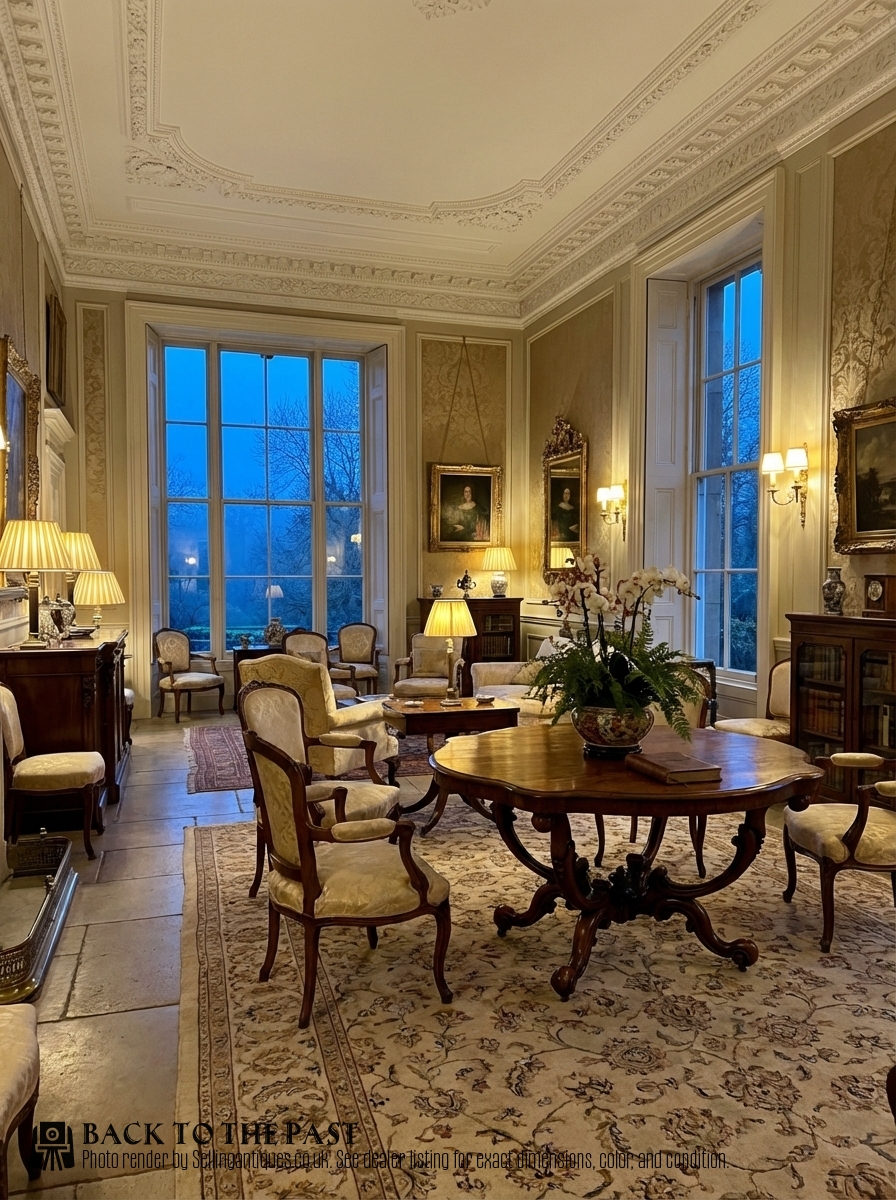
Victorian Parlour Table
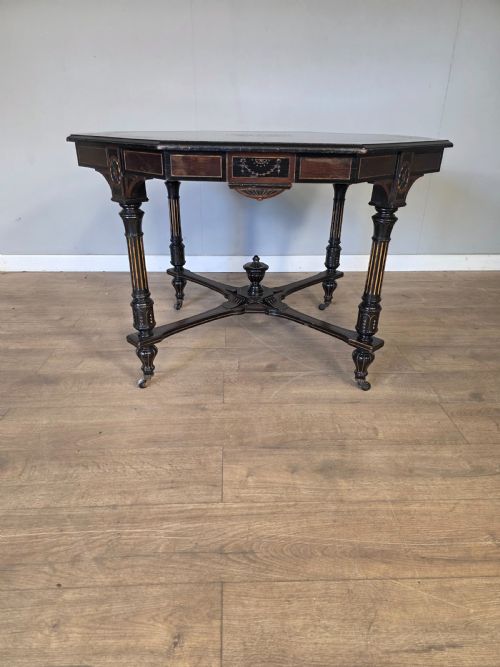
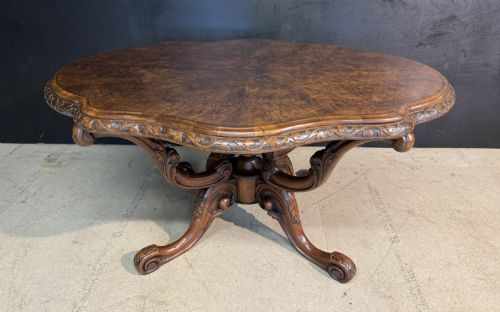
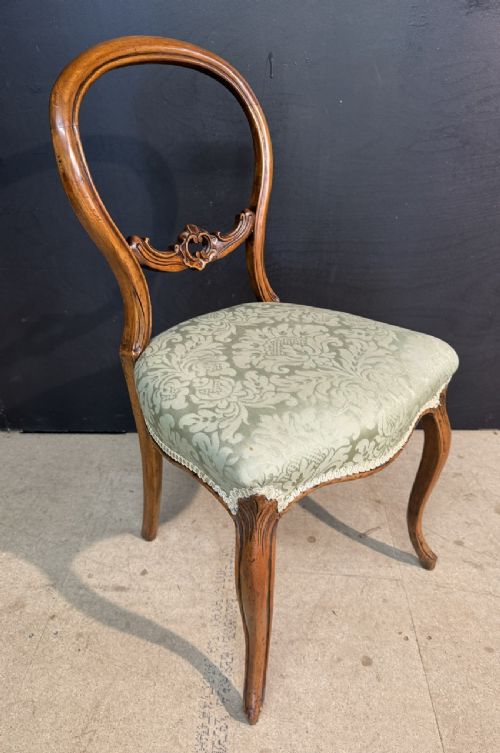
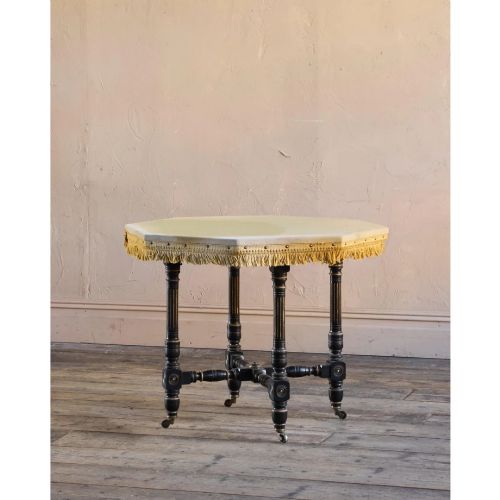
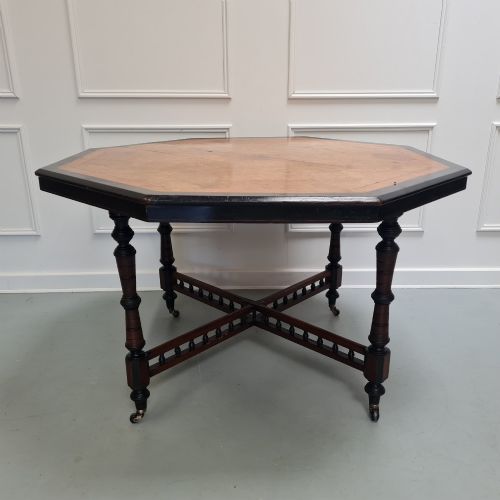
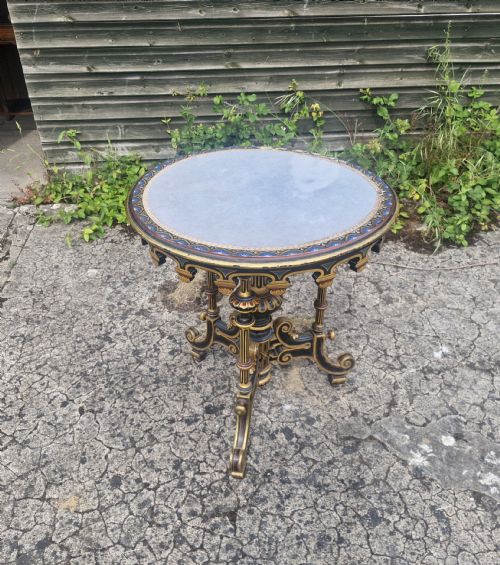
A victorian parlour table serves as a versatile piece designed for formal entertaining and domestic leisure within the nineteenth-century home. These pieces appear most frequently as freestanding centre tables and octagonal occasional tables shaped from dense hardwoods.
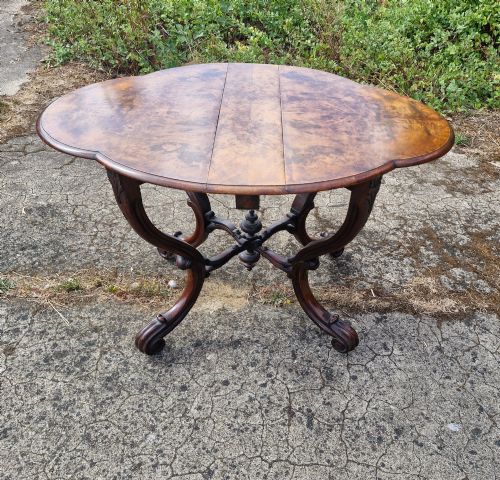
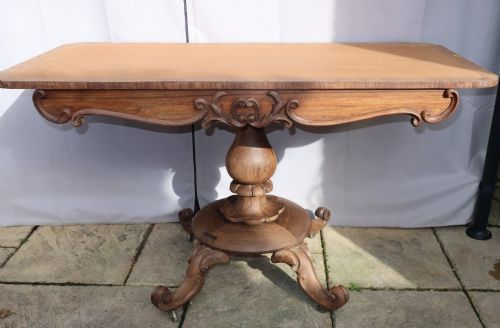
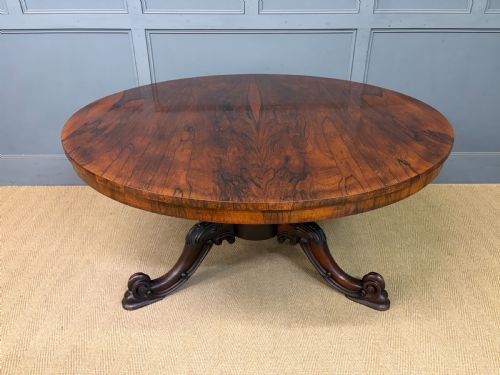
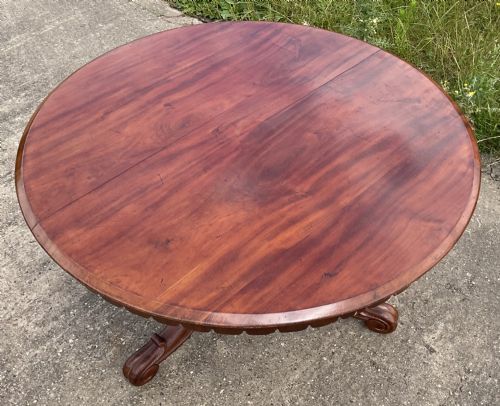
Makers produced these tables in various configurations, including circular tops on pedestal bases, tilt-top mechanisms, and multi-legged designs meant to occupy the middle of a room rather than sit against a wall.
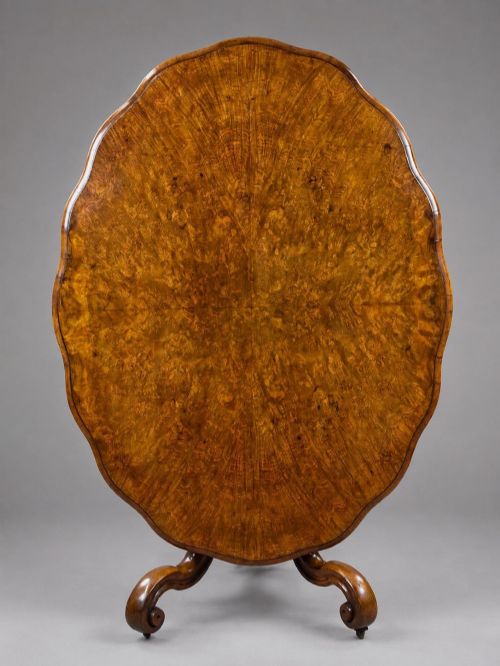
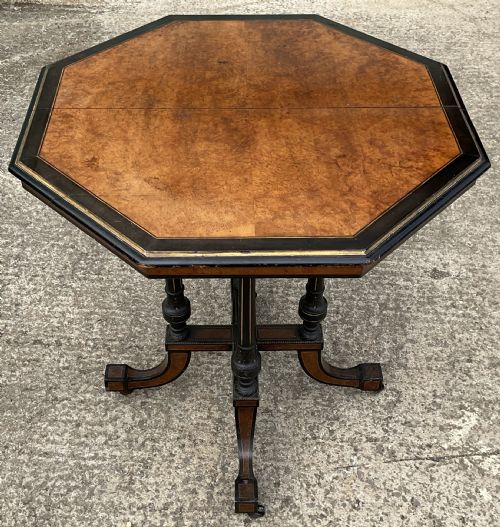
The selection ranges from simple mahogany and oak examples to elaborate burr walnut and rosewood models featuring inlaid marquetry and sophisticated turning.
Materials and construction
Cabinet makers utilised choice hardwoods such as mahogany, rosewood, walnut, and burr walnut, often applying decorative veneers over secondary timbers to achieve rich grain patterns. Marquetry inlay, ebonised finishes, and hand-carved foliate details further embellished the surfaces.
Construction techniques relied on sturdy joinery, turning, and occasional pedestal or scissor-action frameworks designed to support heavy marble or timber tops under regular domestic use.
Victorian Parlour Table Retail Price Guide 2026
Typical asking prices for victorian parlour table among the pieces listed under this phrase on Sellingantiques today, from the lower quarter to the upper quarter. They describe what is for sale here now, not the wider market.
Current listings feature nineteenth-century materials including walnut, burr walnut, rosewood, mahogany, brass, and oak.
Distinctions in quality
The degree of refinement in timber selection and decorative execution sets apart the finest examples, particularly where burr veneers and crisp marquetry inlay demonstrate superior craftsmanship. Secondary elements like hand-carved pedestal bases and stable tilt-top mechanisms reveal the maker's attention to structural integrity.
Proportion and surface finish dictate the overall distinction of a piece, separating straightforward utilitarian furnishings from high-status reception room centrepieces.
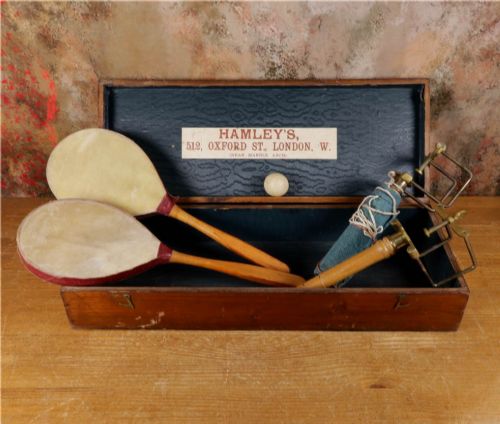
A Hindley And Sons·Jaques And Hamleys·F H Ayres Ltd
The Victorian Parlour Table Glossary
- Centre table
- A freestanding table designed to be viewed from all sides, placed in the middle of a room rather than against a wall.
- Burr walnut
- A highly prized wood featuring swirling, knotty grain patterns harvested from tree growths, used extensively for decorative table veneers.
- Marquetry
- The art of applying fitted pieces of wood veneer to a structure to form decorative patterns and pictures.
- Loo table
- A large round or oval table designed for nineteenth-century card games such as loo, frequently fitted with a tilt-top mechanism for convenient storage.
- Occasional table
- A small, versatile secondary table used for specific domestic tasks or decorative display in a parlour.
Victorian Parlour Table: Frequently Asked Questions
What is a parlour table used for?
These tables functioned as social hubs for the nineteenth-century household, accommodating everything from afternoon tea and card games to the display of decorative objects and oil lamps.
They stood centrally within the room to allow guests to gather around comfortably during evening entertainment and polite visits.
How do I identify a Victorian centre table?
Centre tables are finished on all four sides or feature a symmetrical round, octagonal, or oval top designed to sit freestanding in the middle of a floor space.
Look for heavy pedestal bases, tripod supports, or multiple legs combined with rich timbers like walnut, mahogany, and rosewood characteristic of the nineteenth century.
What is a tilt-top table mechanism?
A tilt-top mechanism allows the upper surface of the table to pivot vertically on its base via a catch or hinge arrangement.
This practical design enabled the furniture to be pushed out of the way against a wall when not in use during larger gatherings.
How do I care for a wood parlour table?
Protect the polished timber surfaces from direct sunlight, excessive heat, and moisture by using coasters and mats beneath any items placed on top.
Apply a traditional beeswax polish occasionally to nourish the grain and maintain the natural lustre of the antique finish.