
Victorian Parlour Furniture
Victorian parlour furniture brings together sophisticated salon suites, centre tables and credenzas designed to impress guests in the formal reception rooms of the nineteenth century.
Victorian Parlour Furniture
When you search for victorian parlour furniture, you encounter a refined selection of formal seating suites, centre tables, and side cabinets dating from the mid to late nineteenth century. These objects served as the primary social furnishings for receiving visitors, displaying taste, and hosting family gatherings in the Victorian home.
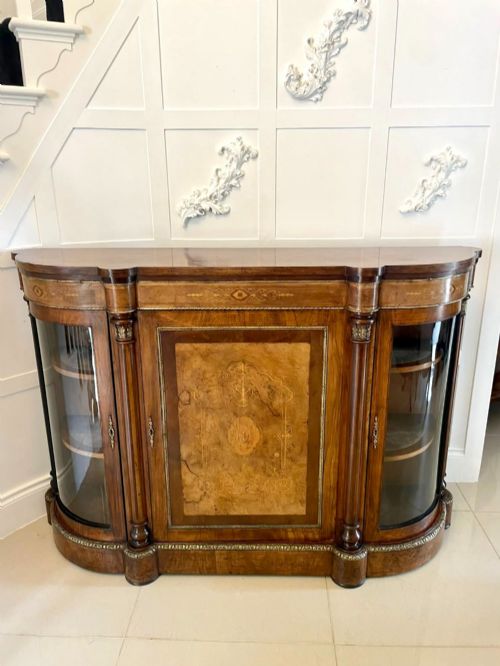
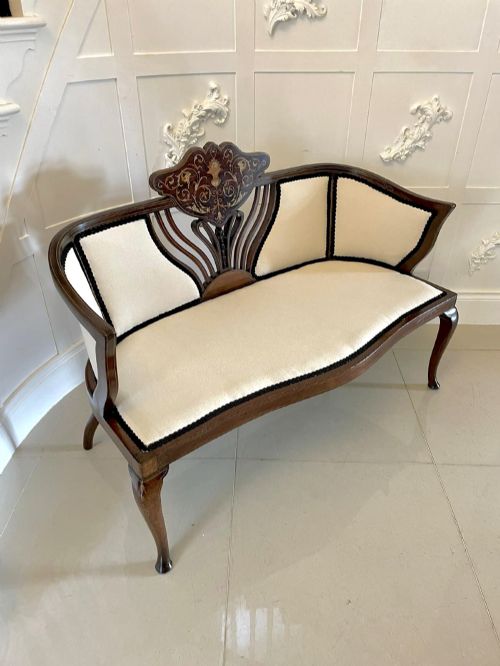
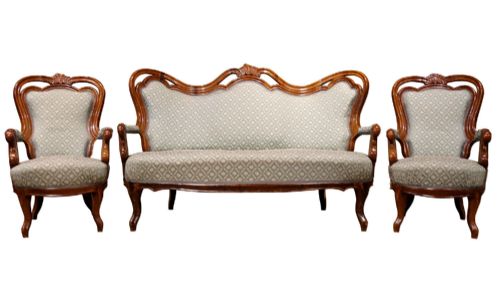
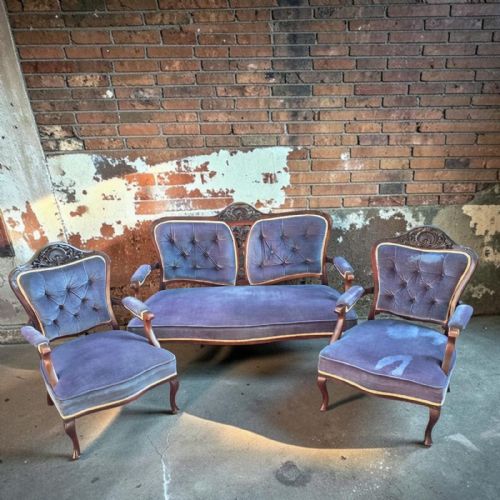
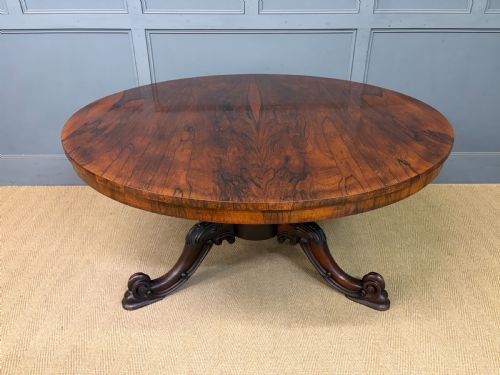
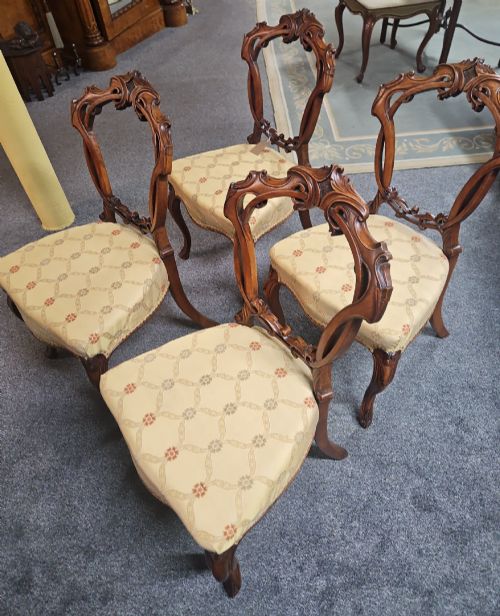
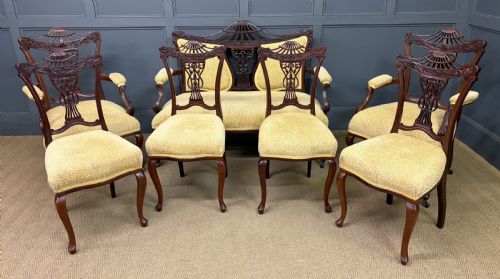
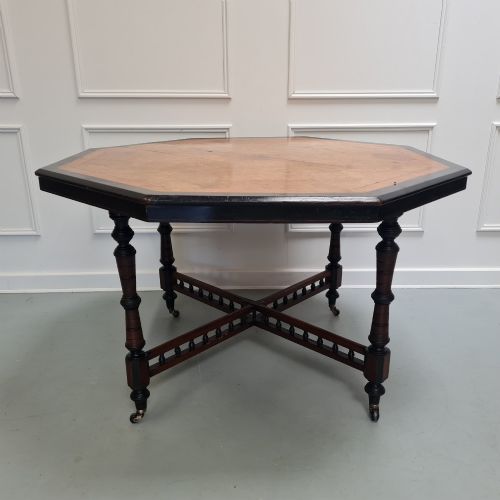
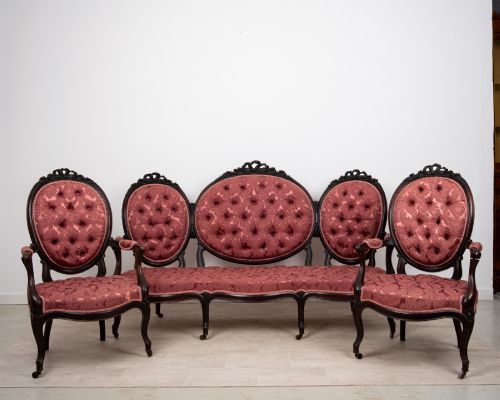
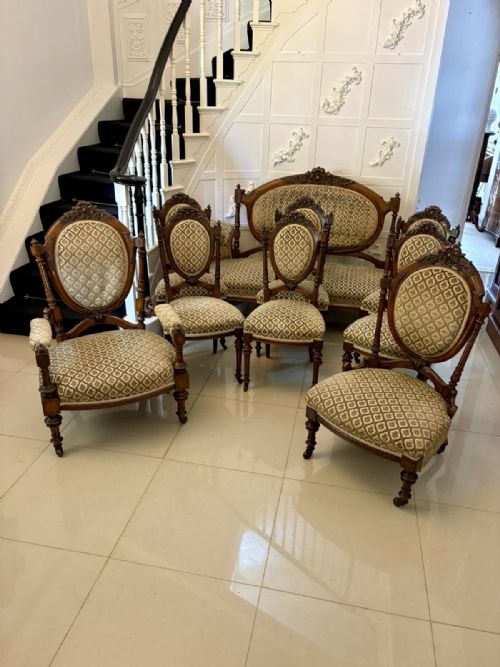
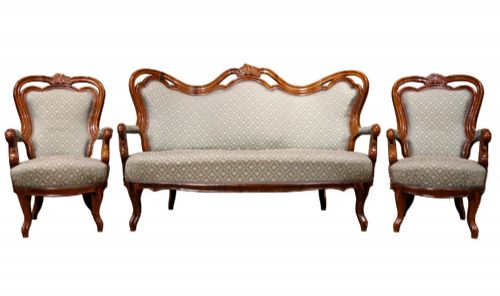
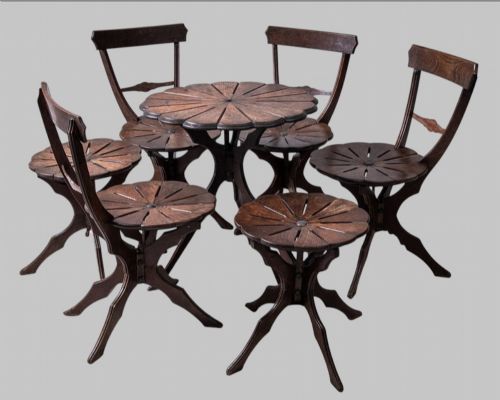
The pieces appearing on this page range from compact rosewood loo tables and inlaid side cabinets to large multi-piece salon suites featuring deep-buttoned upholstery and carved walnut frames. Makers and manufacturers produced these items in varied stylistic idioms, encompassing rococo revival curves, aesthetic movement linearity, and arts and crafts simplicity.
You are most likely to meet rosewood and walnut salon chairs, settees, and centre tables originating between eighteen fifty and eighteen ninety. These survival forms reflect the changing domestic habits of households seeking comfort alongside formal display.
Materials and construction methods
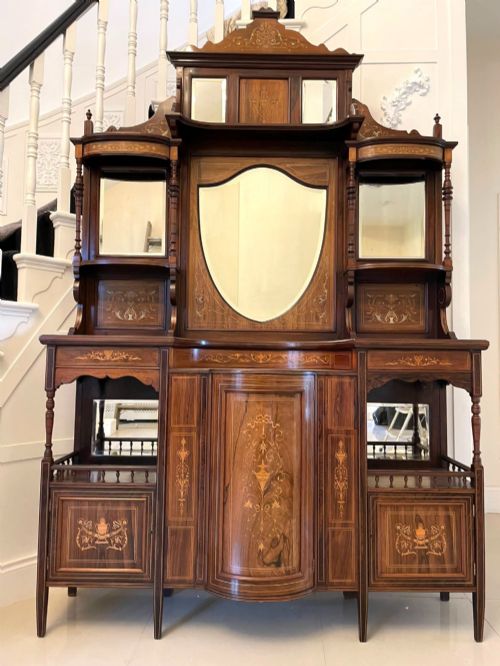
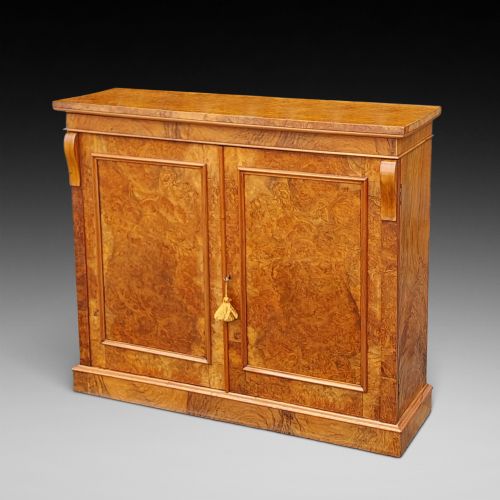
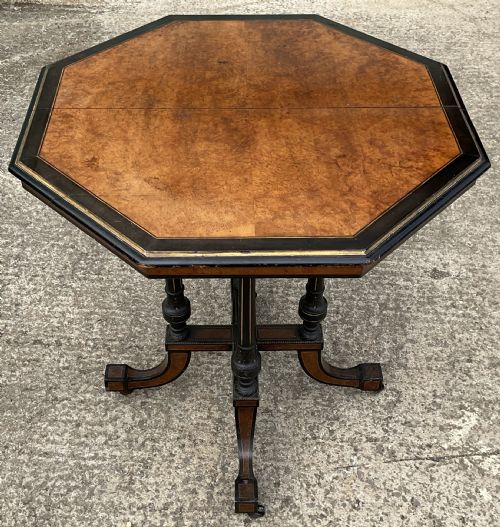
Cabinet makers utilised dense hardwoods such as rosewood, walnut, and mahogany, often applying burr walnut veneers or delicate marquetry inlay to enhance the primary surfaces. Brass hardware, glass panel doors, and ebonised finishes appear frequently across the cabinetry and table listings.
Upholstered seating relied upon robust internal framing covered in fabrics like velvet and contemporary textiles, finished with deep buttoning or intricate carved woodwork. Workshops combined traditional joinery with steam-bent elements and hand-carved ornamentation to achieve both structural integrity and decorative flair.
Listings feature rosewood, walnut, and mahogany timbers alongside cabinet forms spanning the Victorian, Aesthetic Movement, and Edwardian periods.
Distinctions in craftsmanship and design
The highest tier of Victorian parlour furniture demonstrates exceptional depth of carving, crisply executed marquetry inlay, and coherent stylistic design across multi-piece salon suites. Lesser examples rely on repetitive factory moulding or simpler timber selections with minimal decorative enrichment.
Scale and proportion separate standard output from exhibition pieces, where superior cabinet makers invested greater labour into secondary timbers, fine brass mounts, and integrated mirror backs. The integrity of the original structure and the harmony of matched sets determine the standing of each piece within its period.
C. Hindley & Sons·Garnett & Sons·Jas James Shoolbred
The Victorian Parlour Furniture Glossary
- Salon suite
- A matching group of seating furniture, typically comprising a settee and several armchairs or side chairs designed for a drawing room. These suites ensure a unified decorative scheme for formal entertaining.
- Credenza
- A low cabinet or sideboard used for display and storage, often featuring glass doors and decorative brass mounts. Originating in Italy, the form became central to Victorian formal rooms.
- Aesthetic movement
- A late nineteenth-century design style rejecting heavy Victorian ornamentation in favour of simplicity, ebonised finishes, and Japanese-inspired motifs. Pieces from this movement often incorporate geometric lines and subtle gilding.
- Balloon back
- A chair design featuring an oval or looped backrest resembling the shape of a balloon, popular throughout the mid-nineteenth century. This ergonomic form offers lumbar support whilst maintaining a graceful silhouette.
- Marquetry
- The art of applying decorative veneer pieces to a structure to form intricate pictorial or geometric patterns. Craftsmen select contrasting timbers to create tonal variation without the use of paint.
Victorian Parlour Furniture: Frequently Asked Questions
How do I arrange a salon suite?
Salon suites work best when grouped around a central focal point like a fireplace or a large centre table rather than pushed strictly against the walls. This conversational arrangement reflects the original nineteenth-century social function of the parlour.
Allow enough space between the settee and matching chairs to appreciate the carved woodwork and upholstery details from multiple angles within the room.
What is a loo table used for?
A loo table functioned as a versatile centre table for card games, tea service, and general evening socialisation in the Victorian parlour. Many feature tilt-top mechanisms allowing the table to rest flat against the wall when not in use.
These pieces typically anchor the centre of a room, showcasing figured rosewood or burr walnut veneers.
How do I distinguish revival styles?
Rococo revival pieces display exuberant C-scrolls, floral carving, and curved serpentine outlines dating from the mid-nineteenth century. Aesthetic movement examples transition towards ebonised finishes, geometric inlays, and restrained, linear forms.
Examining the structural motifs and secondary timbers helps separate earlier revival work from late-century artistic departures.
Are these pieces suitable for daily use?
Victorian parlour furniture handles normal domestic life well, provided the joints remain stable and the upholstery is sound. Lighter chairs and side tables function effectively as occasional seating and display surfaces.
Care should be taken to protect delicate wood finishes from direct sunlight and excessive temperature fluctuations.