




Victorian Papier Tray
When you search for a victorian papier tray, you encounter moulded paper pulp transformed by lacquer and hand painting into durable serving pieces and tables.
Victorian Papier Tray
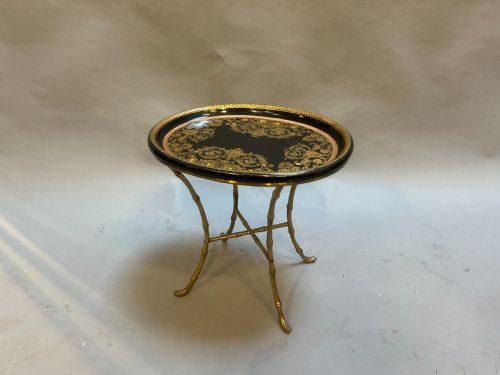
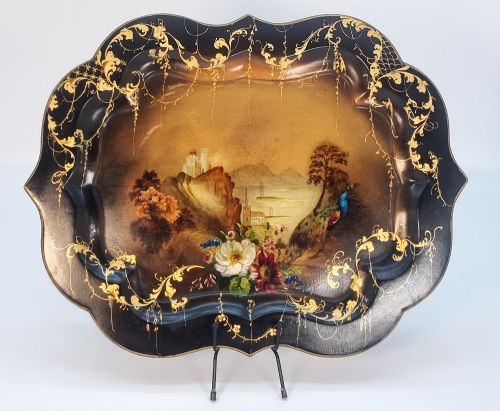
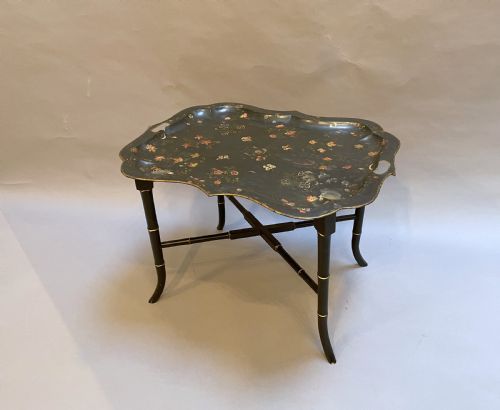
A victorian papier tray encompasses flat serving pieces, card baskets, and desk sets originating primarily from the nineteenth century. Many examples appear adapted onto later wooden or iron stands to function as occasional tables, coffee tables, or butlers serving trays.
The forms range from small rectangular or kidney-shaped dishes to large oval trays, often featuring raised rims or double rims. Alongside standard English production, items span Regency designs and Japanese export pieces.
Materials and construction
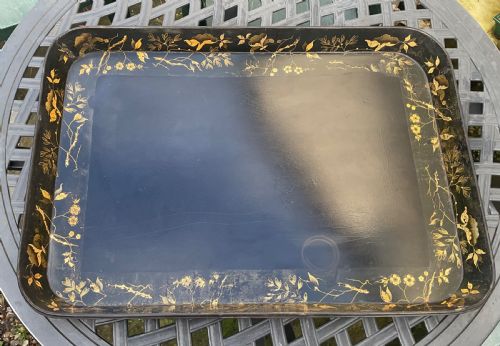
The foundation relies on paper-mâché or layered pulp compressed and baked into rigid forms. Artisans then applied dark lacquer surfaces, frequently ebonised, which served as a base for intricate hand painting.
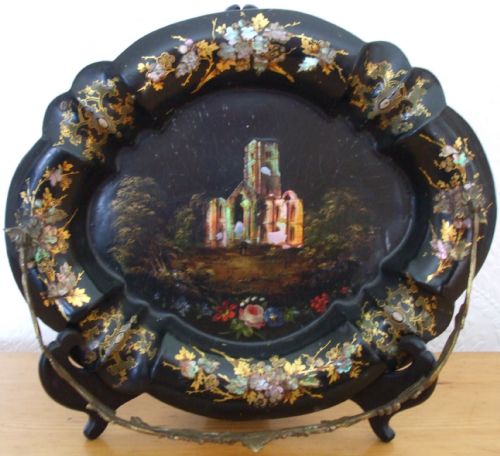
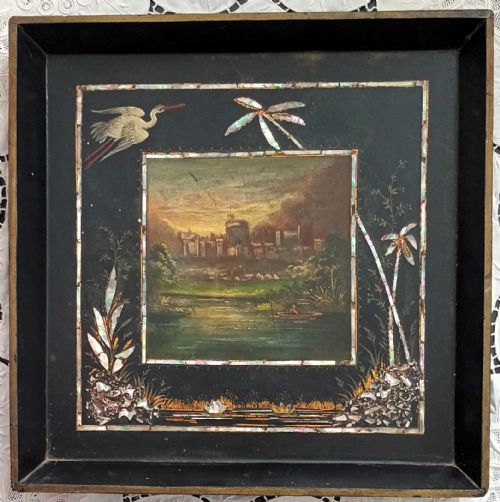
Decoration incorporates gold leaf gilding, polychrome paint, and inlaid mother-of-pearl details. Certain pieces utilise brass elements or incorporate wood and toleware components within set collections.
Listings feature items from the Regency, Victorian, and later periods, with many trays adapted onto custom stands.
Gradations in quality
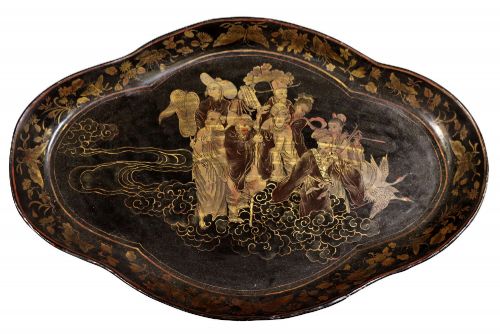
Quality rests upon the execution of the hand-painted or Chinoiserie decoration and the precision of inlaid mother-of-pearl. Superior specimens display refined artistic detail, such as carefully rendered landscapes or figures rather than repetitive patterns.
Maker attribution elevates standing, particularly items bearing signatures or marks from established manufacturers like Jennens and Bettridge. The integrity of the original lacquer surface and the presence of matching stands also differentiate examples.
Jennens & Bettridge
The Victorian Papier Tray Glossary
- Papier-mâché
- A composite material made from paper pulp or layers of paper mixed with glue and resin, then moulded and dried to form a hard surface.
- Chinoiserie
- A European artistic style reflecting Chinese aesthetic motifs, commonly seen in the painted landscapes and figures on these trays.
- Ebonised
- Wood or other materials treated to imitate ebony, creating a dark, glossy black finish typical of many nineteenth-century trays.
- Toleware
- Enamelled or lacquered metalware, occasionally grouped alongside papier-mâché items in period collections.
- Mother-of-pearl
- The iridescent inner layer of certain mollusc shells, utilised for inlay work to catch the light on dark tray surfaces.
Victorian Papier Tray: Frequently Asked Questions
How were these trays originally used?
These pieces served households for carrying drinks, tea services, and letters, or for holding cards and desk accessories.
Larger versions functioned as portable serving equipment before many were later mounted onto stands to serve as permanent side tables.
Can I use a tray table for daily serving?
Many examples are robust enough for gentle daily use, provided they avoid excessive moisture and direct heat.
Careful handling protects the delicate lacquer work and hand-painted surface details from scratching or wear.
How do I distinguish Regency from Victorian pieces?
Regency items generally date from the early nineteenth century and often feature distinct neoclassical or early gilt embellishments.
Victorian pieces frequently display heavier ebonising, elaborate mother-of-pearl inlay, and distinct Chinoiserie floral or landscape motifs.
What is a tray on stand?
A tray on stand combines an original antique papier-mâché tray with a matching or later wooden, bamboo, or iron base.
This conversion transforms flat serving ware into functional low tables suitable for living spaces.