
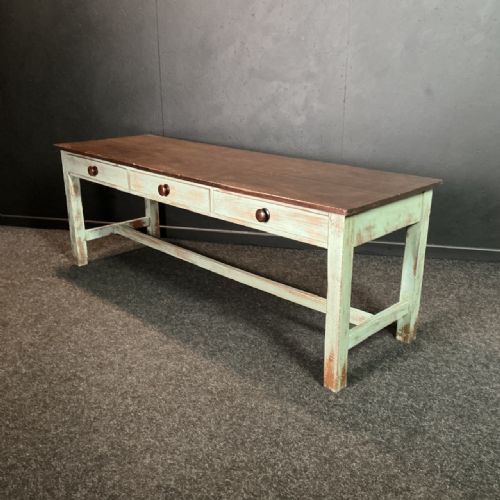
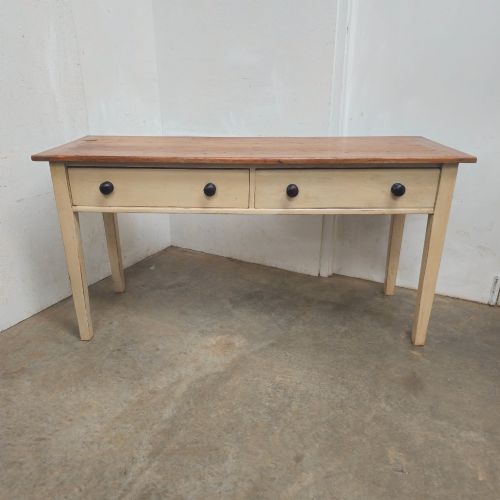
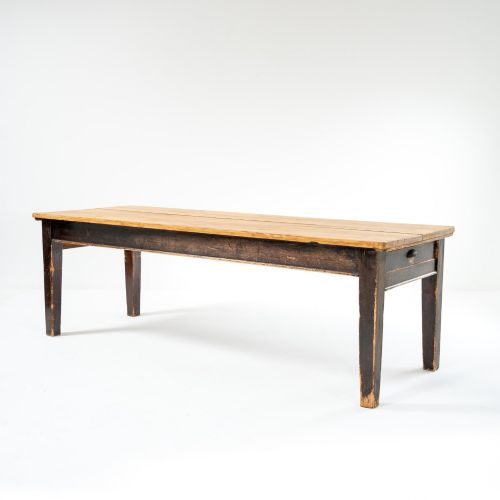
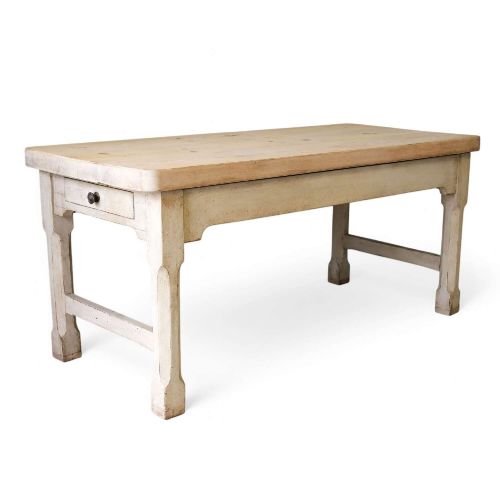
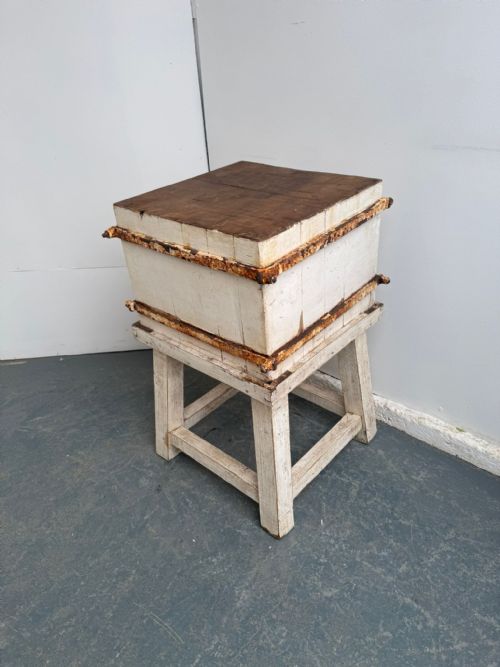
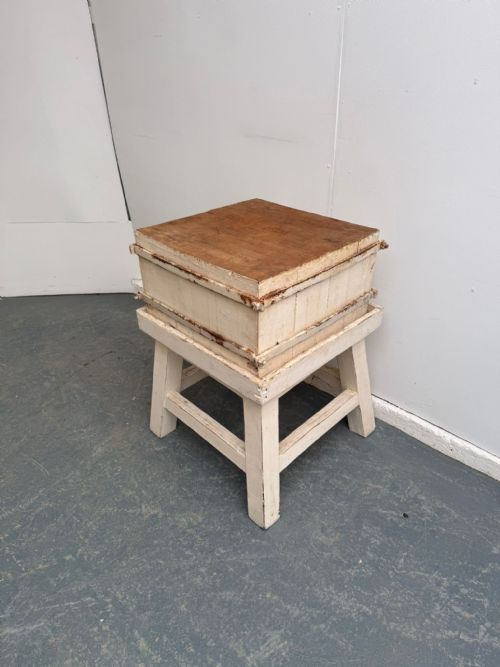
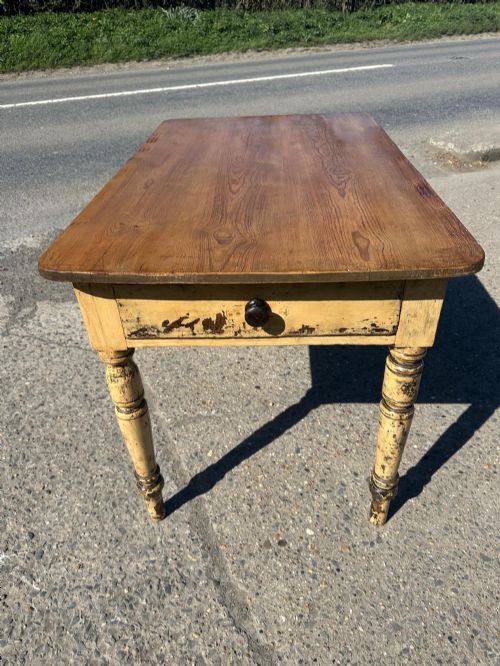


Victorian Painted Prep Table
These robust victorian painted prep table examples offer practical utility and honest charm for any working kitchen or dining space.
Victorian Painted Prep Table
A victorian painted prep table serves as a sturdy workspace, combining functional utilitarian design with the character of nineteenth century domestic life. Buyers seeking these items will find heavy work tables, dairy tables, and butchers blocks suited for daily use.
Most pieces on this page originate from the nineteenth century, including specific dates such as eighteen eighty, eighteen ninety, and nineteen hundred. Forms range from large harvest tables and pastry tables to side tables and server units.
Origins span English country houses and continental workshops, including Hungarian pieces. These tables frequently appear in rustic farmhouse and Victorian industrial styles, reflecting their original purpose in working kitchens and dairies.
Materials and construction
Construction relies heavily on solid pine and painted timber or wood, providing the substantial weight required for food preparation and daily labour. Iron and metal components appear occasionally in structural braces or hardware.
Surfaces feature scrubbed timber tops paired with painted wooden bases, often displaying layers of old paint or later painted finishes. Beech is also utilised for specific structural elements within these hardworking domestic pieces.
Some prep tables carry generations of old kitchen flour and pastry embedded deep within the grain of their scrubbed pine tops.
Assessing quality
Quality in a victorian painted prep table rests upon the integrity of the timber and the character of the surface finish. Pieces retaining original paint layers command attention for their visual depth and historical honesty.
Proportion and structural soundness distinguish finer examples, particularly where scrubbed tops meet well-preserved painted legs and aprons. The presence of drawers or original working hardware further elevates the desirability of these domestic tables.
The Victorian Painted Prep Table Glossary
- Scrubbed top
- A wooden tabletop cleaned repeatedly with water and a brush, leaving a pale, smooth finish. This technique was standard for maintaining hygiene in nineteenth century kitchens.
- Harvest table
- A long, narrow dining or work table designed to seat many farm workers. These pieces often feature sturdy pine construction and simple turned legs.
- Dairy table
- A specialised low-porosity wooden table used for cheese making and milk processing. They typically employ pine and feature unpainted scrubbed surfaces to resist moisture.
- Butchers block
- A thick, heavy wooden block or table used for jointing meat. Hungarian and English variants often incorporate painted timber frames beneath dense wooden working surfaces.
Victorian Painted Prep Table: Frequently Asked Questions
How do I clean a painted prep table?
Maintain painted surfaces by wiping gently with a slightly damp cloth without harsh chemical detergents. Protect scrubbed wooden tops by avoiding excessive moisture and treating periodically with food-safe oils.
Preserve original paint layers by keeping the furniture away from direct heat sources and strong sunlight. Gentle care ensures the historic finish remains stable for daily use.
Are these tables suitable for modern kitchens?
These tables integrate smoothly into contemporary spaces, offering durable workspace and generous proportions for cooking or dining. Their straightforward nineteenth century design complements both modern minimalist and rustic interiors.
Consider the height and leg clearance of each piece to ensure comfortable seating or standing work. Many buyers utilise them as central kitchen islands or serving counters.
What is a scrubbed top?
A scrubbed top refers to a wooden surface cleaned vigorously with water and an abrasive brush over decades of use. This process removes soft grain and leaves a pale, smooth texture.
Such tops were essential in nineteenth century country houses for maintaining cleanliness during food preparation. They provide a durable, water-resistant surface that develops a rich patina over time.
How can I tell original paint from later coats?
Examine the surface under natural light to observe layering, wear patterns, and craquelure within the paint film. Original or early paint often shows natural thinning around high-contact areas like table legs and drawer edges.
Multiple underlying coats visible through chips or wear indicate a history of redecoration. Listings often note whether the paint is original or applied at a later date.