
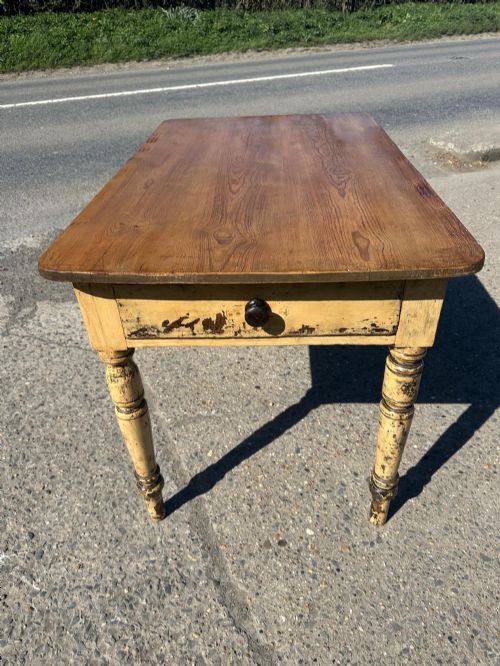


Pine Top Work Table
A pine top work table brings honest utility and warmth to a kitchen or dining space through sturdy construction and time-worn character.
Pine Top Work Table
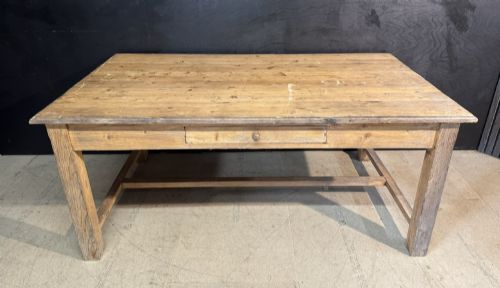
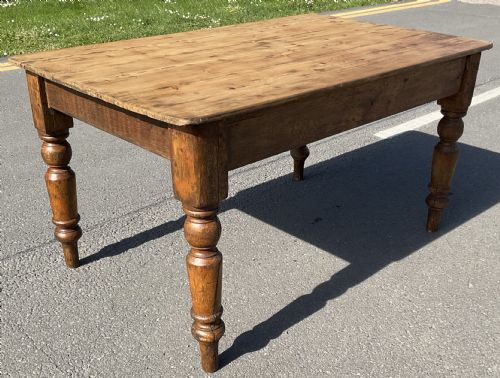
A pine top work table combines a robust wooden surface with functional framing, serving utility roles in kitchens, dairies, and country houses. Buyers searching for a pine top work table encounter sturdy dining tables, kitchen tables, prep tables, and side tables designed for heavy daily use.
The pieces listed span the nineteenth century through the early twentieth century, originating from English and Scandinavian country traditions. Examples range from rustic farmhouse forms and Victorian country styles to industrial trestle designs.
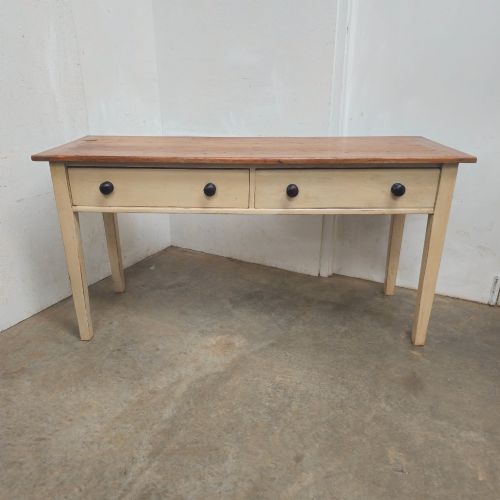
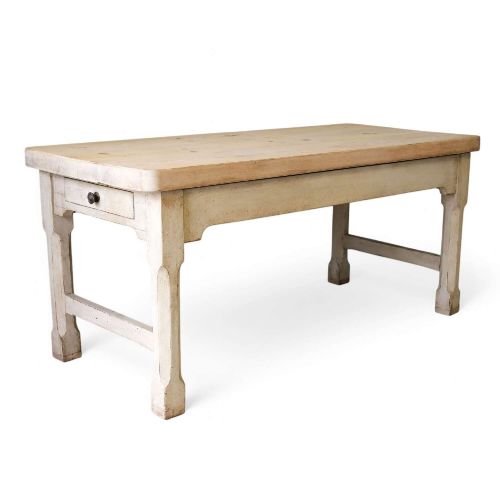
Most pieces feature solid timber construction, occasionally paired with drawers or painted legs. These tables suit modern interiors seeking practical historic surfaces with authentic patination.
How they were made
Makers utilised solid pine for the primary work surfaces, often selecting thick timber planks joined with cleated ends to prevent warping during heavy daily use. Iron and metal components appear in trestle or structural frames, adding industrial strength to later pieces.
Painted finishes frequently define the bases, ranging from original pigments on nineteenth-century examples to later applications on country house prep tables. Joinery techniques prioritize stability and utility, employing sturdy frames suited to demanding domestic or commercial tasks.
Many tables retain flour dust and butter stains from dairy tasks, serving as genuine culinary battle scars.
What varies in quality
Quality rests in the integrity of the timber and the preservation of original surfaces, such as untouched painted legs or untouched patinated tops. Tables exhibiting integrated drawers and thoughtful structural framing demonstrate superior craftsmanship within country traditions.
Proportion and timber selection also divide standard examples from finer pieces, particularly where multi-plank tops maintain tight joints and balanced dimensions. The distinction lies in how gracefully the piece reflects its original working life.
The Pine Top Work Table Glossary
- Cleated ends
- Wooden battens fixed across the ends of a tabletop to prevent the boards from warping and splitting over time.
- Dairy table
- A functional work surface traditionally used in food preparation and cheese making, characterised by sturdy timber construction.
- Prep table
- A utilitarian surface designed for culinary preparation in domestic kitchens or country houses.
- Trestle work table
- A table supported by structural uprights and crossbeams rather than four individual corner legs, often incorporating iron or metal framing.
Pine Top Work Table: Frequently Asked Questions
What is a pine top work table?
A pine top work table is a utilitarian surface constructed with a solid pine board top and a sturdy wooden or iron frame, historically used for kitchen preparation, dining, or dairy work.
These pieces reflect domestic and rural traditions from the nineteenth and early twentieth centuries, valued today for their robust construction and patinated surfaces.
How do I clean a pine work table?
Clean the surface gently using a damp cloth with mild soap, avoiding harsh chemical cleaners that strip historic patination or damage painted timber bases.
Periodic application of natural wax helps nourish the pine top while preserving the dry, historic finish developed over generations of use.
Where were these tables made?
These tables originate primarily from English and Scandinavian country houses, farms, and dairies, reflecting regional vernacular styles and local material availability.
English country designs often feature painted pine bases and drawer fittings, while Scandinavian examples display distinct painted treatments and minimalist framing.
How do I date a pine table?
Dating relies on observing construction methods, tool marks, timber shrinkage, and the presence of original painted finishes or iron hardware.
Nineteenth-century examples typically display hand-planed boards and pegged joinery, whereas early twentieth-century pieces incorporate industrial iron or machine-sawn elements.