
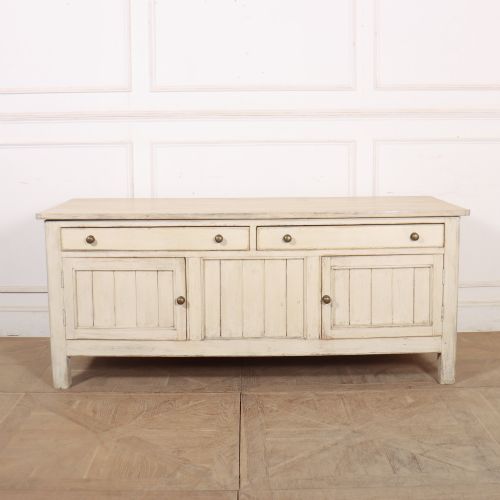


Victorian Painted Kitchen Dresser
A victorian painted kitchen dresser brings practical storage and utilitarian charm to a room, combining open display shelves or cupboards with sturdy pine construction.
Victorian Painted Kitchen Dresser
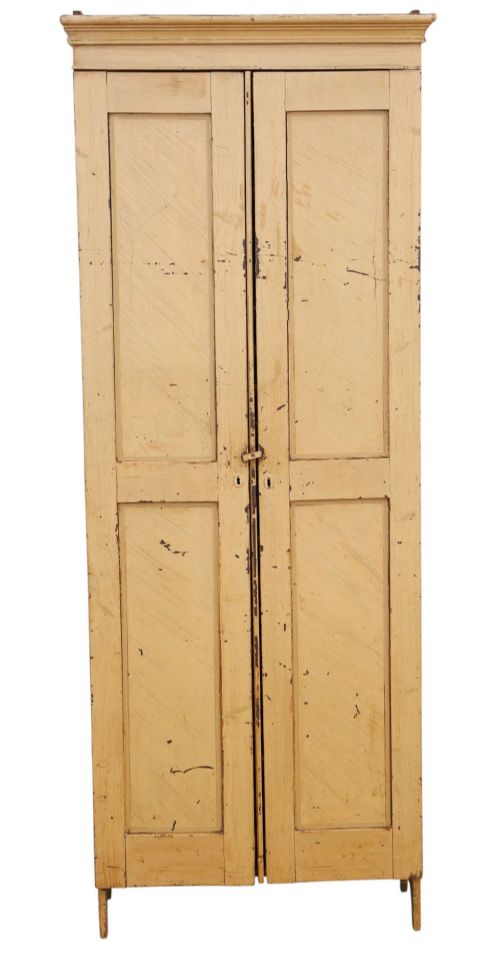
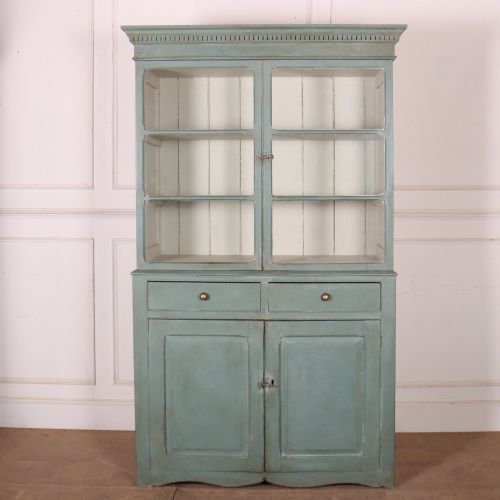
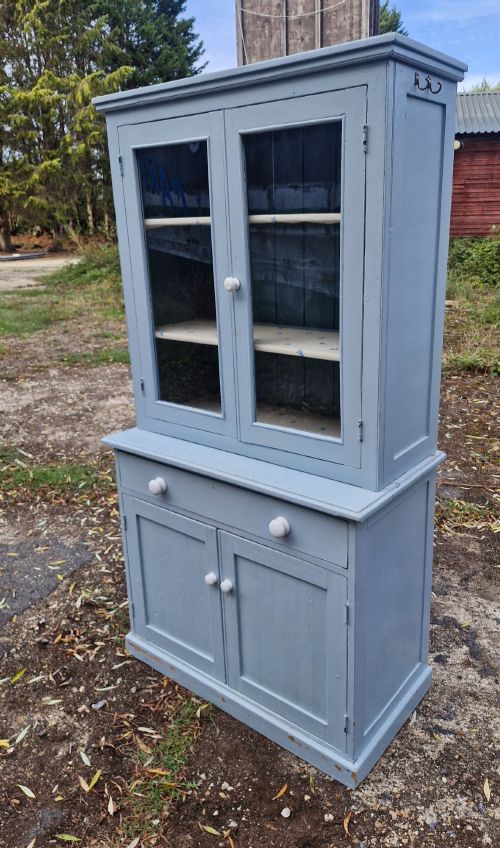
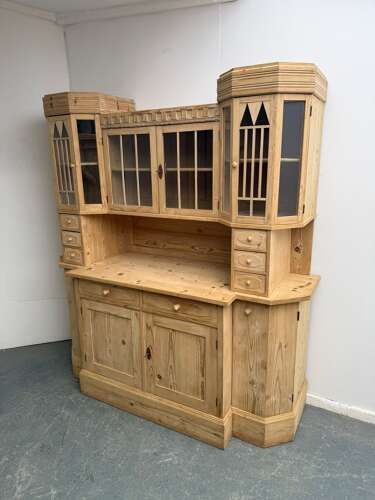
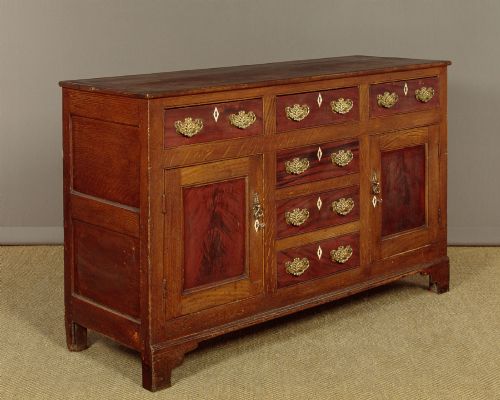
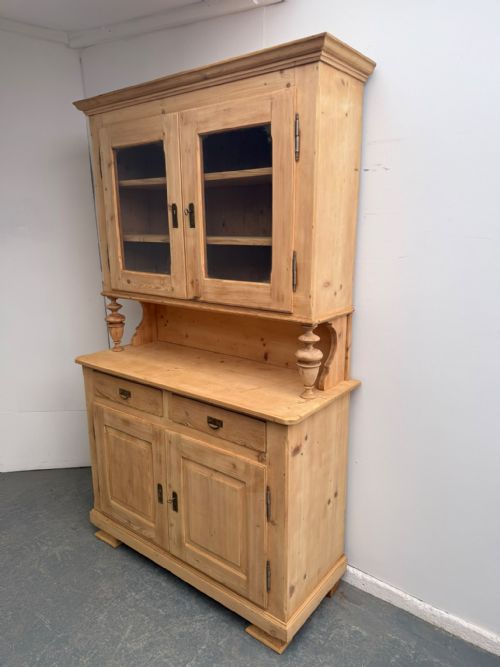
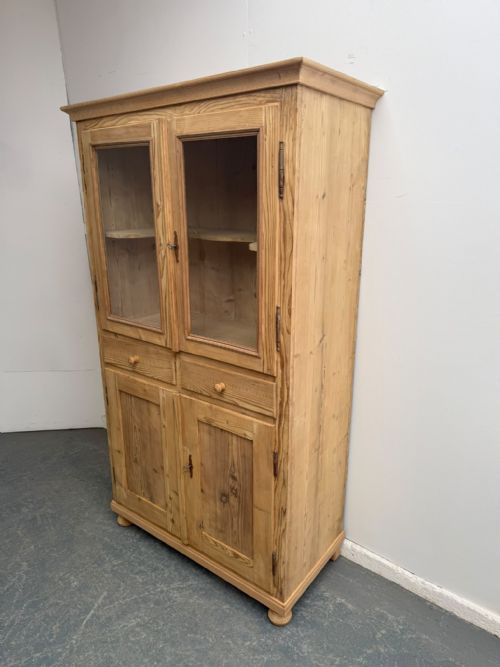
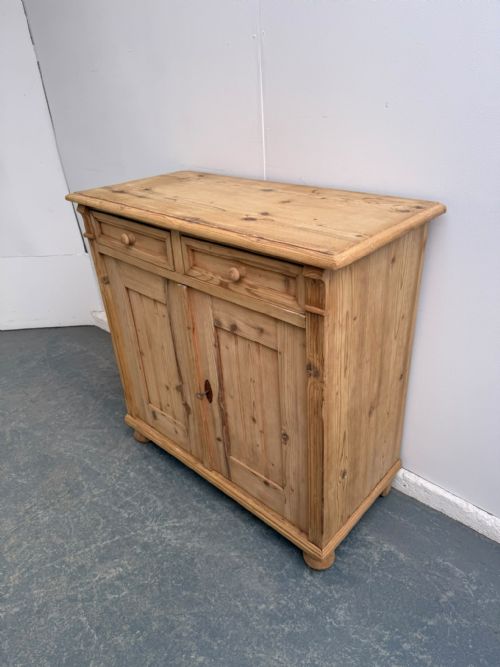
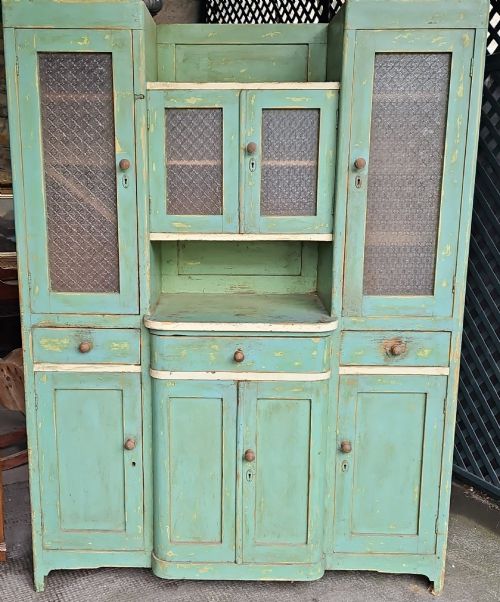
When searching for a victorian painted kitchen dresser, buyers encounter large two-piece combinations, lower dresser bases, and tall housekeeper cupboards. These pieces originate primarily from English, Scottish, and West Country traditions, often designed for domestic food storage and daily utility.
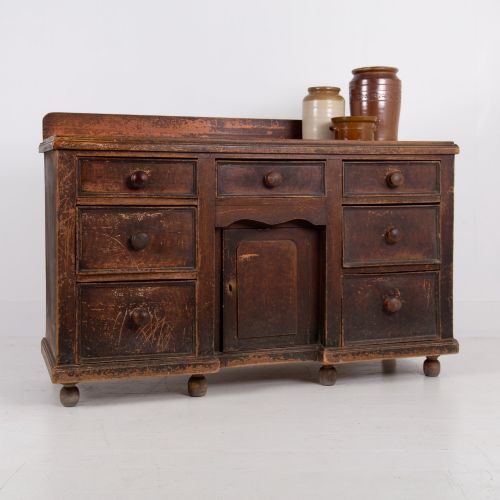
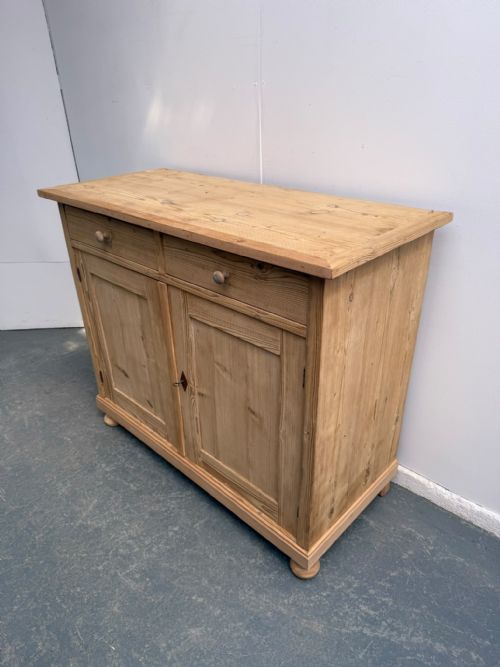
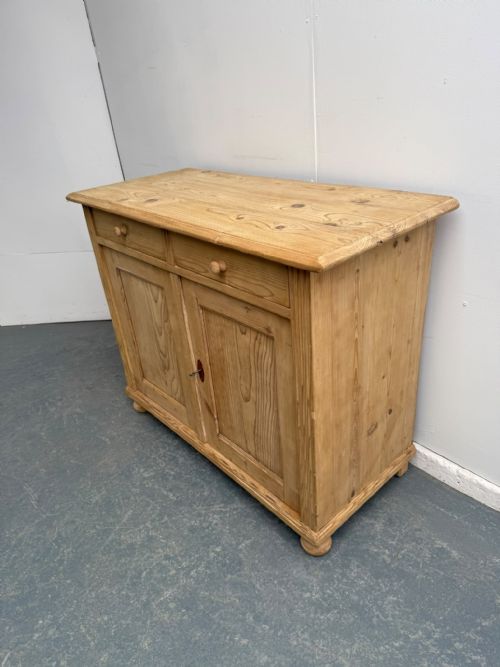
The selections span from the mid-nineteenth century into the early twentieth century, taking forms such as glazed display cabinets, dog kennel dressers, and simple scrubbed or painted pine bases. Most examples demonstrate the utilitarian robustness typical of country house and farmhouse environments.
How They Were Made
Construction relies heavily on solid pine, built with traditional joinery to withstand heavy domestic use in working kitchens and larders. Iron and brass hardware such as drawer pulls and hinges secure doors and drawers.
Surfaces receive layers of paint, often found in original or early finishes including cream, teal, or darker tones, alongside scrumbled effects and wax treatments.
Listings feature eighteenth-century pieces alongside nineteenth-century examples and early twentieth-century variations up to nineteen-ten.
What Varies In Quality
The distinction between standard examples and superior items rests in the survival of original surface finishes, such as untouched historic paint or scrubbed patinas. Proportion and scale also dictate quality, with taller, narrower cupboards or monumental country house bases showing finer architectural balance.
The Victorian Painted Kitchen Dresser Glossary
- Dresser base
- The lower section of a kitchen dresser, usually comprising a bank of drawers above cupboards, functioning independently as a sideboard.
- Dog kennel dresser
- A specific regional form featuring a central open recess positioned between lower cupboards beneath the main drawers.
- Housekeeper's cupboard
- A large tall storage cabinet traditionally used in country houses for linens, provisions, and tableware.
- Scrumbled painted
- A decorative paint technique involving translucent glazes dragged or stippled over a lighter base coat to imitate finer grained woods.
Victorian Painted Kitchen Dresser: Frequently Asked Questions
How do I care for original painted pine?
Original painted surfaces require minimal intervention, avoiding harsh modern chemical cleaners or abrasive scouring pads that lift historic pigment. Dust gently with a dry microfiber cloth to protect the fragile layers beneath. Nourish unpainted pine sections or waxed elements sparingly using traditional beeswax applied with a soft brush.
What is the difference between a base and a two-piece?
A dresser base consists only of the lower cabinet section, featuring working drawers and lower doors topped by a sturdy wooden surface. These stand lower and offer a surface for preparation or display.
Two-piece versions include an upper glazed cabinet or open plate rack securely mounted to the base, creating a taller, unified storage unit.
Where were these dressers originally used?
These pieces served as the central storage and working hubs in nineteenth-century country kitchens, farmhouses, and estate larders. Domestic staff stored dry goods, everyday ceramics, and baking utensils within easy reach.
Their robust construction and practical shelving made them indispensable for daily food preparation before fitted kitchens existed.