




Victorian Painted Blanket Box
A victorian painted blanket box brings robust utility and rich surface pattern into a room, offering generous storage disguised in folk art or scumble decoration.
Victorian Painted Blanket Box
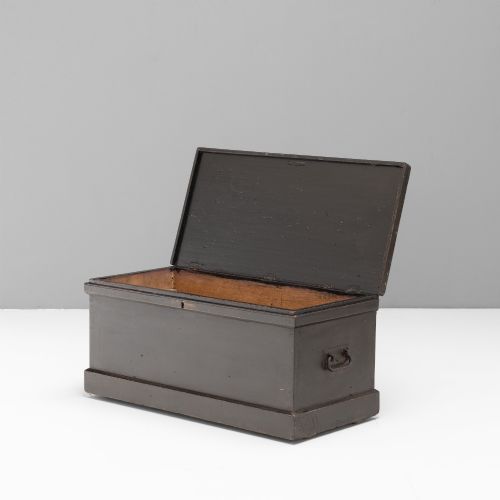
A victorian painted blanket box is a sturdy storage chest typically constructed from solid timber and finished with decorative surface treatments. When you search for this phrase, you encounter heavy pine trunks, mule chests with lower drawers, and functional travel containers.
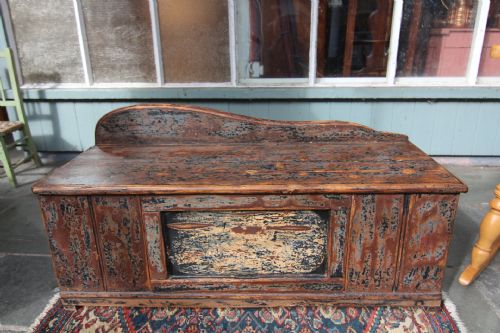
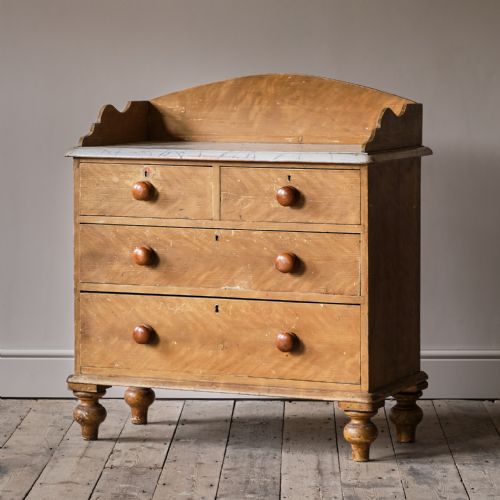
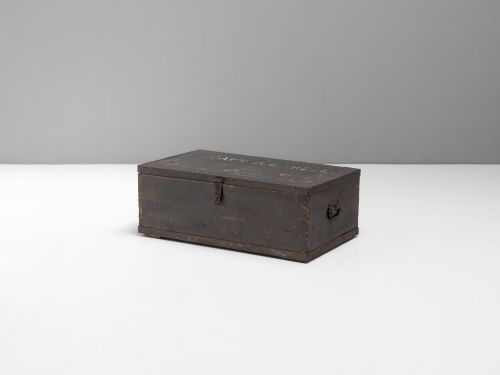
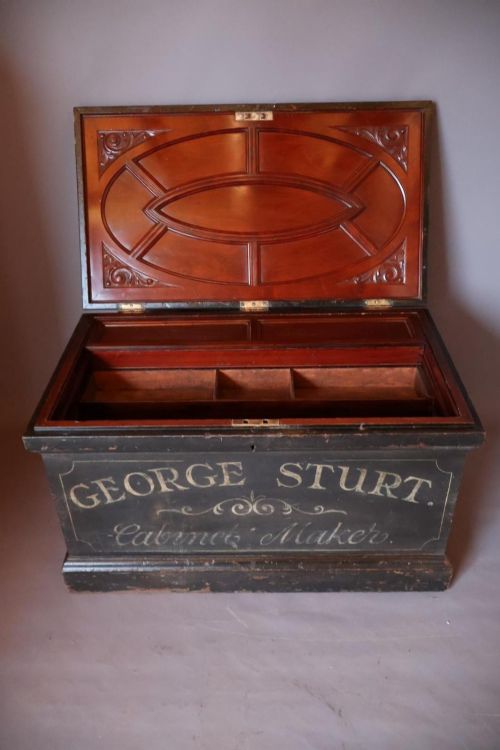
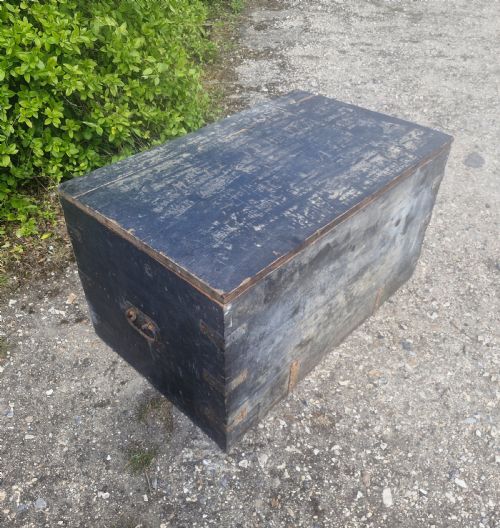
The versions most frequently met on this page are nineteenth-century pine boxes finished in scumbled, grained, or polychrome paint schemes. These range from simple domestic storage in original paint to military campaign trunks and maritime pieces.
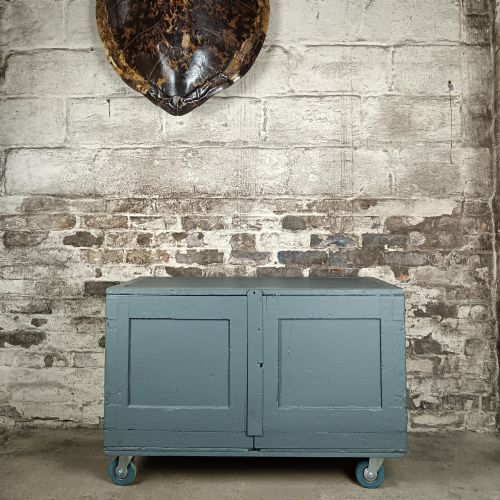
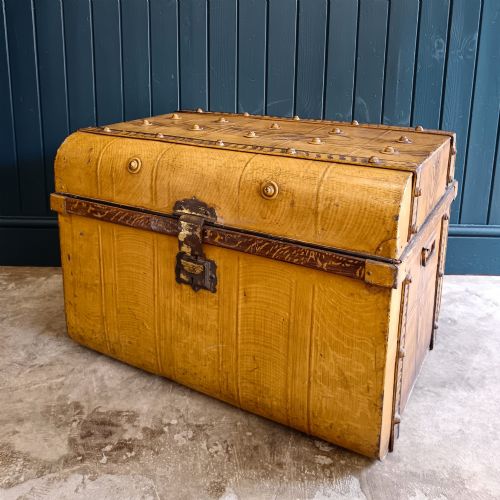
Many examples display regional folk art qualities, whilst others imitate finer hardwoods through decorative painting techniques. They serve equally as coffee tables at the foot of a bed or as substantial storage furniture in a hallway.
Materials and construction
Makers relied principally on solid pine for the carcase construction, often joining the corners with dovetails or sturdy iron corner brackets. Iron and brass hardware, including carrying handles and strap hinges, provided durability for travel.
Surfaces were prepared and finished with oil-based paints, frequently employing graining combs or scumbling brushes to create simulated wood effects or rich tortoiseshell patterns. Some pieces retain their original paper linings or contrasting interior paint colours.
Recorded periods stretch from eighteen hundred through the nineteenth century and Victorian era into the early twentieth century.
Judging quality
Quality rests heavily on the preservation and authenticity of the surface paint rather than smooth factory finishes. Retaining original scumble, graining, or polychrome decoration without excessive overpainting elevates a piece considerably.
The Victorian Painted Blanket Box Glossary
- Scumble
- A decorative painting technique involving a translucent top layer dragged or dabbed over a lighter base colour to simulate wood grain or texture. It creates rich, mottled patterns characteristic of nineteenth-century country furniture.
- Mule chest
- A storage chest featuring one or more drawers built into the base beneath the main compartment. This form bridges the traditional blanket chest and the chest of drawers.
- Campaign chest
- A portable trunk or chest made in sections with recessed brass fittings, designed for easy transport by military officers. They often feature robust iron or brass bound corners.
- Polychrome
- Decorated in multiple colours. In these pieces, it refers to hand-painted surface designs ranging from simple folk art motifs to elaborate faux finishes.
Victorian Painted Blanket Box: Frequently Asked Questions
Where should I place a painted box at home?
These chests suit placement at the foot of a bed, in a hallway for heavy boots, or utilised as a low coffee table in a living room.
Their substantial timber construction and flat lids allow them to double as functional surface furniture while keeping household clutter hidden away.
How do I care for original painted surfaces?
Maintain the finish by dusting with a dry microfibre cloth and avoiding harsh modern chemical cleaners that might strip the historic paint layers.
Keep the timber away from direct heat sources and excessive moisture to prevent the nineteenth-century pine from warping or the paint from flaking.
What is the difference between a scumbled box and a grained box?
Scumbling involves manipulating a translucent glaze over a pale ground to produce a mottled, textured effect that hints at age and depth.
Graining uses specialised combs and brushes to mimic the distinct linear growth rings of expensive timbers like oak or mahogany upon cheaper pine.
Were these boxes used for travel?
Many examples on this page served as travelling trunks, military campaign cases, or maritime chests rather than static bedroom storage.
Their iron corner brackets, stout rope or metal handles, and secure locks were built to withstand the rigours of nineteenth-century transit by rail or ship.