
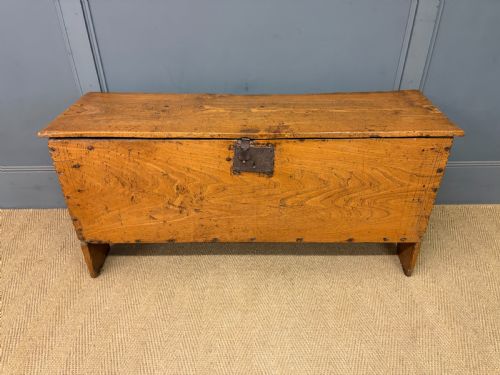


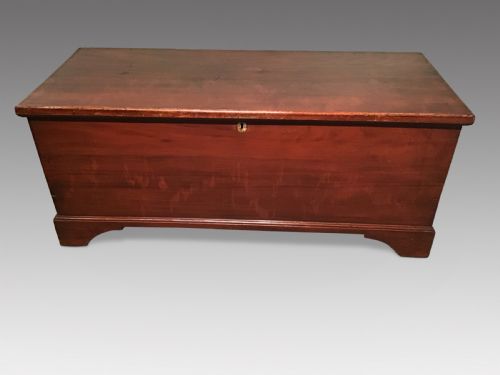

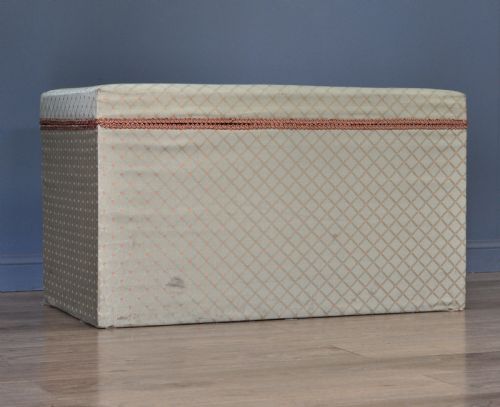
Country House Blanket Chest
These country house blanket chests are practical storage trunks built from solid timber to hold linens, blankets, and household goods.
Country House Blanket Chest
A country house blanket chest provides sturdy domestic storage in robust woods like oak, pine, and elm. These pieces frequently appear in Georgian and Victorian styles, reflecting utilitarian origins in large country properties.
The selection ranges from simple planked boxes and kists to more complex mule chests featuring lower drawers. Many examples show the marks of heavy domestic use through centuries of service.
Mule chests and coffers dominate the forms on offer, combining upper lidded storage with lower drawer space. These pieces served generations of households before finding their way into the antique market.
How They Were Made
Joiners built these chests using local timbers such as oak, elm, and pine, joined with traditional framing techniques. Iron hinges, brackets, and brass fittings reinforced the corners and lids for heavy daily use.
Many surfaces received layers of paint or retained their natural wood grain beneath old wax finishes. Estate workshops often fabricated these trunks on-site using available materials and simple hand tools.
Listings feature woods like pine, oak, elm, and painted surfaces across Georgian and Victorian periods.
What Varies in Quality
Construction methods distinguish everyday utility boxes from finer pieces produced by skilled cabinetmakers. The choice of timber plays a major part, with dense figured oak or seasoned elm commanding more attention than basic deal.
Original ironwork, well-fitted internal till boxes, and untouched painted surfaces elevate the character of a chest. Alterations, replaced hinges, and stripped timbers alter the historical integrity of the piece.
Hallett & Sons
The Country House Blanket Chest Glossary
- Mule chest
- A traditional storage chest featuring one or more drawers beneath the main lidded compartment. This form developed during the eighteenth century to provide easier access to stored clothing.
- Coffer
- A heavy wooden box traditionally used for storing valuables, documents, or textiles. These pieces often feature sturdy panelled construction and iron carrying handles.
- Kist
- A regional term for a traditional wooden chest or box used in domestic storage. These utilitarian trunks were common in rural households across Britain.
- Log bin
- A heavy storage container reinforced with iron bands, designed to hold firewood near a hearth. These robust items often utilise pine or oak construction.
- Till
- A small internal compartment built into the upper corner of a chest for holding smaller valuables. This lidded shelf kept coins, keys, or papers separate from the main storage area.
Country House Blanket Chest: Frequently Asked Questions
What is a country house blanket chest?
A country house blanket chest is a sturdy wooden storage box used historically for linens, blankets, and household gear. These pieces range from simple pine boxes to elaborate panelled oak coffers.
Built for utility in large estates, they combine heavy timber construction with practical storage capacity.
How do I tell an 18th century chest from a Victorian one?
Eighteenth century chests often feature pegged oak or elm joinery with hand-planed panels and simple mouldings. Victorian examples frequently utilise pine, machine-sawn boards, and applied decorative elements.
Examining the underside, hinges, and tool marks helps reveal the period of manufacture.
Where should I place a blanket chest at home?
These chests suit bedrooms as linen storage at the foot of a bed or serve as coffee tables in living rooms. Their flat tops provide useful surface space while concealing clutter inside.
Keep wooden chests away from direct heat sources to prevent the timber from splitting.
What is the difference between a coffer and a mule chest?
A coffer is a simple lidded box built entirely for top-loading storage without additional drawers. A mule chest incorporates one or more drawers beneath the main compartment for easier access.
Both forms served similar storage functions in traditional country houses.