


Victorian Ornate Fire Guard
These Victorian ornate fire guard pieces bring period metalwork to the hearth, offering decorative protection and classic style for the fireplace.
Victorian Ornate Fire Guard
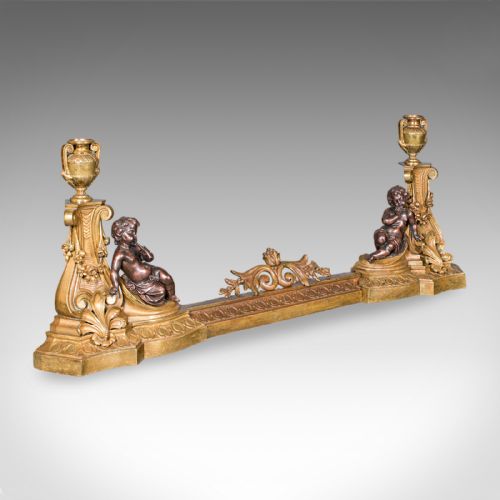
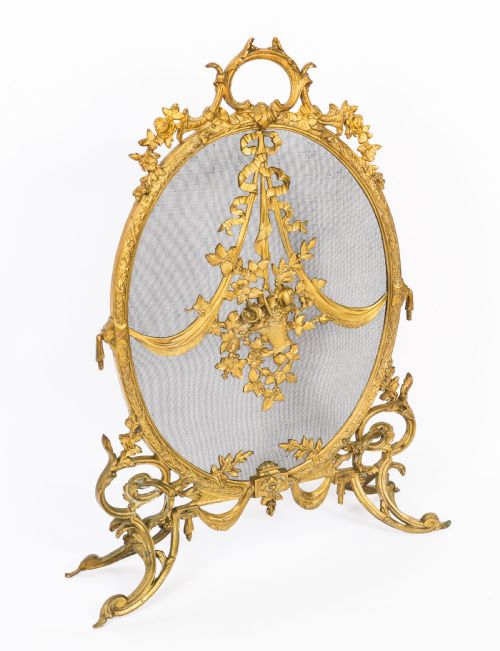
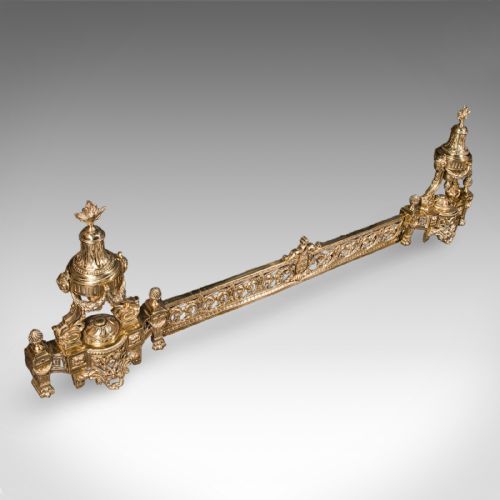
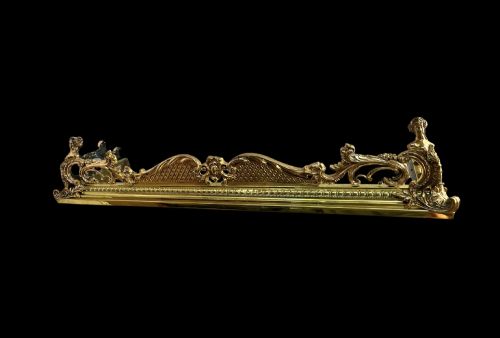
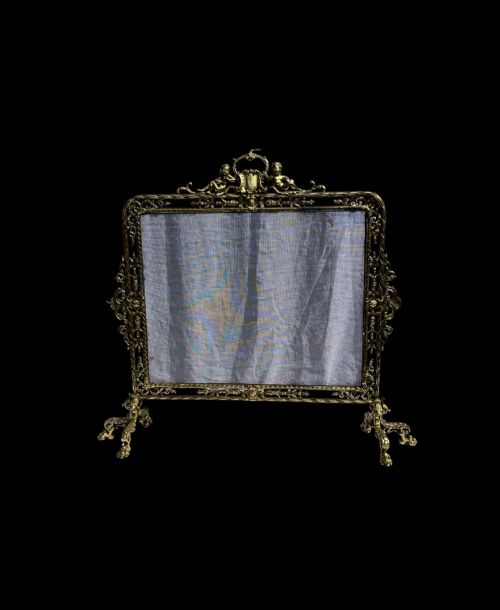
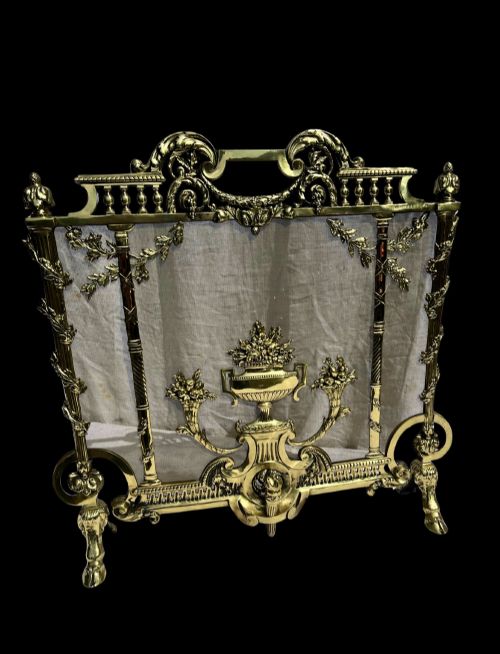
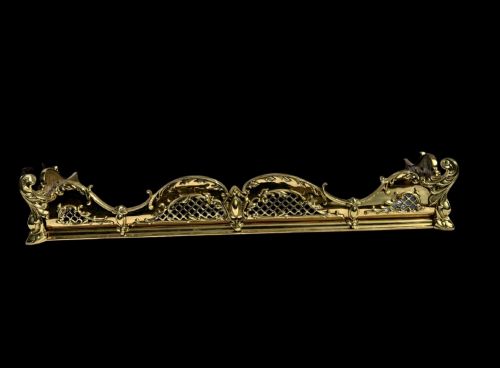
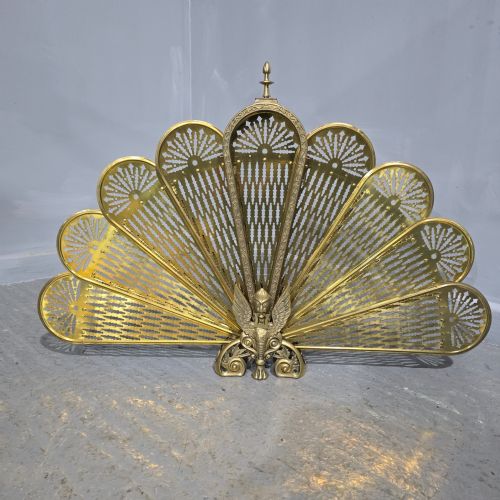
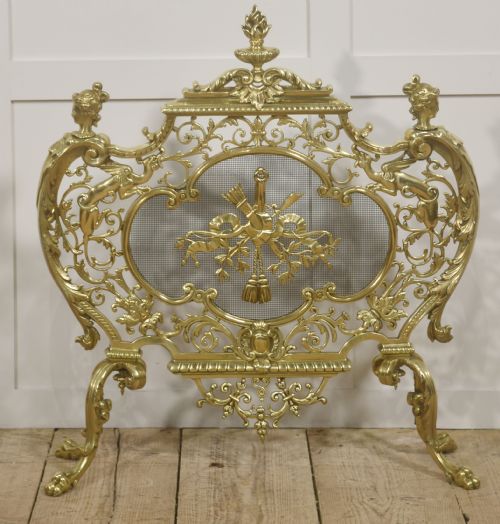
A Victorian ornate fire guard primarily takes the form of adjustable hearth fenders and folding or rigid fire screens designed to shield the room from stray embers. You will frequently encounter brass and gilt-brass fire screens alongside extendable iron and bronze fenders originating from the nineteenth century.
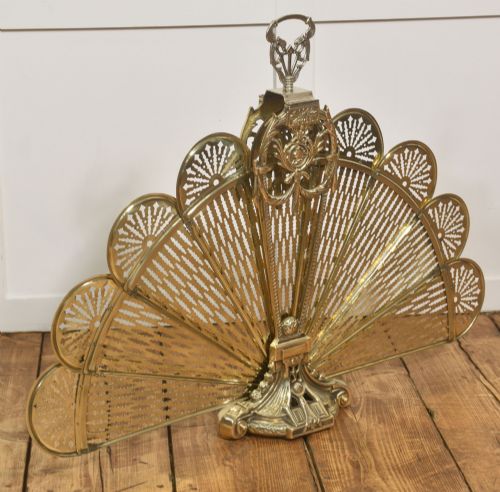
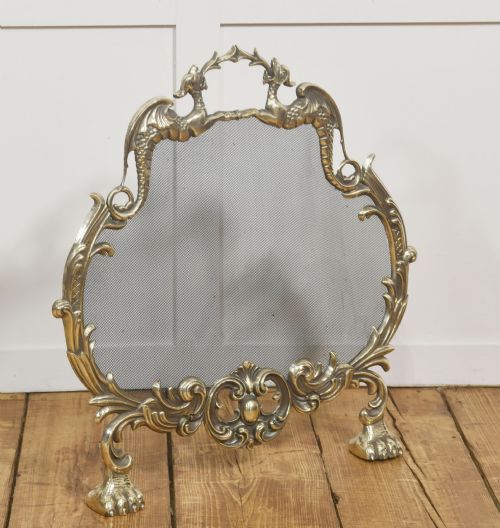
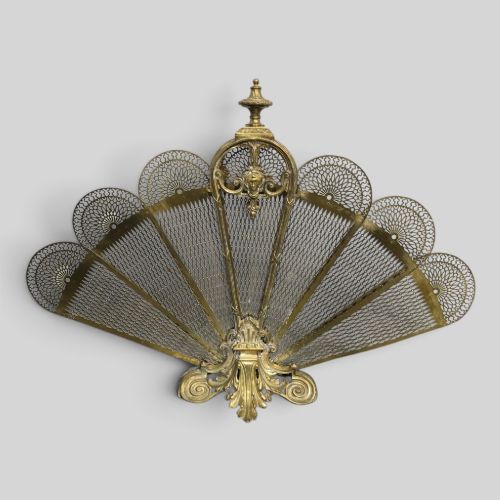
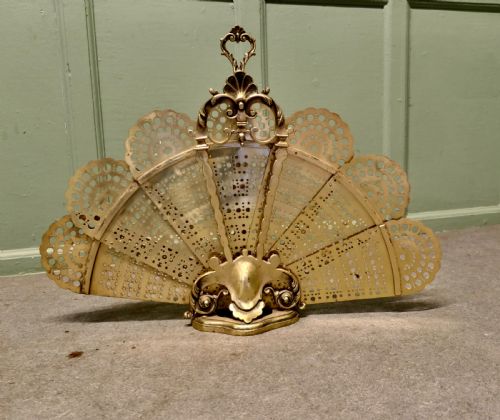
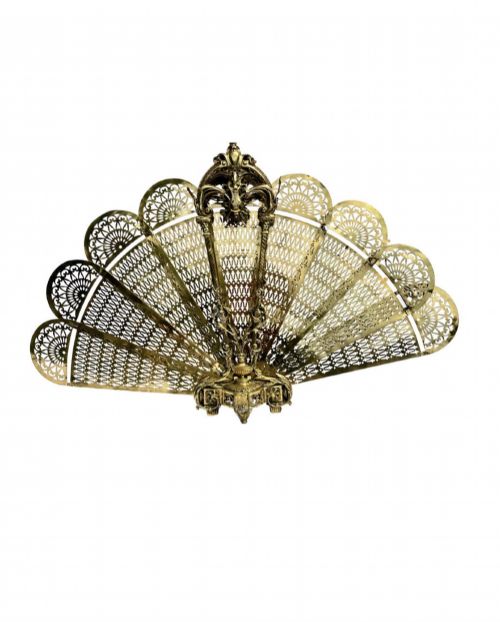
The selection ranges from simple folding peacock tail designs to heavily pierced brass screens and elaborate cast iron kerbs styled in the Rococo and Gothic revivals. These fireplace accessories served both a practical safety function and a decorative purpose in period interiors.
Materials and construction
Workshops utilised brass, cast iron, bronze, and steel, often combining wire mesh with heavy cast or pierced frames. Gilding, ormolu, and applied bronze garlands provided decorative surface finishes on the more elaborate nineteenth-century examples.
Makers employed casting, hand-piercing, and wrought iron techniques to shape the metal components, fitting them with adjustable mechanisms on fenders and folding pivots on screens like the peacock fan formations.
Current listings feature nineteenth-century brass, cast iron, and bronze fire guards alongside wire mesh screens, French Rococo revival frames, and adjustable hearth fenders.
Assessing quality
Substantial weight and gauge of the metal separate heavier, higher-quality castings from lighter production pieces. Finer examples display crisp detail in pierced brass work, ornate cast garlands, and smooth operation in adjustable fender mechanisms.
The depth of enrichment, such as the quality of the ormolu or gilt bronze and the complexity of Rococo or Gothic revival ornamentation, dictates the distinction between standard utilitarian hearth guards and finer decorative furnishings.
The Victorian Ornate Fire Guard Glossary
- Fender
- A low metal guard placed around the hearth to contain coal and sparks from an open fire. Many nineteenth-century examples feature adjustable lengths to fit various fireplace openings.
- Fire screen
- A movable panel placed in front of a fireplace when the fire is unlit, often designed with folding brass blades resembling a peacock's tail.
- Ormolu
- Finely ground high-carat gold applied in a mercury amalgam to a bronze object. This technique produces a rich golden finish seen on French-influenced nineteenth-century pieces.
- Rococo revival
- A design style popular in the nineteenth century characterised by asymmetrical scrolls, C-scrolls, and naturalistic plant motifs. It heavily influenced the ornamentation of brass fire screens and fenders.
Victorian Ornate Fire Guard: Frequently Asked Questions
What is a fire guard fender?
A fire guard fender is a low metal barrier placed on the hearth around the base of an open fire. It prevents hot coals and embers from rolling onto the carpet while framing the fireplace.
Many period examples include extendable sides to accommodate different hearth dimensions. They were produced in brass, iron, and bronze to match other fireplace accessories.
How do I use a folding fire screen?
Folding fire screens, particularly the peacock fan designs, are positioned in front of the fireplace opening when the fire is not burning. They provide a decorative focal point during warmer months while concealing the empty grate.
The hinged brass blades open out into a wide semi-circle and fold flat when you need to store them. You should handle the folding mechanism gently to preserve the original pins and joints.
How do I date a Victorian brass fender?
Dating a nineteenth-century brass fender involves examining the weight, construction methods, and stylistic revival influences. Heavy cast brass components and intricate hand-piercing generally point towards the mid-to-late Victorian era.
Makers often incorporated French Rococo or Gothic revival motifs during the middle decades of the century. Adjustable mechanisms also became more sophisticated as industrial manufacturing advanced.
What is the difference between ormolu and brass?
Brass is an alloy of copper and zinc, widely used for its durability and bright golden appearance in everyday hearth furniture. Ormolu refers specifically to gilded bronze where a layer of gold is bonded to a bronze base.
Ormolu exhibits a deeper, more refined golden lustre and was typically reserved for high-status French style pieces. You will find it applied to decorative mounts and chenets on grander nineteenth-century surrounds.