







Victorian Oriental Furniture
Victorian oriental furniture brings together British design taste and Eastern craftsmanship, offering striking tables, cabinets, and stands made from exotic woods and bamboo.
Victorian Oriental Furniture
Victorian oriental furniture encompasses a range of decorative items produced during the nineteenth century, reflecting European fascination with Eastern aesthetics. Buyers encounter diverse forms such as occasional tables, plant stands, nests of tables, and display cabinets.
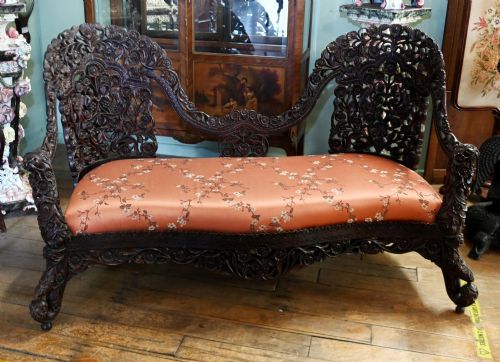
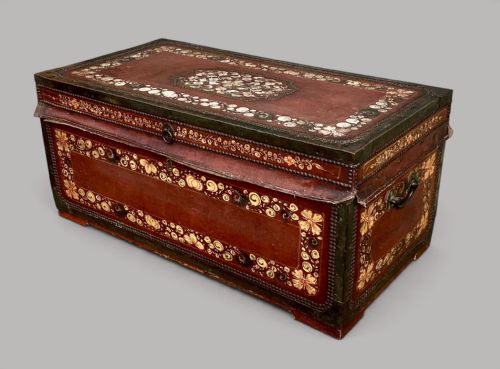
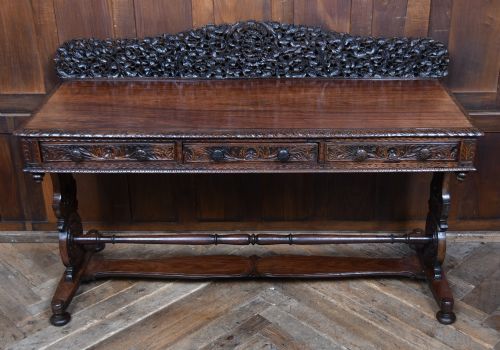
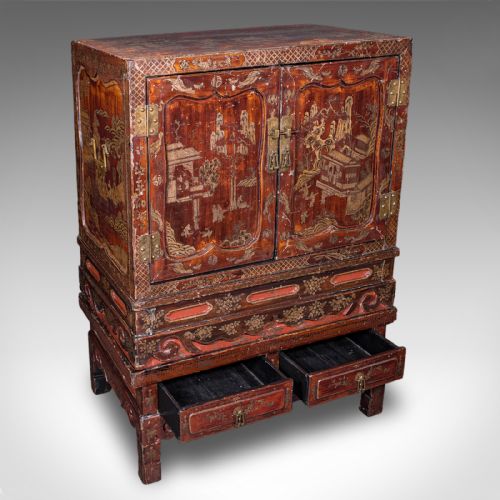
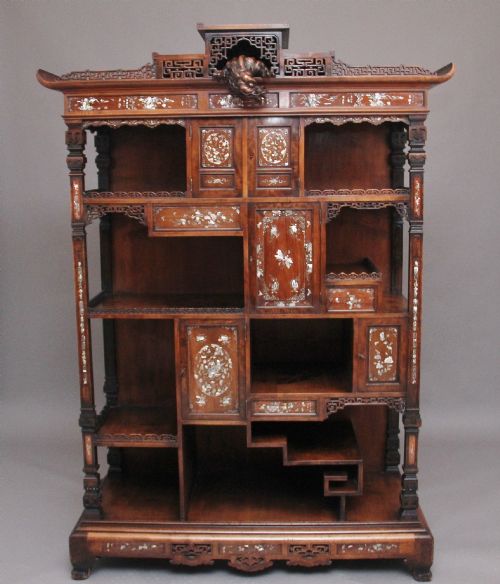
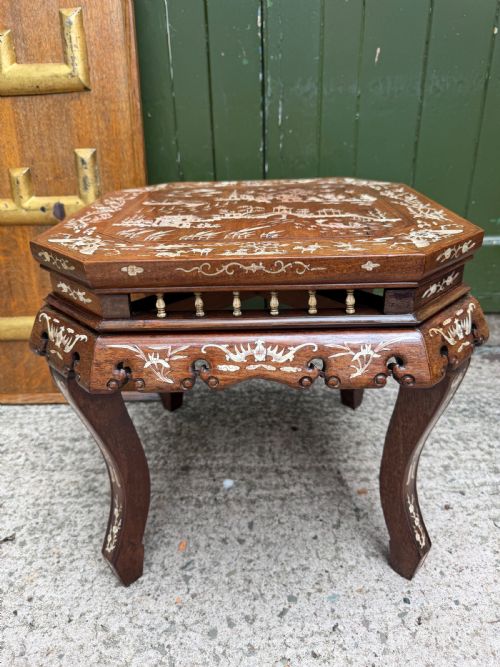
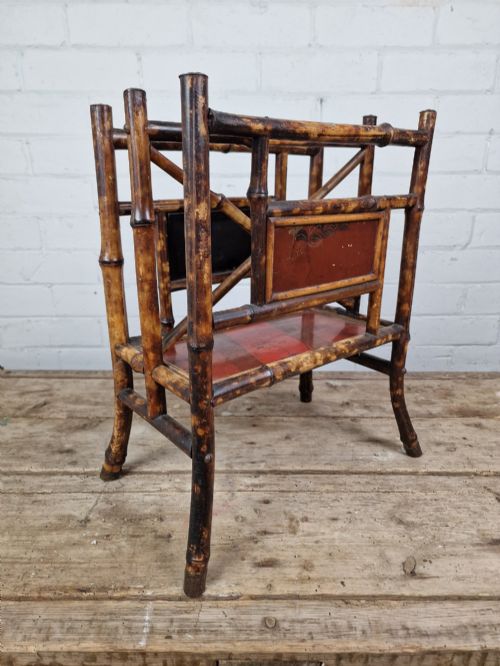
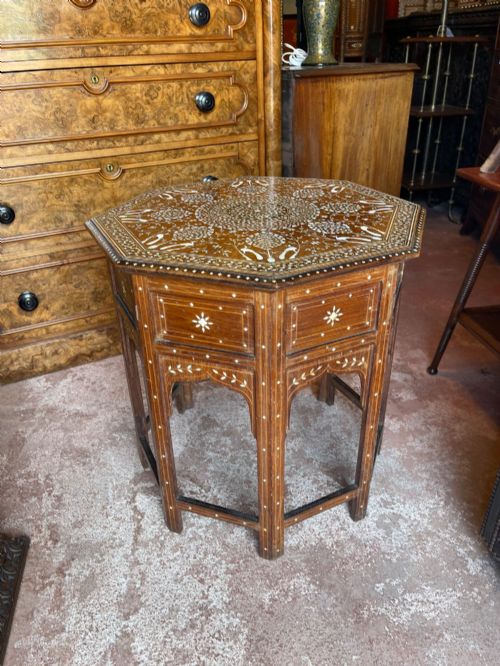
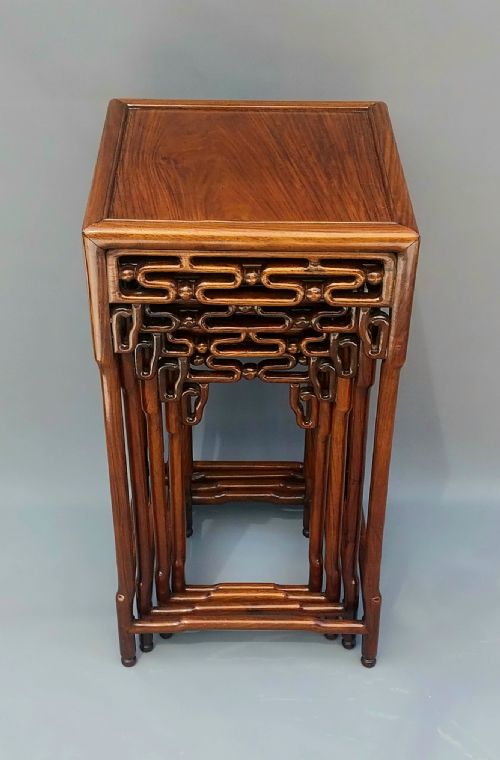
The selections on this page feature regional styles including Anglo-Indian, Chinoiserie, Japonisme, and Aesthetic Movement designs. These pieces range from intricately carved padauk and rosewood tables to bamboo magazine racks and lacquered tray tables.
Originating from varied traditions, these items utilise traditional motifs and construction methods adapted for British homes of the period. Side tables and jardiniere stands remain the most frequent forms encountered within this selection.
Materials and construction
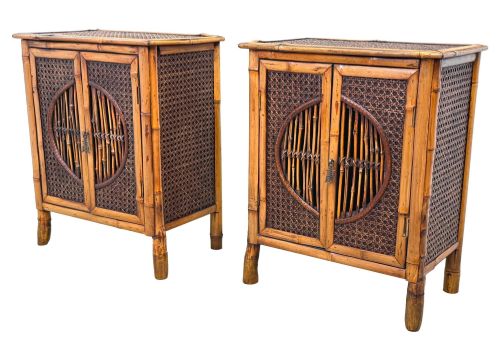
Makers utilised dense timbers such as padauk, teak, rosewood, and general hardwood, often combined with bamboo for lighter frames. These sturdy materials supported intricate surface work including deep carving, bone inlay, and brass detailing.
Surfaces frequently display black lacquer, papier-mâché, or polished marble inserts set into table tops. Craftspeople applied traditional joinery techniques suited to each regional style, whether Chinese export work or Hoshiarpur inlay.
Victorian Oriental Furniture Retail Price Guide 2026
Typical asking prices for victorian oriental furniture among the pieces listed under this phrase on Sellingantiques today, from the lower quarter to the upper quarter. They describe what is for sale here now, not the wider market.
Several bamboo items double as clever storage, letting you stash your Victorian magazines inside an exotic architectural oddity.
Quality variations
The degree of hand-carving and precision in inlaid bone or brass distinguishes standard items from exceptional examples. Dense hardwoods like hongmu and padauk generally indicate higher quality than softer woods or basic bamboo constructions.
The sophistication of the design, such as signed or attributed French Japonisme pieces versus regional export wares, dictates distinction. Original surface treatments like intact lacquer or fitted marble tops further elevate the standing of a piece.
Gabriel Viardot
The Victorian Oriental Furniture Glossary
- Japonisme
- The influence of Japanese art on Western makers during the late nineteenth century. It appears in asymmetry and naturalistic motifs on furniture and decorative objects.
- Chinoiserie
- European interpretation and imitation of Chinese artistic traditions and motifs. This style manifests in lacquered finishes and decorative scenes.
- Padauk
- A heavy, durable tropical hardwood prized for its rich reddish-brown colour. Makers utilised it for carved tables and substantial sideboards.
- Hoshiarpur
- A region in India renowned for intricate woodwork. Pieces from here typically feature dense bone or brass inlay on a dark wooden ground.
Victorian Oriental Furniture: Frequently Asked Questions
What is Victorian oriental furniture?
These pieces are nineteenth-century furnishings influenced by Eastern design aesthetics, produced either in Britain or imported from regions like India, China, and Burma.
They include practical household items such as side tables, plant stands, cabinets, and sewing tables designed for Victorian interiors.
How do I identify Anglo-Indian pieces?
Anglo-Indian items usually feature dense hand-carving depicting foliage, figures, or animals, often constructed from solid padauk or rosewood.
Many examples also incorporate detailed brass or bone inlay arranged in geometric patterns across table tops and cabinet doors.
Where were these pieces used?
Victorian homeowners placed these furnishings in drawing rooms, parlours, and conservatories to display plants, books, or decorative porcelain objects.
Smaller items like bamboo nests of tables and tray tables offered versatile surface space for entertaining guests.
How do I care for lacquered surfaces?
Lacquered and polished wood surfaces require gentle dusting with a soft, dry cloth to prevent scratching the delicate finish.
Keep these items away from direct sunlight and strong heat sources to protect the wood and decorative inlays from drying out.