
Victorian Oil Lighting
Victorian oil lighting brings practical warmth and period presence into a room through heavy metals, painted ceramics and tinted glass.
Victorian Oil Lighting
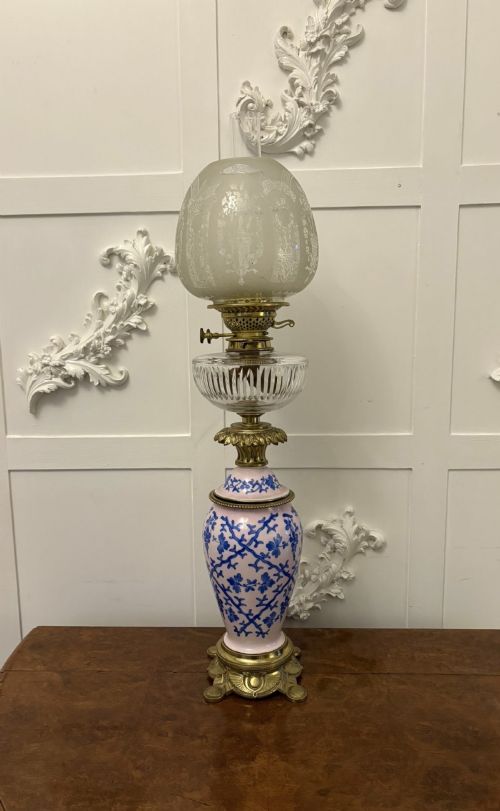
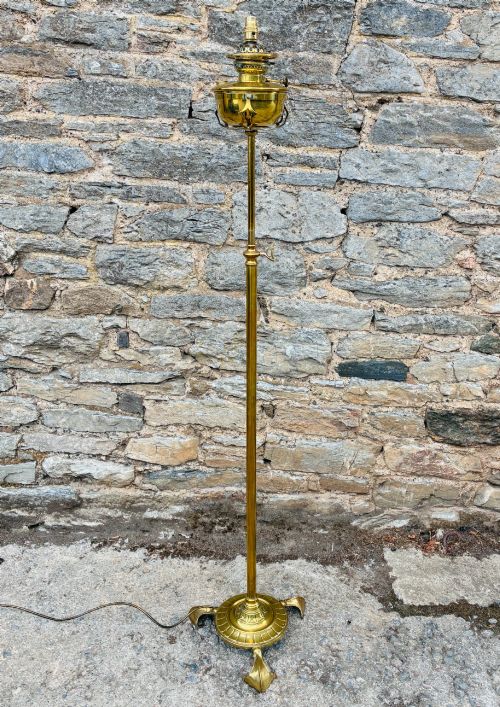
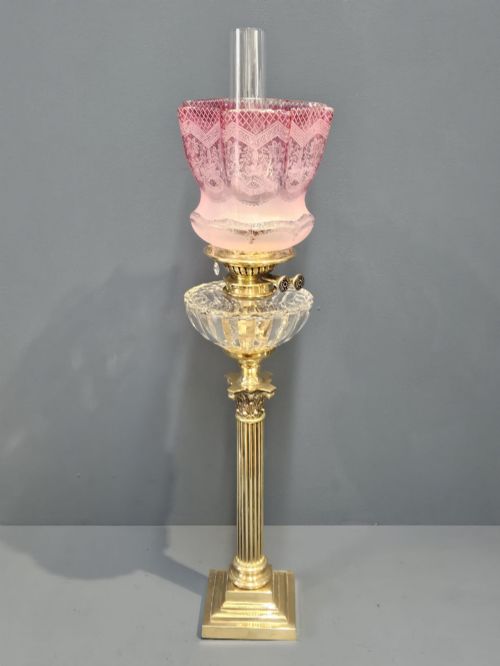
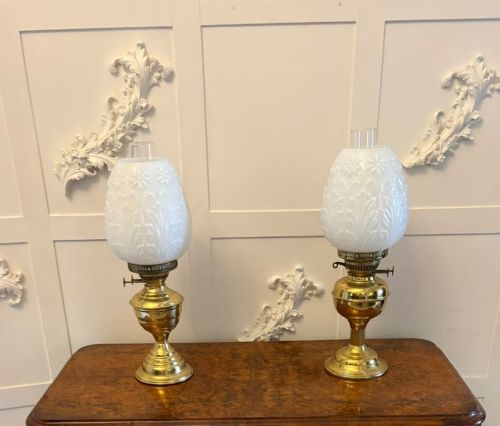
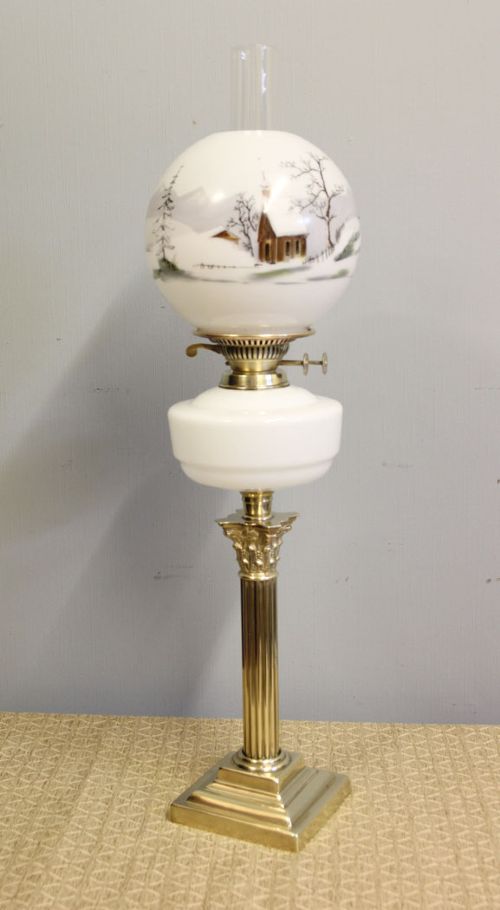
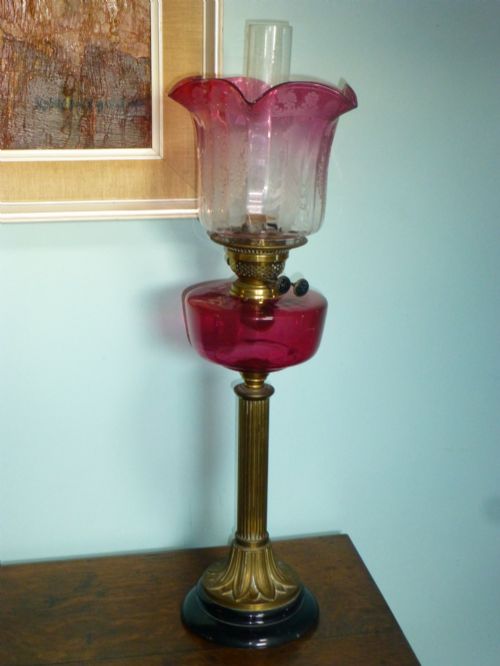
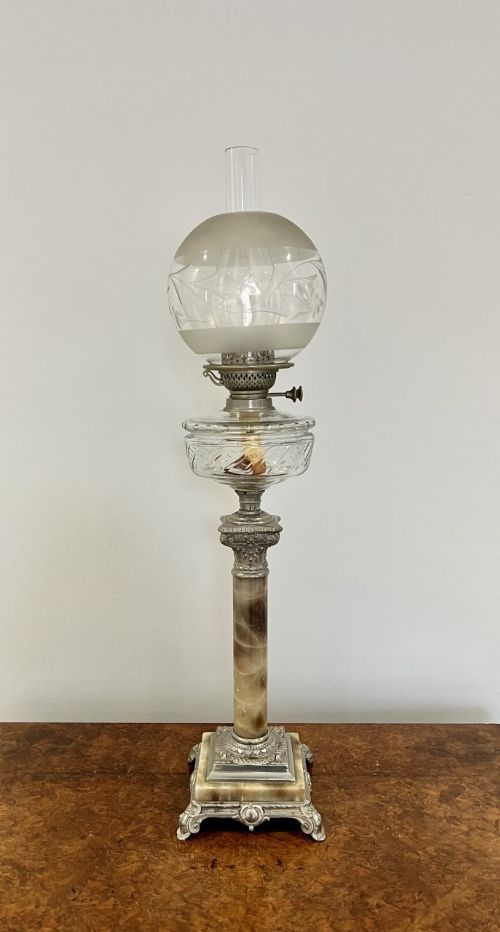
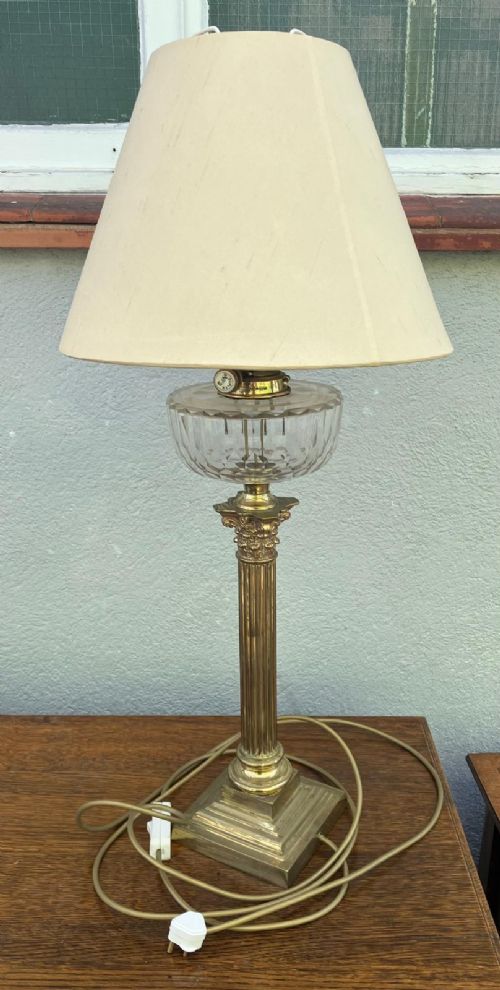
Victorian oil lighting comprises table lamps, floor standing standards, student lamps and hanging lanterns designed for paraffin or oil, spanning the mid nineteenth century into the Edwardian era. Buyers encounter tall Corinthian and Ionic column designs in brass alongside ceramic and porcelain bodies, frequently topped with cranberry or opaline glass shades.
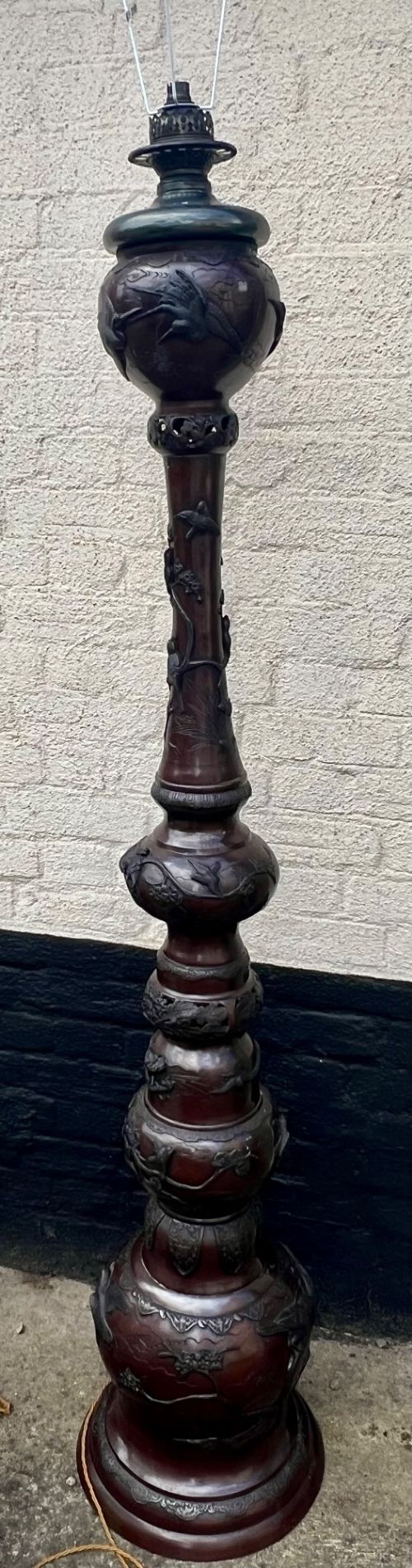
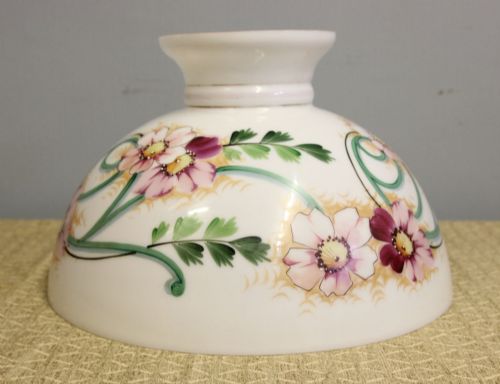
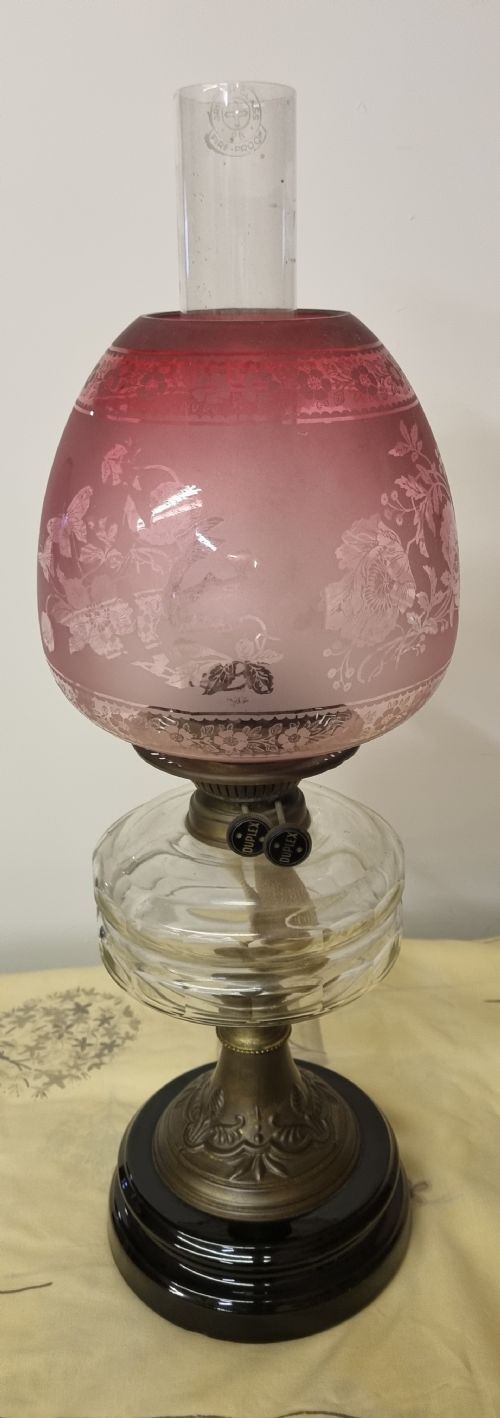
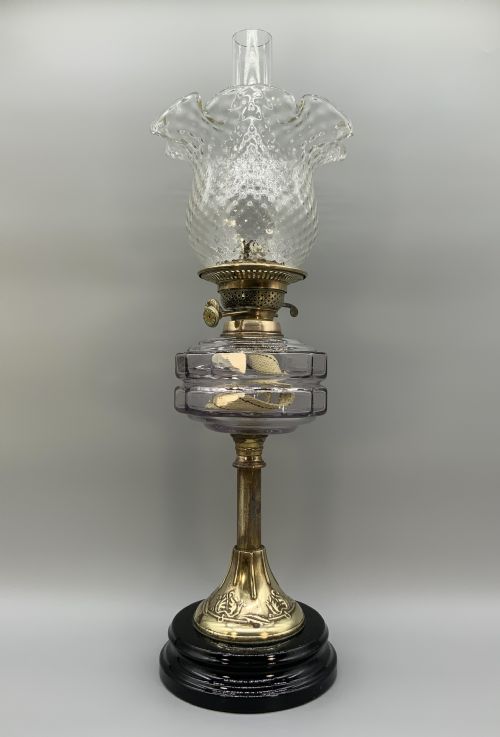
The material palette draws heavily on polished brass, cast bronze, hand-painted porcelain and striking cranberry or opaline glass. Many examples survive with period shade combinations, ranging from etched tulip profiles to botanical motifs and winter scenes.
Most pieces date from the Victorian and Edwardian periods, including specific workshop output and patented burner systems from makers such as Hinks. While numerous survivors retain their original oil mechanisms, others arrive converted for modern electricity.
Materials and construction
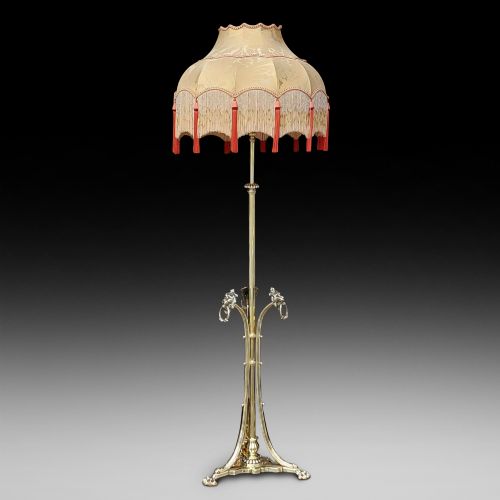
Makers constructed the structural columns and heavy bases using cast brass, gilded bronze and ceramic or porcelain bodies, often incorporating telescopic or adjustable extension mechanisms. Metal components were turned, cast and chased, whilst brass standards frequently utilised weighted iron bases for stability.
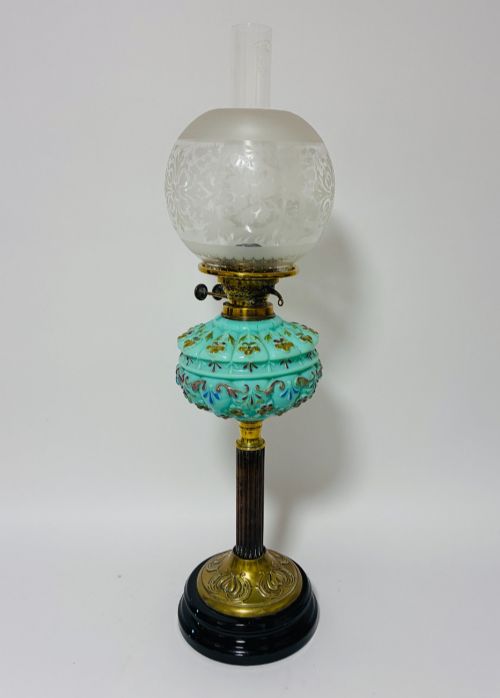
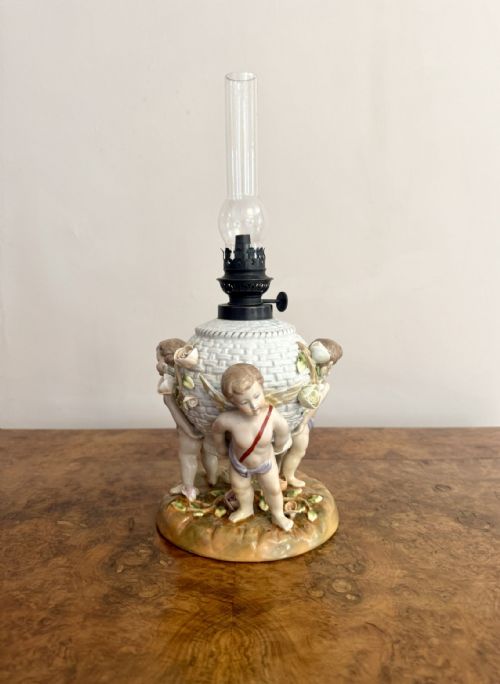
Shades and fonts demonstrate specialist glassmaking techniques, employing hand-blown cranberry glass, opaline glass and flashed or etched layers. Ceramic reservoirs combined moulded porcelain with hand-painted floral decoration, gilt detailing and figural elements.
Judging quality
Quality rests in the weight of the casting, the crispness of classical column fluting, and the depth of the brass or bronze patination. Superior standards display robust telescopic mechanisms and substantial metal gauges that prevent tipping.
The standard of the glass and ceramic components separates standard production from finer examples. Hand-blown cranberry glass, intricate acid-etched tulip shades and finely detailed porcelain figure work indicate superior workshop output.
Hinks·Taylor Tunnicliff·Sitzendorf·Mc Gary
The Victorian Oil Lighting Glossary
- Duplex burner
- A double-wick burner system designed to produce a brighter illumination than single-wick alternatives. These mechanisms frequently bear maker stamps on the brass thumbwheels.
- Opaline glass
- An opaque, milky-white glass popular for Victorian lamp shades and fonts. It softens the light and diffuses the flame glow.
- Font
- The oil reservoir of the lamp, positioned beneath the burner and above the stem or base. Fonts can be formed from matching brass, coloured glass or painted porcelain.
- Student lamp
- A specific form of adjustable desk or table lamp featuring a side-mounted oil reservoir. They were engineered to direct light efficiently across a workspace.
Victorian Oil Lighting: Frequently Asked Questions
Are these lamps still suitable for burning oil?
Many examples retain their original burners and reservoirs, though collectors often evaluate them as decorative objects rather than active light sources.
Safety considerations and modern building regulations mean a large proportion are utilised purely for their visual presence or wired for electricity.
How do I identify a standard lamp from a table lamp?
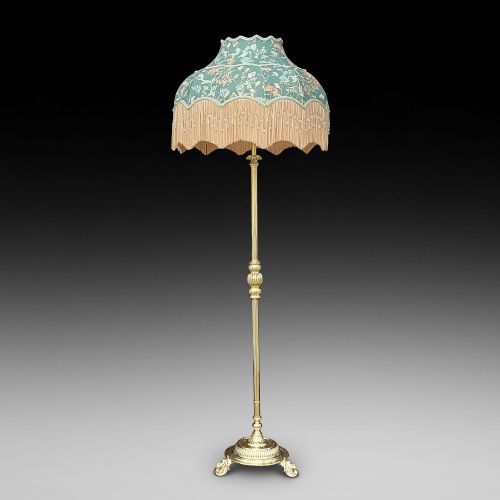
Standard lamps, also known as floor lamps, are built with tall shafts designed to stand directly on the floor. Table lamps feature shorter columns scaled for placement on side tables or desks.
Both forms share similar Corinthian, Ionic or figural column vocabulary depending on the Victorian or Edwardian date of manufacture.
What is the difference between opaline and cranberry glass?
Opaline glass is an opaque, milk-white material that diffuses light softly across a room. Cranberry glass is a transparent, rich pink-red shade created by adding gold chloride to the molten glass mix.
Both materials appear frequently on Victorian lamp shades and fonts, sometimes paired together on the same piece.
Can converted lamps be restored to oil use?
Reversing an electrical conversion depends entirely on whether the original burner mechanism and interior reservoir were discarded during the modification.
Many listings note whether the conversion preserved the internal components or if the burner has been permanently altered.