


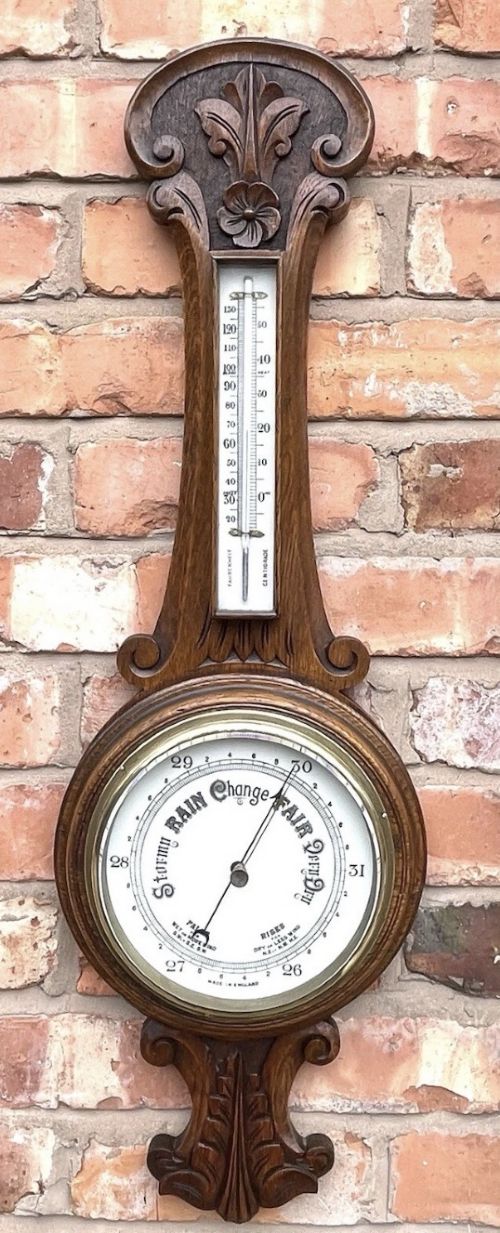


Victorian Oak Wall Clock
These robust victorian oak wall clock examples bring practical timekeeping and honest timber into daily rooms.
Victorian Oak Wall Clock
A victorian oak wall clock represents a durable piece of nineteenth-century domestic or institutional engineering, built to hang securely in busy hallways, parlours and offices. The examples gathered here span simple drop dial timepieces to more elaborate carved cases, reflecting the diverse ways time was kept during the period.
Most pieces met on this page date from the Victorian era and the late nineteenth century, predominantly housed in solid oak casings rather than softer woods. Dial sizes vary from compact domestic versions to larger transit and railway models designed for precise legibility.
Alongside standard circular dial wall clocks, the selection occasionally encompasses related forms such as banjo barometers, combination instruments and architectural Vienna wall clocks. The underlying commonality remains the use of oak timber combined with mechanical movements, whether chain-driven fusee or spring-driven.
Materials and Construction
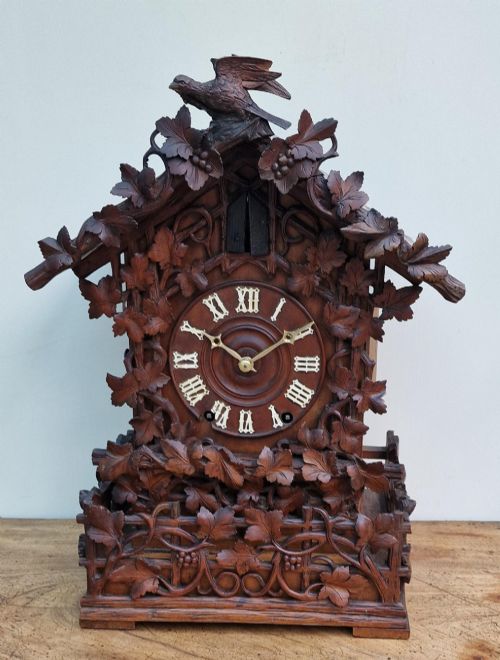
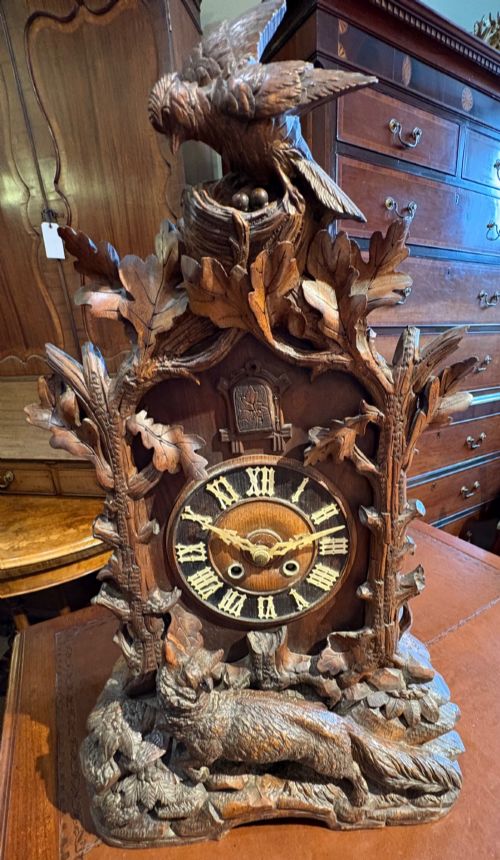
The primary material visible across these listings is oak, frequently finished in polished or golden tones that highlight the natural grain of the wood. Makers utilised solid timber for structural cases, often incorporating hand-carved ornamentation, particularly within Black Forest and Vienna style variants.
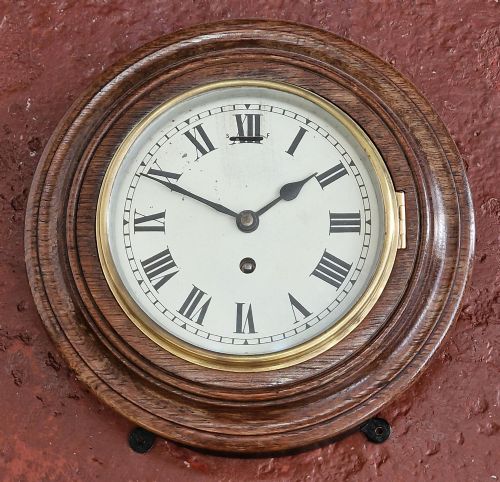
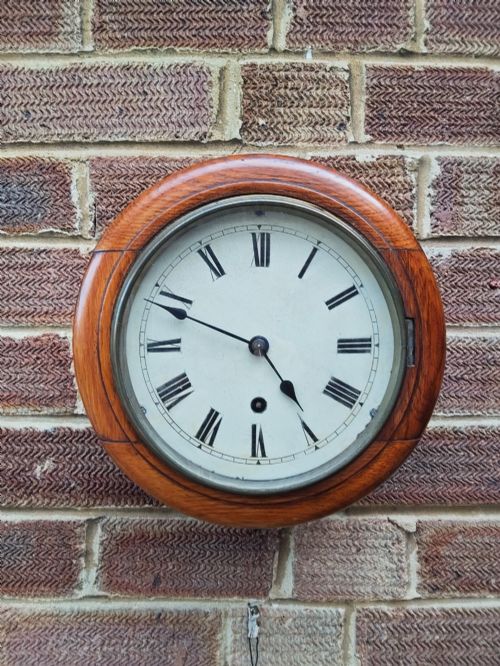
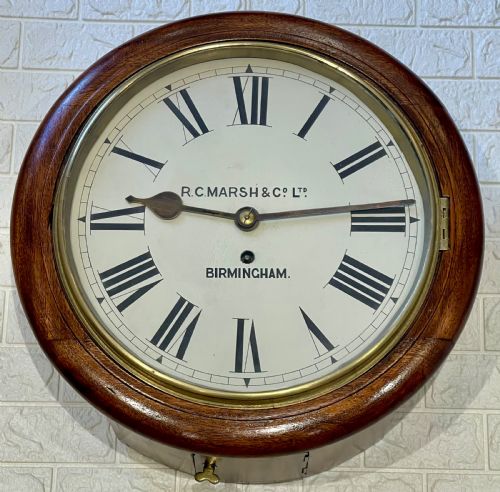
Dial construction relies on enamel, glass and painted metal surfaces to display Roman or Arabic numerals clearly to the room. Brass components form the vital internal gears and bezels, working alongside steel springs and chains to drive the eight-day or thirty-hour mechanical movements.
Victorian Oak Wall Clock Retail Price Guide 2026
Typical asking prices for victorian oak wall clock among the pieces listed under this phrase on Sellingantiques today, from the lower quarter to the upper quarter. They describe what is for sale here now, not the wider market.
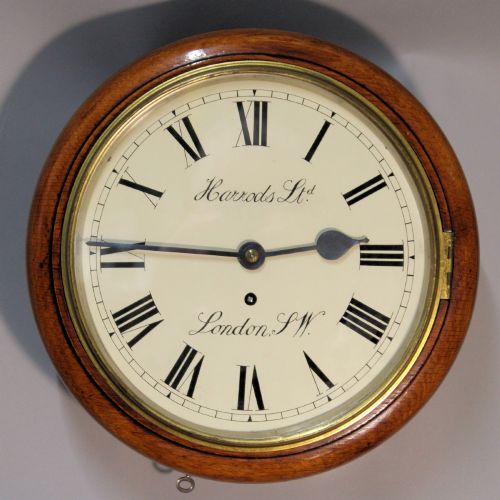
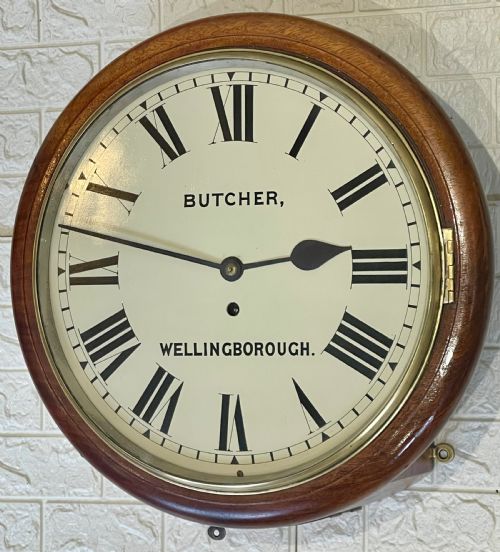
Enamel, brass and glass components appear alongside carved wooden cases representing Victorian and Edwardian domestic design.
Distinctions in Quality
Quality in a victorian oak wall clock rests upon the precision of the mechanical movement and the crispness of the case joinery. Higher-tier pieces utilise fusee movements that maintain even tension for steady timekeeping, whereas simpler designs rely on standard spring or weight-driven mechanisms.
The tactile quality of the carved wooden decoration and the clarity of the enamel dial also separate ordinary production from superior workshop output. Well-preserved original proportions and signed dials from recognised makers indicate a higher standard of original manufacture.
Dent of London·Charles Frodsham·J. Hummel of Worcester·W. Davis and Sons·Negretti and Zambra
The Victorian Oak Wall Clock Glossary
- Fusee
- A conical pulley used in mechanical clocks to maintain even power from the mainspring as it winds down. This mechanism ensures consistent timekeeping throughout the duration of the eight-day wind.
- Drop Dial
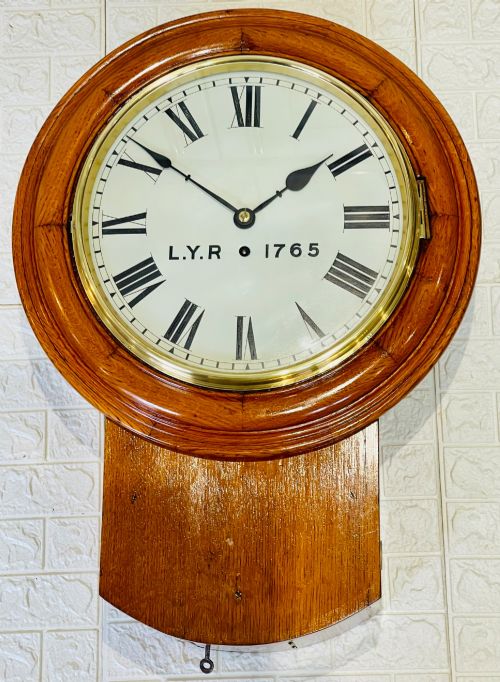
- A wall clock featuring a circular dial positioned above an extended wooden case, frequently used in railway stations and offices. The lower trunk houses the pendulum swing.
- Aneroid Barometer
- An instrument measuring atmospheric pressure without liquid, often paired with thermometers in carved oak wall barometers. The internal sealed metal box expands and contracts with weather changes.
- Vienna Regulator
- A precision pendulum clock originating in nineteenth-century Austria, characterised by a long glass-fronted door and refined movement. These pieces display the descending weights and pendulum clearly.
- Timepiece
- A clock that indicates the time of day without including a striking mechanism or bell. Many fusee wall clocks function strictly as timepieces.
Victorian Oak Wall Clock: Frequently Asked Questions
How do fusee movements work?
A fusee movement uses a conical drum and a chain to equalise the declining force of the mainspring. As the spring unwinds, the chain pulls higher up the wider part of the cone, maintaining steady power.
This clever mechanical adjustment prevents the clock from losing accuracy as the power reserve diminishes over its operational cycle.
Where should I hang a wall clock?
These heavy oak clocks require secure mounting directly into solid wall studs or proper masonry fixings. Hang them at a comfortable eye level where the dial can be easily read across the room.
Avoid placing them on damp walls or directly above active heat sources that might dry out and crack the timber case.
How do I wind an eight day clock?
Use the appropriate winding key inserted into the dial hole, turning it gently until resistance indicates the mainspring is fully tensioned. Take care not to overwind the mechanism.
Most eight-day models require attention once a week, making a consistent weekly routine the best way to keep the movement running reliably.
Are these clocks suitable for daily use?
Many nineteenth-century movements remain entirely capable of keeping accurate daily time when properly set up and leveled on the wall. Regular operation helps keep the oil distributed across the brass pivots.
Routine servicing by a professional horologist every few years ensures the mechanical parts continue to function without excessive wear.