
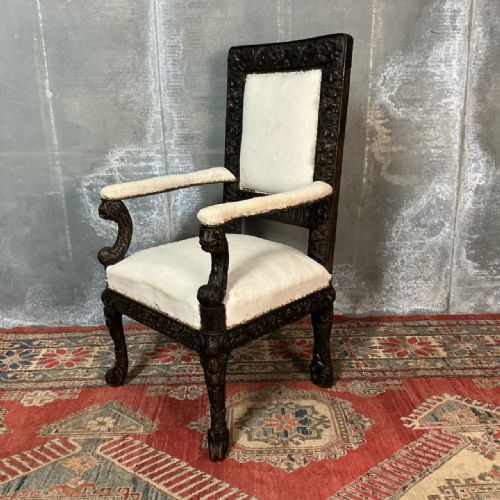
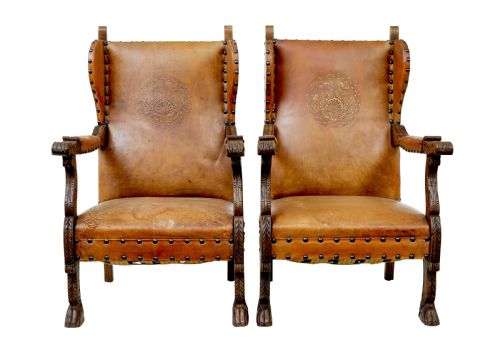
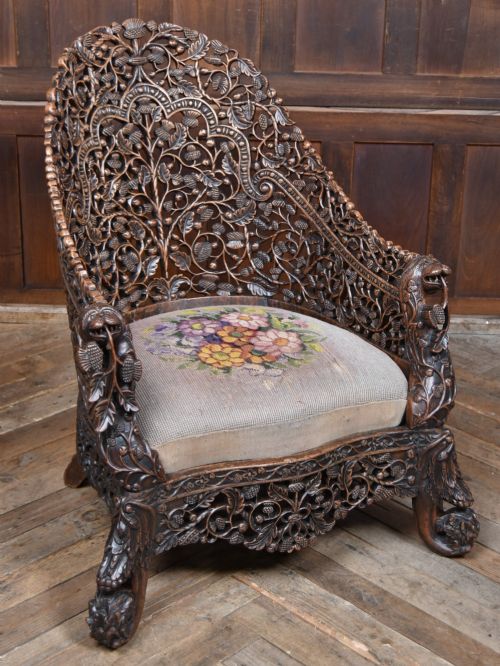
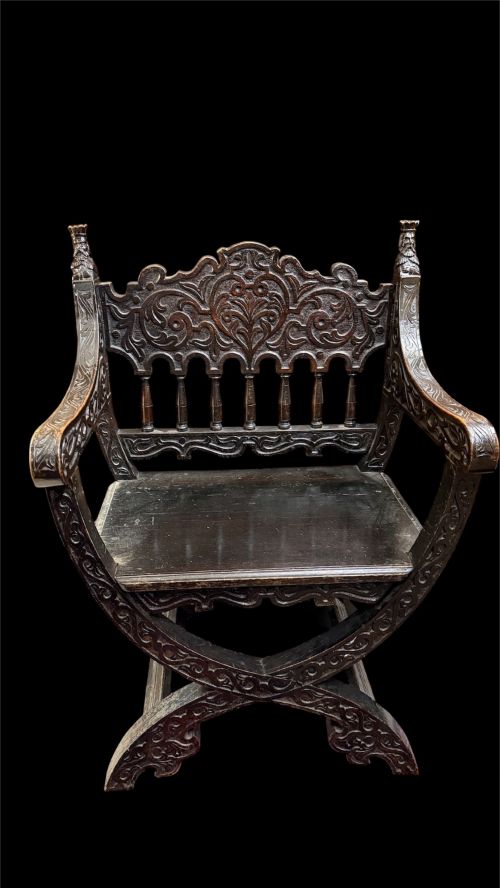



Victorian Oak Throne Chair
When you want a commanding seat with architectural presence, a victorian oak throne chair brings heavy nineteenth-century character directly to a room.
Victorian Oak Throne Chair
A victorian oak throne chair is a substantial seating form designed to dominate a room with high backs, architectural carving and imposing armrests.
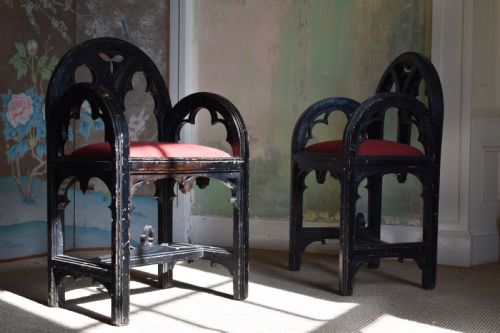
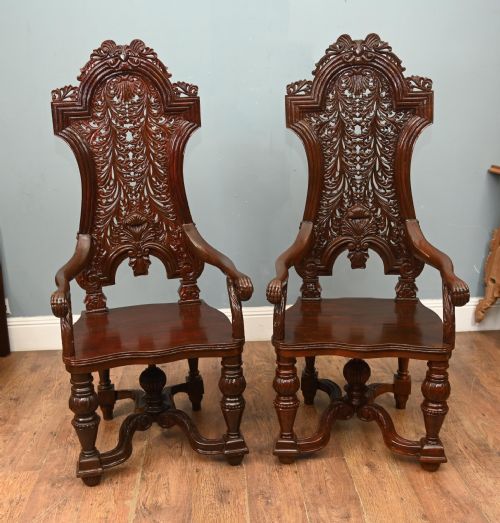
The pieces appearing in these records lean heavily into nineteenth-century revivals, presenting high-backed seating with Gothic, Jacobean or Renaissance ornament.
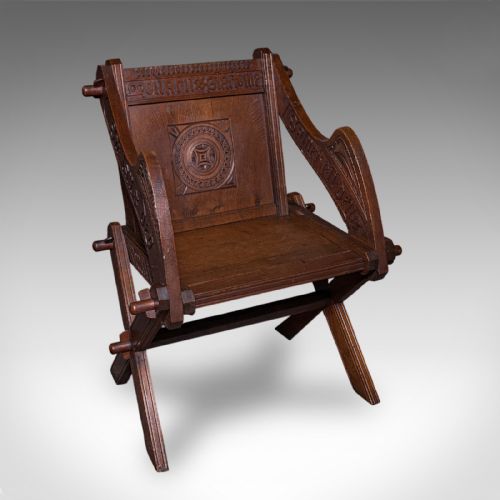
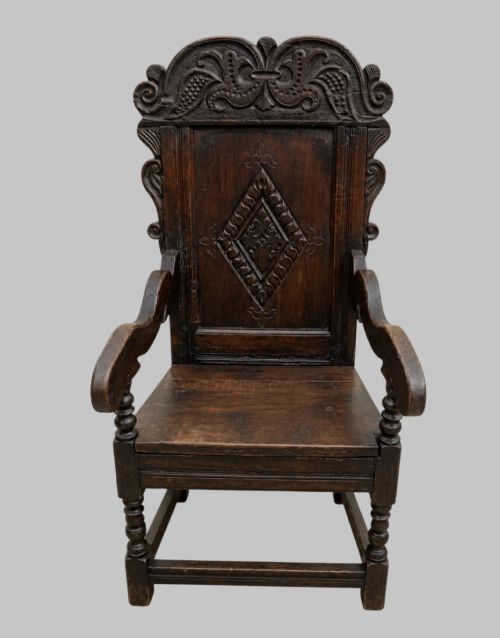
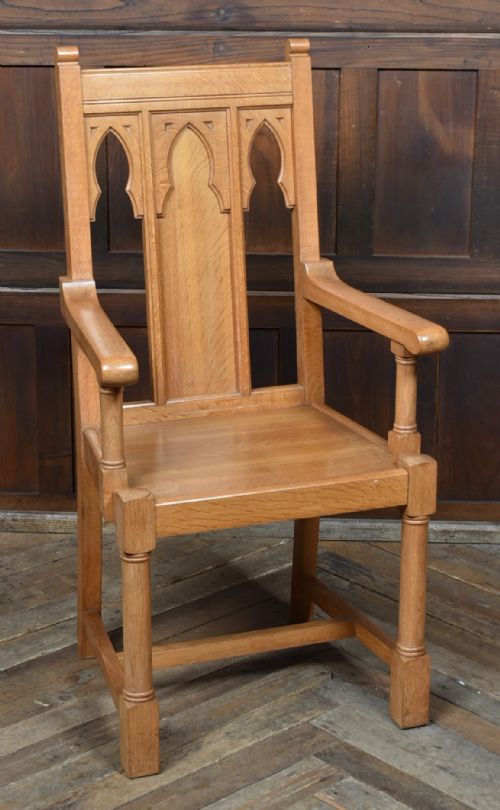
Many examples incorporate regional forms such as Glastonbury chairs with X-frame supports or solid wainscot constructions rooted in earlier centuries.
How they were made
Cabinet makers built these frames primarily from solid oak, sometimes combining walnut or beech, and accented the timber with brass fittings or turned elements like barley twists.
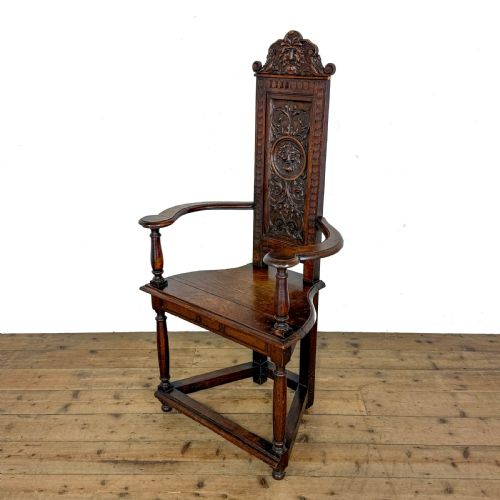
Carvers worked directly into the heavy wood to produce deep relief motifs including Green Man masks, scrolling foliage, tracery and heraldic animals.
Upholstery departments integrated embossed leather, velvet, tapestry and buttoned textiles, fastening the covers with brass nailheads.
Listings feature oak predominantly, supported by walnut and beech, with upholstery variations including leather, velvet, tapestry and heavy textiles.
What varies in quality
The ambition and depth of the timber carving dictate the visual weight of the piece, separating standard workshop output from deeply articulated sculptural examples.
Proportion and scale play a major role, as taller frames with balanced architectural symmetry demand greater joinery skill than smaller or simpler armchairs.
The integrity of the structural joints and the handling of secondary materials, such as embossed leather panels or heavy textiles, separate ordinary seating from exhibition-grade seating.
The Victorian Oak Throne Chair Glossary
- Wainscot chair
- A heavy wooden armchair with a paneled back and solid seat, originating in earlier centuries and revived during the nineteenth century. These sturdy forms often mimic seventeenth-century vernacular styles.
- Glastonbury chair
- An ecclesiastical folding armchair characterised by X-shaped legs and sloping armrests. This design follows medieval models recovered in nineteenth-century church contexts.
- Green Man
- A sculptural architectural motif depicting a human face emerging from or entwined with foliage. This pagan symbol appears frequently in nineteenth-century Gothic revival woodwork.
- Barley twist
- A turned wooden furniture leg or stretcher resembling a spiral rope. Makers utilised this decorative turning extensively during revival periods to add vertical rhythm.
- Gothic Revival
- An architectural and decorative style drawing inspiration from medieval forms, pointed arches and ecclesiastical tracery. This movement dominated nineteenth-century furniture design.
Victorian Oak Throne Chair: Frequently Asked Questions
How do I identify a Gothic revival piece?
Look for pointed arches, cusped tracery, linenfold panels and deep architectural mouldings carved directly into the oak frame. These elements deliberately emulate medieval ecclesiastical architecture.
Makers often paired these structural motifs with embossed leather or heavy tapestries to reinforce the medieval aesthetic.
What is a Turner's chair?
A Turner's chair is a distinctive three-legged seating form constructed entirely from turned wooden spindles fitted together in a triangular plan. This ancient design experienced revivals throughout the nineteenth century.
Their open spindlework and compact triangular footprint distinguish them from standard box-frame armchairs.
How do I care for nineteenth-century oak furniture?
Maintain the timber by applying traditional beeswax sparingly to nourish the dry oak and preserve the natural grain. Avoid modern silicone polishes that build up sticky residues over decades.
Keep the seating away from direct heat sources and dramatic humidity fluctuations to prevent the heavy solid wood panels from splitting.