
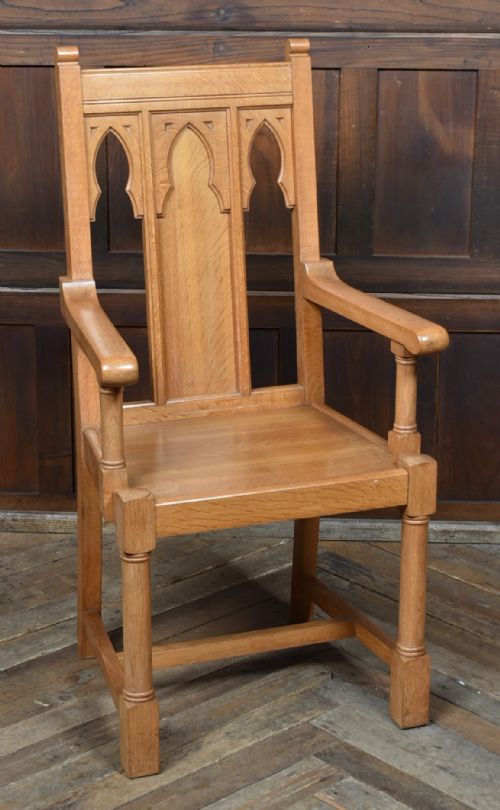


Antique Oak Throne Seat
An antique oak throne seat commands attention in a room, combining heavy timber construction with elaborate historical ornament.
Antique Oak Throne Seat
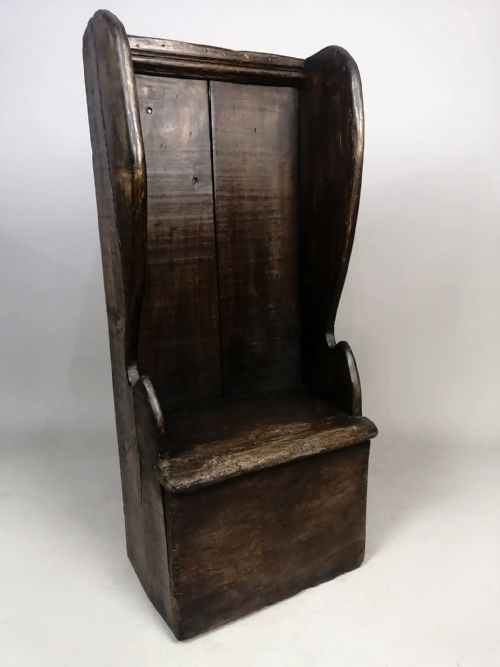
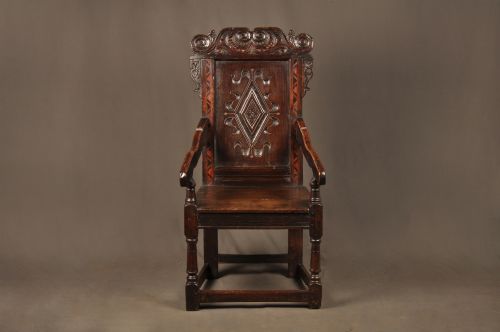
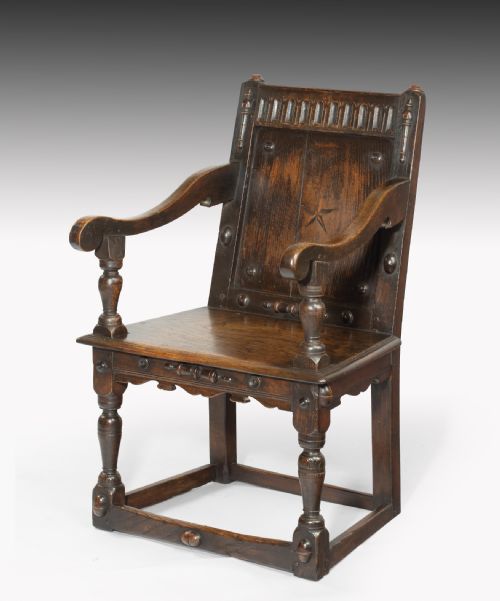
An antique oak throne seat encompasses heavy timber armchairs, wainscot forms, and tall ecclesiastical chairs designed with imposing backs and solid framing. These pieces draw on historical vocabularies spanning the seventeenth century through to Victorian revivals, incorporating stylistic elements from Gothic, Renaissance, and Jacobean periods.
The selection here ranges from early solid timber vernacular chairs to nineteenth-century revival pieces heavily ornamented with carving, green man motifs, and heraldic details. Buyers regularly encounter nineteenth-century interpretations alongside earlier wainscot constructions and ecclesiastical seating.
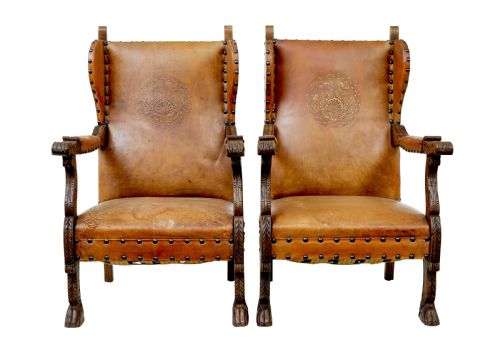
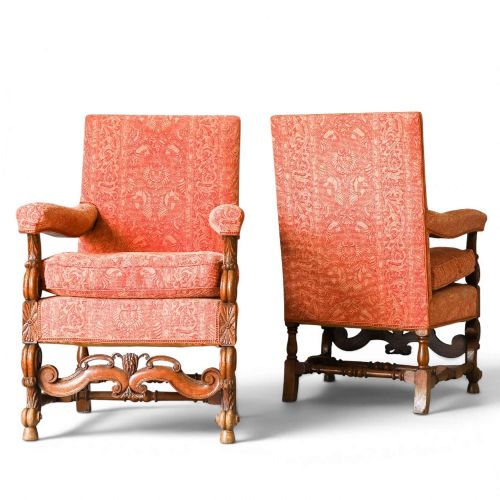
Forms include high-backed chairs with panelled construction, elbow seats, and architectural frames designed to dominate an interior space. Makers utilised solid timber frames combined with upholstery in leather, velvet, and fabric where comfort was required.
How they were made
Makers built these seats using solid timber frames joined by traditional mortise and tenon joints secured with wooden pegs. The primary material is oak, supplemented occasionally by fruitwood or beech in specific regional or vernacular forms.
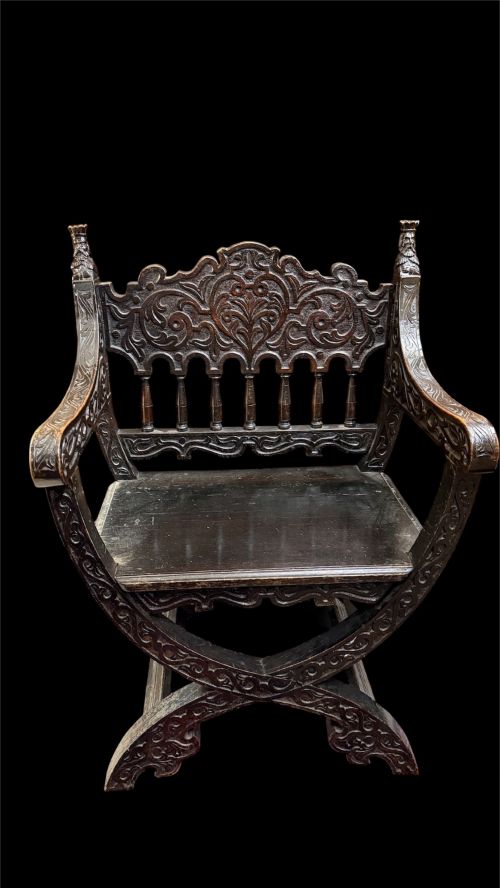
Surface decoration relies on deep relief carving, panel moulding, and turned woodwork elements such as spindles and finials. Upholstered variants incorporate leather panels, velvet, or fabric fixed with brass studs, whilst others leave the timber panels exposed to showcase the grain.
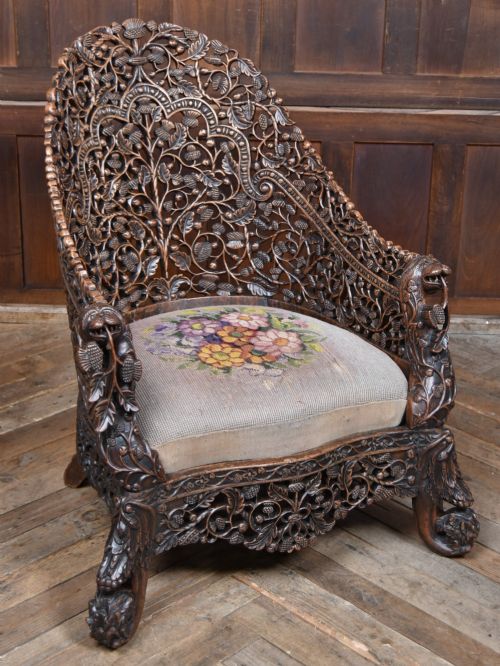
Several Victorian examples feature fierce carved hunting dogs and hound motifs keeping watch beneath the armrests.
What varies in quality
The distinction between ordinary and exceptional examples rests upon the depth and crispness of the carving, the architectural proportions of the frame, and the integrity of the timber. Pieces featuring intricate figural work, such as green man masks or heraldic beasts, demonstrate superior craftsmanship compared to plain vernacular versions.
Proportion and stance dictate visual success, with superior examples maintaining balanced vertical lines and substantial timber thickness without appearing clumsy. The quality of secondary materials, from embossed leather panels to turned spindle work, elevates an interior seating piece into a significant decorative object.
The Antique Oak Throne Seat Glossary
- Wainscot chair
- A heavy wooden armchair constructed primarily from panelled oak, popular during the seventeenth century. These seats feature solid wooden backs and panelled seats.
- Gothic Revival
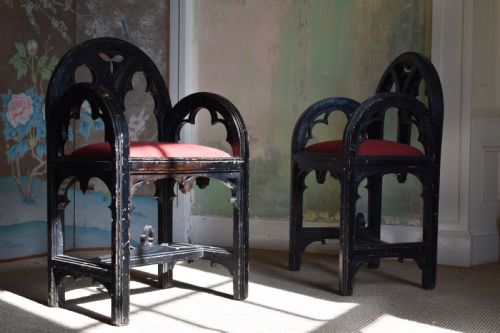
- An architectural and decorative style popular during the nineteenth century that mimics medieval forms. It utilises pointed arches, tracery, and heavy carved ornamentation.
- Turner's chair
- An early form of armchair constructed entirely from turned wooden spindles and members. Also known as a roundel chair, it relies on geometric repetition rather than panels.
- Glastonbury chair
- A nineteenth-century revival chair based on an ancient design, featuring intersecting X-form legs and a sloping panel back. This form is closely associated with the Gothic Revival movement.
- Green man
- A sculptural architectural ornament depicting a human face surrounded by or sprouting from foliage. It appears frequently in nineteenth-century carved oak furniture.
Antique Oak Throne Seat: Frequently Asked Questions
How are antique oak throne seats used today?
These imposing seats function effectively as statement pieces in entrance halls, studies, or living rooms where a strong architectural anchor is required. Their solid proportions make them suitable for use as desk chairs or end-of-table seating in dining spaces.
Because of their historical presence, they often serve as focal points in a room rather than casual lounging furniture. Pairing them with contemporary interiors creates a striking contrast between modern minimalism and heavy historic timber.
How do I tell a seventeenth-century chair from a nineteenth-century revival?
Examining the construction methods, tool marks, and timber shrinkage reveals the true age of a piece. Seventeenth-century examples display hand-split and pit-sawn timber surfaces alongside pegged joinery that has settled over centuries.
Nineteenth-century revival pieces often feature machine-sawn components and crisper, deeper machine-assisted carving styles typical of Victorian workshops. The wear patterns and patina on genuine early timber differ significantly from nineteenth-century chemical or mechanical ageing attempts.
What maintenance do these wooden seats require?
Preserving these pieces involves maintaining stable indoor humidity levels to prevent the oak timber from splitting or warping. Regular dusting with a soft brush keeps carved crevices clear of debris without damaging the surface finish.
Applying a traditional beeswax polish occasionally nourishes the dry timber and enhances the natural grain and patina. Leather and fabric upholstery components require gentle cleaning appropriate to their specific textile type.
Are these chairs comfortable for daily sitting?
Most antique oak throne seats were designed primarily for authority, status, and visual impact rather than ergonomic comfort. Upholstered variants with leather or padded panels offer a softer sit than solid wood wainscot versions.
Adding a tailored loose cushion can improve comfort for everyday use without altering the historic structure of the seat. The upright posture encouraged by their rigid backs suits formal sitting rather than relaxed lounging.