



Victorian Oak Throne Armchairs
These heavy, imposing seats carry the weight of nineteenth-century revivalism directly into a room.
Victorian Oak Throne Armchairs
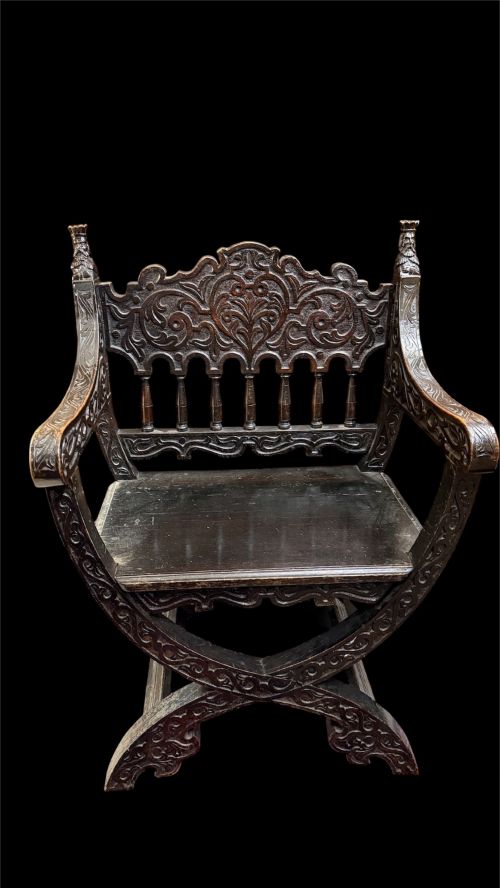
Victorian oak throne armchairs combine commanding scale with historicist design, drawing heavily on earlier seventeenth-century and medieval forms. The pieces available span the nineteenth century, including dated examples from the eighteen-seventies alongside later revival interpretations up to nineteen-twenty.
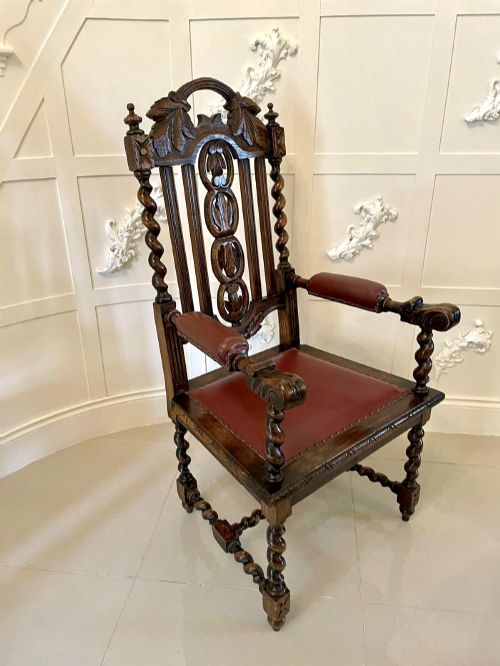
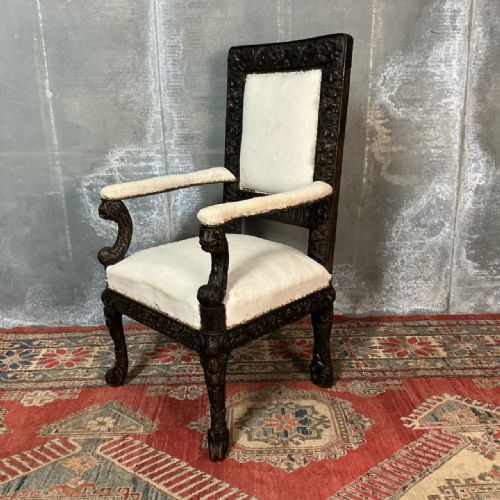
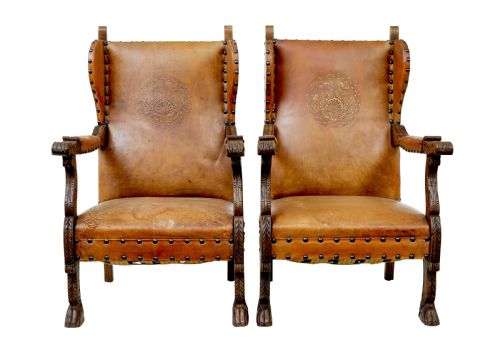
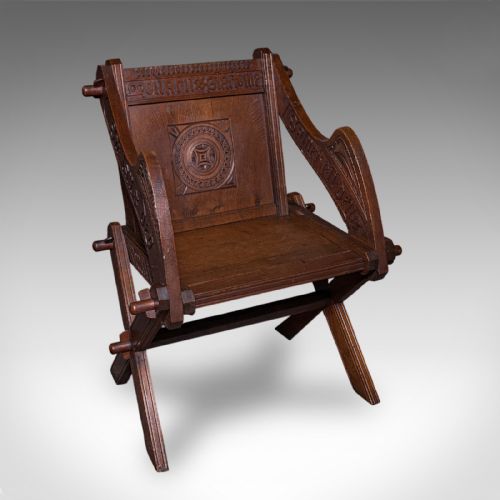
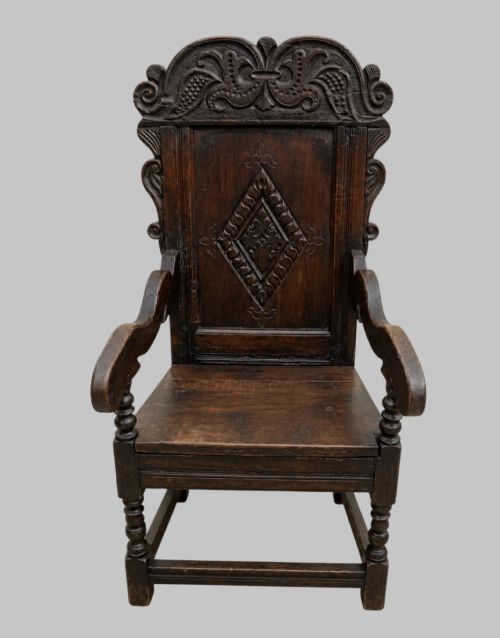
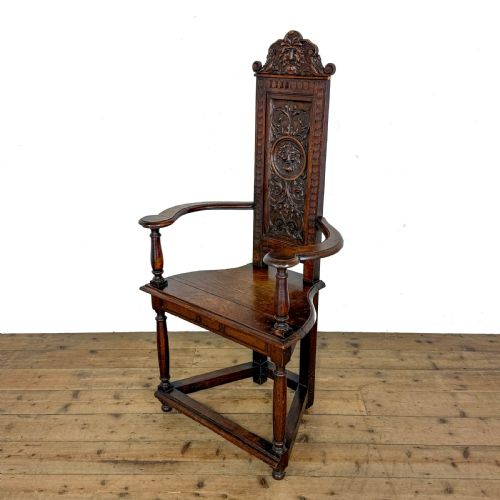
Buyers encounter distinct regional and stylistic variants, from Glastonbury and wainscot forms to deeply carved ecclesiastical and Green Man armchairs. Pairs and single grand armchairs dominate, frequently constructed as heavy library or hall seating.
Originating in domestic morning rooms, halls and ecclesiastical settings, these seats bring architectural presence to contemporary interiors. The sturdy oak construction ensures they function reliably as heavy occasional seating.
Materials and construction
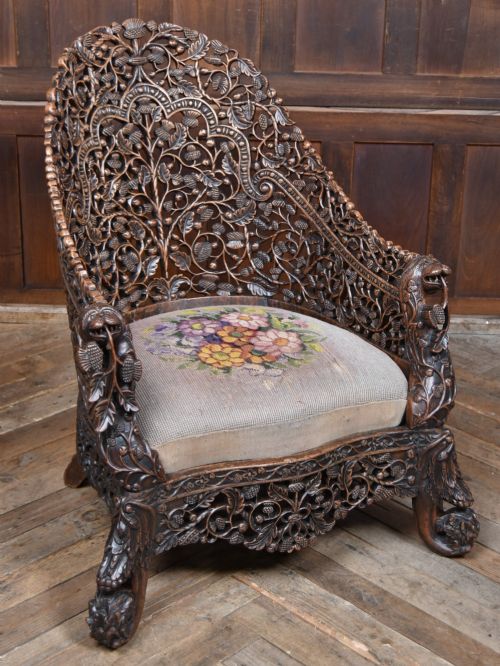
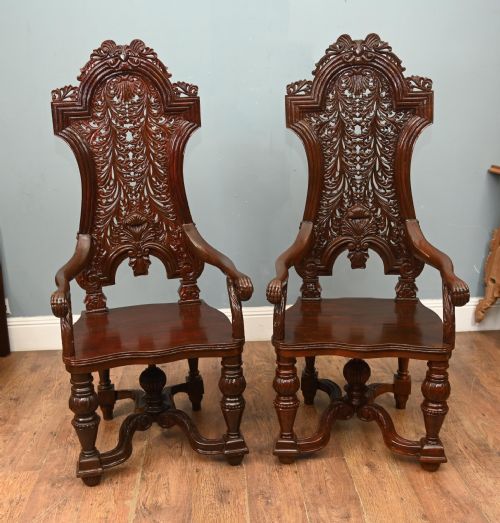
Timbers are predominantly solid oak, sometimes accompanied by walnut or beech, shaped using traditional joinery and deep relief carving. Master carvers worked directly into the dense wood to render heraldic motifs, tracery and mythical beasts.
Upholstery materials include embossed leather, velvet, tapestry and woven textiles, secured with brass detailing or heavy studwork. Many examples feature buttoned leather panels or padded arm rests designed for domestic comfort.
Listings feature robust nineteenth-century timbers including solid oak and walnut, paired with tactile textiles such as velvet, tapestry and embossed leather.
Assessing quality
Depth and crispness of the timber carving separate standard production from exceptional exhibition pieces. Master carvers achieved remarkable dimensionality in foliage, figures and tracery, whereas lesser examples show flat or mechanical detailing.
Structural ambition dictates value, marked by monumental scale, thick framing and harmonious proportions. The integration of original leather, brass fittings and secondary timbers completes the evaluation of an elite piece.
A.W.N. Pugin
The Victorian Oak Throne Armchairs Glossary
- Glastonbury chair
- A distinctive folding armchair design with X-framed supports, sloping arms and a panelled back. This form gained popularity during the Gothic Revival.
- Wainscot chair
- A heavy wooden armchair constructed with panelled backs and sturdy uprights, originating in the seventeenth century and frequently revived by Victorian cabinet makers.
- Green Man
- A sculptural architectural motif depicting a human face carved from or entwined with leaves and vines. Victorian carvers utilised this symbol extensively on ecclesiastical and throne seating.
- Barley twist
- A turned column or leg resembling a tightly wound helix, common on mid-nineteenth-century supports. This technique adds dynamic movement to heavy oak frames.
Victorian Oak Throne Armchairs: Frequently Asked Questions
Where should I place a throne armchair?
These imposing seats suit entrance halls, libraries or studies where their architectural presence anchors the room. They function best as standalone statement pieces rather than clustered seating.
Ensure adequate floor space surrounds the chair to accommodate the deep projection of the arms and high backboards.
How do I care for nineteenth-century oak?
Maintain the timber by applying a microcrystalline wax polish periodically to nourish the dry grain. Avoid placing the chair near direct heat sources or strong sunlight, which causes the oak to split and damages leather upholstery.
Dust intricate carvings regularly with a soft bristle brush to prevent particulate accumulation in the recesses.
Are these seats comfortable for daily use?
Most examples prioritise architectural dignity and formal posture over modern cushioning. Many feature rigid wooden back panels or firm stuffed upholstery designed for upright support.
Upholstered variants with padded seats and arm rests offer a softer sit suitable for reading or occasional relaxing.
How do I distinguish Gothic Revival from Jacobean Revival?
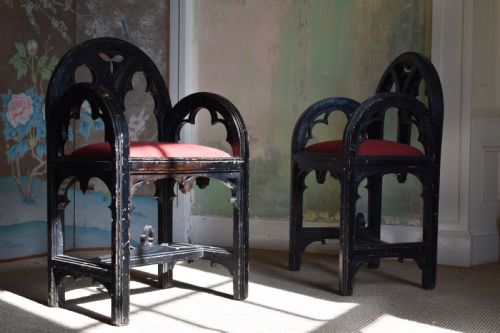
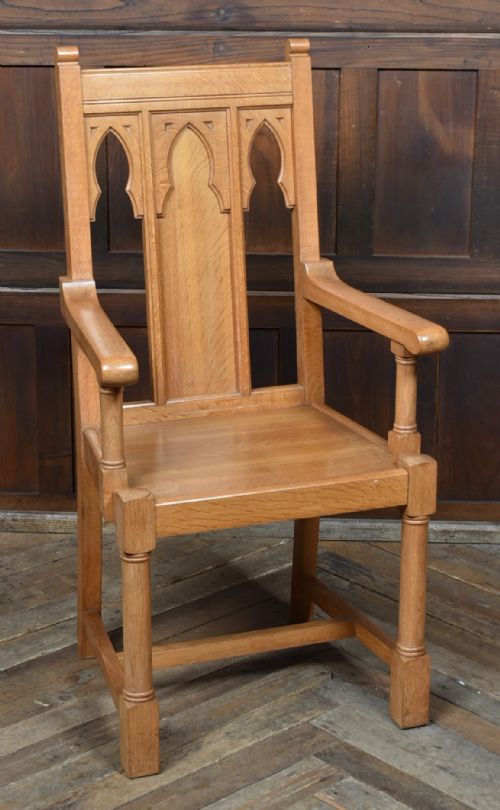
Gothic Revival pieces display pointed arches, trefoils, tracery and ecclesiastical motifs inspired by medieval architecture. These elements reflect the romantic medievalism popular throughout the nineteenth century.
Jacobean Revival pieces incorporate geometric panelling, strapwork, lunettes and turned supports that reference seventeenth-century English domestic joinery.