


Carved Leaf Accent Chair
A carved leaf accent chair brings French and English period seating into a room, offering gilded frames and carved woodwork.
Carved Leaf Accent Chair
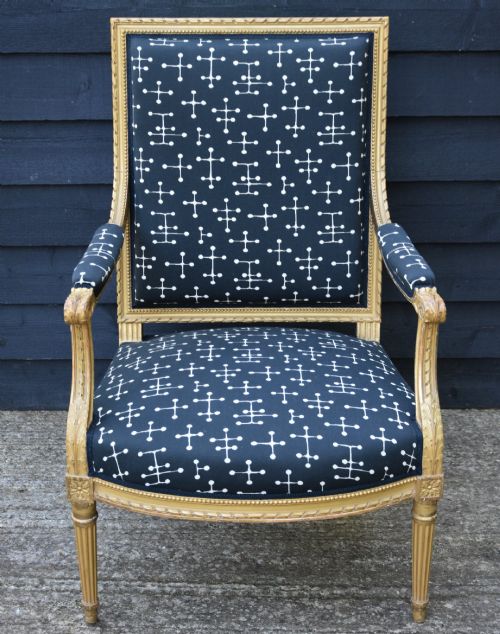
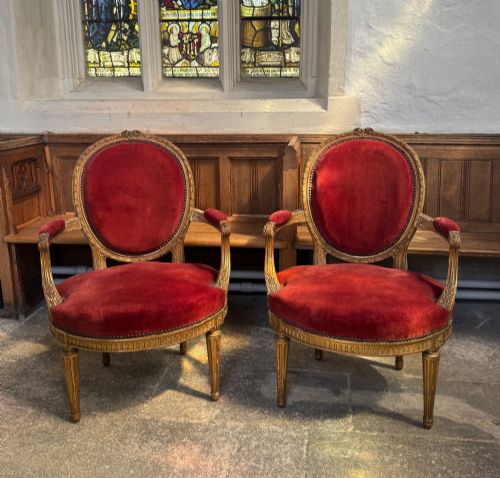
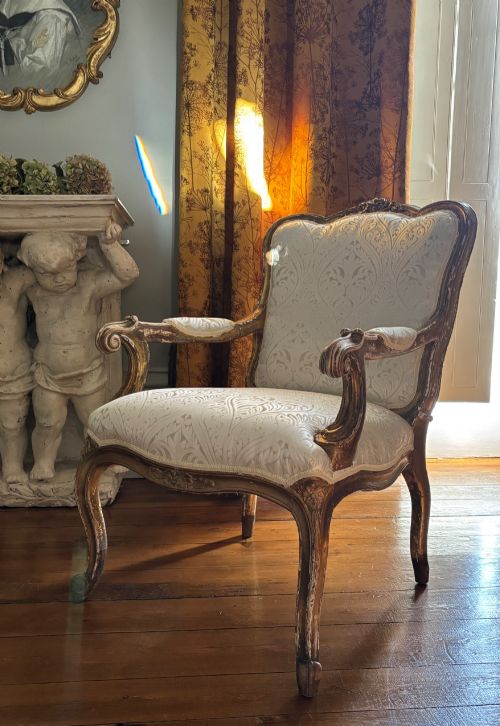
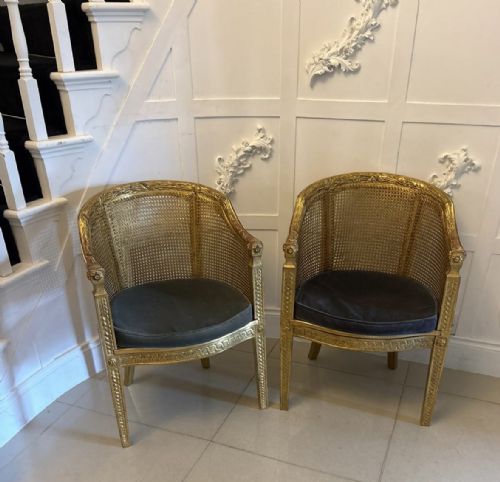
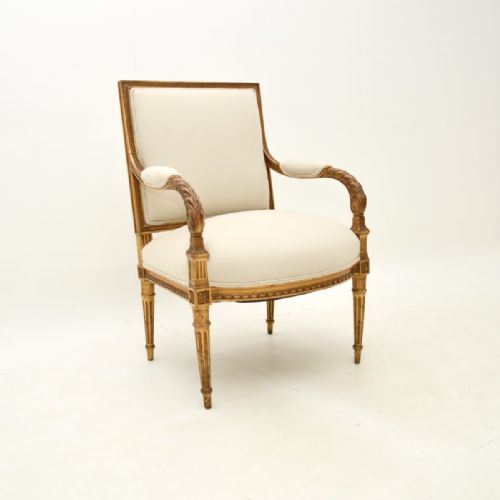
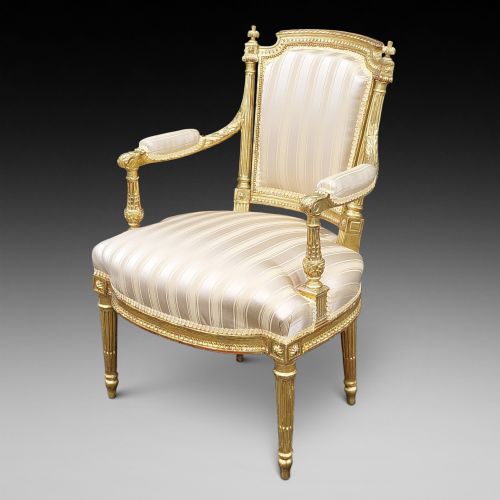
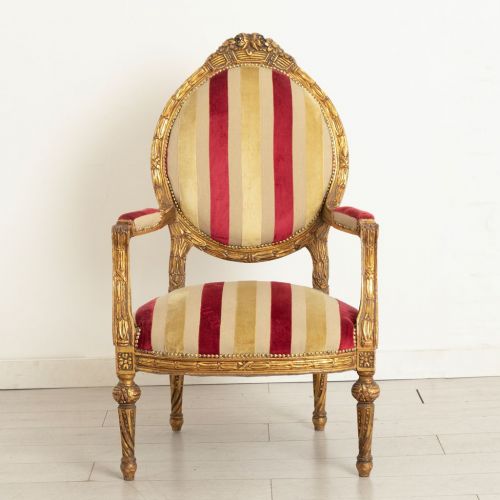
A carved leaf accent chair typically appears as a French-inspired armchair, bergere, fauteuil, or salon chair dating from the eighteenth to the twentieth century. These seats feature open or closed arms, high backs, and carved wooden frames finished in gilt or silver gilt.
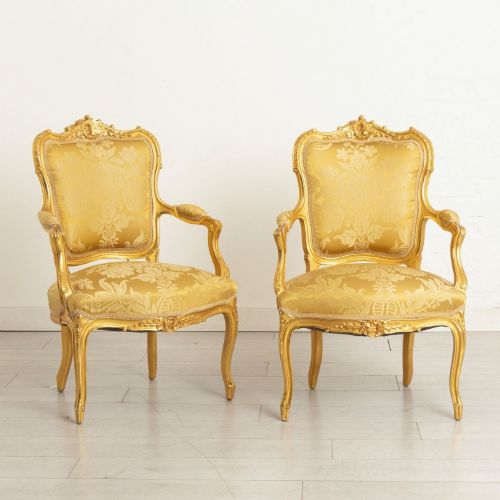
The selection on this page leans heavily towards nineteenth-century examples executed in Louis XVI, Rococo, and Regency styles. Alongside armchairs, buyers encounter dining chairs, side chairs, and occasional chairs constructed from beech, oak, and walnut.
Makers and designers of the period drew upon classical European motifs, resulting in pieces that function as both practical seating and decorative focal points. The recurring presence of giltwood finishes links these varied forms into a cohesive group of ornate antique seating.
What varies in quality
The depth and crispness of the wood carving distinguish superior frames from simpler production, particularly where leaf motifs and scrollwork meet the structural joints. Hand-carved articulation in walnut or beech holds sharper edges than cast composition ornaments applied to lesser frames.
The application of the gilt finish also sets examples apart, with genuine gold leaf ageing with a softer warmth compared to modern metallic paints. Furthermore, the choice of upholstery materials, such as heavy silk fabric versus plain textiles, alters the overall character and historical consistency of the chair.
Listings span from the eighteenth century through the 1930s, featuring timber frames in beech, oak, walnut, and giltwood.
Blaise Maucuy
The Carved Leaf Accent Chair Glossary
- Giltwood
- Wood that has been coated with thin sheets of gold leaf. This finish creates a bright, reflective surface characteristic of formal European period furniture.
- Fauteuil
- An open-armed upholstered armchair with exposed wooden arms and legs. Originating in France, this form became central to formal interior decoration.
- Bergere
- A closed-arm upholstered armchair with padded sides and a built-in seat cushion. The style provides a deeper and more enclosed seat than an open armchair.
- Rococo
- An ornate artistic style characterised by asymmetry, scrollwork, and naturalistic plant motifs. It heavily influences the carved decoration found on many nineteenth-century chairs.
Carved Leaf Accent Chair: Frequently Asked Questions
What is a fauteuil armchair?
A fauteuil is an open-arm upholstered seat designed in France during the seventeenth and eighteenth centuries, featuring exposed carved wooden frames.
These chairs combine structural woodwork with upholstered comfort, making them suitable for formal reception rooms and parlours.
How do I identify Louis XVI style?
Louis XVI style furniture is distinguished by neoclassical straight lines, fluted legs, and symmetrical geometric or botanical ornamentation.
This aesthetic contrasts sharply with the earlier curved lines and asymmetrical flourishes of the preceding Rococo period.
Where should I place a salon chair?
Salon chairs work well as occasional seating in bedrooms, hallways, or drawing rooms where space is limited but decorative presence is desired.
Their lighter scale allows them to be moved easily compared to heavy armchairs.
Are these chairs comfortable for daily use?
Period armchairs and bergere chairs offer supportive seating, though their upright postures reflect the formal etiquette of their eras of origin.
Upholstered versions provide softer support, while side chairs are better suited for occasional seating or dining.