


Victorian Oak Relief Carving
Victorian oak relief carving brings dense historical narrative and deep grain into a room, turning bare walls and plain corners into focal points.
Victorian Oak Relief Carving
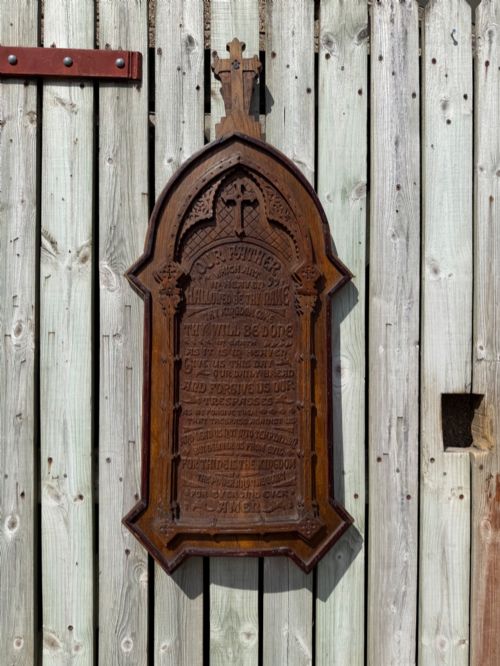
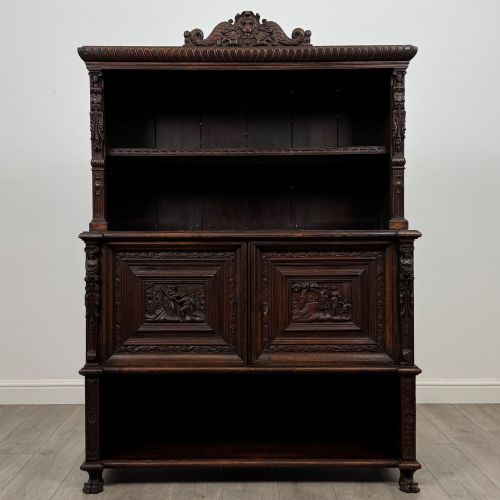
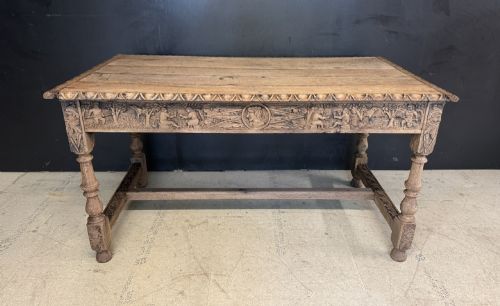
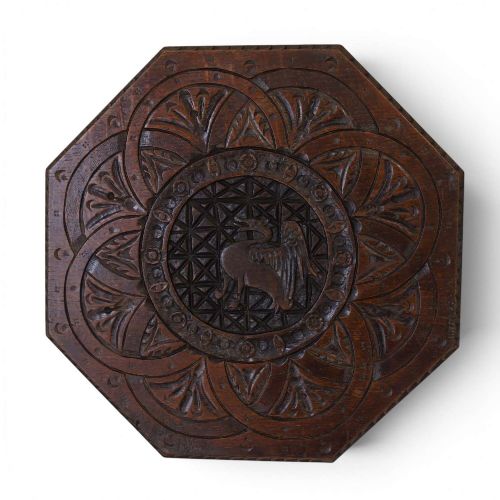
When you search for victorian oak relief carving, you encounter architectural salvage, wall plaques, panels, and heavy furniture carrying deep, chisel-cut ornamentation. The pieces span the nineteenth century, drawing heavily on Gothic, Renaissance, and Flemish revival styles.
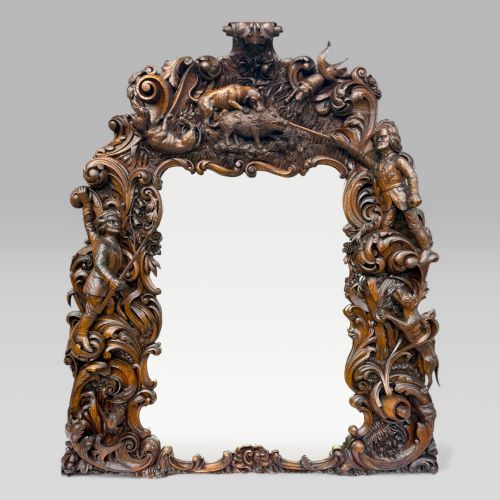
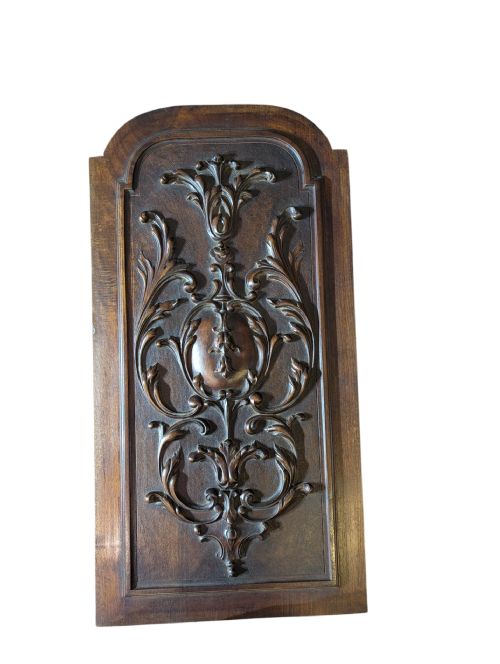
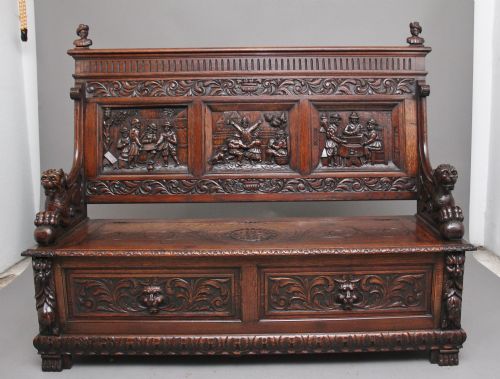
You are most likely to meet wall panels, cupboards, and hall benches on this page. These items range from single heraldic shields and portraits to large Flemish hall stands and overmantle mirrors.
The objects originate from British and continental European workshops, reflecting a period fascinated by historical revivalism and dark, heavily figured timber.
Materials and construction methods
The primary material is oak, selected for its strength and grain, occasionally accompanied by fruitwood, walnut, brass, leather, and iron fittings. Craftsmen relied on hand-carving techniques to achieve deep relief work, cutting directly into the timber to create shadow and dimension.
Larger items like cupboards, settles, and cabinets utilise traditional joinery to support heavy, carved doors and panels. Surfaces frequently display linenfold motifs, figural scenes, and crests shaped entirely by hand tools.
Materials across the page include oak, walnut, fruitwood, brass, iron, leather, and glass.
Assessing quality in carved timber
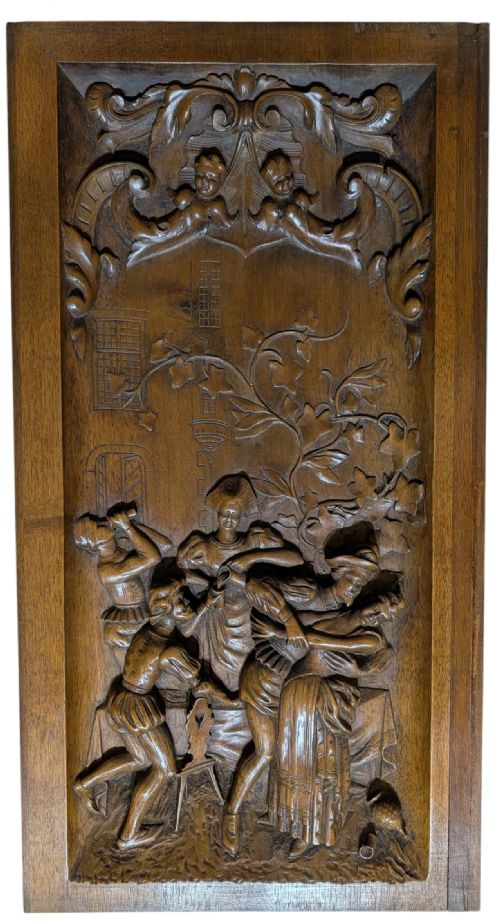
Quality rests in the crispness and depth of the chisel work rather than the mere presence of decoration. Superior examples show clear undercut details, expressive faces, and balanced composition across complex figural scenes.
The selection of the timber itself dictates the visual impact. Denser oak with prominent medullary rays holds sharper carved edges and develops a deeper patina than softer or more uniform wood.
The Victorian Oak Relief Carving Glossary
- Relief carving
- A sculptural technique where figures and motifs project from a flat background. This method gives architectural panels and wall plaques their three-dimensional depth.
- Linenfold
- A style of wood paneling carved to resemble folded fabric. It appears frequently on fifteenth-century revivals produced during the Victorian era.
- Overmantle
- A large mirror or decorative panel designed to be hung directly above a fireplace. These often anchor the main decorative scheme of a room.
- Gothic Revival
- An architectural and decorative style drawing inspiration from medieval forms. It manifests here in pointed arches, tracery, and solemn figural plaques.
- Flemish Renaissance Revival
- A style characterised by exuberant, ornate scrollwork, fruit garlands, and robust human figures. Cabinets and hall stands often display these elaborate motifs.
Victorian Oak Relief Carving: Frequently Asked Questions
Where were these carved panels originally placed?
Many of these pieces originated as architectural fittings inside hunting lodges, chateaux, and grand halls. They served as wall paneling, overmantles, or structural components of large sideboards.
Over time, elements were salvaged and repurposed as standalone wall plaques, mirrors, or decorative inserts for smaller rooms.
How do I care for antique oak furniture?
Maintain the timber by keeping it away from direct heat sources and rapid temperature changes. This prevents the heavy oak panels from splitting or warping.
Apply a traditional beeswax polish sparingly to nourish the grain and preserve the dark patina built up over the centuries.
What is the difference between Gothic and Flemish styles?
Gothic revival pieces lean towards architectural sternness, featuring pointed arches, linenfold patterns, and religious or heraldic iconography. They project a solemn and orderly visual weight.
Flemish revival pieces favour theatrical exuberance, displaying tumbling fruit, scrolls, and dynamic figures engaged in lively scenes.
Are these pieces made from solid oak?
The listings consist primarily of solid oak, alongside tiger oak variants and occasional secondary timbers used for internal framing. The substantial weight of these items demands robust hardwood construction.
Craftsmen selected heavily grained timber specifically to withstand deep sculptural relief without compromising structural integrity.