




Victorian Oak Hall Tree
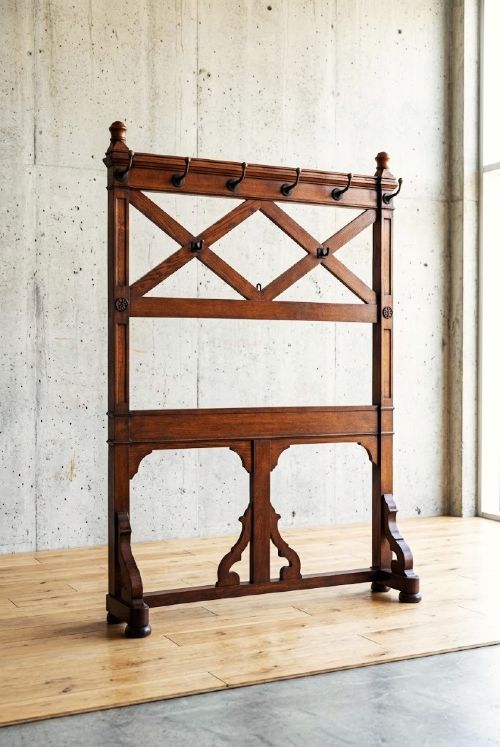
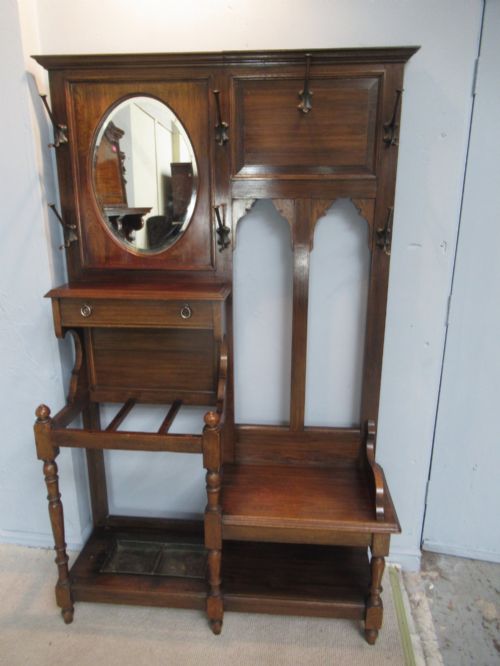
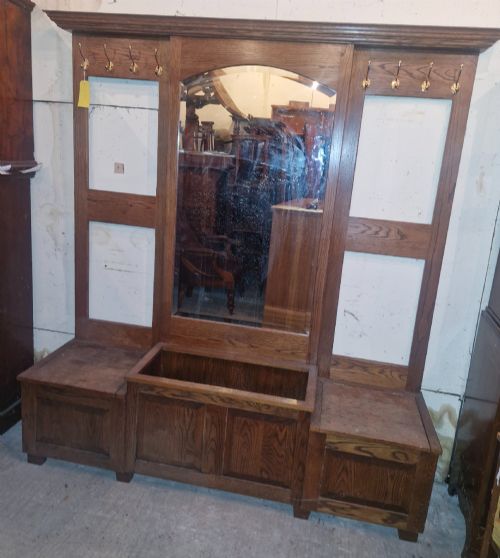
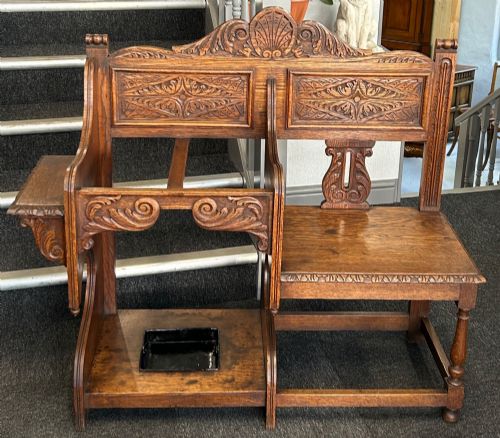
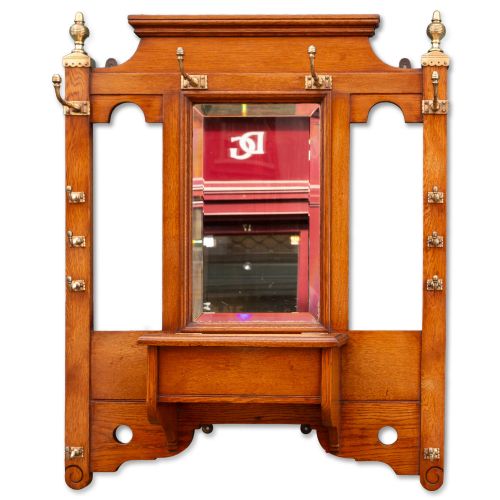
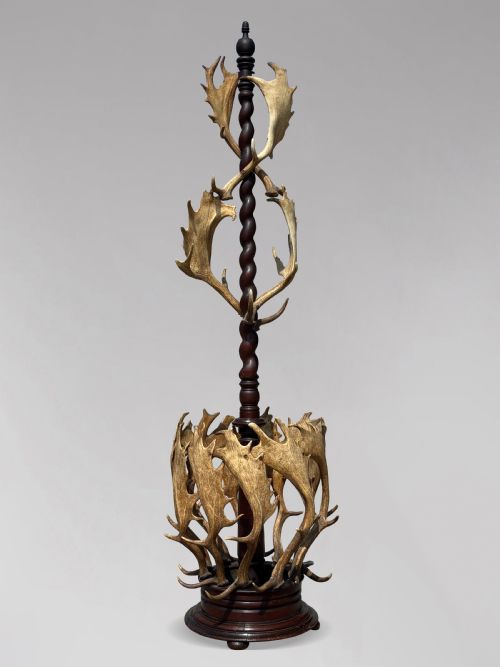
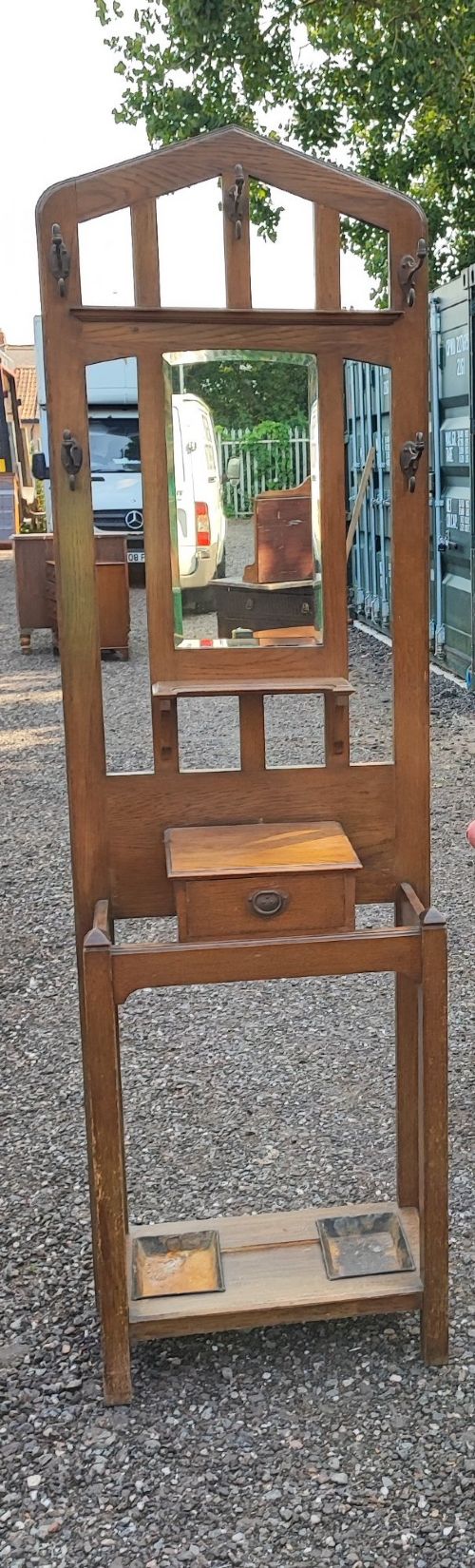
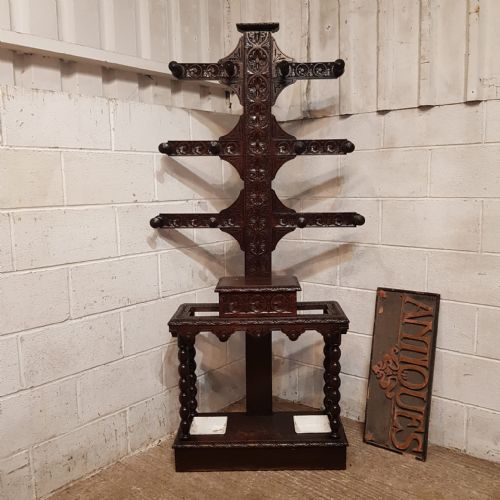
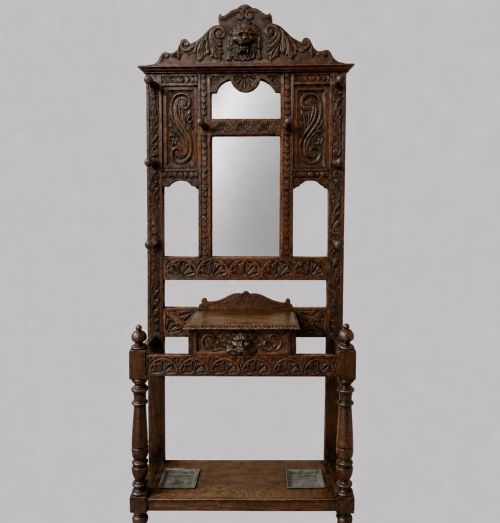
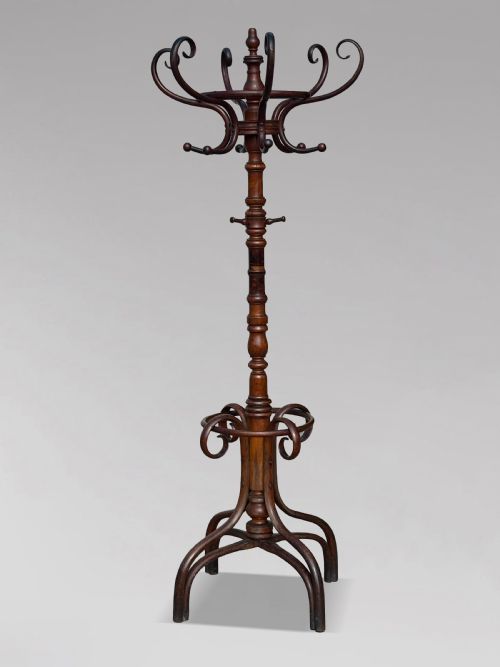
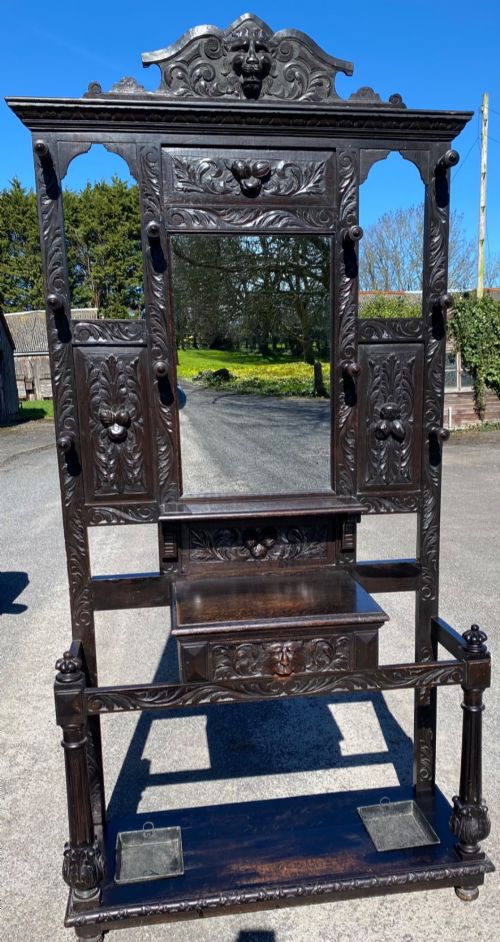
A victorian oak hall tree is a substantial piece of entrance furniture designed to hold coats, hats and sticks.
Victorian Oak Hall Tree
A victorian oak hall tree stands in the entranceway as a practical and decorative fixture for the home. When you search for a victorian oak hall tree, you encounter heavy timber furniture built to organise outdoor garments and walking gear.
The pieces on this page appear in various forms, including traditional hall stands, coat stands, hall seats and wall mounted racks. Many incorporate mirrors, brass hooks, marble inserts and drip pans for umbrellas.
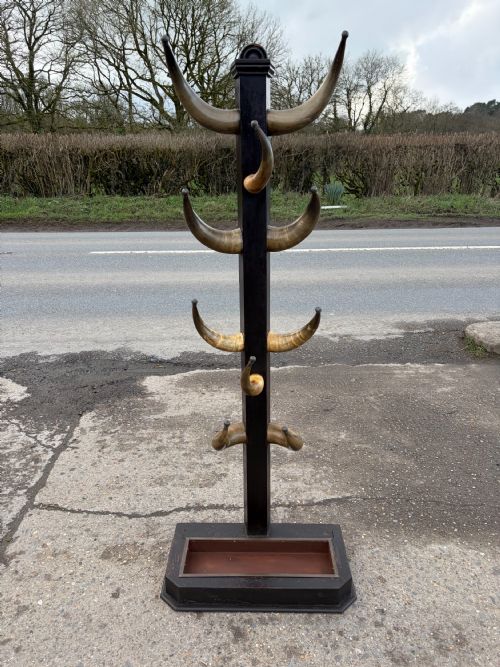
Origins stretch from the mid-nineteenth century through the Edwardian era, taking influence from Gothic Revival, Arts and Crafts and Black Forest styles. The prevailing material is solid or carved oak, often complemented by horn, iron and glass.
What varies in quality
The standard of carving defines the upper tier of these pieces, separating mass-produced items from exhibition pieces with intricate figural work like Black Forest animal motifs or detailed Greenman masks. Depth, sharpness and symmetry in the carved wood indicate the skill of the maker.
Material selection and scale also determine worth, with larger multi-functional examples featuring pollard oak, substantial marble inserts, heavy brass hardware and original drip pans commanding greater presence.
The listings show oak as the primary timber, paired with brass, iron, glass and cow horn across various nineteenth century periods.
J. Parker of Woodstock·Fischel·William Whiteley
The Victorian Oak Hall Tree Glossary
- Hall tree
- A freestanding piece of hallway furniture combining coat hooks, a hat rack, an umbrella stand and frequently a mirror or seat.
- Greenman
- A sculptural architectural ornament depicting a human face disgorged from foliage, common in nineteenth century oak carving.
- Gothic Revival
- An architectural and decorative style drawing inspiration from medieval design, featuring pointed arches, heavy mouldings and structural vigour.
- Black Forest
- A nineteenth century carving style originating in Switzerland and Germany, characterised by naturalistic animals and woodland motifs.
- Pollard oak
- Timber taken from trees that have been pollarded, producing a richly figured and mottled grain highly prized for cabinetmaking.
Victorian Oak Hall Tree: Frequently Asked Questions
What is a victorian oak hall tree used for?
A victorian oak hall tree serves as a grand entranceway organiser for outer garments, hats, walking sticks and umbrellas.
Most examples provide a combination of iron or brass coat hooks, upper hat shelves, umbrella retainers with metal trays, and occasionally a bench seat or mirror.
How do I identify a gothic revival hall tree?
Gothic revival pieces display architectural motifs such as pointed arches, quatrefoils, heavy chamfered edges and deep linenfold or geometric panels.
These designs reflect a mid-nineteenth century interest in medieval forms, rendered in solid or carved oak.
Where should I place a hall tree?
A hall tree requires adequate wall space and floor clearance in an entrance hall, boot room or large corridor.
Because many examples feature mirrors and wide umbrella bases, positioning them opposite a light source enhances the room and displays the carved oak grain.
What is a black forest hall tree?
A Black Forest hall tree incorporates naturalistic carvings of woodland animals such as bears, foxes, eagles or oak foliage.
Originating from European mountain regions, these dramatic pieces treat the timber like a natural tree or branch structure.