





Gothic Oak Hall Stand
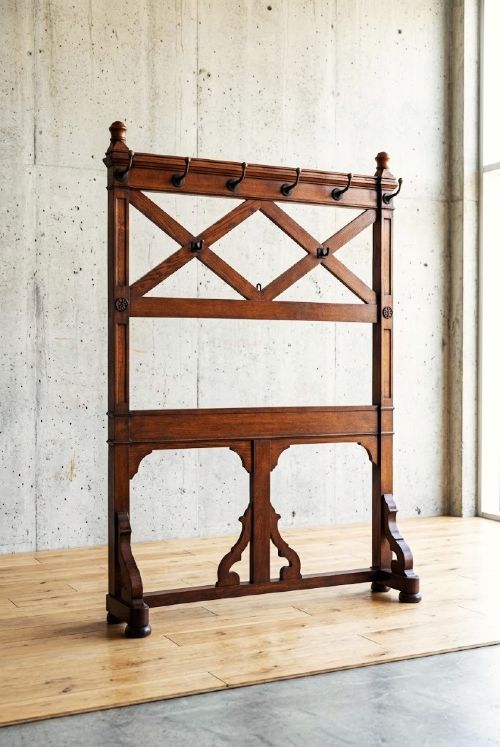
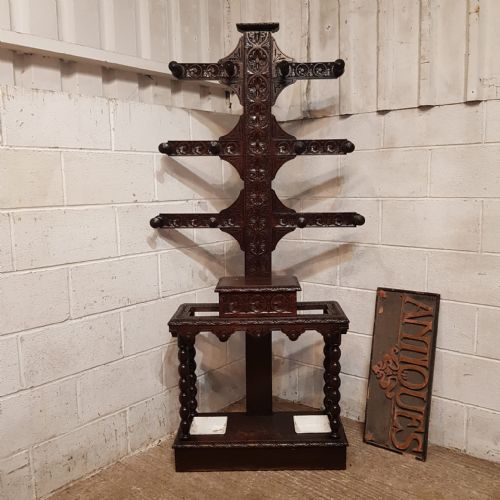
A gothic oak hall stand anchors an entrance hall with heavy timber, pointed arches and carved figures suited to hold hats, coats and umbrellas.
Gothic Oak Hall Stand
A gothic oak hall stand is a substantial entrance hall furnishing designed to organise hats, coats, sticks and umbrellas. When you search for this phrase, you encounter large upright pieces produced predominantly during the Victorian period and the late nineteenth century.
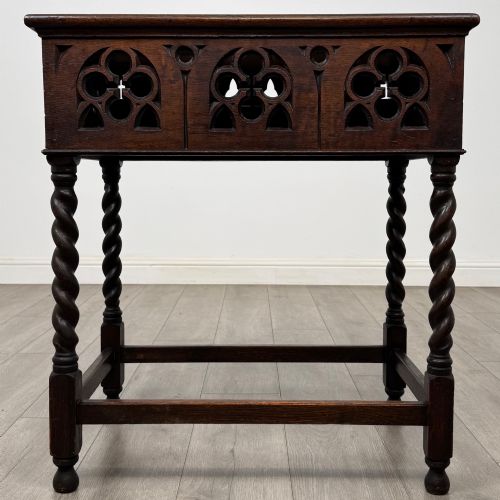
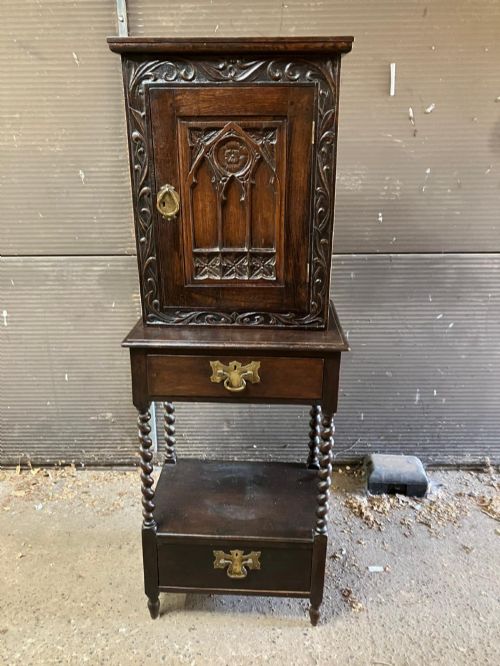
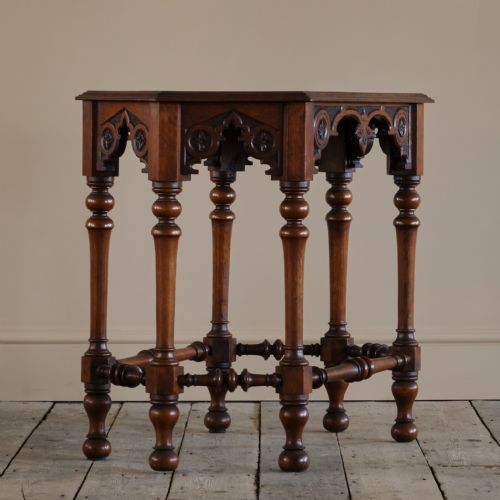
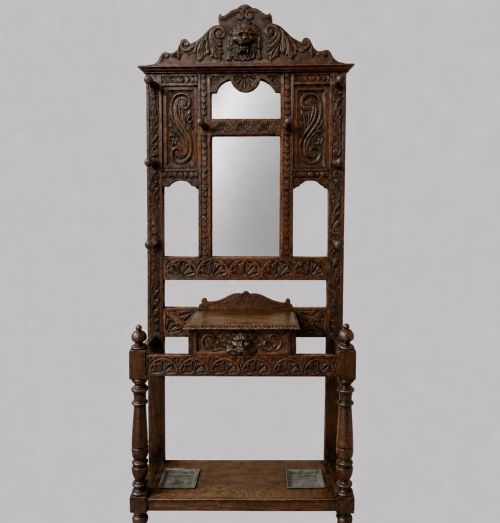
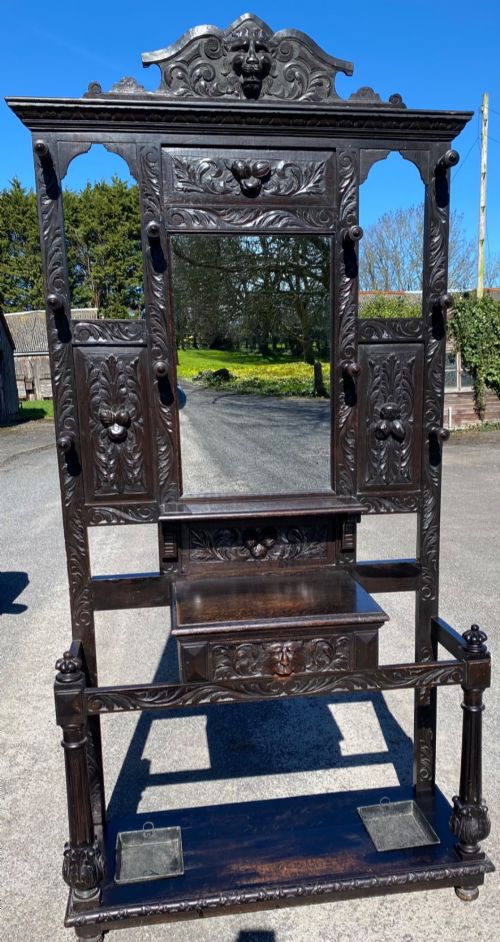
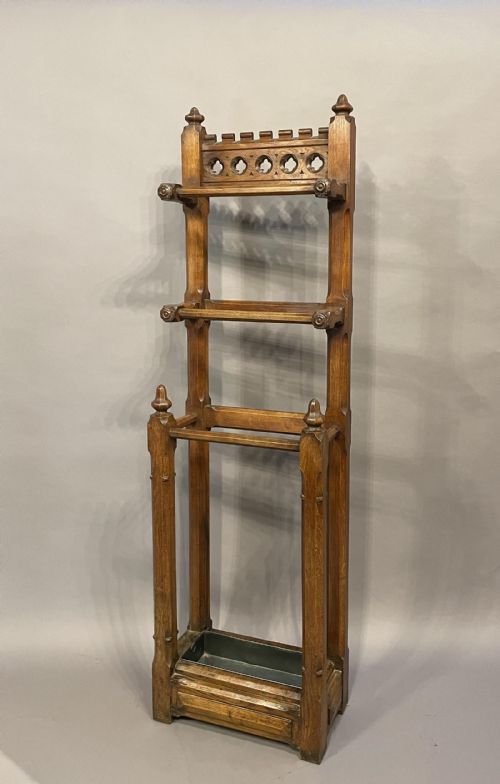
The forms span tall vertical stands featuring integrated mirrors and umbrella wells alongside lower hall tables, side tables and compact cupboards. Many examples incorporate specific gothic details such as linenfold panels, pointed archways and carved green man motifs.
The pieces on this page originate mostly from nineteenth century workshops adhering to Gothic Revival and Jacobean Revival styles. Simpler country house versions and larger architectural umbrella stands appear with equal frequency.
How they were made
Cabinet makers utilised solid oak as the primary structural material, selecting timber for density and visible grain. Metal, brass, iron and zinc components form the drip trays, coat hooks and umbrella rings integrated into the framework.
Carving defines the decoration, with craftsmen executing deep relief work by hand on panels, cornices and corbels. Glazing, mirror glass and occasionally ceramic tiles are fitted into the timber carcass to complete the construction.
Several stands include built-in gun racks, suggesting country house owners needed quick access to firearms right beside the umbrella tray.
What varies in quality
The depth and ambition of the carving separate standard production from superior examples. Master carvers produced intricate green man masks, undercut foliage and crisp architectural tracery that display far greater dimension than shallow machine stamping.
Scale and structural complexity dictate the standing of the piece within the range. Large country house stands incorporating gun racks, multiple storage compartments and heavy brass hardware represent more accomplished design than straightforward vertical coat rails.
William Whiteley·Pugin
The Gothic Oak Hall Stand Glossary
- Gothic Revival
- An architectural and decorative style drawing inspiration from medieval design. It employs pointed arches, heavy mouldings and vertical emphasis.
- Green Man
- A sculptural motif depicting a human face emerging from or entwined with foliage. It symbolises rebirth and appears frequently on Victorian woodwork.
- Drip tray
- A removable metal basin positioned at the base of a stand to catch water from wet umbrellas. It protects the timber floor from moisture damage.
- Tracery
- Openwork stonework patterning translated into wooden joinery. It creates geometric window-like frameworks on panels and cabinet doors.
Gothic Oak Hall Stand: Frequently Asked Questions
What is a gothic oak hall stand?
A gothic oak hall stand is a tall entryway furniture piece designed to hold coats, hats and wet umbrellas. It combines medieval architectural motifs with sturdy oak construction to serve as both a practical storage unit and a decorative statement in a hallway.
These pieces typically incorporate mirror glass, carved panels, hooks and metal drip trays into a single vertical framework. They emerged strongly during the nineteenth century revival periods.
How were they used in period homes?
In nineteenth century households, these stands greeted visitors immediately upon entering the front door. Residents and guests used them to deposit outer garments, walking sticks and umbrellas before entering the main living areas.
The central mirror allowed a quick check of appearance, while lower compartments or drawers often held gloves, brushes and calling cards.
How do I care for antique oak?
Antique oak benefits from minimal intervention, requiring only occasional dusting with a dry, soft cloth. Avoid applying modern silicone sprays or heavy liquid polishes that build up a residue on the timber surface over time.
Keep the wood away from direct heat sources and dramatic humidity shifts to prevent the solid oak panels from splitting or warping. Natural beeswax applied sparingly helps preserve the finish.
How can I tell Victorian from Edwardian stands?
Victorian examples tend to feature heavier proportions, dense and deep relief carving, and darker patination. Green man masks and elaborate linenfold panels are strongly associated with this nineteenth century phase.
Edwardian pieces often show slightly lighter timber tones and more restrained ornamentation. The overall silhouettes become a touch simpler as domestic tastes shifted away from heavy revivalism.