


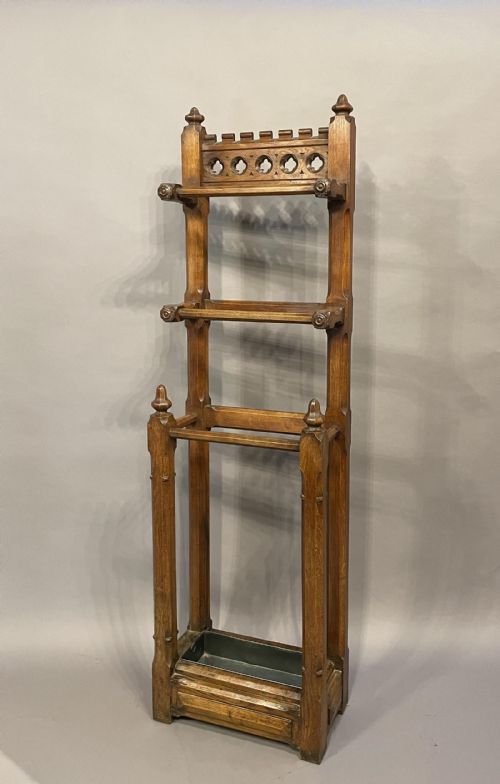


Gothic Stick Stand Tray
A gothic stick stand tray organises wet outerwear in the hallway while bringing pointed arches and heavy metalwork into the home.
Gothic Stick Stand Tray
When you search for a gothic stick stand tray, you find heavy hallway furniture designed to hold wet umbrellas and walking sticks off the floor. These pieces date from the nineteenth century, spanning the Victorian era and the gothic revival period.
Most examples appearing on this page take the form of cast iron umbrella stands, often incorporating integral drip trays at the base. You will also encounter occasional hall stands in oak or mahogany alongside country house pieces.
Makers utilised durable metals and hardwoods to withstand the moisture dripping from damp weather gear. The ornamentation borrows directly from ecclesiastical architecture, featuring trefoils, lancet arches and structural ironwork.
How they were made
Foundries manufactured the iron components using sand casting techniques, pouring molten metal into moulds to create intricate openwork patterns and rigid frames. Sheet metal and zinc often formed the removable drip trays hidden beneath the umbrella rings.
Joiners and cabinetmakers constructed the wooden variants using solid oak and mahogany, cutting mortise and tenon joints to bear the weight of heavy coats and walking canes. Brass fittings and hooks were then screwed into the timber backboards.
Listings feature items from the Victorian period, including pieces dated around 1800 and 1900, constructed from cast iron, brass, oak, and mahogany.
What varies in quality
The crispness of the casting defines the better examples, where architectural tracery and foliage remain sharp rather than blurred by worn foundry moulds. Heavier cast iron frames sit more steadily on flagstones and floorboards without wobbling.
The presence of an original removable drip tray elevates a piece, as many lost their sheet metal or zinc inserts over decades of use. Maker attribution, such as foundry marks stamped into the iron, also separates standard production from superior work.
Falkirk Foundry
The Gothic Stick Stand Tray Glossary
- Gothic Revival
- An architectural and decorative style popular in the nineteenth century that revived medieval forms, pointed arches, and ornamental ironwork. It heavily influenced hallway furniture of the period.
- Cast Iron
- A strong, heavy alloy of iron and carbon poured into moulds to create rigid frames and intricate patterns. Foundries utilised it extensively for umbrella stands.
- Drip Tray
- A shallow metal basin placed at the bottom of a stand to catch water running off wet umbrellas. Zinc and sheet metal were common materials for these components.
- Hall Stand
- A larger piece of hallway furniture combining an umbrella stand with coat hooks, a mirror, and sometimes a glove drawer. Oak and mahogany were typical woods for construction.
Gothic Stick Stand Tray: Frequently Asked Questions
What is a gothic stick stand tray?
A gothic stick stand tray is a nineteenth-century hallway furnishing designed to hold umbrellas and walking sticks while catching water in a base tray.
These pieces draw on medieval architectural motifs, featuring pointed arches and heavy cast iron or timber construction.
How do I date a cast iron stick stand?
Dating relies on stylistic clues, registration marks, and foundry stamps cast into the metal during production in the nineteenth century.
Victorian gothic revival pieces typically exhibit heavier ornamentation and sturdier ring configurations than later reproductions.
Are drip trays usually original?
Many original zinc or sheet metal drip trays did not survive decades of moisture and daily use in busy hallways.
Replacements are common, so collectors look closely at how the base tray fits the iron frame.
Where should I place a heavy iron stand?
These robust stands belong in entrance halls or boot rooms where their weight can rest safely on stone or sturdy wood floors.
Ensure the floor can support the combined weight of the cast iron and wet umbrellas.