




Edwardian Carved Hall Tree
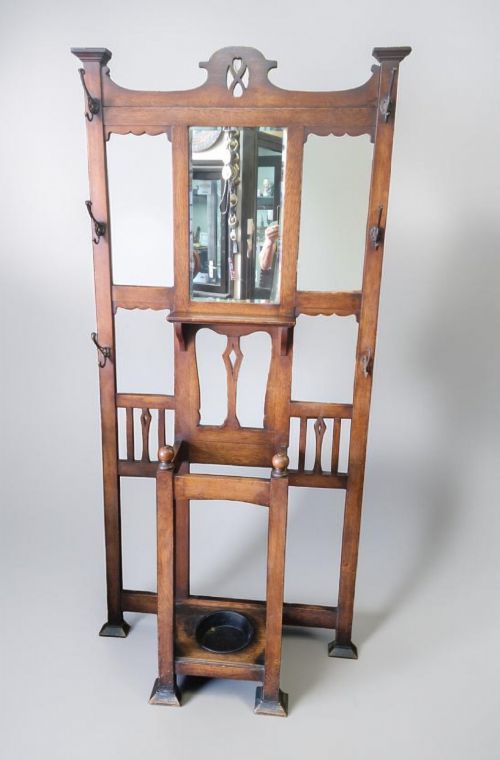
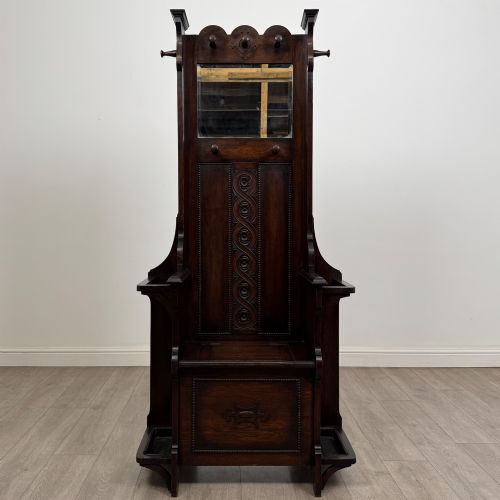
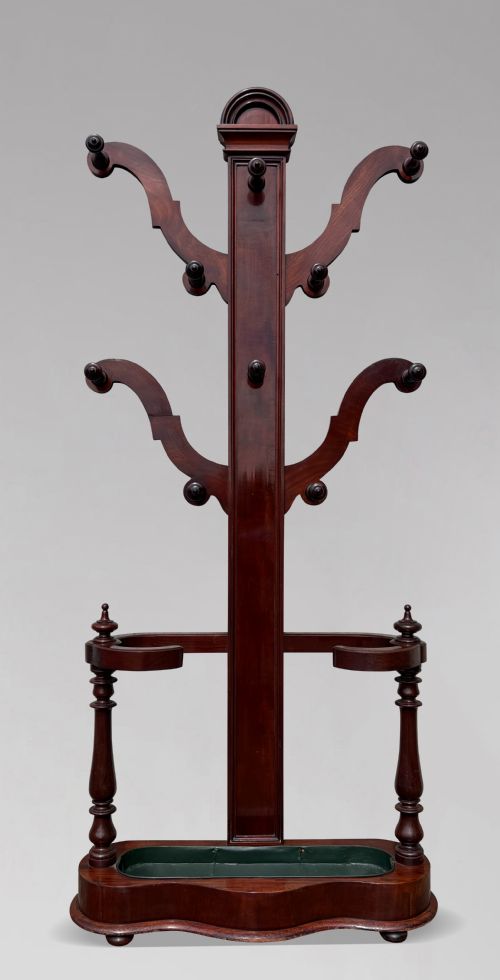
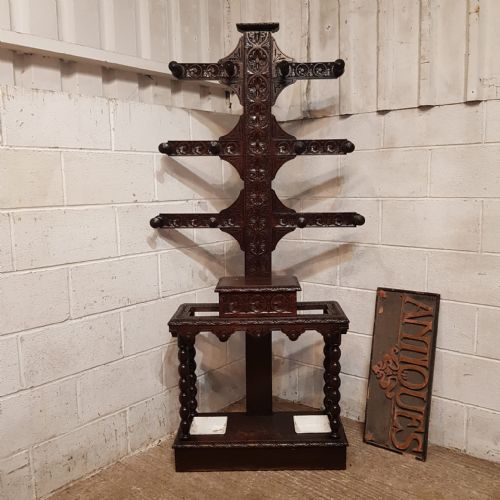
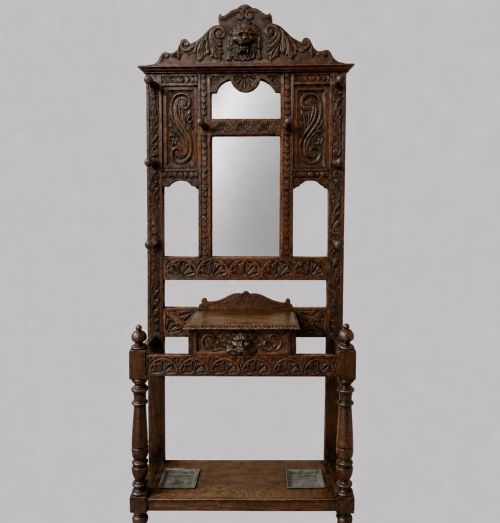
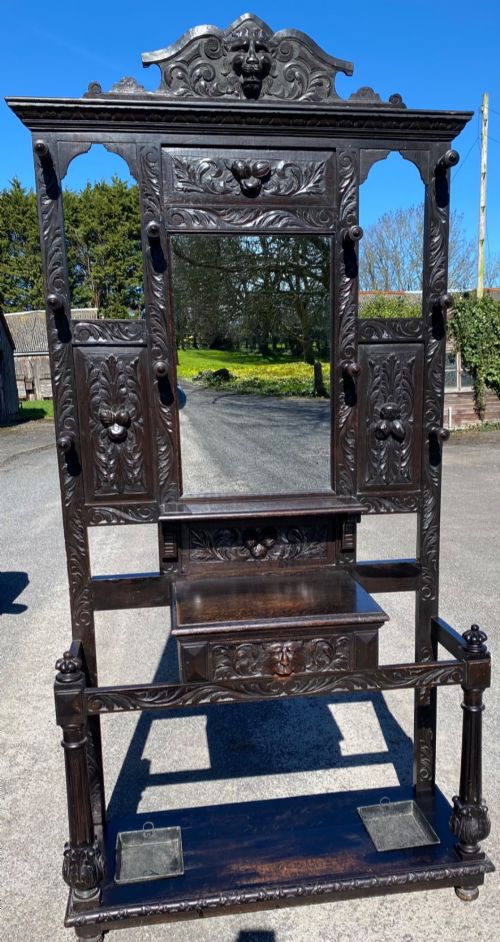
An edwardian carved hall tree organises the entrance with timber, mirror glass and metal hooks.
Edwardian Carved Hall Tree
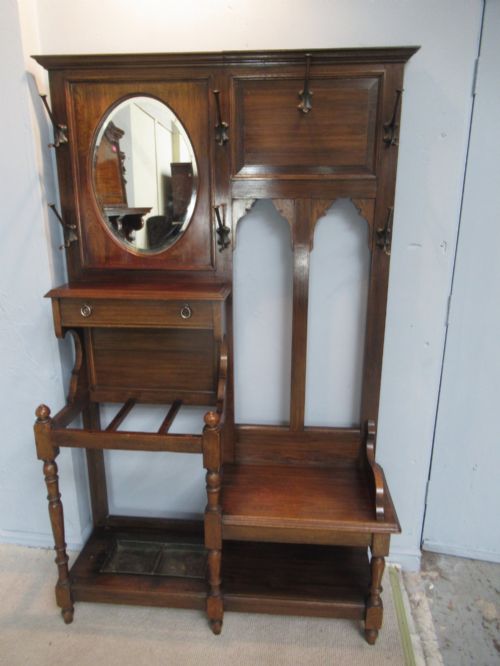
The edwardian carved hall tree stands in the entrance hall to hold coats, hats and walking sticks while reflecting light through an integrated mirror.
Most examples encountered on this page date from the Edwardian period or the broader turn of the century, constructed principally in oak or mahogany.
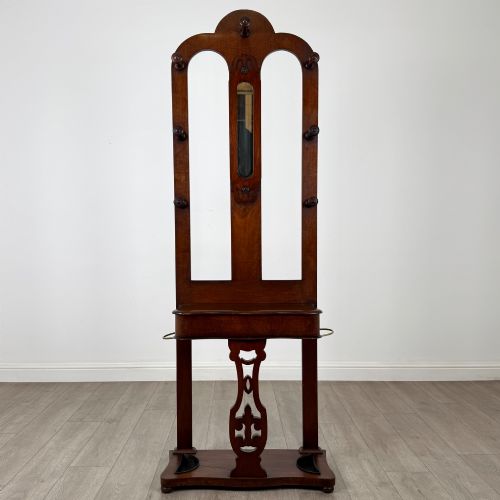
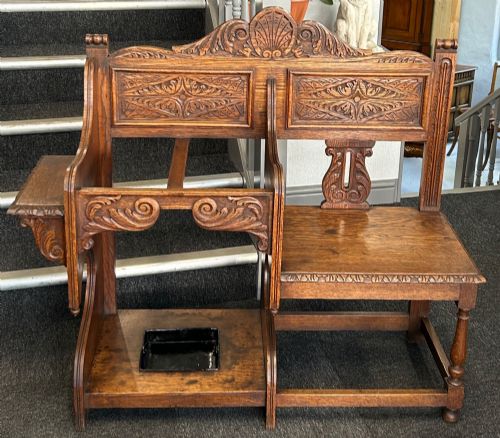
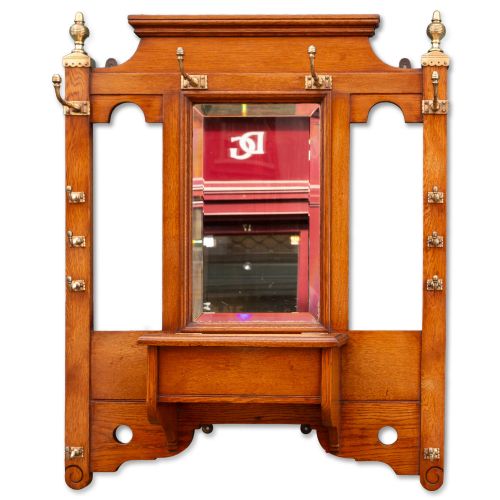
Combinations of hall seats, umbrella wells and brass coat hooks define the standard domestic form found in these listings.
Materials and construction
Cabinetmakers utilised solid oak and mahogany for the main frames, often incorporating figured walnut veneers on larger panels.
Functional hardware relied on cast iron and brass for coat hooks, drip pans and umbrella rails, secured directly to the wooden structure.
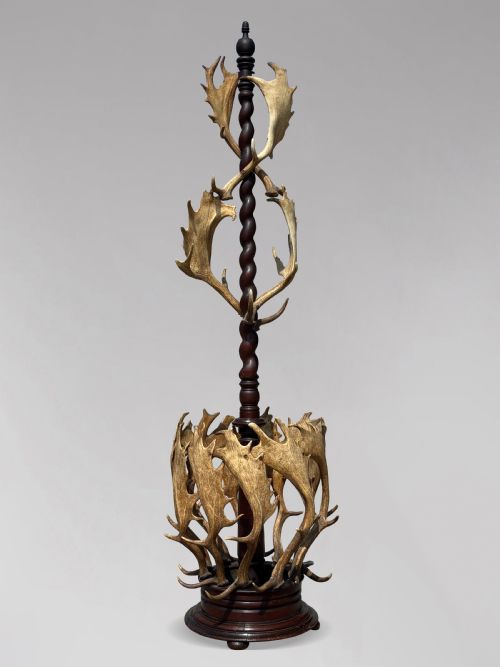
A carved bear makes an unexpected appearance amongst the traditional coat stands.
Indicators of quality
Depth and crispness of carving separate standard production pieces from finer examples, particularly where figural motifs like Green Men appear.
J. Parker of Woodstock
The Edwardian Carved Hall Tree Glossary
- Hall tree
- A freestanding piece of hallway furniture combining coat hooks, a mirror and umbrella storage. It serves the same function as a hall stand.
- Green Man
- A sculptural architectural ornament depicting a human face disgorged from foliage. Carved examples frequently adorn oak furniture from this era.
- Drip pan
- A removable metal tray positioned at the base of a stick stand to catch moisture from wet umbrellas. Brass and cast iron are typical materials.
- Bevelled glass
- Mirror glass with an edge cut at an angle to create a decorative frame effect. Its presence often indicates a better quality piece.
Edwardian Carved Hall Tree: Frequently Asked Questions
What is an edwardian carved hall tree used for?
These pieces serve as an all-in-one entryway station for hanging outerwear, storing walking sticks and checking appearance before departure.
The lower umbrella wells and trays manage wet weather gear while upper hooks accommodate hats and coats.
How do I care for the wood?
Maintain the timber surfaces by applying natural beeswax periodically to nourish the polish and protect the grain from atmospheric moisture.
Avoid placing these tall items in direct sunlight or near heat sources to prevent timber splitting.
Are mirrors original?
Many pieces retain their original mirror glass, often showing slight foxing or age spots that confirm their antique status.
Replacements do occur if the original glass suffered damage over decades of hallway use.
How do I distinguish Edwardian from Victorian pieces?
Edwardian items tend to display lighter oak timbers and slightly more restrained carving compared to heavier, darker Victorian counterparts.
Stylistic crossover remains common around the turn of the century, blending late Victorian proportions with Edwardian brightness.