




Victorian Oak Gaming Box
These robust victorian oak gaming box pieces combine drinking hospitality with parlour entertainment, built from solid timber to anchor a gentleman's study or country house drawing room.
Victorian Oak Gaming Box
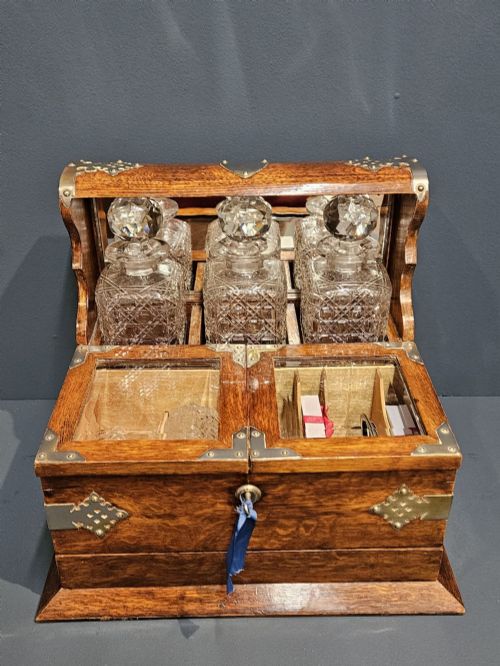
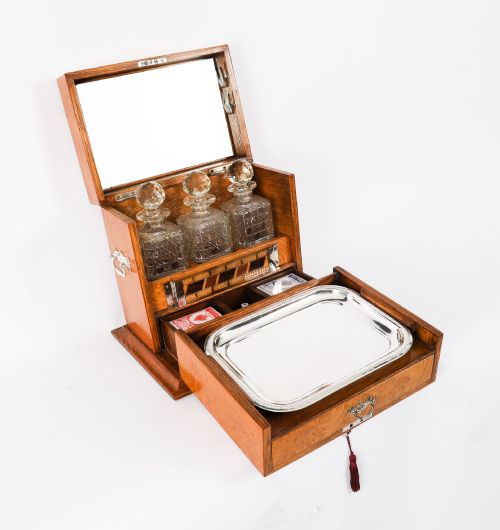
A victorian oak gaming box unites social drinking with board games, merging a tantalus with internal compartments for cards, cribbage boards, and counters. Most examples encountered here date from the late nineteenth century, spanning the Victorian and Edwardian periods.
The dominant forms combine heavy timber cabinetry with locking mechanisms, housing cut glass decanters alongside dedicated wells for parlour games. These multi-purpose compendiums served as the social hub for evening entertaining in country houses and town residences alike.
Materials and construction
Cabinetmakers utilised quarter-sawn and figured oak, often referred to as blonde or golden oak, fashioned into robust carcasses designed to withstand heavy daily use. The timber grain provides both structural strength and visual depth across the exterior panels.
Brass fittings, including carrying handles, locking plates, and corner braces, reinforce the heavy oak frames while providing mechanical security for the contents. Internal partitions are fitted precisely to house removable cut glass decanters, silver-plated accessories, and playing card compartments.
Victorian Oak Gaming Box Retail Price Guide 2026
Typical asking prices for victorian oak gaming box among the pieces listed under this phrase on Sellingantiques today, from the lower quarter to the upper quarter. They describe what is for sale here now, not the wider market.
Current listings span from the 1880s through the Edwardian period, utilising oak, brass, and cut glass to form comprehensive games compendiums.
Assessing quality
The distinction between standard commercial pieces and superior examples rests on the selection of figured timber and the integration of the internal mechanisms. Finer boxes incorporate sophisticated locking systems that simultaneously release the decanters and swing open the game compartments.
The quality of the internal fittings, from the thickness of the cut glass decanters to the precision of the brass hardware, determines the cabinet's original standing. Comprehensive compendiums featuring complete sets of games equipment represent the upper tier of this category.
The Victorian Oak Gaming Box Glossary
- Tantalus
- A locking drink cabinet that holds decanters securely in place while displaying the contents, preventing unauthorized access through a clever metal bar mechanism. This device earned its name because guests could see the liquor but could not pour it without the key.
- Compendium
- A single fitted container holding multiple games, writing implements, or drinking vessels designed for travel or home entertainment. These multi-use boxes maximise utility within a compact cabinet footprint.
- Cribbage board
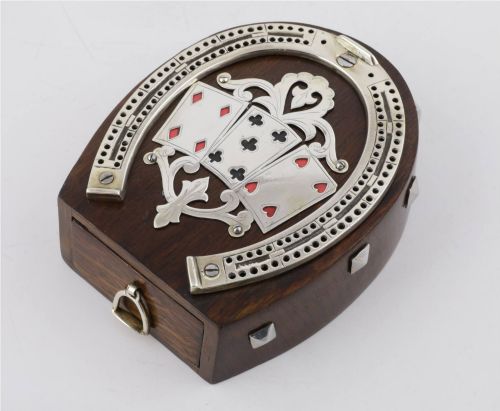
- A scoring board featuring parallel tracks of small holes used to tally points during a traditional card game. These boards are frequently integrated into the lids or internal trays of nineteenth-century games boxes.
- Quarter-sawn oak
- Timber cut radially from the growth rings to produce distinctive ray fleck patterns and superior dimensional stability. This method reduces warping in large cabinet doors and heavy box lids.
Victorian Oak Gaming Box: Frequently Asked Questions
What is inside a gaming box?
These boxes typically house cut glass decanters alongside dedicated compartments for playing cards, cribbage boards, and gaming counters. Some larger examples function as complete dry bars with matching glasses and stirrers.
Interior layouts vary depending on whether the cabinet was designed primarily for drinking hospitality or for parlour games, though many combine both functions.
How do you date an oak games box?
Dating relies on architectural styling, lock mechanisms, and the specific combination of materials like brass hardware and cut glass. Pieces from the late nineteenth century often display robust Victorian proportions.
Later Edwardian iterations tend to feature slightly lighter oak tones and simplified internal hardware while maintaining the dual purpose of drink service and game storage.
Were these boxes locked originally?
Yes, security was a primary function of these cabinets, allowing hosts to secure expensive spirits and gaming accessories from household staff. Working brass locks with original keys remain a key feature of well-preserved examples.
The locking mechanism often secures both the decanter retaining bar and the drop-front game drawers simultaneously.
Where were these boxes used?
They were standard fixtures in country house drawing rooms, smoking rooms, and gentlemen's studies for evening hospitality. Guests would gather around the cabinet for after-dinner drinks and parlour games.
Their portable nature also allowed them to be moved between rooms depending on where entertaining took place.