


Victorian Oak Executive Desk
A victorian oak executive desk brings serious presence to a study, offering sturdy timbers and clever storage built for heavy daily use.
Victorian Oak Executive Desk
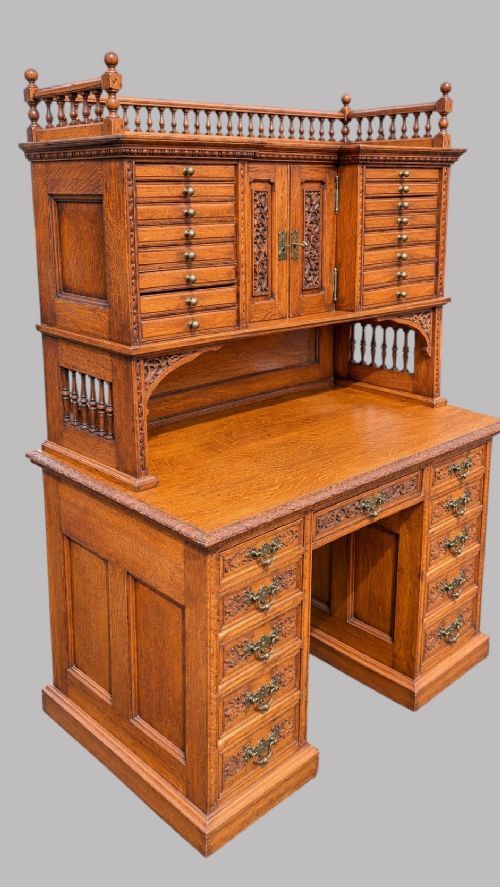
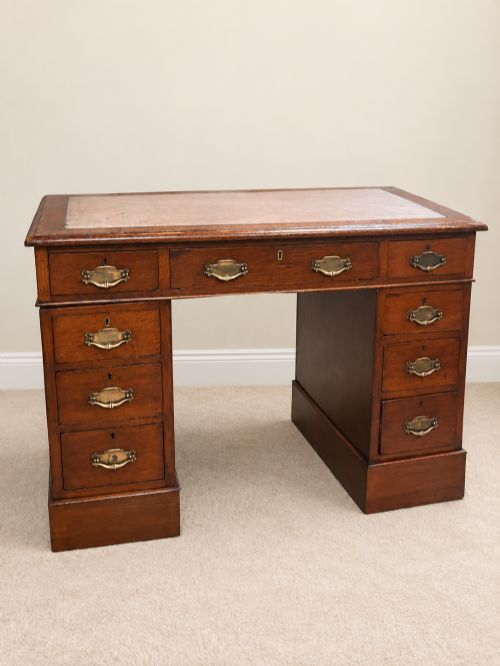
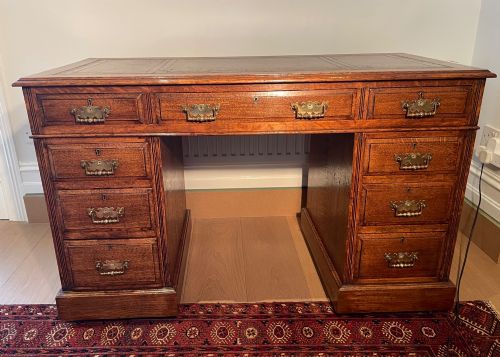
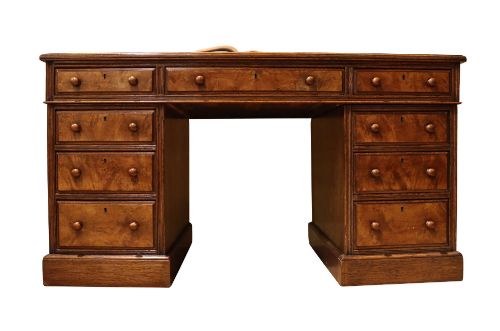
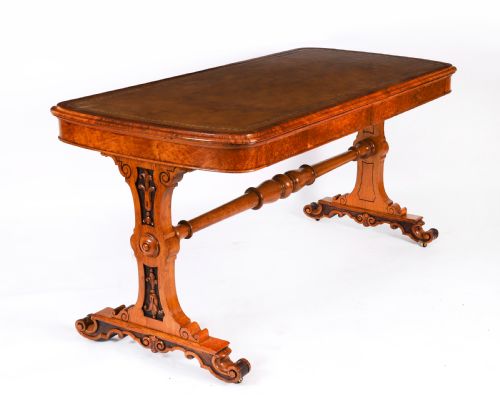
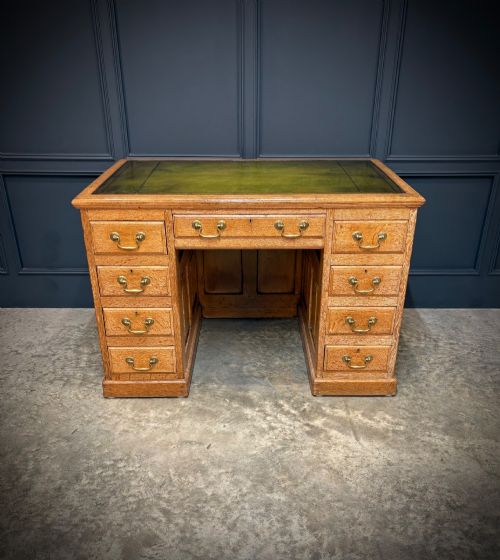
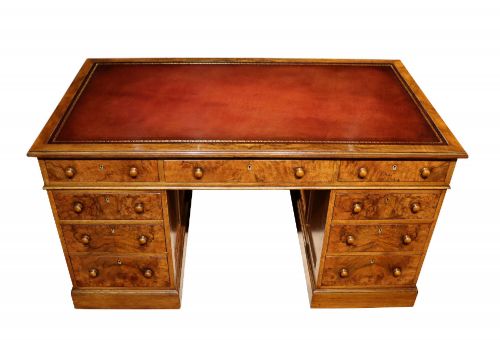
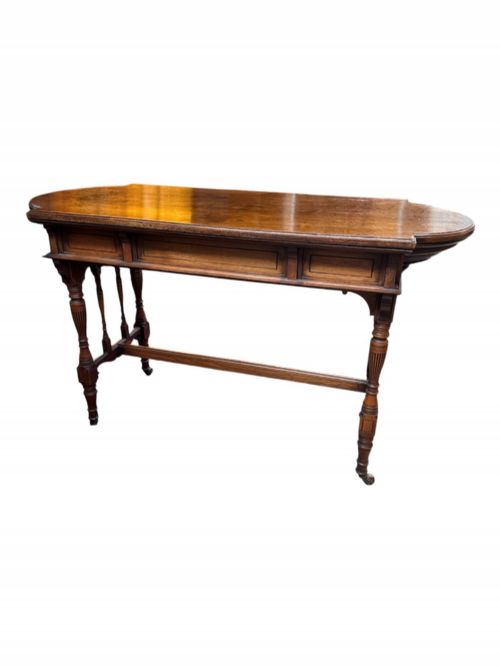
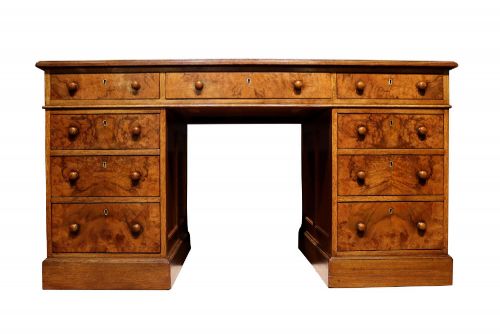
A victorian oak executive desk usually takes the form of a substantial pedestal desk, a kneehole desk, or a large partners writing table designed for two sides of work. The pieces appearing here date from the nineteenth century into the early twentieth century, spanning periods from the 1850s to the Edwardian era.
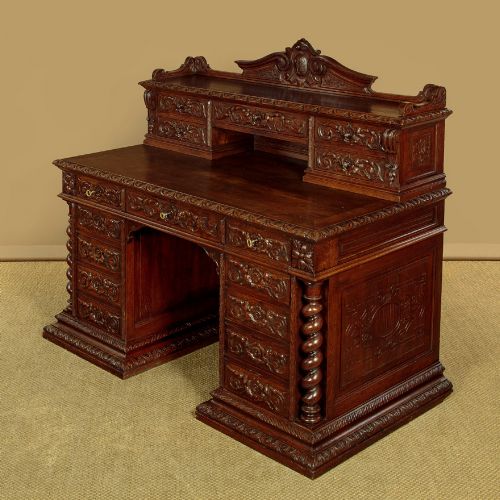
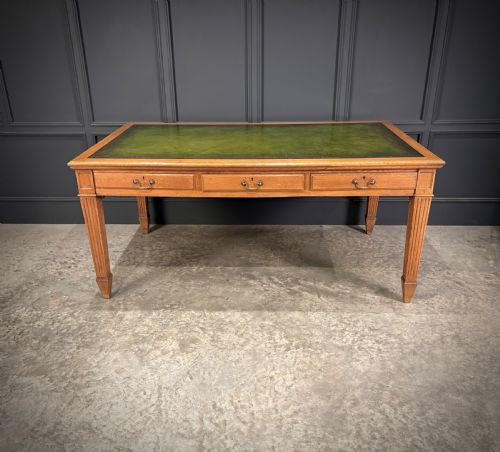
Makers often drew upon revival styles, producing pieces with Gothic, Renaissance, or Tudor influences alongside standard Victorian forms. Buyers encounter pedestal desks with banks of drawers flanking a central recess, writing tables with leather inserts, and specialised library tables.
Materials and Construction
Solid oak provides the primary structural timber, frequently paired with secondary woods like ash and mahogany, and decorative veneers such as burr walnut and pollard oak. Cabinetmakers integrated brass handles, iron hardware, and inset leather writing surfaces bordered with gilt tooling.
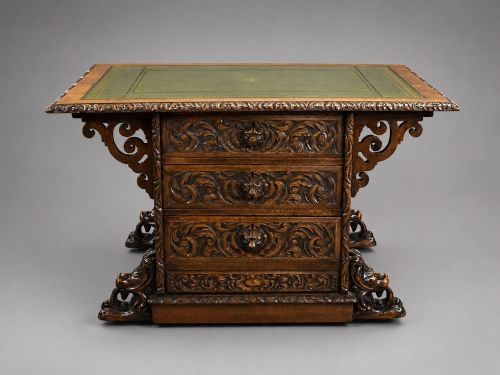
Construction techniques include deep drawer dovetailing, heavy timber framing, and elaborate hand-carving applied to pedestals, panels, and corners. Some larger pieces incorporate swivelling mechanisms and adjustable components to suit office requirements.
Look closely for the occasional ferocious lion head or carved green man peering out from beneath the desk drawer.
Quality and Distinction
The degree of carving and the selection of secondary timbers separate standard utility pieces from exhibition items, with burr walnut and pollard oak veneers signalling higher status. Stated attributions to workshops like Gillows or marked makers elevate the standing of a desk.
Proportion, timber figure, and the preservation of original leather writing surfaces and brass hardware determine the merit of a piece. The presence of documented maker plates or specific regional estate origins adds notable archival weight.
Gillows·T Wilson·Deighton and Dunthorne·Merryweather and Son
The Victorian Oak Executive Desk Glossary
- Partners desk
- A large double-sided writing table designed with matching drawers and cupboards on both long faces so two people could work opposite each other.
- Pedestal desk
- A heavy table comprising two pedestals of stacked drawers that support a single wide top, often featuring a central kneehole.
- Kneehole desk
- A compact desk with a central recess for the legs, flanked by single or double columns of small drawers.
- Burr walnut
- A highly figured wood veneer derived from walnut tree growths, prized for its swirling grain patterns on drawer fronts.
- Pollard oak
- Timber taken from trees that were pollarded, yielding a densely knotted and rippled grain appearance used for decorative surfaces.
Victorian Oak Executive Desk: Frequently Asked Questions
How do I care for the leather top?
Leather writing inserts require periodic treatment with specialist leather balms to prevent drying and cracking over time.
Keeping the surface clear of direct sunlight preserves the original colour and the delicate gilt tooling around the edges.
Are these desks easy to move?
Most pedestal and partners desks separate into three distinct modules, consisting of the two drawer pedestals and the heavy top.
This modular construction allows for manageable transport despite the solid oak framing and large overall dimensions.
How do I spot a Victorian desk?
Victorian desks typically display heavy oak construction, hand-cut dovetails inside the drawers, and period revival stylistic details.
Hardware such as brass drop handles and brass locks stamped by period makers offer further confirmation of age.