



Victorian Oak Buffet Table
A victorian oak buffet table is a heavy dining room serving piece built to hold dishes and silver during the nineteenth century.

Victorian Oak Buffet Table
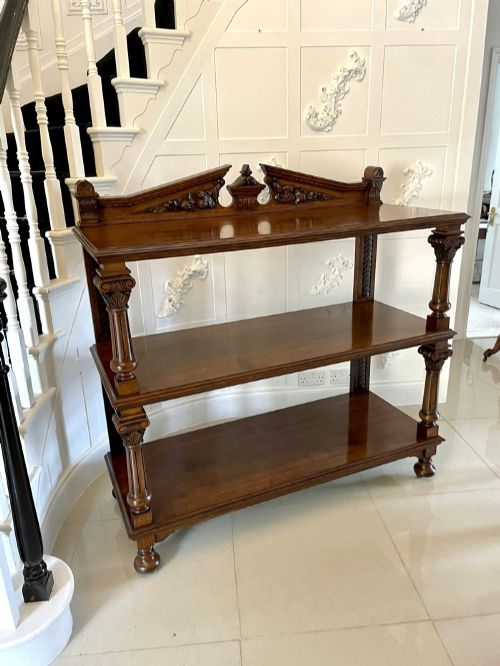
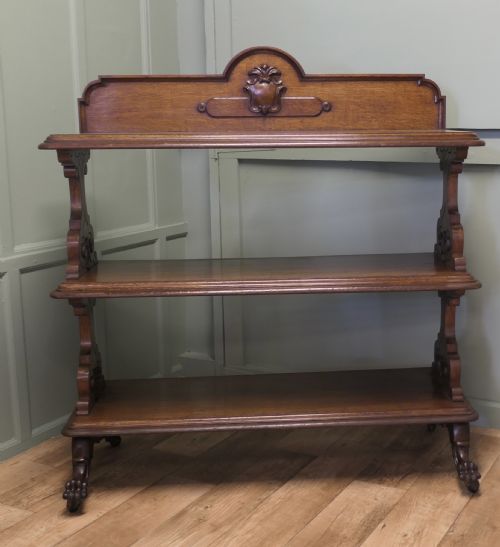
A victorian oak buffet table typically takes the form of a heavy multi-tiered serving table, a dumbwaiter, or a sideboard designed for dining room service. You will most commonly encounter carved oak pieces dating from the mid to late nineteenth century, often featuring two or three tiers supported by sturdy pillars or brackets.
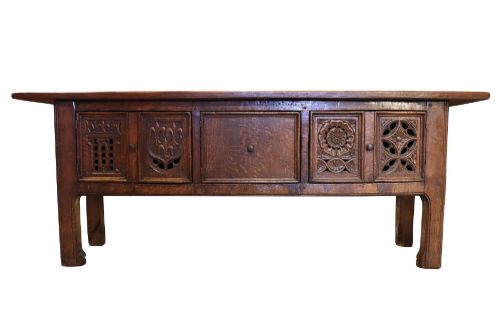
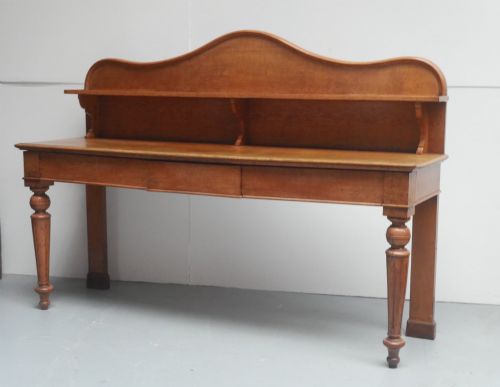
Many examples incorporate gothic revival details or rich figuring, reflecting the heavy tastes of nineteenth century cabinet makers. They range from narrow serving tables to large three-tier servers with top shelves and raised backs.
What varies in quality
Quality rests upon the crispness of the timber carving and the selection of figured wood, such as pollard oak. Pieces with deep, sharply defined motifs and well-matched grain patterns stand apart from plain or mechanically finished examples.
Proportion and structural integrity also dictate worth, as narrower servers and multi-tiered dumbwaiters with original shelves and sound structural framing represent the more accomplished Victorian workshop production.
Listings feature oak alongside pollard oak and walnut, with brass and glass appearing on selected serving tables and cabinets.
Phillips Bristol
The Victorian Oak Buffet Table Glossary
- Pollard oak
- Timber taken from trees that have been pollarded, producing dense, highly figured wood with clustered knots. This timber was frequently chosen for prominent drawer fronts and panel inserts.
- Green Man
- A sculptural motif depicting a human face entwined with leaves, foliage or vines. This pagan symbol saw a strong revival in nineteenth century Gothic architecture and furniture.
- Dumbwaiter
- A multi-tiered serving table or stand used in dining rooms to hold plates, dishes, and bottles without the need for servants. These pieces often feature two or three graduating shelves.
- Gothic Revival
- An architectural and design style drawing inspiration from medieval forms, featuring pointed arches, tracery, and heavy carved details. This movement dominated much of Victorian cabinet making.
- Court cupboard
- A heavy enclosed piece of furniture used for storing and displaying plate, featuring recessed upper sections supported by pillars. These sturdy carcase pieces form part of the broader buffet tradition.
Victorian Oak Buffet Table: Frequently Asked Questions
What is a victorian oak buffet table used for?
These large pieces served as practical sideboards for holding food, serving dishes, and silverware during grand dining occasions. They kept heavy platters close at hand in the dining room.
Today, they function well as sideboards in modern living spaces or hallways, offering generous surface area and practical shelving for display and storage.
How do I identify a gothic revival buffet?
Gothic revival pieces display distinct medieval architectural motifs, such as pointed arches, heavy linenfold panels, and deeply carved tracery. They lean towards a darker, more imposing aesthetic.
Look also for structural elements like barley twist columns, Green Man carvings, and robust oak framing that reflect nineteenth century interpretations of medieval design.
What is pollard oak?
Pollard oak comes from trees that were cut back at the trunk to promote a dense flush of branches, which creates tightly clustered, swirling knot patterns in the grain. Cabinet makers prized this wood for its decorative visual impact.
On a buffet, pollard oak typically appears on drawer fronts, cabinet doors, or back panels where the unusual grain can be shown to best effect.
How do I care for nineteenth century oak furniture?
Keep these heavy oak items away from direct sunlight and sudden temperature changes, which can cause the old timber to dry out and split. Apply a suitable beeswax polish occasionally to nourish the grain.
Avoid using modern liquid polishes or silicone sprays, as these build up over the antique surface and dull the natural patina of the wood.