



Victorian Needlepoint Wall Art
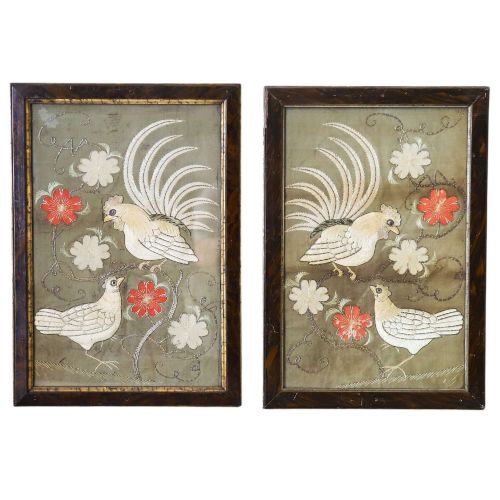
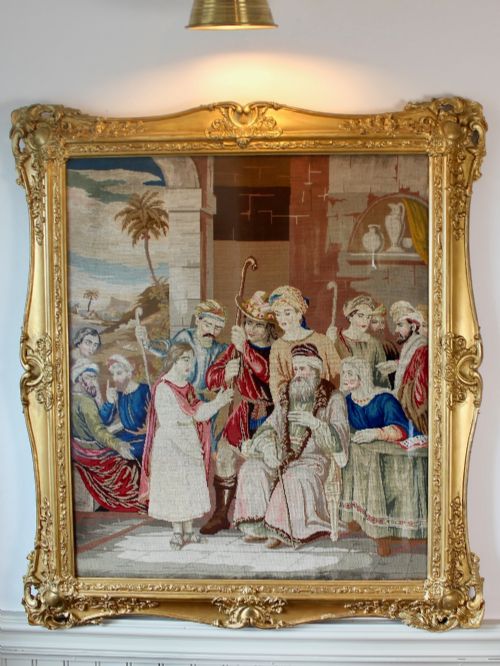
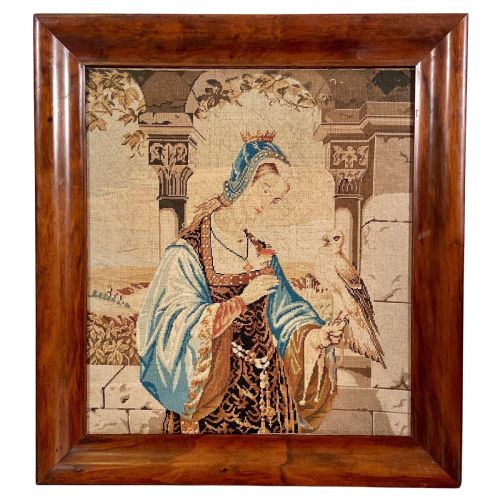
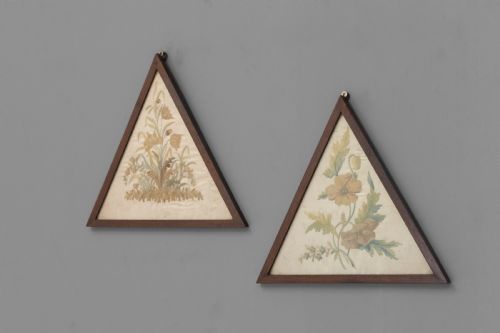
These pieces of victorian needlepoint wall art bring vibrant woolwork, silk embroidery and historical romance directly onto interior walls.
Victorian Needlepoint Wall Art
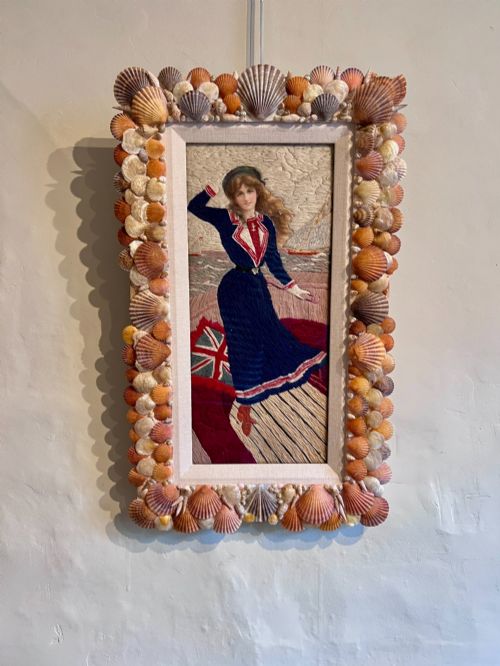
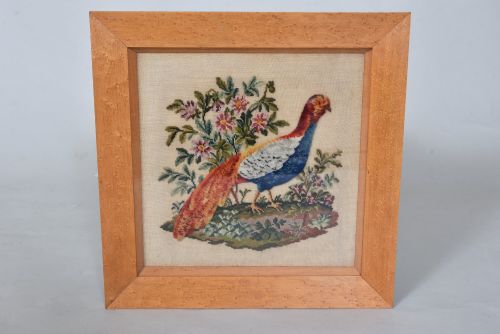
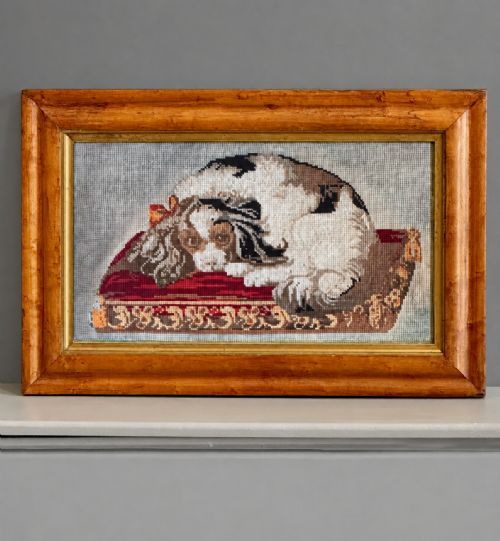
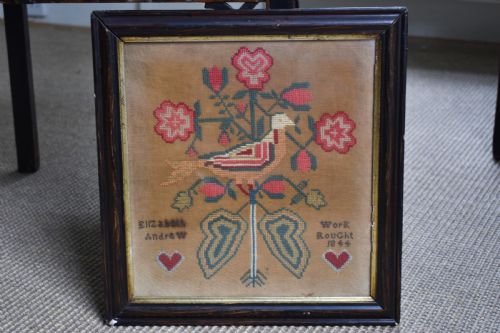
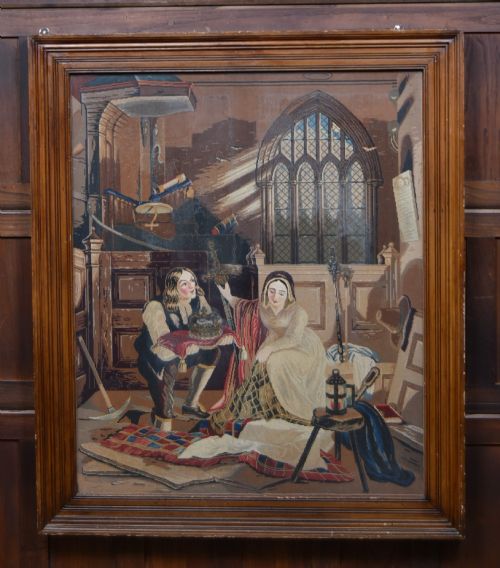
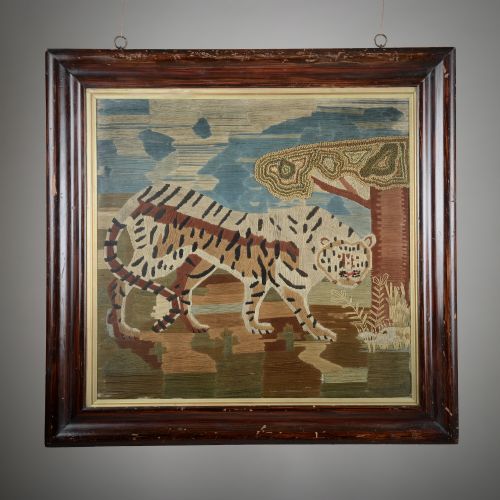
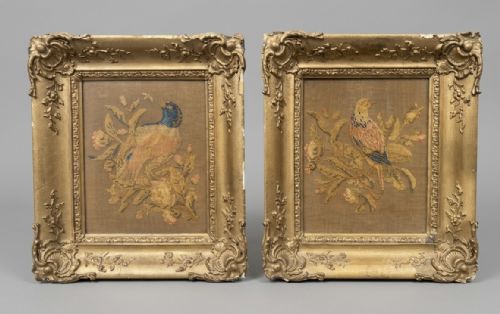
Victorian needlepoint wall art encompasses framed textile panels, samplers, and woolwork pictures created across the nineteenth century. These textile works depict domestic animals, classical figures, literary scenes, and memorial subjects.
Most examples found here date from the mid to late Victorian period, originating from English country houses and continental workshops. Common formats include rectangular wall hangings and circular pictorial panels designed specifically for display.
How They Were Made
Workers stitched colourful wool, silk, and linen threads onto woven canvas grounds using counting techniques like gros point and petit point. Berlin wool work utilised printed and hand-coloured grid charts that guided makers through complex pictorial designs.
Makers housed finished embroideries in protective wooden surrounds, selecting burr maple, oak, rosewood, and giltwood frames. Glazing often protected the delicate textile surfaces from dust and environmental wear.
Listings feature works utilising wool, silk, and linen canvas housed in burr maple, rosewood, and giltwood frames across the Victorian era.
What Varies In Quality
Execution skill separates standard decorative needlework from exceptional artistic output, visible in the precision of the stitching and tonal shading. Complex pictorial subjects like portraits and historical scenes demand advanced needle control to render realistic facial expressions and perspective.
Original framing significantly influences overall integrity, as period burr maple or carved giltwood enclosures complement the textile work. Pieces retaining contemporary frames and stable canvas stretchers demonstrate better preservation over time.
The Victorian Needlepoint Wall Art Glossary
- Berlin wool work
- A style of needlepoint popular in the nineteenth century that used brightly coloured wools stitched over printed paper grids. This technique allowed domestic makers to produce vivid pictures of animals, people, and floral compositions.
- Sampler
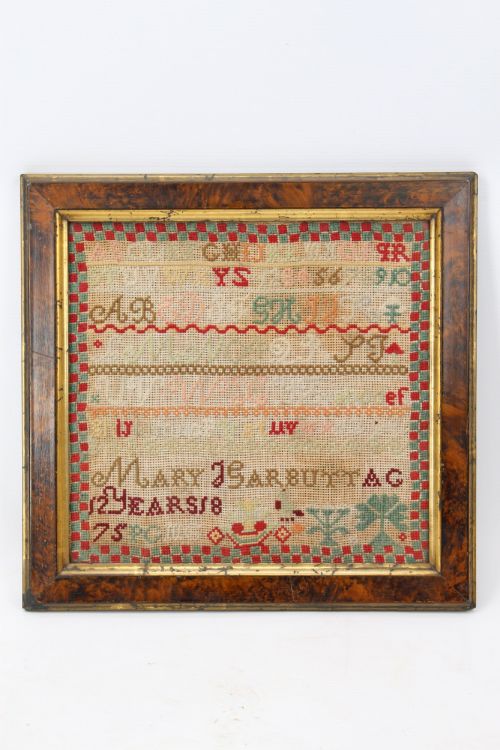
- A piece of embroidery produced by a maker to demonstrate proficiency in various stitches and alphabets. Many examples record the name and age of the maker alongside dates.
- Gros point
- A coarse counted-thread embroidery stitch used to cover large areas of canvas quickly. It provides a sturdy and textured background for detailed foreground elements.
- Petit point
- A fine needlepoint stitch worked over a single thread of canvas, allowing for intricate facial details and shading. It appears on higher quality nineteenth-century pictorial panels.
- Plushwork
- A variant technique where loops of yarn are left uncut or sheared to create a raised, velvety pile. This method added tactile depth to animal depictions.
Victorian Needlepoint Wall Art: Frequently Asked Questions
How do I hang needlepoint wall art safely?
Support heavy framed textiles securely using appropriate wall anchors matched to the weight of the wood and glass. Hang pieces away from direct sunlight to prevent the wool and silk threads from fading.
Maintain stable indoor humidity levels to protect both the wooden frames and the organic textile fibres from environmental degradation.
What is a woolie?
A woolie is a specific type of nineteenth-century textile artwork typically embroidered by sailors at sea. These works frequently depict naval ships or portrait subjects using heavy wool yarns.
Makers often mounted these pieces in simple wooden surrounds to decorate maritime homes.
How are sampler dates verified?
Samplers often include embroidered dates and the age of the maker stitched directly into the composition. Stylistic lettering conventions and materials help confirm the nineteenth-century production period.
Contextual evidence from the framing style also assists in dating the complete object.
Should antique needlework be cleaned?
Professional textile conservators should handle any cleaning of nineteenth-century embroidery threads and canvas grounds. Household cleaning agents damage delicate silk and wool fibres irreparably.
Surface dust requires only very gentle removal with a soft brush.