
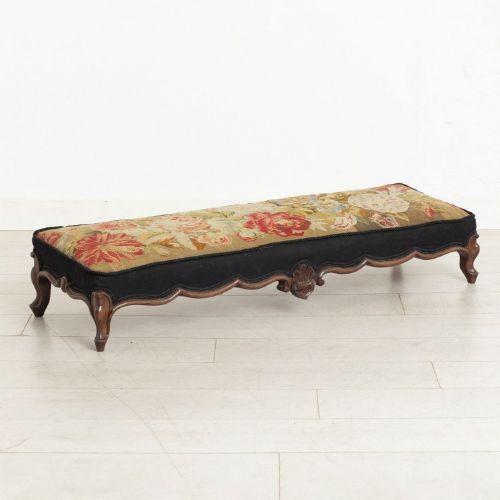


Victorian Needlepoint Footstool
A victorian needlepoint footstool brings grounded comfort and textured pattern to a room, uniting timber frames with hand-worked textile tops.
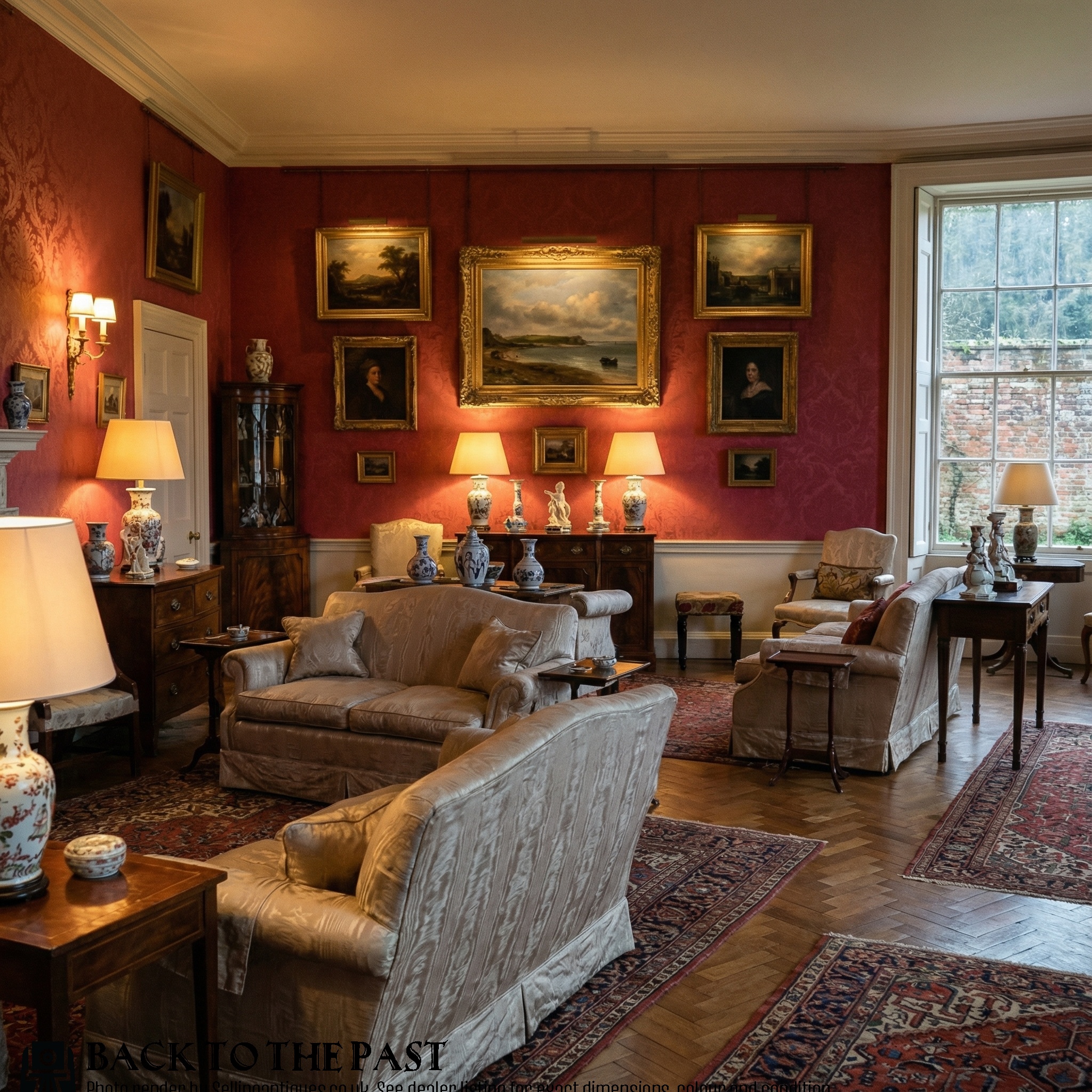
Victorian Needlepoint Footstool
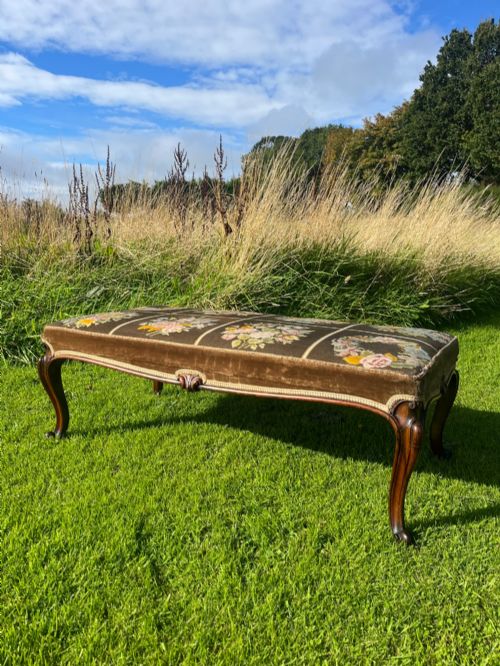
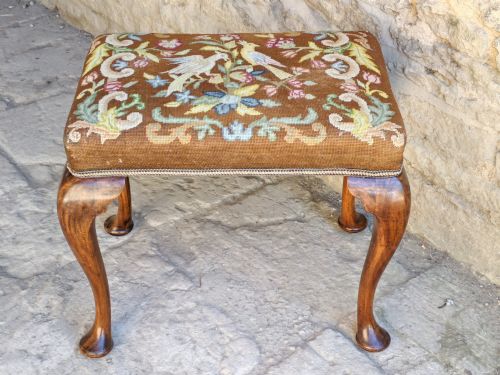
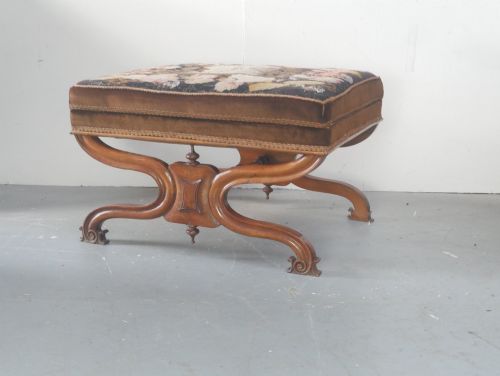
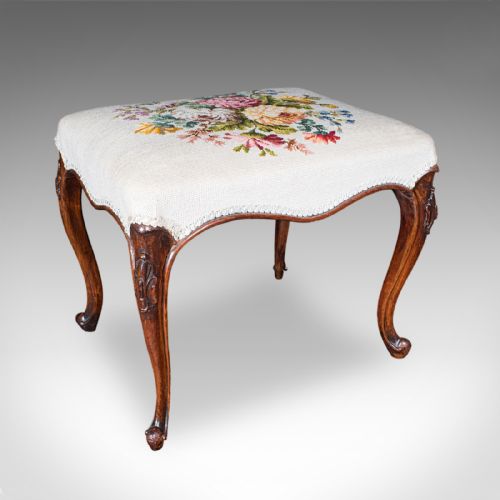
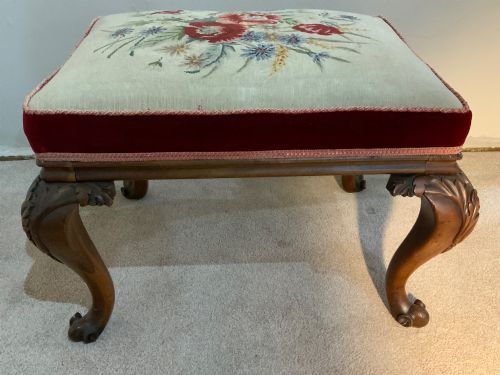
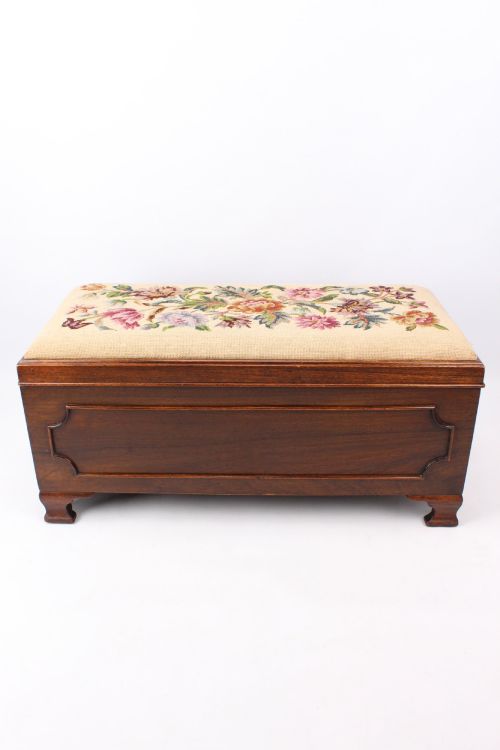
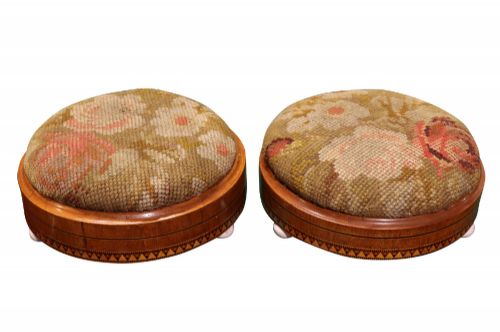
When you search for a victorian needlepoint footstool, you encounter low timber seats designed for firesides, dressing rooms and parlours. The pieces on this page span compact round stools to larger ottomans and piano stools, mostly originating from the nineteenth century.
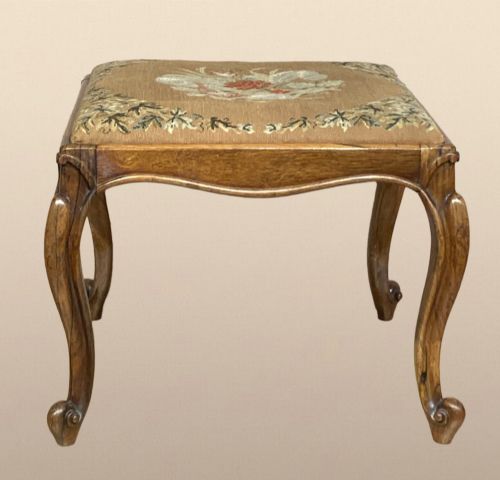
Walnut and mahogany dominate the timber frames, frequently shaped with cabriole legs or carved details. The upholstered tops display wool tapestry and needlework, often retaining their original fabric or period needlepoint.
Early Victorian examples sit alongside pieces from later decades, reflecting revival styles including rococo and gothic alongside scottish baronial forms. These low seats serve their original purpose beside armchairs or stand alone as decorative accent pieces.
How they were made
Cabinetmakers constructed the frames using solid hardwoods like walnut, mahogany and rosewood, employing traditional joinery to support the weight placed upon them. Turning, carving and occasional inlay defined the woodwork, producing cabriole legs, octagonal columns or circular frames.
The textile tops relied on wool needlepoint, tapestry or gros-point worked by hand over canvas foundations. Upholsters secured these decorative panels over stuff-over padding, completing pieces designed for daily domestic use.
Walnut and mahogany form the primary timbers across the listings, paired with wool tapestry, velvet and original needlepoint fabric.
What varies in quality
The ambition of the timber frame dictates the baseline of quality, separating plain turned legs from deeply carved cabriole supports or inlaid Tunbridge ware details. Finer walnut and rosewood frames display crisp carving and substantial proportions that anchor the design.
Needlepoint execution sets the finer examples apart, where tight, even stitches form intricate floral or geometric patterns with well-preserved colour palettes. The survival of original fabric adds substantive character, whereas later reupholstery alters the visual integrity of the piece.
Jas Shoolbred
The Victorian Needlepoint Footstool Glossary
- Needlepoint
- A form of counted thread embroidery worked on a stiff canvas mesh. It creates the durable, textured surface seen on nineteenth-century footstool tops.
- Cabriole leg
- A furniture leg that curves outward and then tapers inward, ending in a pad or scroll foot. This shape is typical of mid-nineteenth-century revival seating.
- Gros-point
- A coarse needlepoint stitch worked with wool yarn on canvas. It provides a heavier texture suited to high-wear upholstery on large ottomans.
- Tunbridge ware
- Small-scale decorative woodworking featuring geometric mosaics made from tiny pieces of naturally coloured wood. It appears on select Victorian walnut stool frames.
- Ottoman
- A low, upholstered seat without arms or a back, designed for resting feet or sitting. Larger variants accommodate internal storage or extended lounge use.
Victorian Needlepoint Footstool: Frequently Asked Questions
How do I date a Victorian footstool?
Examine the secondary timbers, the turning of the legs and the style of the carving. Mid-century pieces often display robust walnut frames with cabriole supports, while later examples shift in proportion and decorative detail.
The needlework itself offers further clues, though textile panels were sometimes replaced or retained during later nineteenth-century refurbishments.
Were these stools used only by the fireside?
While frequently positioned near hearths to keep feet away from cold drafts, these pieces served multiple domestic functions. Smaller round versions acted as piano stools or dressing seats in bedrooms.
Larger rectangular ottomans stood in drawing rooms, providing flexible seating or resting places for legs in front of low armchairs.
Can I use these stools daily?
Solid timber frames and sturdy joinery make these pieces resilient enough for regular use in contemporary rooms. The internal padding and webbing provide stable support.
Care should be taken with antique wool needlepoint tops to avoid excessive abrasion or direct sunlight that might fade the original yarn colours.
How do I clean antique needlepoint?
Gentle surface cleaning with a soft brush or low-suction vacuum attachment removes dust settled in the wool fibres. Avoid wet washing or chemical spot cleaners unless handled by a textile conservator.
Protecting the surface from sustained friction preserves the delicate stitches of the period needlework over time.