




Victorian Needlepoint Fire Screen
A victorian needlepoint fire screen combines a sturdy wooden stand with a hand-stitched textile panel, designed to shield faces from the intense heat of an open hearth.
Victorian Needlepoint Fire Screen
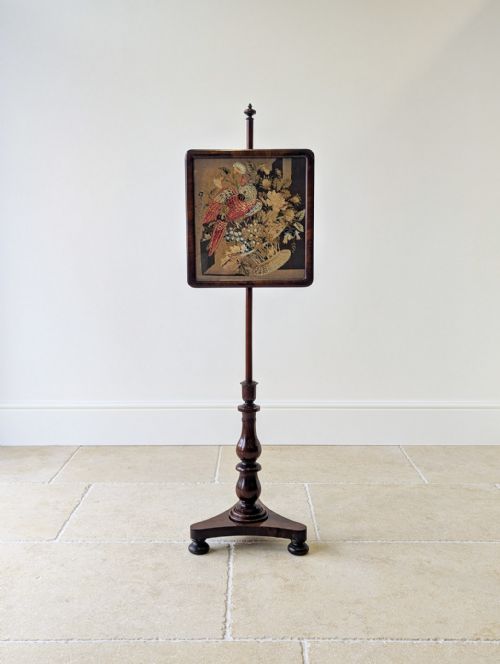
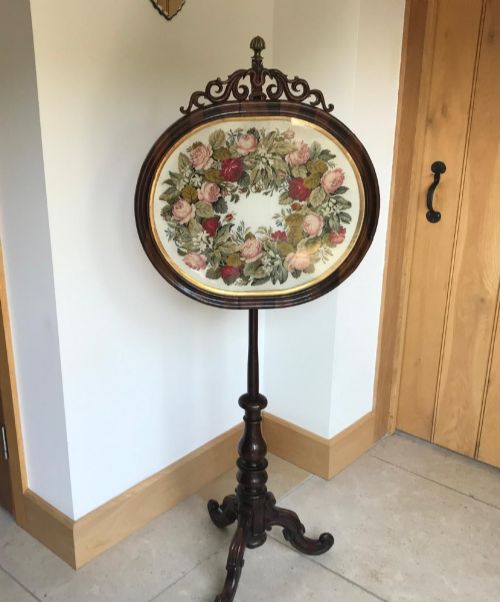
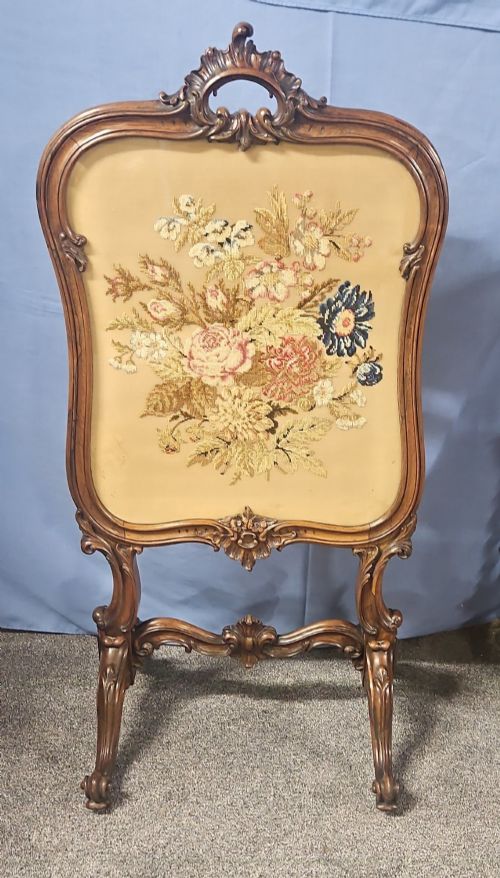
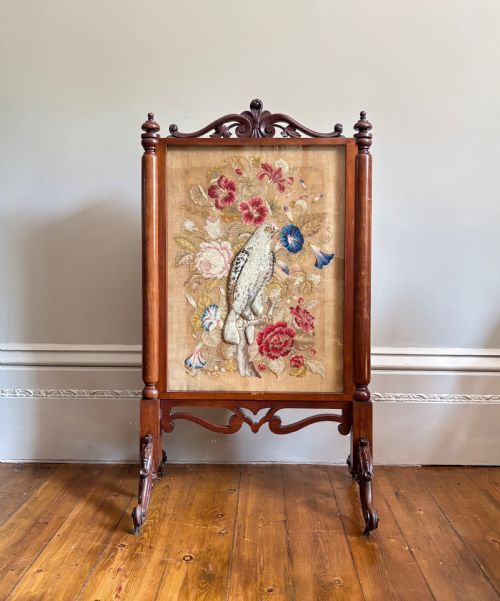
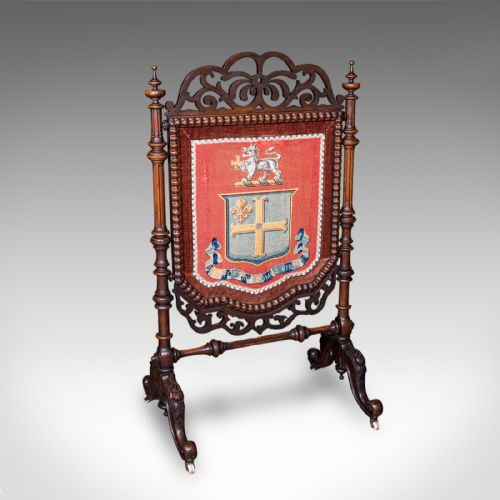
A victorian needlepoint fire screen is a functional piece of period furniture designed to deflect the direct warmth of a fireplace away from those seated nearby. The pieces seen here span the nineteenth century, including Georgian, Regency, William IV, and Victorian periods, alongside later twentieth-century examples.
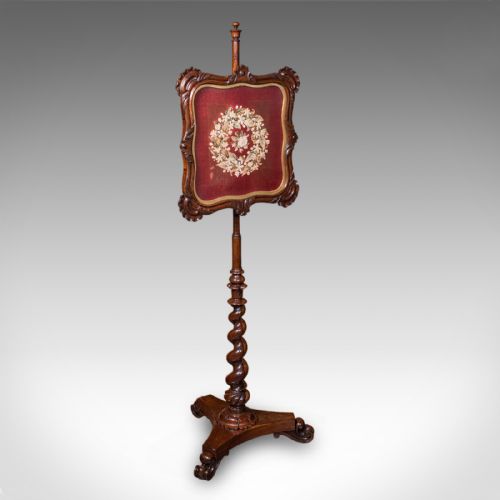
The most common formats on this page are pole screens, where an adjustable embroidered panel slides vertically on a slender wooden shaft supported by a tripod base. Fixed cheval frames and metamorphic tables that convert into screens also appear among the objects listed.
Timber frames constructed from rosewood, mahogany, and walnut dominate the selection, housing textile panels worked in wool, silk, and canvas. These furnishings range from simple domestic items to large country house pieces bearing coats of arms or pastoral scenes.
How they were made
Cabinetmakers shaped dense hardwoods such as mahogany, rosewood, and walnut into turned poles, carved tripod bases, and standing frames. Brass adjustments allowed pole screens to raise and lower the textile panel according to the heat of the fire.
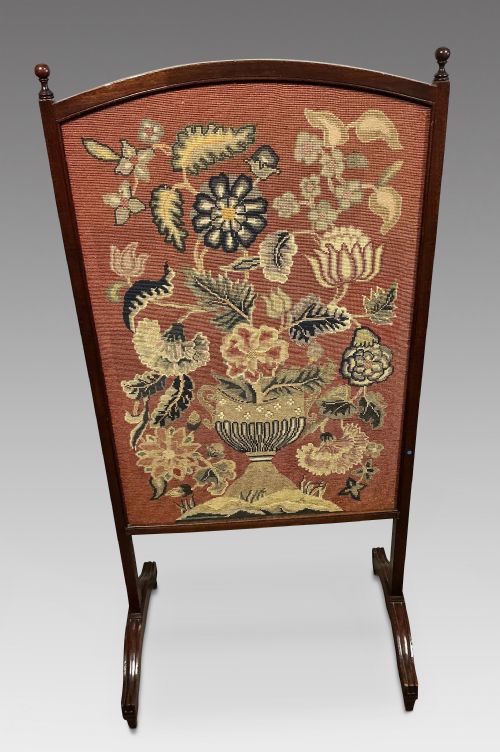
Craftspeople worked detailed needlepoint, tapestry, and Berlin work using wool and silk threads upon stretched canvas grounds. These textile panels were then mounted into wooden frames or fixed to sliding brackets.
The listings show materials spanning rosewood, mahogany, walnut, satinwood, and brass, paired with wool, silk, tapestry, and canvas textiles.
What varies in quality
The distinction between standard domestic items and superior pieces rests on the complexity of the woodwork and the finesse of the needlework. Finely carved tripod bases, bobbin turning, and gilded details set apart the better examples.
The density and pictorial skill of the tapestry panel dictate the visual weight of the screen. Elaborate armorial bearings, figural scenes, and intricate floral needlepoint indicate workshop production of higher ambition.
The Victorian Needlepoint Fire Screen Glossary
- Pole screen
- A standing piece of furniture featuring a vertical wooden shaft and a sliding panel used to block radiant heat from a fireplace. The panel adjusts in height by means of a brass thumb screw or collar.
- Berlin work
- A style of needlepoint popular in the nineteenth century that used coloured point-to-point charts printed on grid paper. This technique allowed makers to produce shaded floral and figural tapestries with geometric precision.
- Cheval screen
- A self-supporting floor screen held within a standing wooden frame, allowing the textile panel to pivot between two upright posts. Unlike pole screens, cheval versions remain fixed at a set height.
- Tapisserie
- Hand-woven or needle-worked textile panels depicting pictorial scenes, foliage, or heraldic designs. These panels formed the decorative and functional centrepiece of the fire screen.
- Tripod base
- A three-legged support system utilised on pole screens to provide stability on uneven floorboards. The legs often terminate in carved scrolls or pad feet.
Victorian Needlepoint Fire Screen: Frequently Asked Questions
How did a pole screen work?
The sliding panel moved up and down a vertical wooden pole to shield a person's face from the direct heat of an open coal or wood fire.
Users adjusted the height of the textile panel depending on how close they sat to the hearth.
What is the difference between a pole screen and a cheval screen?
A pole screen uses a single central shaft with an adjustable sliding panel mounted on a tripod base.
A cheval screen rests within a fixed standing frame and pivots on horizontal axes rather than sliding vertically.
Were these screens used only for heat?
While originally designed to protect complexions from excessive fireplace heat, they served as decorative room dividers when not in use.
The intricate needlework also displayed the domestic accomplishments of the household.
How do you date a Victorian needlepoint fire screen?
Dating relies on the timber used, the style of the base supports, and the characteristics of the needlework panel. Regency and William IV pieces often feature rosewood and bold carved pedestals, while later Victorian versions incorporate walnut and varied revival styles.