


Victorian Naval Ornament
These Victorian naval ornaments capture maritime history in brass, bronze, cast iron, and Staffordshire pottery.
Victorian Naval Ornament
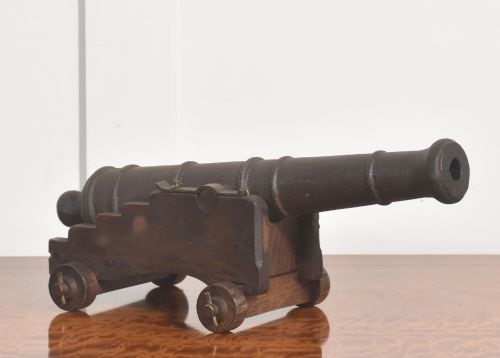
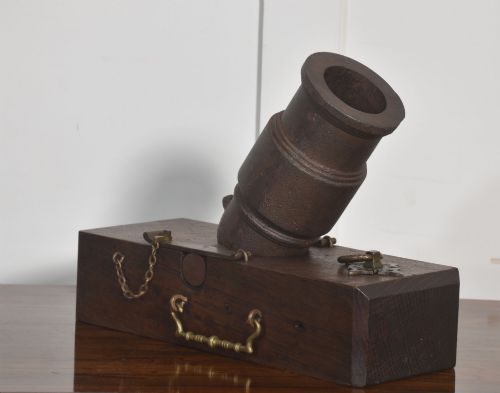
A victorian naval ornament brings military heritage into domestic spaces through miniature artillery, anchors, and portrait figures of prominent commanders. Buyers searching for a victorian naval ornament will encounter functional desk accessories alongside decorative mantel objects.
The selection ranges from heavy cast iron signal mortars and brass signal cannons mounted on timber carriages to Staffordshire pottery figures depicting naval heroes. These pieces celebrate nineteenth century maritime power and commemoration.
Most items on this page date from the nineteenth century, including late Georgian elements and pieces marking specific historical events like the end of the Crimean war. Model cannons and anchors dominate the functional items, while portrait figures represent named commanders such as Lord Nelson and Admiral Sir Charles Napier.
Materials and construction
Makers utilised durable metals including brass, bronze, and cast iron to create working signal cannons and mortars. These metal components were frequently paired with wooden carriages fashioned from oak and mahogany.
Periods represented span from late Georgian and nineteenth century production through to Victorian and early twentieth century examples.
Assessing quality
Quality rests in the precision of the metal casting and the stability of the timber carriage. Heavy polished bronze and detailed cast iron show greater command of the medium than simpler forms.
In pottery figures, the clarity of the painted decoration and the crispness of the portrait moulding distinguish superior examples. Original mountings and matching pairs elevate the standing of metal desk ornaments.
The Victorian Naval Ornament Glossary
- Signal cannon
- A small artillery piece used for firing blanks on celebratory occasions or for signalling. These working models appear frequently in desk ornaments and marine collections.
- Staffordshire pottery
- Earthenware figures produced in the Staffordshire potteries depicting popular historical and military subjects. Portrait figures often bear the names of famous commanders.
- Signal mortar
- A short, thick-walled piece of ordnance designed for high-angle firing of signals. They are typically mounted on sturdy wooden carriages.
- Doorstop
- A heavy weighted object used to keep doors open. Brass figural examples often depict notable historical figures such as Lord Nelson.
Victorian Naval Ornament: Frequently Asked Questions
What is a signal cannon?
A signal cannon is a miniature artillery piece constructed to fire blank charges for signaling or celebration. They were popular desk ornaments during the nineteenth century.
Most examples feature metal barrels cast in brass, bronze, or iron, mounted securely on timber carriages made of oak or mahogany.
Who do Staffordshire figures depict?
Staffordshire figures in this category portray prominent naval commanders and historical personages. Examples include named portraits of figures like Admiral Sir Charles Napier and Greenwich Hospital sailors.
These earthenware pieces served as patriotic mantel ornaments in nineteenth century homes.
How were desk cannons used?
Desk cannons served as decorative desk accessories and conversation pieces for maritime enthusiasts and military officers. Their robust construction in heavy bronze and brass gave them substantial weight.
Many incorporate functional design elements modelled on full-sized naval ordnance.
Are these items period originals?
The pieces listed date primarily from the nineteenth century, encompassing late Georgian production through to the Victorian era and early twentieth century. Specific pieces commemorate historical milestones such as the end of the Crimean war.
Materials such as cast iron, bronze, and Staffordshire glaze reflect authentic period manufacturing techniques.