




Victorian Naive Portrait
These Victorian naive portrait works capture an unfiltered glimpse of people, animals and domestic scenes through unvarnished provincial skill.
Victorian Naive Portrait
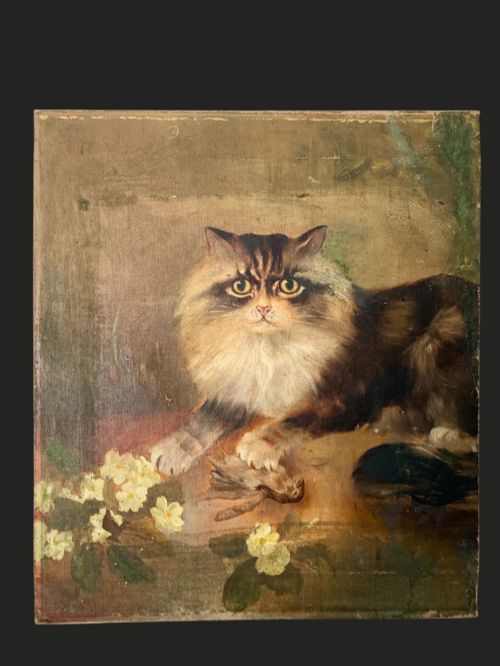
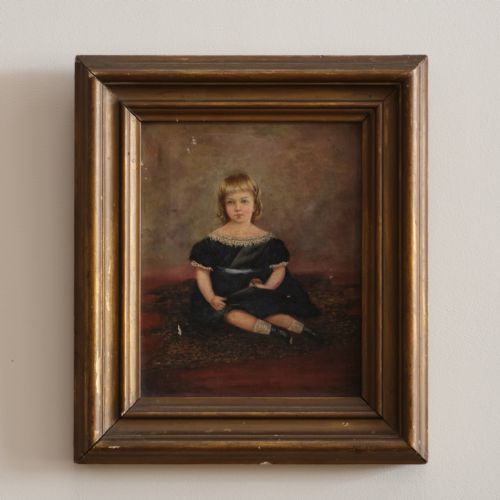
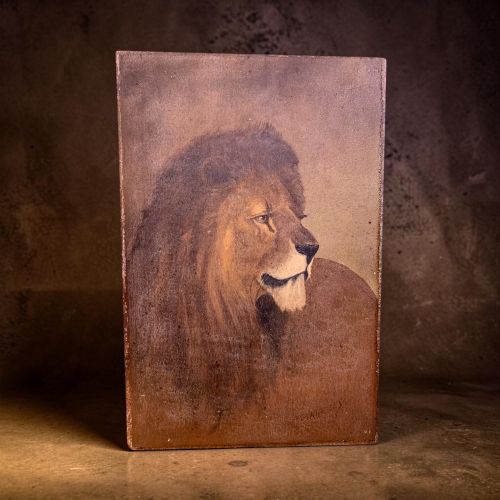
A victorian naive portrait presents subjects with a charming disregard for academic proportion, executed by self-taught or provincial painters working across the nineteenth century. The examples found here span oil on canvas, oil paint, paper and watercolour, capturing children, gentlemen, animals and family groups.
You are most likely to meet nineteenth-century oil paintings depicting solitary sitters or domestic animals, often housed in period frames. These works emerge from traditions like English folk art and the nineteenth-century naive school, recording subjects with direct honesty rather than grand artistic polish.
Materials and techniques
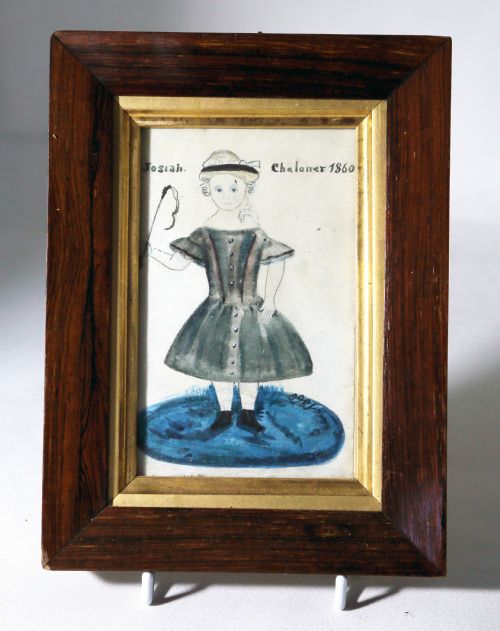
Painters applied oil paint directly onto canvas or wood panels, while others worked in watercolour on paper. Surviving pieces frequently utilise gold leaf accents and sit within timber surrounds, such as rosewood frames.
The technique relies on flat planes of colour, strong outlines and stark perspective rather than academic shading or tonal depth. This direct approach yields the characteristic charm inherent to British folk art traditions.
The listings show works spanning the nineteenth century, including specific dates from eighteen-fifty to nineteen-thirty, executed in oil and watercolour.
What separates the best from the rest
Quality rests upon the strength of character captured by the painter and the complexity of the composition. A well-rendered expression or an ambitious interior setting elevates a piece far above a stiff, formulaic likeness.
The survival of original framing, such as period rosewood or gilt surrounds, contributes to the integrity of the work. Condition also plays a role, with stable oil on canvas surfaces and clean watercolours holding greater appeal.
The Victorian Naive Portrait Glossary
- Naive art
- Artwork created by a self-taught individual lacking formal academic training. This style prioritises expressive power and direct observation over strict adherence to perspective.
- Oil on canvas
- Pigment suspended in a drying oil medium applied to a stretched woven fabric support. This combination forms the primary medium for the majority of these nineteenth-century paintings.
- Folk art
- Traditional cultural expression produced within a community or regional tradition. These pieces reflect local tastes and domestic values rather than courtly or academic standards.
- Watercolour
- Pigment ground in a water-soluble binder and applied to paper surfaces. It yields translucent washes that capture delicate interior details and portrait subjects.
Victorian Naive Portrait: Frequently Asked Questions
What is a naive portrait?
A naive portrait is an artwork created by an untutored painter who depicts subjects with unpretentious charm and flat perspective rather than strict academic realism. These pieces rely on direct observation and personal style.
They offer an authentic window into nineteenth-century life, recording sitters, children and pets without the embellishments common in formal portraiture of the period.
How do I date these paintings?
Dating relies on costume, hair styling, framing materials and any inscribed dates or signatures found on the canvas or reverse. Comparative study of known nineteenth-century folk art helps narrow the timeframe.
Provincial painters often lagged behind metropolitan fashions, meaning clothing styles can sometimes point to a broader period rather than a single exact year.
Where should I hang naive art?
These pieces suit informal living spaces, studies and hallways where their unpretentious character can be appreciated up close. They mix well with both period interiors and modern neutral walls.
Keep them away from direct sunlight and damp environments to protect the oil paint, canvas and delicate paper supports from environmental damage.