
Antique Child Oil Painting
An antique child oil painting captures the distinct character of youth through centuries of portraiture and genre scenes, offering buyers a compelling piece of social history.
Antique Child Oil Painting
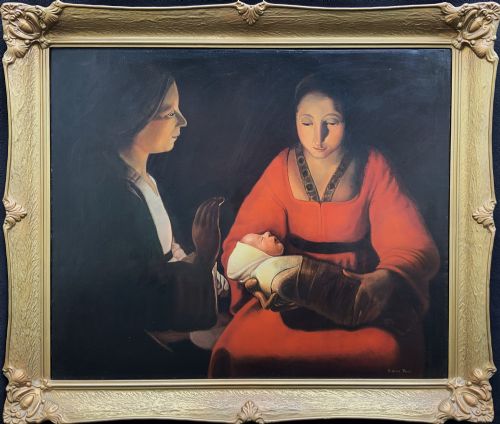
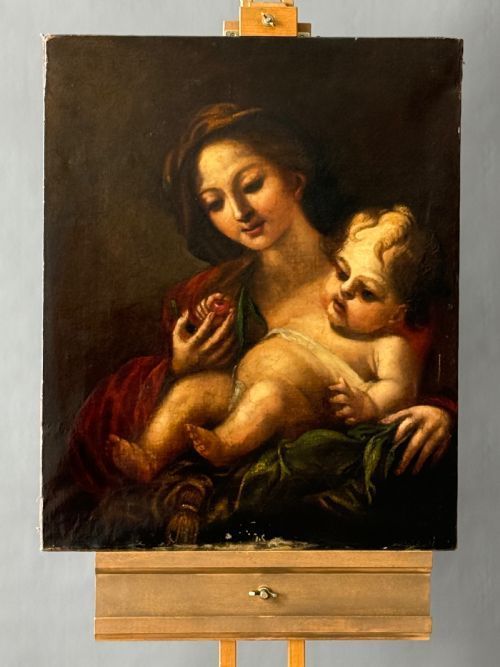
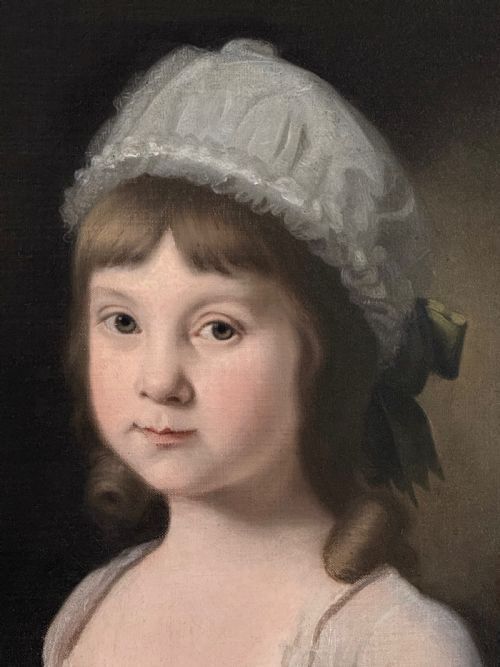
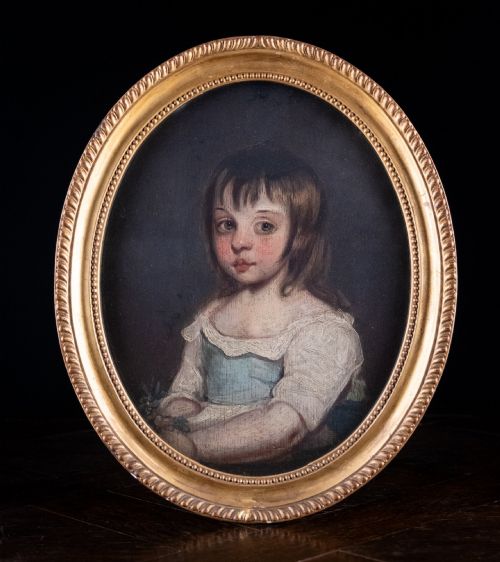
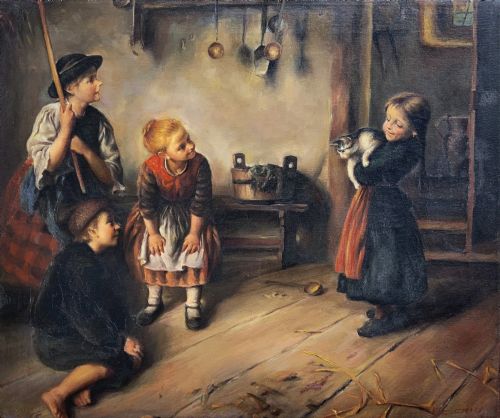
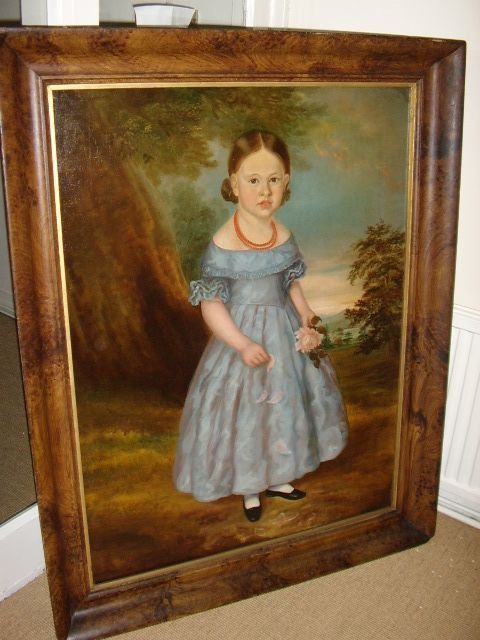
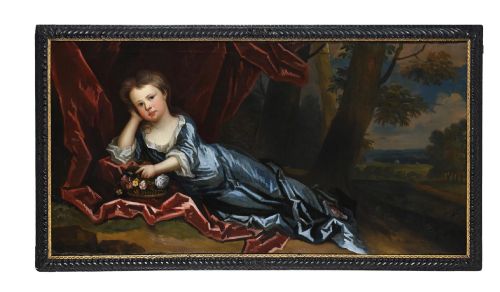
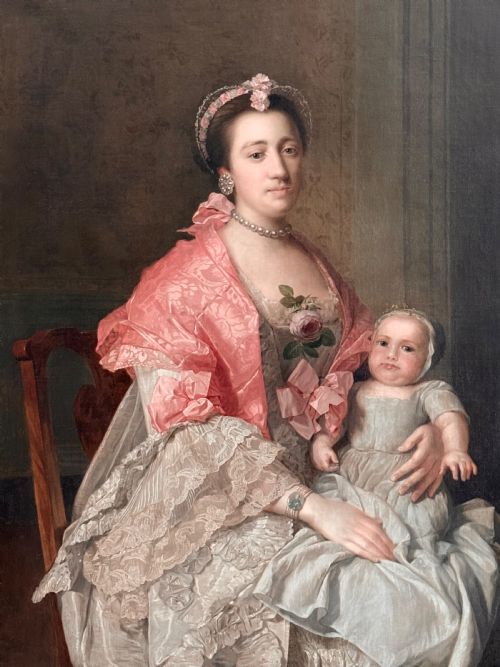
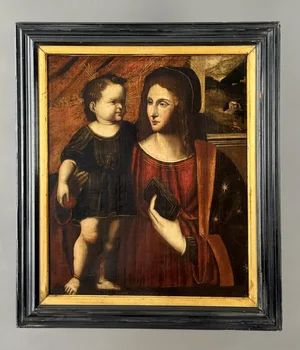
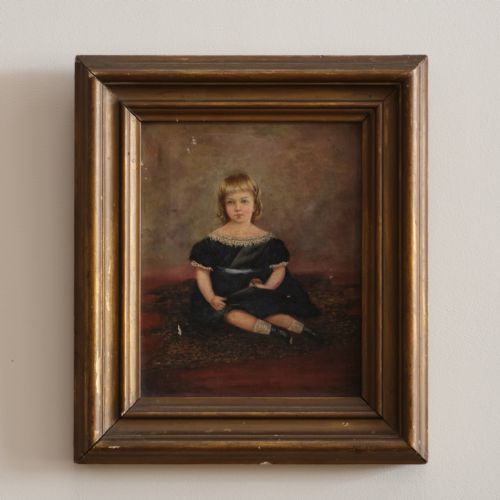
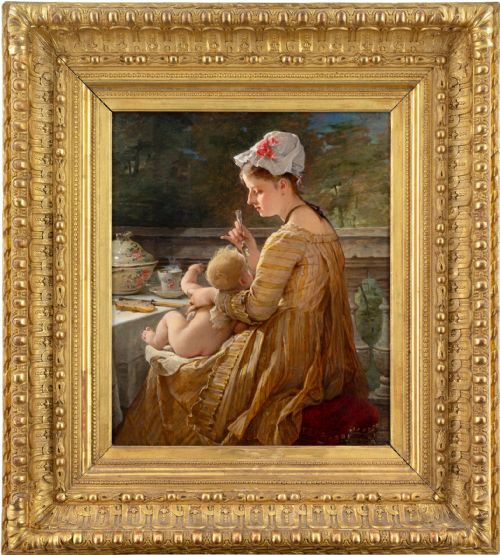
An antique child oil painting encompasses formal individual portraits, sibling groups, and domestic genre scenes featuring young subjects. The selection spans centuries from sixteenth-century religious compositions to twentieth-century domestic depictions.
Buyers frequently encounter nineteenth-century canvases and eighteenth-century aristocratic portraits alongside provincial folk art depictions. These works range from grand historical representations to intimate portrayals of children with animals, toys, or family members.
How They Were Made
Artists painted primarily with oil paint on canvas supports, sometimes utilising wooden boards or panels. Many works retain their period framing executed in wood with gesso, gold leaf, and giltwood finishes.
Techniques varied from meticulous studio layering by academic painters to the direct application seen in naïve and provincial folk art examples.
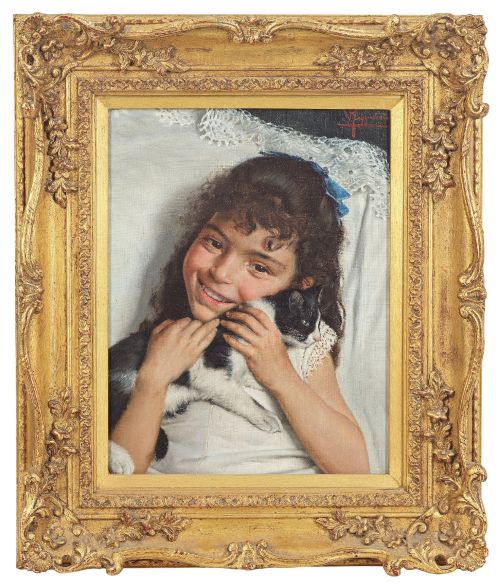
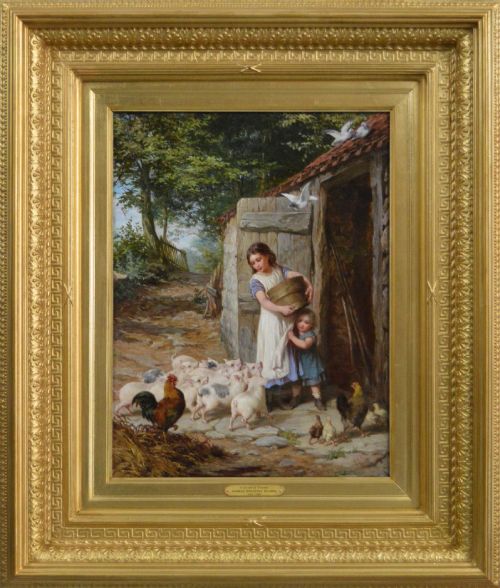
Several children share the canvas with unexpected companions, including piglets, chickens, exotic birds, and a very patient dog.
What Varies in Quality
Quality rests in the anatomical accuracy of the subject, the expressive rendering of the face, and the skill demonstrated in handling light and fabric. Master painters achieved a lifelike presence and depth that provincial or naive works often lacked.
The integrity of the original canvas surface and the matching period frame contribute significantly to the standing of a painting within its historical tier.
Vittorio Reggianini·Mark William Langlois·Charles D'Agar·Sir Allan Ramsay·George Augustus Holmes·Thomas Beach·Michael Dahl·Joseph Highmore·Arthur William Devis·Egisto Manzuoli
The Antique Child Oil Painting Glossary
- Genre painting
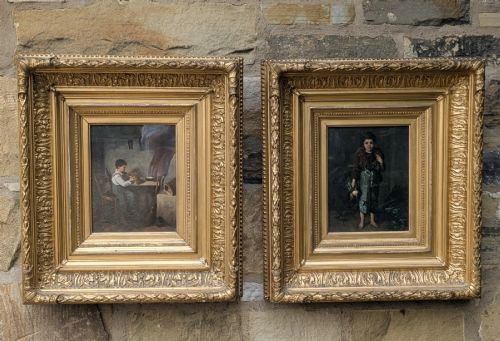
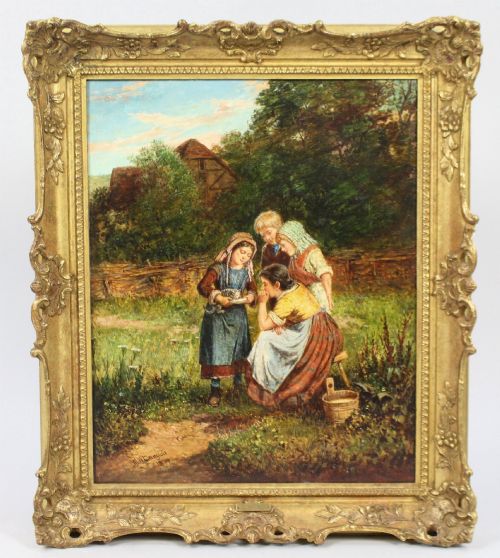
- A depiction of everyday subjects and scenes from ordinary life rather than formal portraiture or religious narrative. These works often show children playing, feeding animals, or engaged in domestic tasks.
- Old Master
- A term applied to European painters of high skill working before the nineteenth century. Such works often show classical training and traditional religious or portrait subjects.
- Naïve art
- A style of visual art created by a person without formal training, typically characterised by a direct simplicity in perspective and proportion. These pieces frequently emerge from provincial folk art traditions.
- Giltwood
- Wood carved and treated with a thin layer of gold leaf or powder, commonly used for traditional picture frames. The presence of original period gilding enhances the historical context of the artwork.
- Gesso
- A paint mixture consisting of a neutral binder mixed with chalk, gypsum, or pigment, used as a prepared surface on wood panels or frames before gilding. It provides a smooth base for intricate moulding and gold leaf application.
Antique Child Oil Painting: Frequently Asked Questions
What periods do these paintings cover?
The available works span from the sixteenth century through the seventeenth, eighteenth, and nineteenth centuries into the Edwardian era and mid-twentieth century.
Earlier pieces often reflect religious iconography or aristocratic commissions, while later nineteenth and twentieth-century works lean towards genre scenes and intimate childhood portraits.
How were children typically portrayed?
Children appear in various settings, ranging from formal aristocratic commissions dressed in fine attire to rustic genre scenes involving animals, toys, or everyday chores.
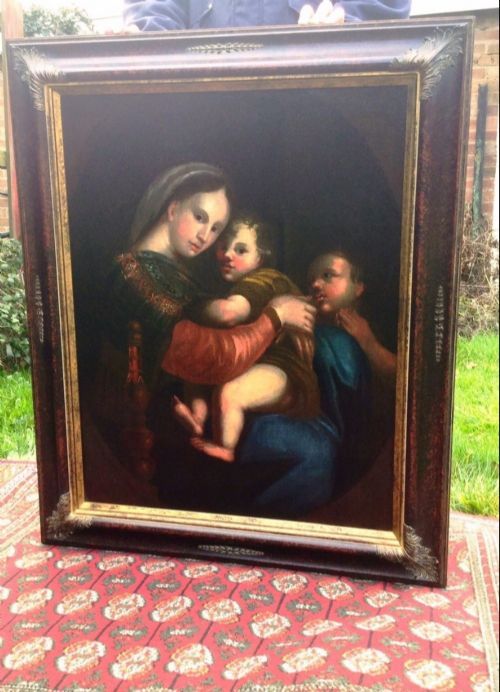
Religious subjects such as the Madonna and Child or the young St John also feature prominently among the earlier European school paintings.
How do I identify the school or period?
Attributions are typically determined by stylistic analysis, costume details, brushwork techniques, and known signatures or historical records associated with the artist or circle.
Works lacking signatures are often attributed to specific regional schools or centuries based on canvas preparation and pictorial conventions.