



Victorian Naive Art
Victorian naive art brings the unschooled charm of nineteenth-century painters and makers straight into your home.
Victorian Naive Art
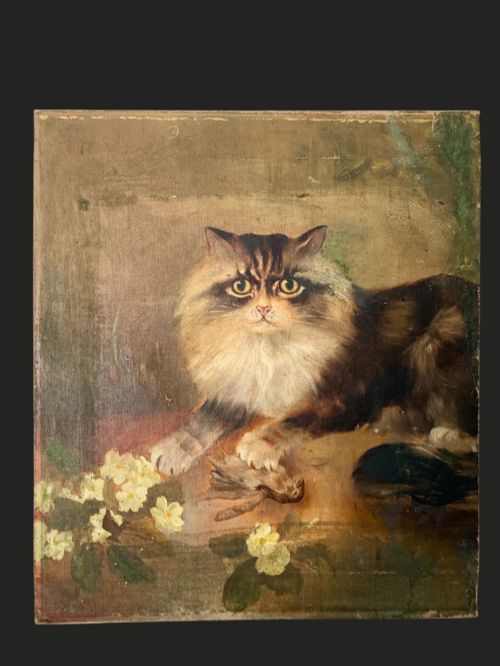
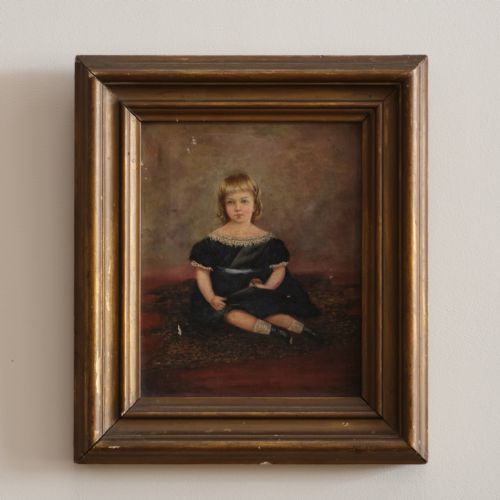
Victorian naive art encompasses oil paintings, watercolours, and wooden objects created during the nineteenth century by self-taught hands. These pieces capture animals, children, gentlemen, and domestic scenes with a direct honesty that academic art often misses.
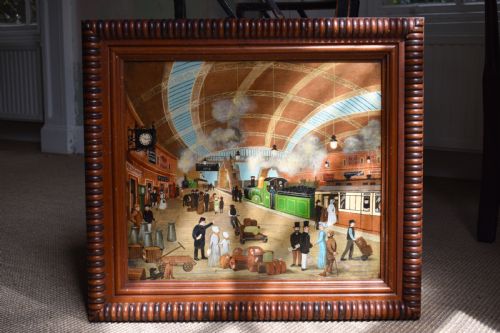
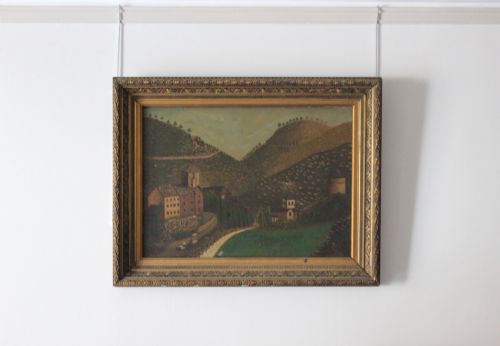
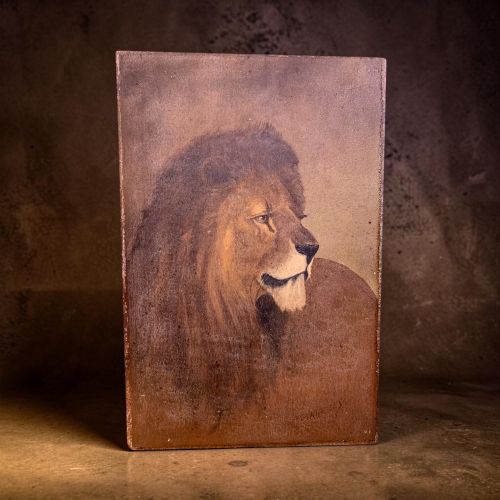
The objects on this page lean heavily towards oil paintings on canvas or board, alongside framed watercolours, wooden dioramas, and carved rocking horses. Portraits of children with dogs, farm animals, and local railway stations dominate the selection.
Originating largely from the English naive school and British folk art traditions, these works span periods from the Regency era through to the late nineteenth century and into the early twentieth century. Buyers encounter everything from small oil studies to large depictions of cattle in stables.
Materials and methods
Makers utilised oil paint on canvas or wood board, applying pigments with straightforward brushwork that prioritized clear subject matter over academic perspective. Watercolours on paper also appear, occasionally framed in rosewood with gold leaf accents.
Three-dimensional pieces such as wooden dioramas and rocking horses demonstrate basic carpentry joined with painted surface decoration. Glass frequently protects sensitive watercolours and paper works within their original frames.
The selection includes portraits of border collies, racing pigeons, and gentlemen with wooden legs.
Evaluating quality
Quality in Victorian naive art rests upon the strength of the composition and the expressive character of the subject rather than technical perspective. Stronger pieces display confident brushwork and an engaging narrative, such as a portrait featuring a gentleman with a wooden leg or a detailed railway station scene.
Condition and originality dictate the standing of a piece within its category. Intact original frames, stable surfaces on canvas or wood, and clear provenance or attribution to specific creators elevate certain works above anonymous examples.
The Victorian Naive Art Glossary
- Naive art
- Art produced by a self-taught creator lacking formal academic training. This work relies on personal vision and direct observation rather than classical rules of proportion.
- Folk art
- Utilitarian or decorative objects made within a community tradition. These pieces reflect regional materials and everyday domestic or rural life.
- Diorama
- A three-dimensional scene housed within a shallow box or case. Nineteenth-century examples often depict sailing ships or domestic interiors using carved and painted wood.
- Oil on board
- A painting executed on a rigid wooden panel or card rather than stretched canvas. This support appears frequently in provincial nineteenth-century works.
- Provincial school
- Art produced outside metropolitan artistic centres by local practitioners. These regional works carry distinct local characteristics.
Victorian Naive Art: Frequently Asked Questions
What is Victorian naive art?
Victorian naive art consists of paintings and objects made by untrained creators during the nineteenth century. These works bypass academic rules in favour of direct, honest representation.
The category includes portraits of people and animals, landscapes, and wooden dioramas. Each piece offers a window into provincial life and traditional craft.
How were these paintings created?
Makers used oil paint on canvas or wooden boards, as well as watercolour on paper. Their techniques relied on straightforward application rather than formal academic training.
Surviving examples often retain their original frames made of wood or finished with gold leaf. Glass is frequently present to protect delicate paper works.
Where did these pieces originate?
The works originate largely from British and English provincial traditions. Local makers and regional schools produced them for domestic settings.
Subjects range from English landscapes and railway stations to family group portraits and farm animals. They reflect the immediate surroundings of their makers.
How do I care for naive art?
Keep paintings and watercolours away from direct sunlight to protect oil paint and paper from fading. Stable indoor humidity prevents wood panels and frames from warping.
Clean surfaces gently with a dry cloth and avoid harsh chemical cleaners. Fragile watercolours behind glass require secure hanging in stable environments.