





Vintage Primitive Painting
These vintage primitive painting examples bring genuine folk character into a room through honest brushwork and unpretentious form.
Vintage Primitive Painting
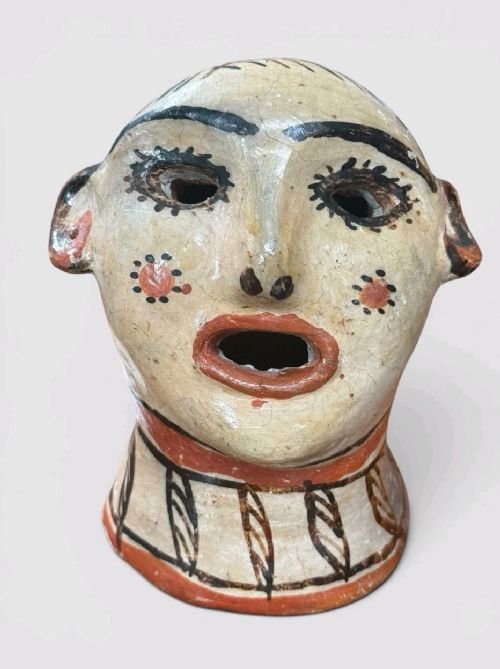
A vintage primitive painting encompasses naive oil portraits, rural street scenes, and folk art boards spanning from the nineteenth century to mid-century works. These pieces showcase untutored artistic expressions that prioritize directness and character over academic proportion or perspective.
Buyers will most frequently encounter nineteenth-century works alongside mid-century interpretations like the rural street scene dated nineteen hundred and five or naive oils on board from eighteen fifty. Such items often merge painting with functional objects or rustic wooden substrates to create strong visual interest.
The aesthetic relies heavily on simple compositions, flat planes of colour, and unpretentious subject matter reflecting domestic and rural life. These works suit interiors that value handcrafted charm and historical authenticity above polished perfection.
Materials and construction
The works listed utilise wood, timber, and pine as painting supports, often taking the form of sturdy boards or panels prepared with basic grounds. Oil and ochre paint dominate the surface decoration, applied with straightforward brushwork that leaves the hand of the maker visible.
Associated items in this category incorporate iron, leather, and clay, demonstrating the broader manual skills of rural craftspeople. Structural elements on related wooden supports frequently employ simple joining techniques suited to utilitarian workshop production.
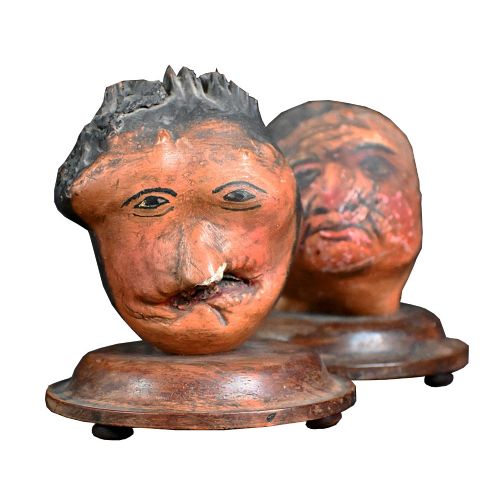
Some paintings capture aristocratic gents with surprising cheekiness, proving that even formal portraiture could not escape the folk art touch.
Factors of quality
Quality rests upon the strength of the composition and the expressive power within the naive rendering, where confident brushwork elevates a simple subject. Original surface coatings and untouched paint layers carry significant weight in determining the visual integrity of a piece.
The relationship between the support and the pigment matters greatly, with well-preserved boards and stable oil layers offering better longevity. Authenticity of age and surface wear without inappropriate restoration also distinguish superior examples.
The Vintage Primitive Painting Glossary
- Naive art
- Artwork produced by an artist without formal training, typically characterised by a rejection of perspective and a direct approach to form. This style creates an unpretentious charm valued in folk collections.
- Oil on board
- A painting technique where pigment suspended in oil is applied directly to a wooden panel or rigid board. This method was common for smaller, portable rural works.
- Ochre paint
- An earthy, natural pigment mixed with a binder to produce yellow, brown, or red tones found frequently on rustic items. It provides a durable and stable finish.
- Folk art
- Utilitarian or decorative objects made by self-taught individuals within a traditional community framework. These pieces reflect local customs and material availability.
Vintage Primitive Painting: Frequently Asked Questions
What is a primitive painting?
A primitive painting is an artwork created by an untutored hand, focusing on direct expression rather than strict academic rules of proportion and perspective.
These pieces often emerge from regional traditions, capturing everyday scenes and portraits with honest charm.
How do I style these paintings?
These works pair naturally with rustic furniture, exposed timber, and neutral walls that allow the naive brushwork to stand out.
They bring warmth and historical texture to modern or traditional interiors alike.
How old are these paintings typically?
The selections span from the nineteenth century through to mid-century creations reflecting earlier aesthetic styles.
Each piece carries specific material evidence pointing to its period of origin.
What surfaces are used?
Painters utilised wooden boards, panels, and timber supports as a robust base for their oil and ochre pigments.
These durable materials have helped the artworks survive across generations.