


Antique Country Landscape Artwork
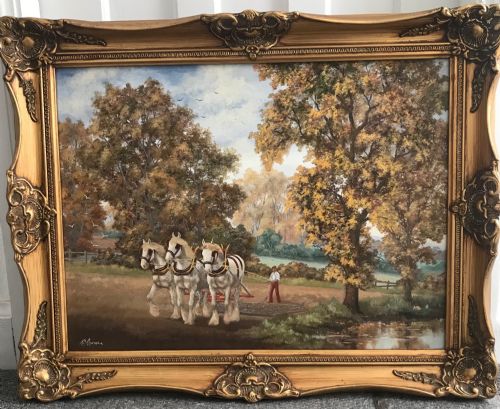
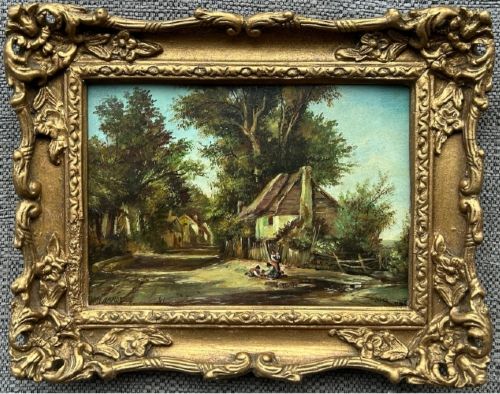
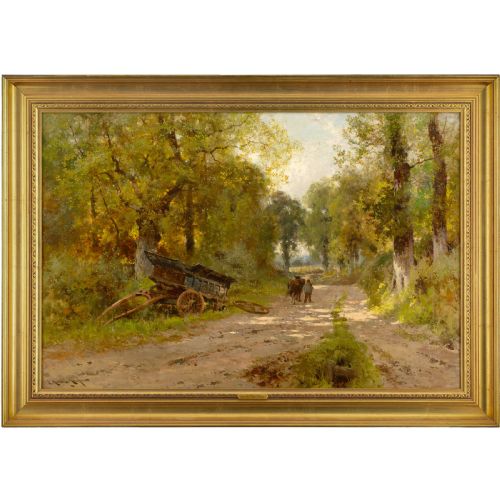
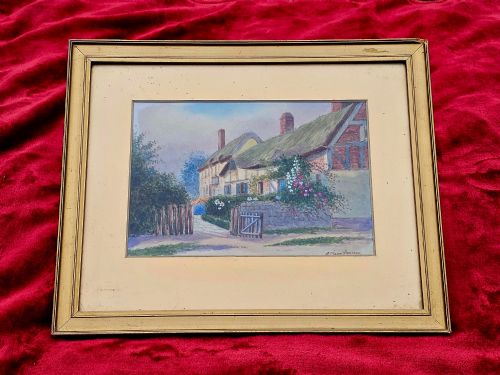
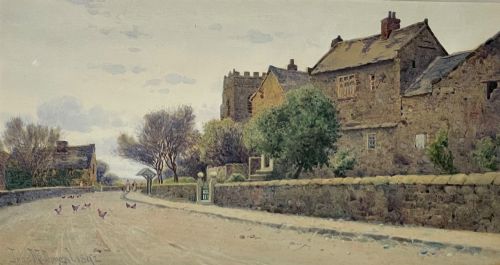
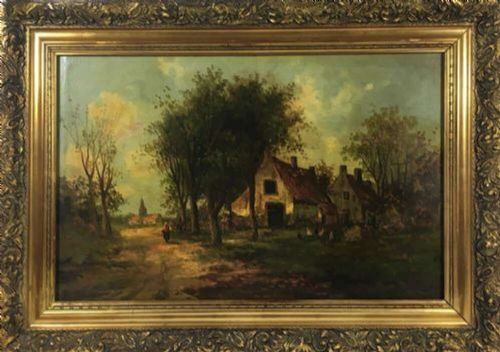
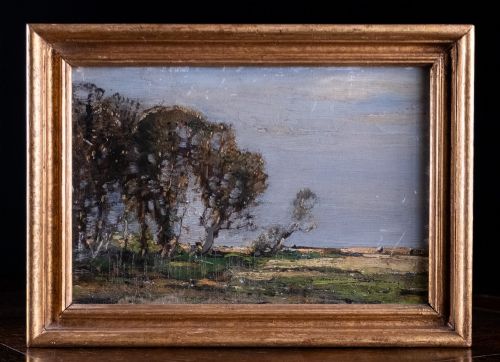
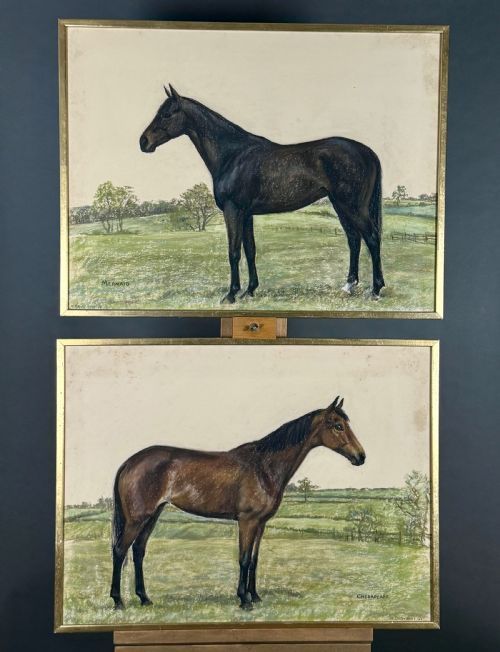
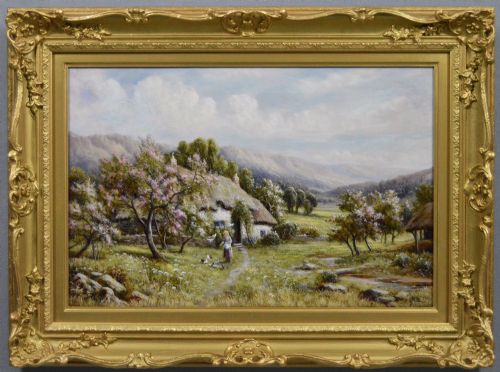
These antique country landscape artwork pieces capture rural life through oils, watercolours and pastels spanning the nineteenth and early twentieth centuries.
Antique Country Landscape Artwork
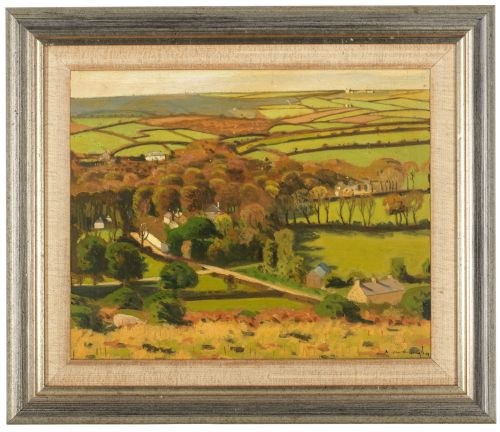
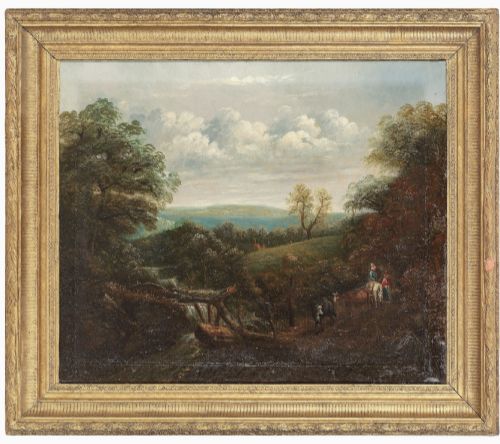
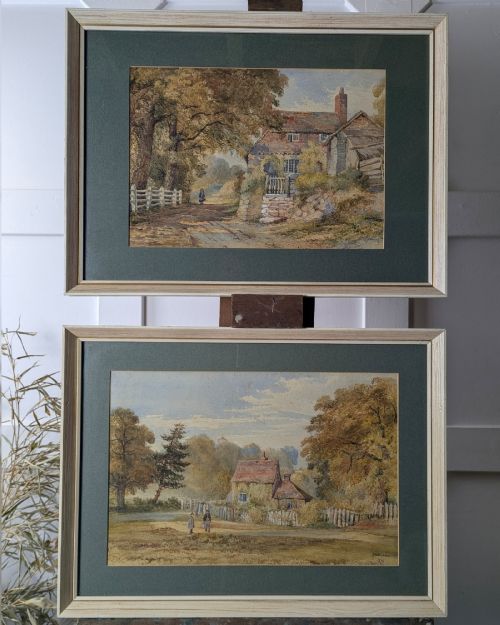
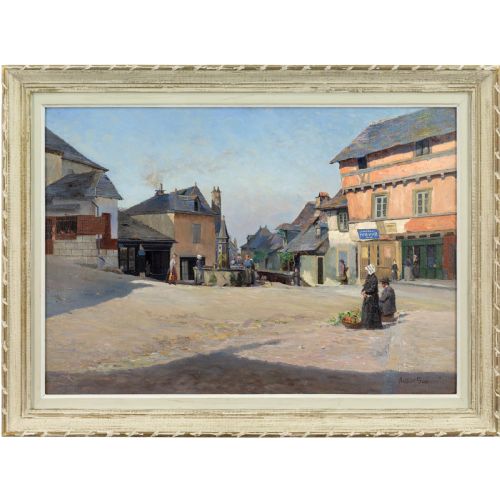
Antique country landscape artwork encompasses rural scenes rendered in oil paint, watercolour, pastel and etching across British and European schools. These works document fields, cottages, rivers and farmyards from the Victorian period through to the 1930s.
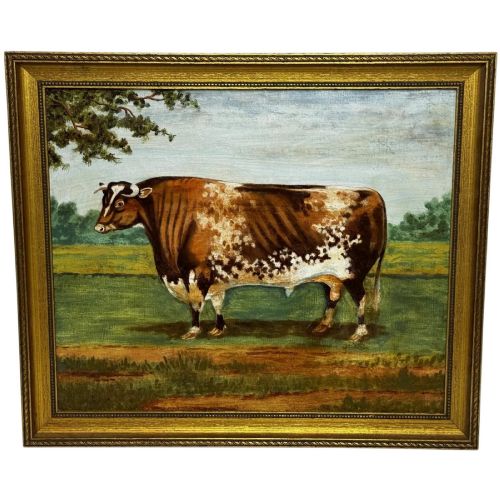
The most common examples on this page are oil paintings on canvas or board and works on paper by named and provincial artists. They range from finished academic compositions to naive folk art interpretations of agrarian life.
How They Were Made
Artists applied oil paint or watercolour to stretched canvas, wooden panels, card and heavy paper using traditional brushes and mixing techniques. Many of these works retain their original gilt wood frames, protecting the delicate surfaces of paper and canvas alike.
Etchings and pencil drawings utilise inked metal plates and graphite on paper to build intricate rural details. The materials reflect the period standards, relying on durable supports and natural pigments that have endured for generations.
Listings feature works from the 19th Century, 1900, Victorian, 1920, 1930, 1890, 1860, and 1910 periods.
What Varies in Quality
Quality rests upon the artist's handling of light, perspective and atmospheric depth within the rural setting. Stronger pieces display confident brushwork and a coherent composition that draws the viewer into the field or village path.
The condition of the painted surface, the stability of the panel or canvas, and the integrity of the original frame also influence the overall standing of the piece. Works retaining strong pigment saturation generally command greater appreciation.
Percy Lancaster·William Howard Hardy·John Horace Hooper·A. Marie Parsons·John McDougal·Kershaw Schofield·Robert A. Nottingham·Arthur Gué·Robert John Hammond·Walter Heath Williams·Robert W. Macbeth·John Smith Atherton·Ernest Arthur Rowe·Frederick James Kerr·Herbert Royle·Rene Levrel·Johann Friedrich Voltz·Henry Yeen King
The Antique Country Landscape Artwork Glossary
- Oil on Canvas
- A painting medium where pigments are suspended in drying oils and applied to a woven fabric support. This combination allows for rich colour blending and textured brushwork.
- Watercolour
- A painting method where water-soluble pigments are applied to paper. It yields translucent washes of colour that capture soft light and atmospheric skies.
- Barbizon School
- A nineteenth-century French movement focused on detailed observation of nature and rural life. Painters associated with this group worked directly from the landscape.
- Provincial Naive
- Art created outside academic traditions by self-taught painters. These pieces often feature simplified perspectives and direct charm rather than strict proportion.
- Gilt Wood
- Timber framing coated with a thin layer of gold leaf or metallic gilt. It provides a decorative and protective border suited to traditional artworks.
Antique Country Landscape Artwork: Frequently Asked Questions
What periods do these landscapes cover?
The selections span the nineteenth century, the Victorian era, Edwardian period and the early twentieth century up to the 1930s. Most examples date from the late Victorian and Edwardian decades.
This broad timeline encompasses shifting artistic movements from traditional British school painting to impressionist influences.
How should I hang antique watercolours?
Watercolours require protection from direct sunlight to prevent the pigments from fading over time. UV-filtering glass and archival mounting help preserve the delicate paper supports.
Keep them away from damp walls and fluctuating temperatures to maintain the condition of both the paper and the frame.
What is the difference between oils and watercolours here?
Oil paintings utilise pigment bound in drying oil applied to canvas, wood panels or card. They offer heavy texture and deep colour saturation that withstands ambient light well.
Watercolours use water-based pigments on paper, creating translucent, lighter scenes that traditionally sit behind protective glass.
Are these artworks signed by the artists?
Many pieces feature visible signatures, monograms or contemporary inscriptions identifying the creator or the specific rural location. Some works remain unattributed or belong to broader regional schools.
Documentation on the reverse of the canvas or frame often provides further clues regarding the origin of the piece.