


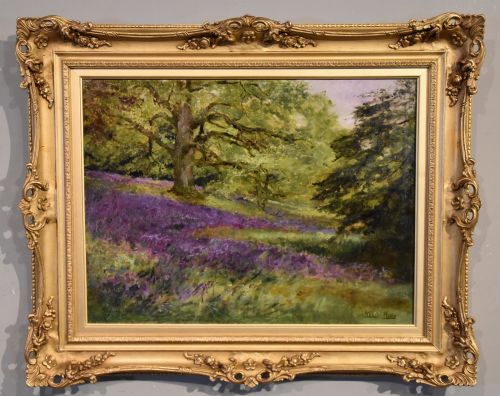
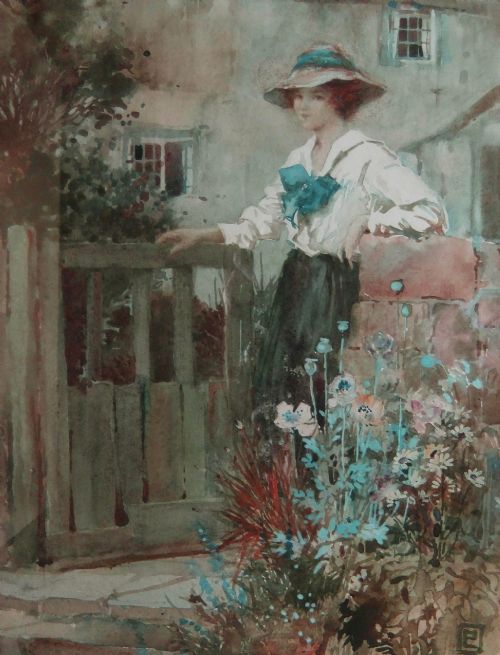
Antique English Landscape Picture
An antique English landscape picture captures the countryside, rivers and rural life through the eyes of Victorian, Edwardian and early twentieth-century painters.
Antique English Landscape Picture
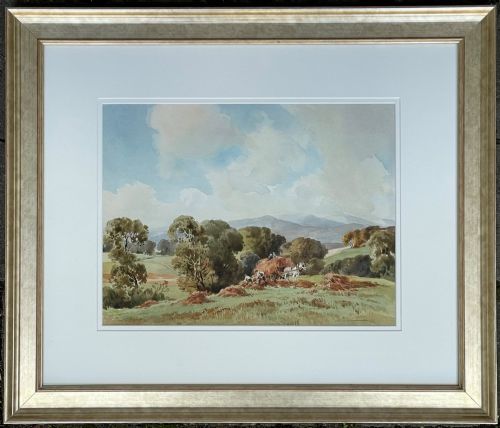
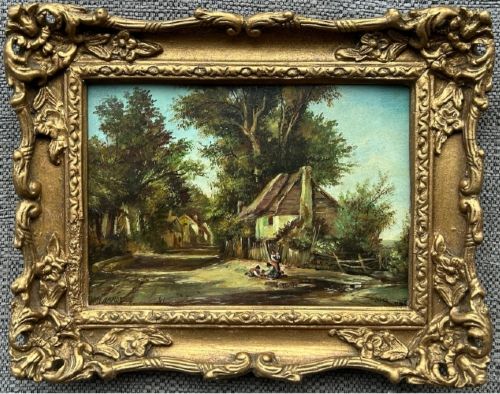
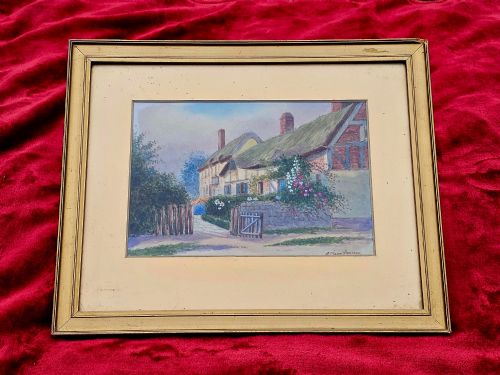
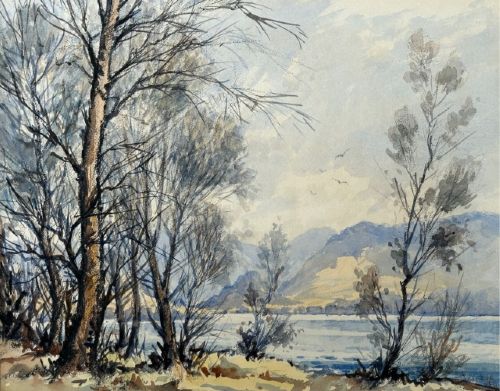
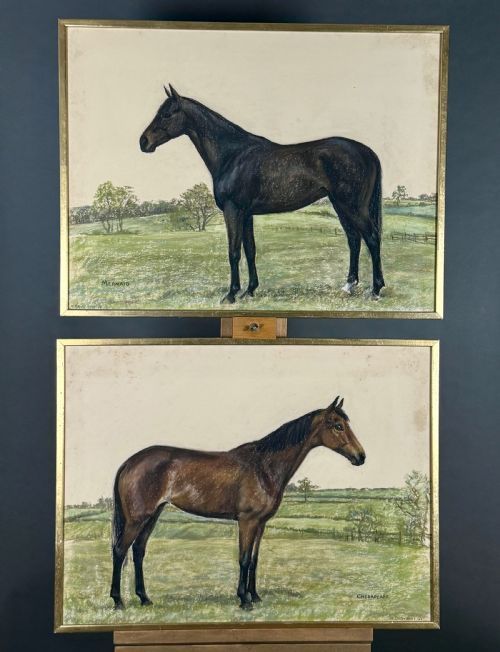
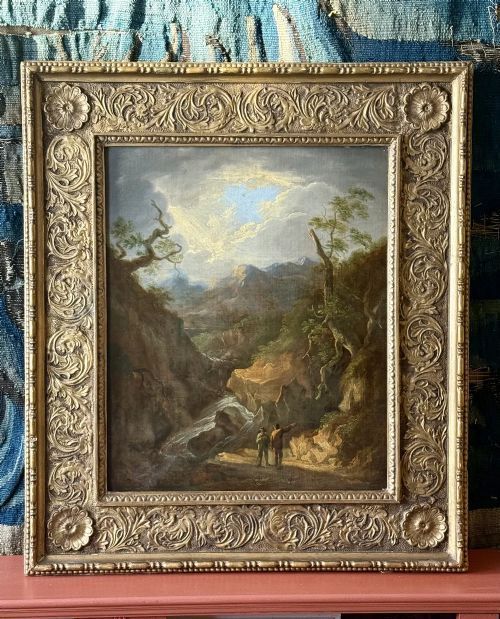
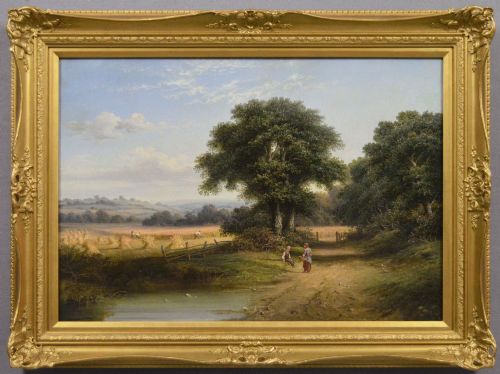
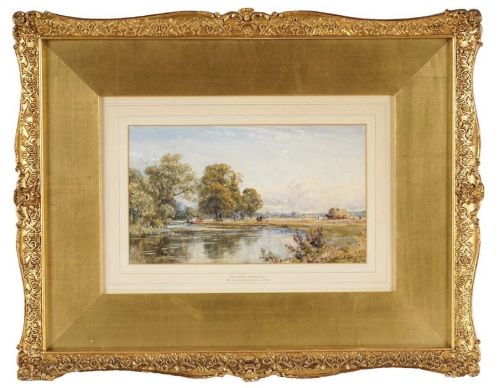
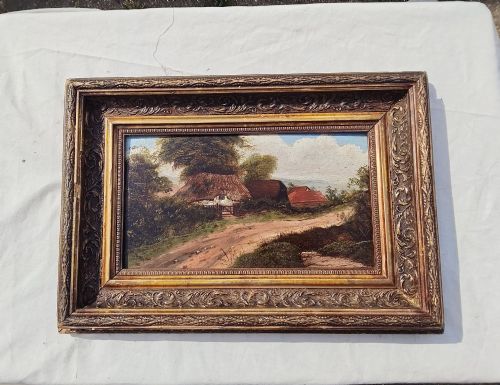
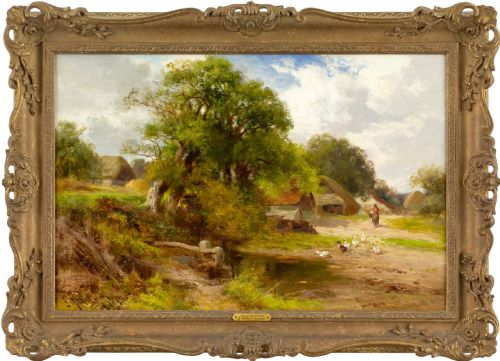
When searching for an antique English landscape picture, collectors encounter framed artworks depicting rivers, cottages, coastal views and rural scenes across the British Isles. The majority of pieces on this page originate from the nineteenth century and the early decades of the twentieth century, spanning Victorian and Edwardian periods.
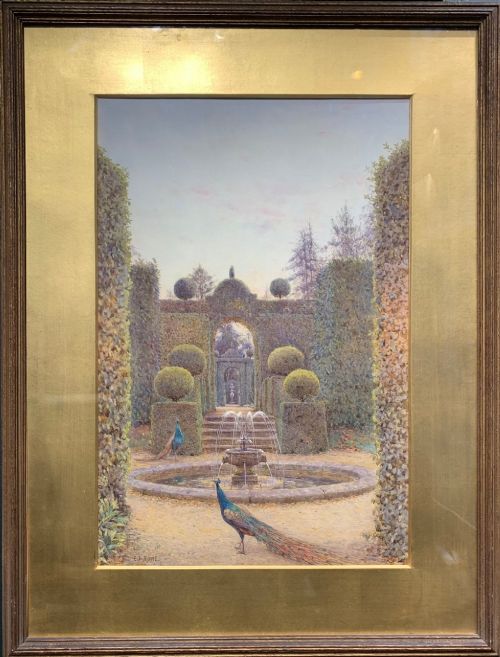
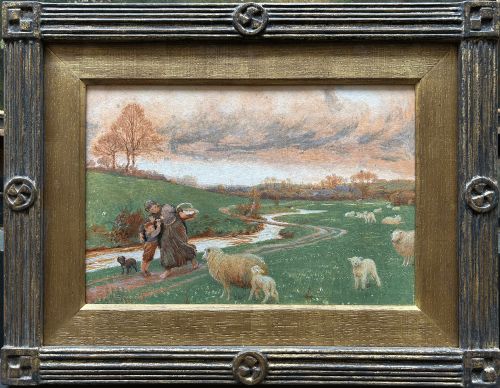
Subjects range from quiet Yorkshire farmyards and Devonshire streams to Hampshire gardens and Welsh valleys. Forms vary from small watercolours on paper and oil paintings on canvas to works executed on panel, board and card.
The selection frequently includes named topographical scenes, pastoral watercolours and oil paintings by regional English school artists. Works often arrive preserved in period gilt wood frames.
Materials and techniques
Makers utilised traditional artist materials, applying watercolour pigment onto paper or oil paint onto canvas, board and wood panels. Gold leaf and gilt wood frequently appear on the surrounding frames.
Paintings were created using brushwork and washes, sometimes employing card or paper supports that reflect standard nineteenth and early twentieth-century studio practices.
Listings feature paper, glass, wood, oil on canvas, gold leaf and watercolour pigment across Victorian and Edwardian periods.
Distinctions in quality
Quality rests upon the skill of the brushwork, the subtlety of light and atmosphere captured by the artist, and the preservation of the pigment. Works by recognised regional painters exhibit stronger composition and more confident handling of natural light than anonymous student pieces.
The condition of the paper or canvas, alongside the integrity of the original gilt frame, elevates the standing of a piece within its period.
Alfred Young Nutt·Percy Lancaster·William Howard Hardy·David Bates·Benjamin Barker·Walter Heath Williams·Robert Thorne Waite·John Horace Hooper·Ernest Arthur Rowe·Henry Yeen King·Robert Leslie Howey·T C Hofland·William Greaves·Herman S Melville·George Morland·Sydney Yates Johnson·Hubert Wellington·Alfred George Morgan·Thomas Cooper Moore·John Bedloe Goddard·Charles Walter Simpson·Charles Gregory·Henry Charles Fox·Arthur Wardle·Robert Little
The Antique English Landscape Picture Glossary
- Watercolour
- A painting method where fine pigment is suspended in a water-based solution, typically applied to paper. This medium allows for transparent washes and delicate atmospheric effects.
- Oil on canvas
- A technique utilising pigments bound in drying oils applied to stretched woven fabric. This medium permitted richer textures and deeper colour tones.
- English School
- A classification for artists trained or working within British artistic traditions. It groups together painters sharing regional subjects and stylistic approaches.
- Gilt wood
- Wood coated with a thin layer of gold leaf or metallic gilt. This finish is commonly found on traditional picture frames from the Victorian era.
- Panel
- A rigid wooden board utilised as a sturdy support for oil paintings before canvas became universally dominant. Artists valued its stable surface for detailed brushwork.
Antique English Landscape Picture: Frequently Asked Questions
What periods do these landscape pictures date from?
The works originate primarily from the nineteenth and early twentieth centuries, encompassing Victorian, Edwardian and Georgian eras.
Dates extend from the late eighteenth century through to the interwar period.
What mediums were used by the artists?
Painters worked predominantly in watercolour on paper or oil on canvas, panel and board.
Pastel on paper also appears among the documented formats.
How were these framed historically?
Original presentations frequently featured moulded gilt wood frames designed to complement the tone of the artwork.
Some pieces retain their period frames from the nineteenth or early twentieth centuries.
What subjects are most common?
Common subjects include rivers, coastal bays, rural cottages, pastoral harvest scenes and topographical views across English counties.
Artists frequently recorded specific locations such as Yorkshire, Dorset and the Thames Valley.