
Gilded Landscape Painting
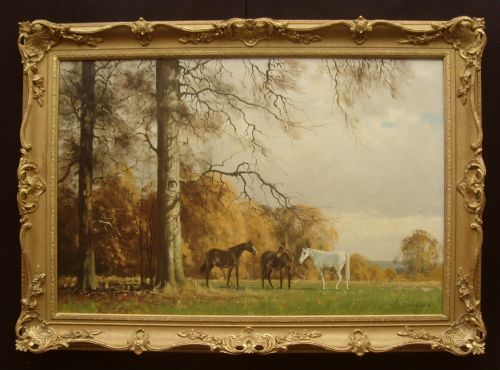
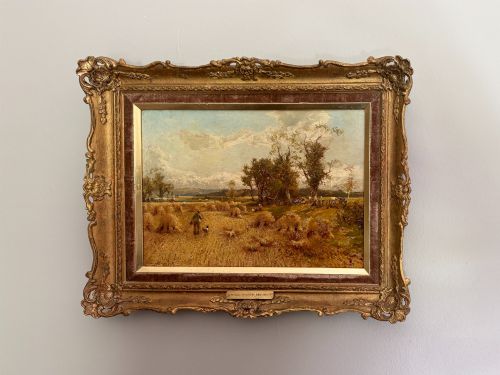
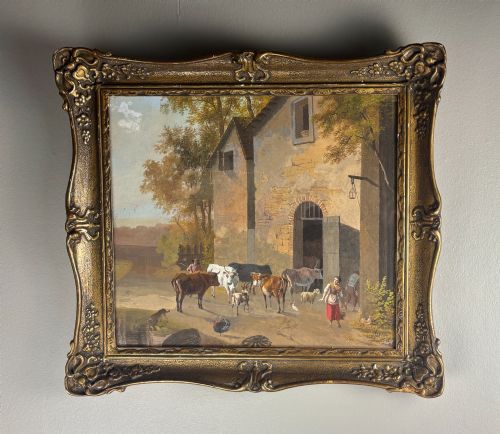
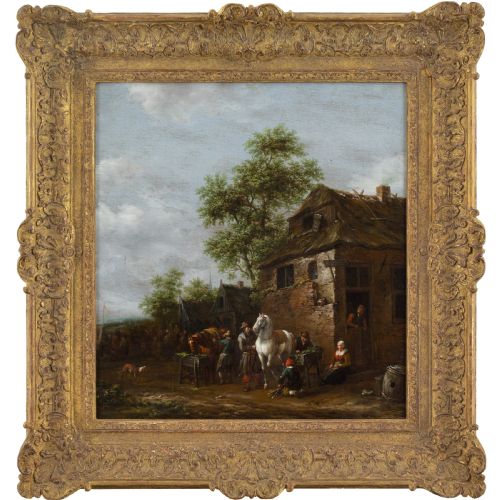
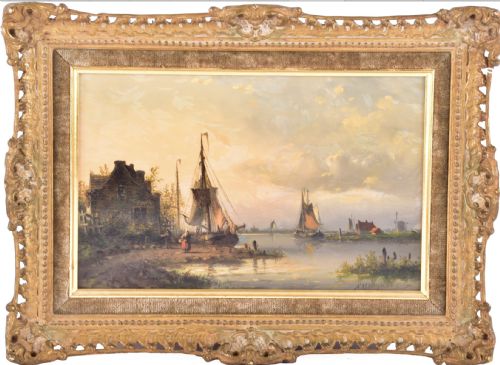
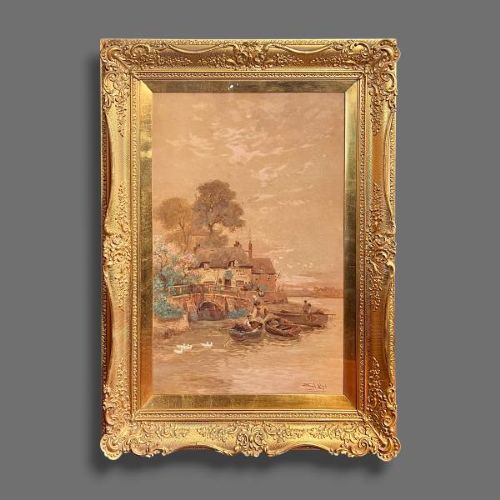
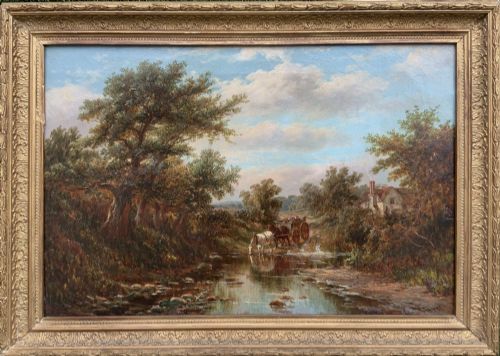
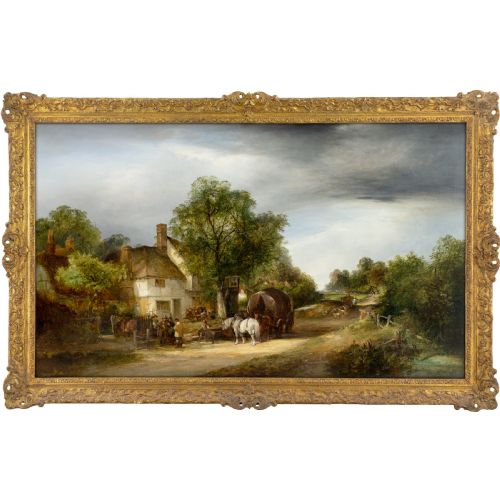
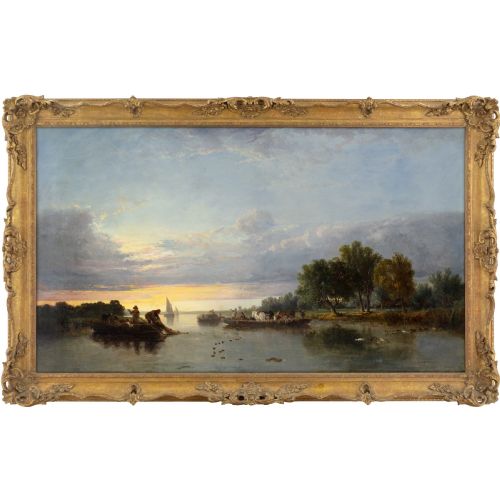
When you search for gilded landscape painting, you are looking at oil on canvas, wood, and card framed in gold leaf and giltwood from the Georgian, Victorian, and Edwardian periods.
Gilded Landscape Painting
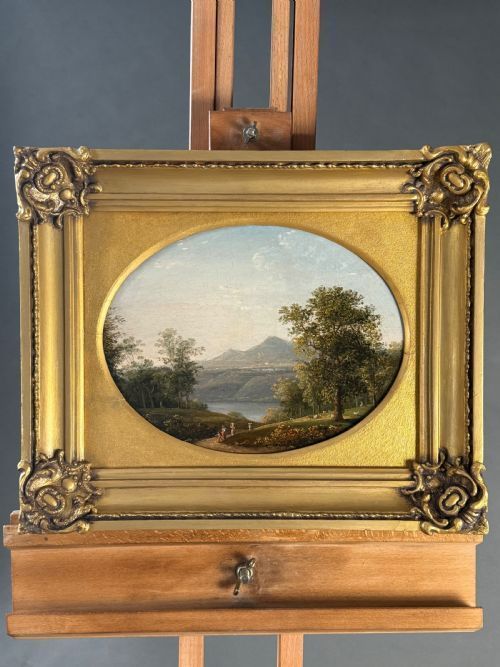
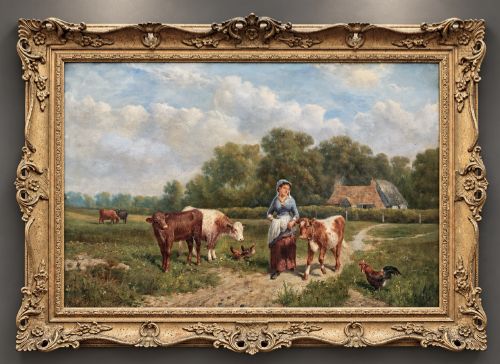
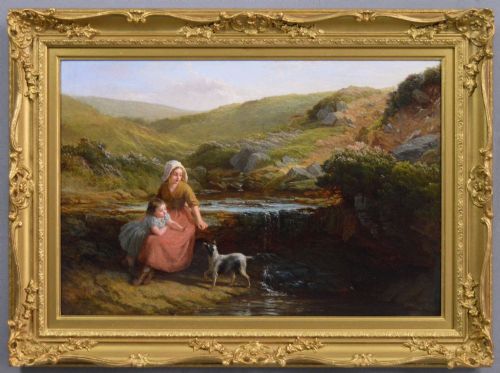
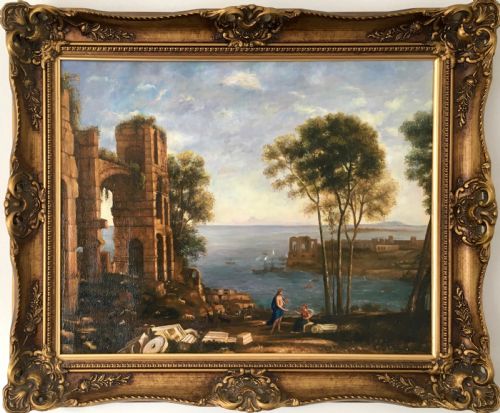
A gilded landscape painting presents pastoral scenes, river views, and architectural vistas framed in ornate metallic leaf. You will frequently encounter works originating from the eighteenth, nineteenth, and early twentieth centuries.
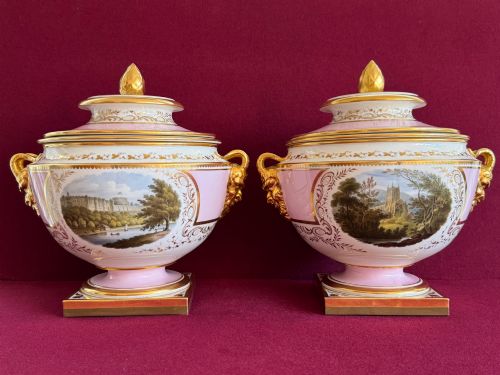
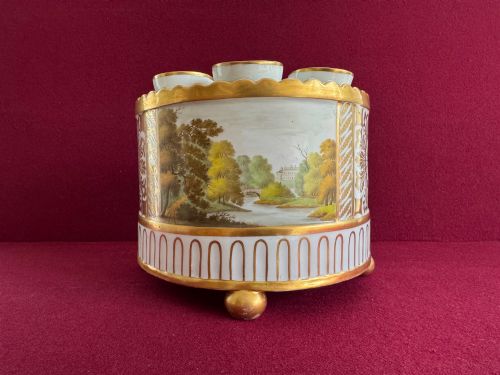
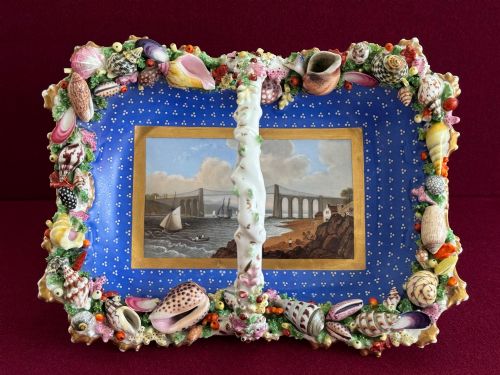
The selection ranges from expansive oil paintings on canvas and wood panels down to delicate watercolours and porcelain cabinet cups painted with topographical views. Artists often captured romantic settings, seaside gatherings, and rural farmyards.
British and European schools dominate this category, spanning movements from Neoclassical and Victorian Romanticism to Post-Impressionism. Many pieces carry signatures or attributions to recognised academic painters of the period.
How They Were Made
Makers applied oil paint or watercolours onto prepared supports of canvas, wood panels, board, card, milk glass, and porcelain. Wooden panels and canvas required gesso priming before the artist laid down the pigments.
The framing utilised heavy wood construction finished with gold leaf or giltwood, sometimes carved or swept in design. Gesso provided the smooth base layer needed for the metallic leaf application on the frames.
Listings feature works across oil, watercolour, and porcelain spanning the Georgian, Victorian, and Edwardian eras.
What Varies in Quality
Technical proficiency in brushwork and the handling of light define the upper tiers of these works. Master painters achieved depth and atmosphere through careful tonal graduation rather than relying on formulaic compositions.
The integration between the artwork and its frame influences overall standard. Original carved or swept gilded frames that complement the period and scale of the painting elevate the piece significantly.
Richard Sebastian Bond·Clifford Hanney·Francois Boucher·Alfred Fontville de Breanski Jr·EJ Letheren·Edward Mills·Thomas Barker of Bath·Augusto Alberici·Gabriel Mathieu·David Bates·Robert John Hammond·Alfred Pollentine·Robert Thorne Waite·Jacob Philipp Hackert·Francis Moltino·Ernest Arthur Rowe·John Hodgson Lobley·Adriana Verelst·Robert Mann·A Wallace
The Gilded Landscape Painting Glossary
- Giltwood
- Wood carved and coated with gold leaf or gold paint. This material forms the primary structure for many traditional picture frames.
- Gesso
- A plaster mix used as a base coat on wood panels and picture frames. It prepares the surface to receive gilding or paint.
- Oil on Canvas
- Pigment mixed with drying oil applied to stretched fabric. This technique allowed artists to build rich textures and deep colours.
- Topographical
- Representing a specific actual place or landscape accurately. These views often record historical towns, rivers, and estates.
- Post-Impressionism
- An art movement extending beyond Impressionism towards more symbolic content and expressive brushwork. It builds upon the colour theories of the preceding decades.
Gilded Landscape Painting: Frequently Asked Questions
How do I date a gilded landscape painting?
Examine the stretcher bars, canvas type, and framing materials for period characteristics. Nineteenth-century works often utilise machine-milled canvas and standard gesso framing techniques.
Signatures, stylistic movements like Victorian Romanticism, and inscriptions on the reverse provide further chronological markers. Comparing the technique to known regional schools helps narrow the timeframe.
Are these paintings always on canvas?
No, while canvas is common, many period works utilise wood panels, board, or heavy card. Porcelain and milk glass also serve as supports for smaller painted scenes.
Each material requires specific handling and preservation methods. Wood panels demand stable humidity to prevent warping over time.
What is the difference between oil and watercolour?
Oil paint utilises slow-drying plant oils bound to pigments, allowing for rich blending and heavy texture on canvas or wood. Watercolour employs water-soluble pigment on paper or card, resulting in a lighter appearance.
Watercolours from this era typically require glass protection within their frames. Oils remain durable on their exposed surfaces.
How should I hang and light these pieces?
Position paintings away from direct sunlight and strong heat sources to protect the canvas and gold leaf. Stable indoor climates prevent cracking in the gesso and paint layers.
Use dedicated picture lights with low UV emission to illuminate the metallic frames and painted details properly. Ensure the wall fixings match the substantial weight of wood and gilt frames.