




Victorian Music Rack Castors
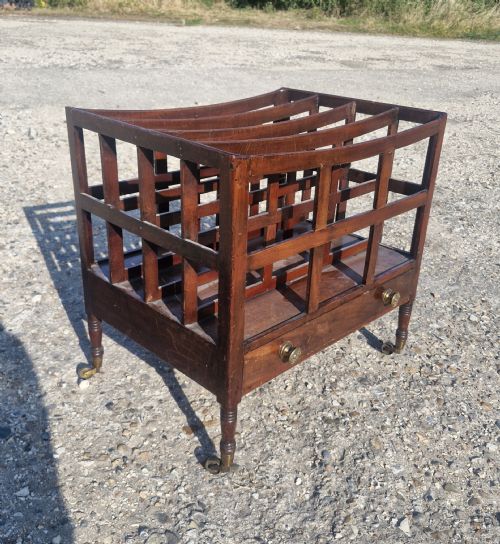
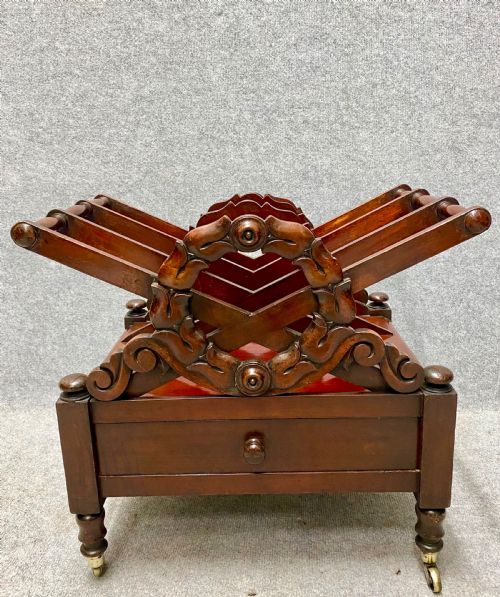
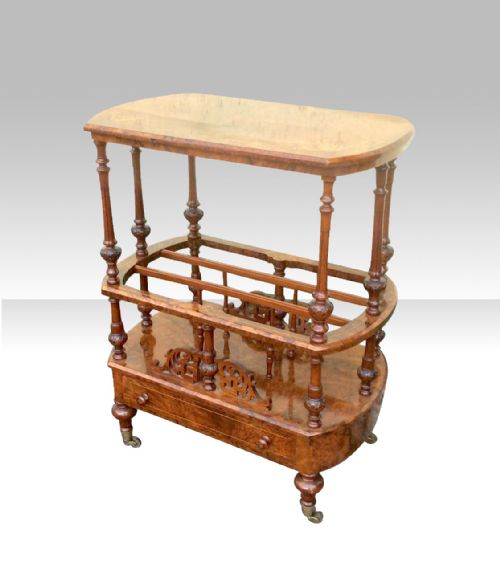
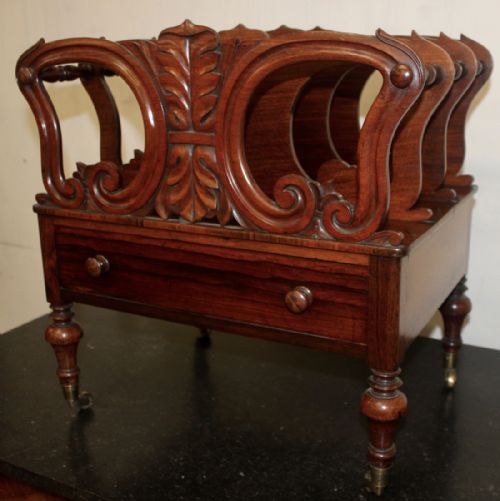
These Victorian music rack castors and associated canterburys are the practical wheeled stands designed to hold sheet music and folios in the nineteenth-century drawing room.
Victorian Music Rack Castors
When buyers search for victorian music rack castors, they generally encounter canterburys and music stands outfitted with small wheels for mobility across carpets and floorboards. These pieces span the nineteenth century, including Regency, William IV, and Victorian periods.
The primary forms on this page comprise canterburys, magazine racks, and shelving stands fitted on turned feet and original castors. They utilise woods such as mahogany, rosewood, walnut, and burr walnut.
Makers and designers like J.C. Loudon influenced these furnishings, which served to keep sheet music and periodicals organised near the piano or music stool. The inclusion of castors allowed servants or musicians to reposition heavy timber holders with ease.
Materials and construction
Carpenters constructed these music racks and canterburys using solid timbers and veneers of mahogany, rosewood, walnut, and burr walnut. Many examples incorporate marquetry inlay and wood inlay to decorate the partitions and drawer fronts.
Makers integrated brass hardware, ceramic elements, and turned wooden feet to mount the castors securely beneath the baseboards. Joinery methods relied on traditional cabinet-making practices suited to supporting partitioned compartments and lower drawers.
The materials on this site span mahogany, rosewood, walnut, burr walnut, ceramic, and brass.
Evaluating quality and execution
Quality in these pieces rests on the choice of timber figure, such as burr walnut or figured mahogany, paired with crisp wood inlay or marquetry. The sophistication of the slatted partitions and the presence of integrated lower drawers mark the distinction between standard items and more elaborate examples.
Originality of the castors and turned feet heavily influences the integrity of the piece. Finer workshops produced balanced proportions and detailed turned supports that complement the overall cabinet work.
J.C. Loudon
The Victorian Music Rack Castors Glossary
- Canterbury
- A low stand with partitioned vertical sections for holding sheet music, folios, or periodicals, often featuring a small drawer below.
- Castor
- A small wheel mounted on a swivel assembly attached to the feet of furniture to allow easy movement across the floor.
- Marquetry Inlay
- Decorative patterns formed by fitting contrasting pieces of wood veneer into a prepared surface.
- Burr Walnut
- Timber taken from the wart or growth on a walnut tree, yielding a highly figured and swirling grain pattern.
- What-Not
- An open set of multi-tiered shelves used for displaying or storing books and music.
Victorian Music Rack Castors: Frequently Asked Questions
What is a music canterbury?
A music canterbury is a dedicated nineteenth-century stand featuring vertical divisions designed to hold sheet music, scores, and folios upright.
These pieces typically sit beside a piano or in a parlour, keeping working music accessible to the household.
Why do these stands have castors?
Castors were fitted to allow heavy timber canterburys and shelving stands to be moved across heavy carpets during cleaning or room reconfiguration.
They provide practical mobility for furniture that needed to shift position near instruments or firesides.
What woods were used for music racks?
Cabinet-makers utilised dense hardwoods including mahogany, rosewood, walnut, and burr walnut for their durability and rich appearance.
Many pieces also featured decorative wood inlay and marquetry across the panels and top rails.
How do I identify a Victorian piece?
Victorian pieces often display characteristic timber choices like walnut and burr walnut alongside period decorative motifs such as marquetry inlay.
They reflect the domestic design trends of the nineteenth century, ranging from simple mahogany racks to elaborate ebonised what-nots.