


Brown Wood Magazine Stand
These brown wood magazine stand pieces, largely taking the form of traditional canterburys, offer practical division for periodicals alongside classic cabinetmaking.
Brown Wood Magazine Stand
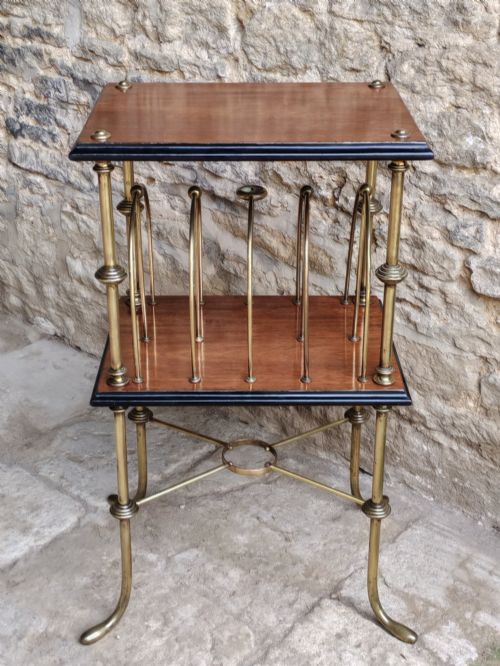
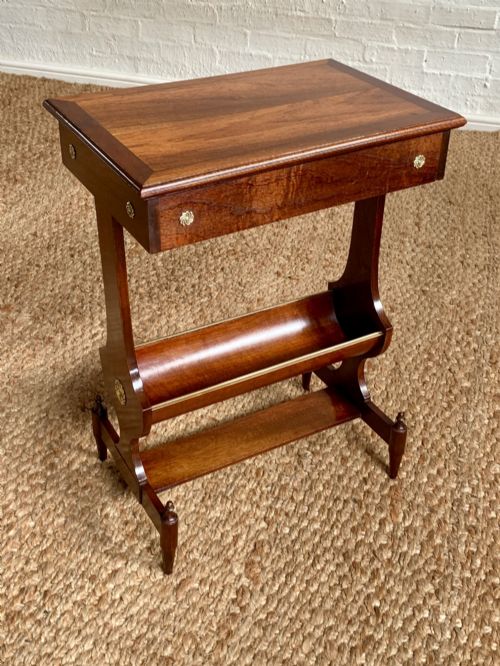
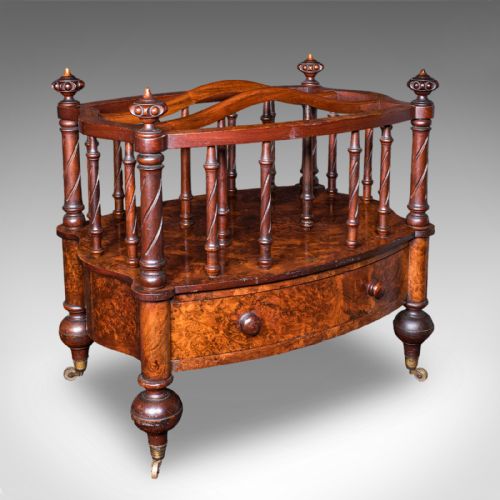
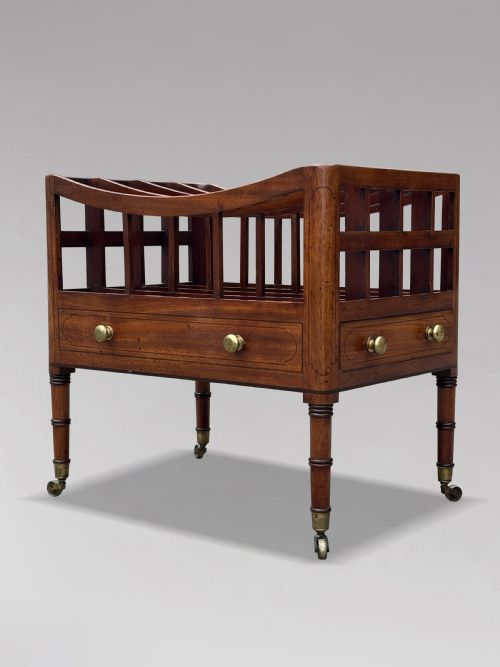
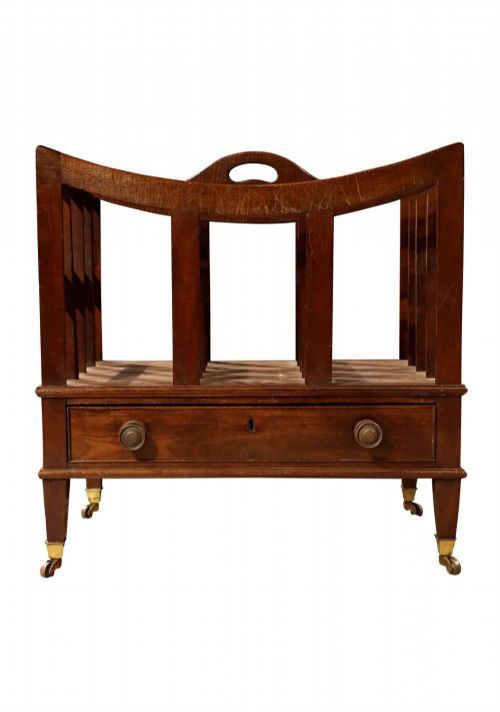
A brown wood magazine stand typically appears on this page under traditional names like canterbury, folio stand, or music rack, serving to organise papers and periodicals in a drawing room or study. You will frequently encounter mahogany and walnut examples spanning the Georgian, Regency, and Victorian periods.
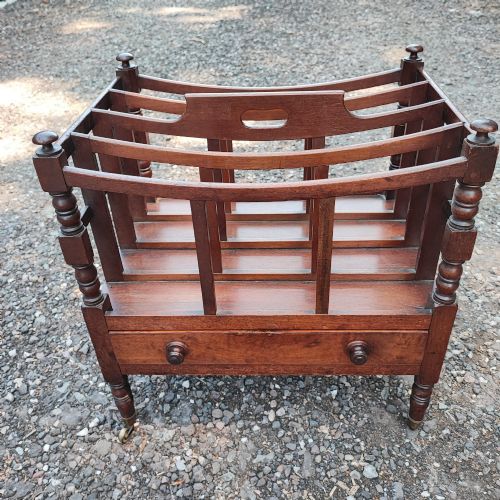
The form often incorporates slatted partitions for holding sheets or publications upright, occasionally supported by slender legs with castors and supplemented by a small base drawer. While later Edwardian iterations introduce delicate wood inlay, earlier Georgian and Regency versions rely on the clean grain of solid timbers.
How they were made
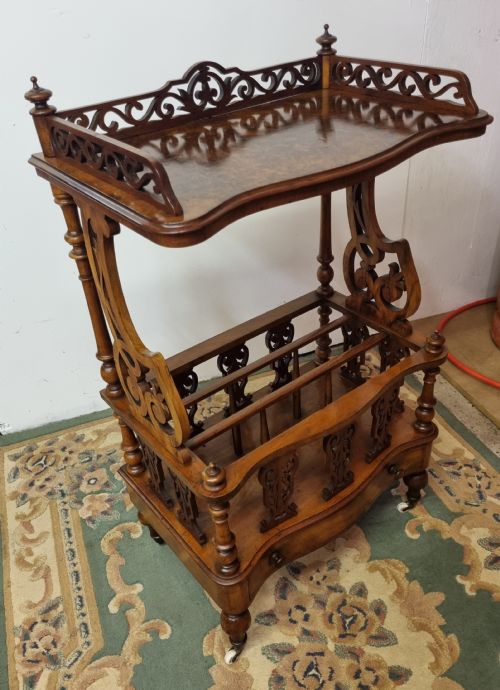
Cabinetmakers utilised dense hardwoods such as mahogany and walnut, frequently selecting figured burr veneers for prominent surfaces like table tops and side panels. Timber selection dictated the structural stability required for items repeatedly loaded with heavy paper and folios.
Detailing often included contrasting wood inlay, ebony banding, and brass mounts, alongside carved elements like wreath motifs or fretwork. Joinery relied on precise framing to ensure the slatted dividers and drawers withstood daily handling.
Object types recorded across the inventory include canterburys, folio stands, side tables, and dedicated music racks.
What varies in quality
Quality rests upon the selection of timber veneers, the crispness of any inlay or carved detailing, and the structural integrity of the slatted dividers. Pieces featuring figured burr walnut or finely banded mahogany sit toward the upper end of the scale.
Proportion and execution define the distinction between standard utilitarian items and grander salon pieces. Well-turned legs, original brass castors, and integrated drawers with dovetail joints indicate superior workshop production.
Shoolbred·J.C. Loudon
The Brown Wood Magazine Stand Glossary
- Canterbury
- A low stand with partitions for holding sheet music, books, or newspapers, often fitted with a drawer below. Originating in the late 18th century, it remains the primary form encountered for magazine storage.
- Folio stand
- A piece designed for large sheets of paper, prints, or folios, typically featuring adjustable or fixed upright partitions. These grand scale items often date from the Regency period.
- Burr walnut
- A highly figured wood veneer taken from the wart-like growths on walnut trees. It provides a dense, swirling pattern favoured by Victorian cabinetmakers.
- Inlay
- A technique where pieces of contrasting wood or other materials are inserted into a recessed surface to form a decorative pattern. Edwardian examples frequently employ this method.
- Ebony banding
- A thin strip of dark ebony wood inlaid around the edges of a panel or top to create a neat geometric border.
Brown Wood Magazine Stand: Frequently Asked Questions
What is a canterbury?
A canterbury is a low, freestanding piece of furniture designed with vertical partitions to hold sheet music, newspapers, or periodicals. Many examples also include a small drawer at the base for smaller accessories.
Originally developed in the late 18th century, the form adapted easily over subsequent decades to serve as a convenient repository for daily reading material in sitting rooms.
How do I date a mahogany canterbury?
Dating relies on examining the timber, the style of the legs, and construction methods. Georgian and Regency pieces generally display clean lines and solid mahogany framing, sometimes with simple turned supports.
Victorian and Edwardian versions often incorporate burr walnut veneers, elaborate fretwork, or decorative wood inlay. Hardware such as brass castors can also offer clues to the period of manufacture.
Where should I place a folio stand?
Folio stands and larger magazine racks suit studies, libraries, or spacious sitting rooms where they can sit near a desk or armchair. Their open partitions make them ideal for easy access to current reading.
Because many examples feature polished mahogany or burr walnut surfaces, keeping them away from direct heat sources helps protect the timber and veneer.
What is the difference between a music rack and a magazine stand?
While both terms describe partitioned stands, music racks were historically built to hold unbound sheet music and folios near a piano. Magazine stands often serve a similar function but generally date from later periods when periodicals became common household items.
In practice, makers often combined the designations, producing pieces suited to both sheet music and general reading.