


Victorian Mountain Landscape Painting
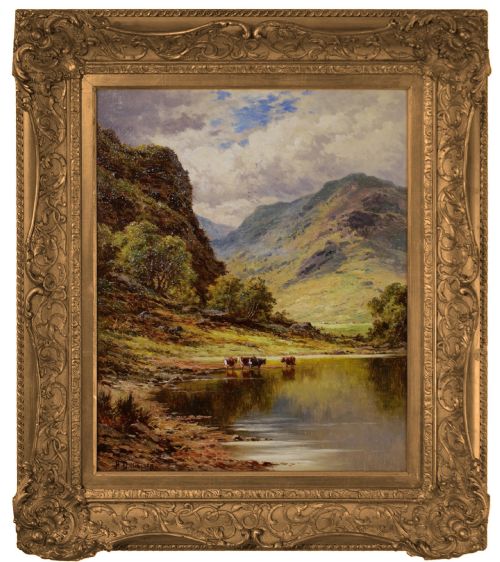
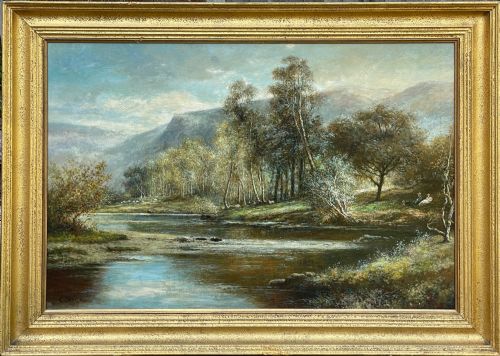
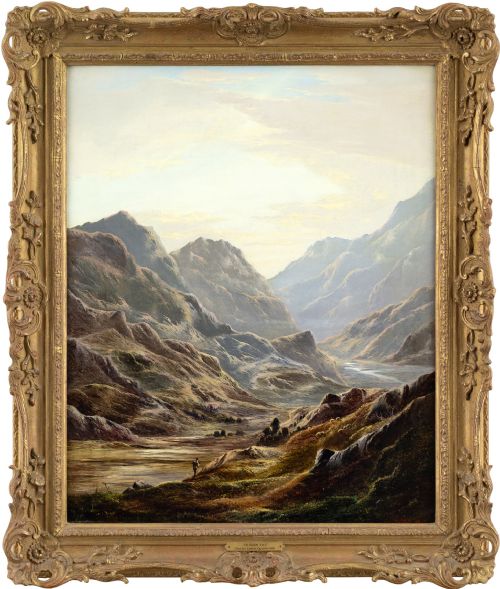
A victorian mountain landscape painting captures the sublime grandeur of highland peaks, rugged valleys and quiet lochs.
Victorian Mountain Landscape Painting
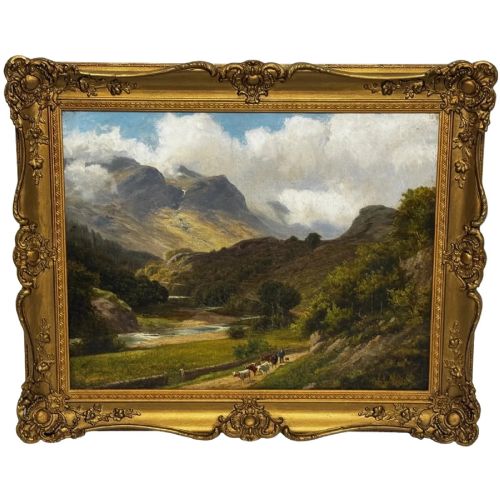
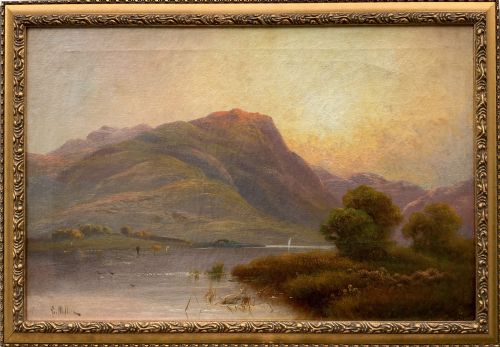
A victorian mountain landscape painting typically portrays dramatic terrain across Scotland, Wales, the English Lake District and continental ranges like the Alps. These works celebrate the raw power of nature through towering crags, rushing torrents and moody skies.
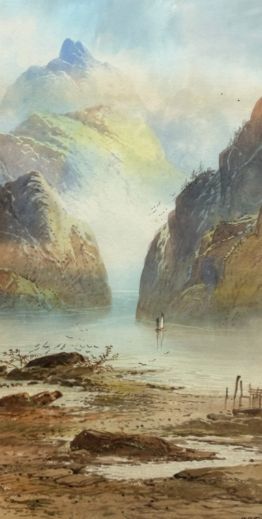
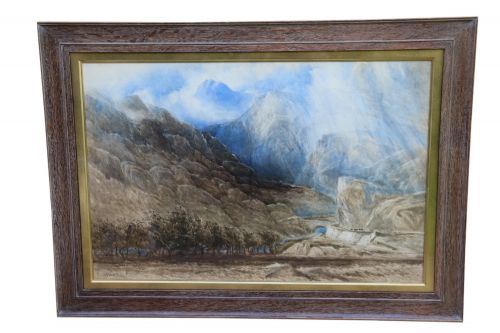
Most pieces encountered on this page originate from the nineteenth century, spanning decades from eighteen-fifty to nineteen-twenty. They emerge in both oil on canvas and delicate watercolour formats, housed within period wooden and gesso frames.
Materials and Techniques
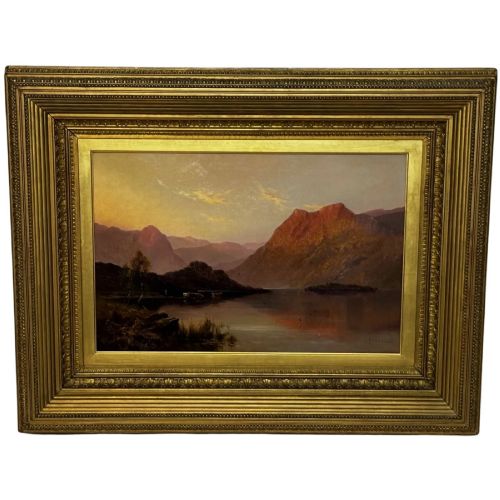
Artists built these scenes predominantly using oil on canvas or applied pigments to paper in watercolour. Canvases received layers of rich pigment to capture the shifting light on Highland mist and dark water.
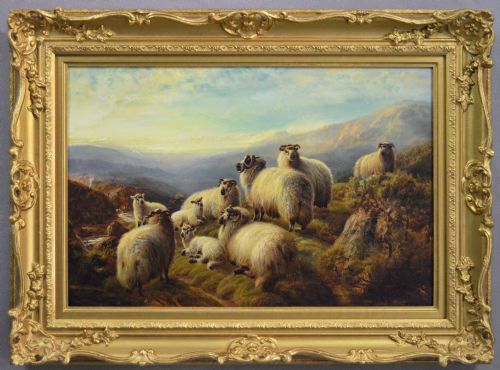
Finished works found their homes in substantial giltwood, wood and gesso frames that enhanced the depth and scale of the mountainous vistas.
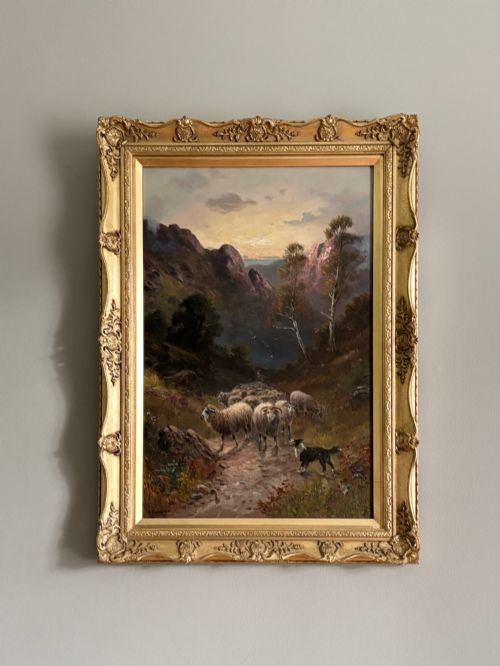
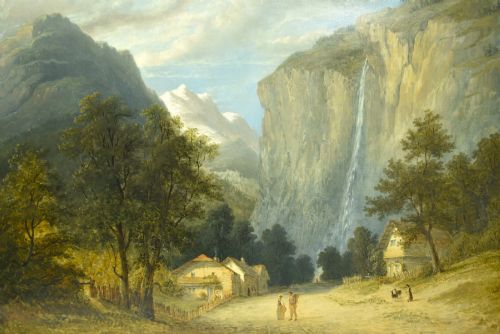
Frequent subjects across the archive include Welsh river valleys, Swiss alpine waterfalls and Scottish Highland cattle beside misty lochs.
Distinctions in Quality
Quality rests in the painter's command of atmospheric perspective, distinguishing atmospheric moisture over distant peaks from the crisp detail of foreground rocks and resting sheep. Stronger compositions balance the sheer weight of crags with subtle plays of light across water.
The sophistication of the original giltwood or gesso frame also contributes significantly to the overall presence of the piece, as original mouldings complement the ambition of the canvas.
William Beattie-Brown RSA·William Henry Earp·Alfred Fontville de Breanski Jr·Henry H. Parker·Charles Leslie·Robert Watson·Henry Martin Pope·William George Tennick·John Grenville Fennell·William Henry Mander·Sidney Richard Percy·Thomas Spinks·Walter J Watson·John Syer·John Douglas Perrett·Karl Herrle·Thomas Lound·Stephen Enoch Hogley·George Turner·Alfred de Breanski·Alfred de Breanski Snr·Frederick Richard Lee·Thomas Sidney Cooper·Gustave De Brianski
The Victorian Mountain Landscape Painting Glossary
- Giltwood
- Wood carved and coated with a thin layer of gold leaf or metallic gilt. It provided luminous borders for nineteenth-century canvases.
- Gesso
- A plaster-like mixture applied to wooden frames before gilding. It allowed craftsmen to sculpt intricate ornamental relief patterns.
- Romanticism
- An artistic movement emphasising emotion, individualism and awe of the natural world. It heavily influenced nineteenth-century depictions of untamed peaks.
- Watercolour
- Pigments suspended in a water-based, translucent solution applied to paper. It created luminous, airy depictions of distant valleys.
Victorian Mountain Landscape Painting: Frequently Asked Questions
Where were these paintings usually displayed?
These works hung in nineteenth-century drawing rooms and formal parlours to project refined taste and a connection to the dramatic British countryside.
Owners valued the sense of scale and distant travel these grand vistas brought into domestic interiors.
How do I identify a Scottish scene?
Look for specific topographical clues such as highland cattle, misty lochs, purple heather and distinctive peaks like Ben Lawers or Sgurr nan Gillean.
Artists frequently inscribed titles or locations on the reverse of the canvas or stretcher bars.
What is the difference between oil and watercolour versions?
Oils offer rich, heavy impasto and deep pigments that convey the brooding weight of massive mountain ranges and stormy weather.
Watercolours provide a lighter, more translucent quality well suited to delicate atmospheric effects in valleys and lakes.
How should I care for a nineteenth-century frame?
Keep gilded wooden frames away from direct sunlight and fluctuating humidity to prevent the gesso base from cracking or flaking.
Dust gently with a dry, soft brush rather than using liquid cleaning products on the delicate metallic surface.