
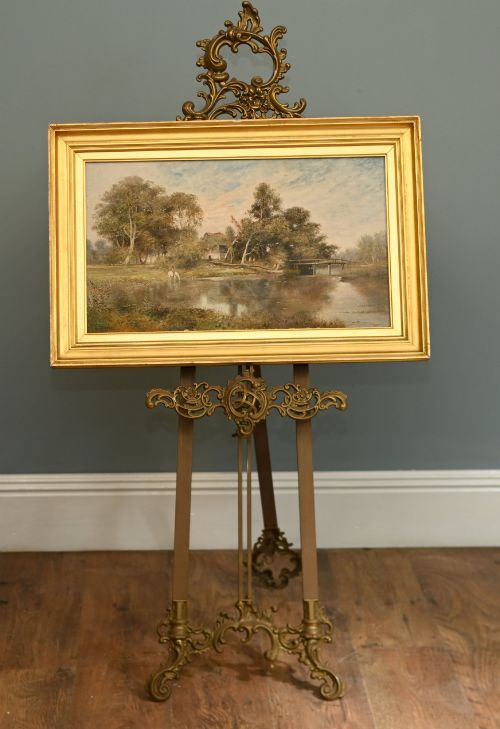

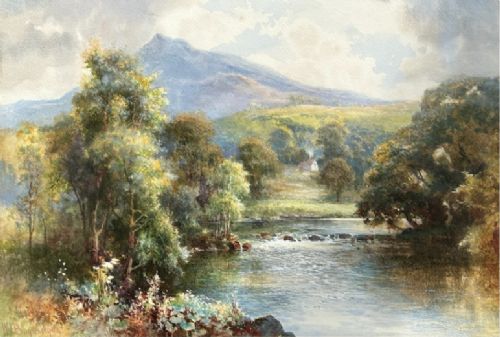


Antique Valley River Picture
An antique valley river picture captures the quiet charm of nineteenth and early twentieth century waterways through delicate brushwork.
Antique Valley River Picture
An antique valley river picture depicts scenic inland waterways, quiet riverbanks and pastoral countryside views across Britain and France. These works capture specific topographical scenes ranging from the Thames Valley to Welsh rivers and Scottish glens.
Buyers encountering this selection will find original watercolours and oil paintings dating from the Victorian and Edwardian eras. The subjects focus on natural landscapes, picturesque valleys and rural river life rendered by period artists.
Most examples originate from the nineteenth and early twentieth centuries, reflecting changing landscape painting traditions from Victorian pastoral art to early impressionism. These framed pictures offer a direct window into historical rural scenery.
Materials and construction methods
Artists created these river scenes using watercolour pigments on paper or oil paint applied to canvas, wood panels or board. The physical components rely on traditional painting media bound by historical formulations typical of the Victorian period.
Framing often incorporates wood mouldings enhanced with gilt finishes to complement the painted artwork. Support structures range from stretched canvas to heavy paper sheets and wooden panels suitable for plein air painting.
Geese occasionally make an appearance to supervise river traffic.
Factors that distinguish quality
Quality in these landscape paintings rests upon the artist's handling of light, atmospheric depth and natural perspective. Skilled brushwork brings movement to the water and texture to the surrounding valley foliage.
The sophistication of the composition and the artist's ability to render topographical details with clarity separate finer works from simpler decorative pieces. Provenance through signed signatures and identified locations adds archival weight to the artwork.
Alfred Young Nutt·William Joseph Boyes·William George Tennick·Harold Lawes·Reginald Grange Brundrit·Edmond Defonte·Cornelius Pearson·Charles Branwhite
The Antique Valley River Picture Glossary
- Watercolour
- A painting method where fine pigment is suspended in a water-based solution and applied to paper. This medium allows for translucent washes and delicate tonal gradients.
- Oil paint
- A slow-drying paint made with pigments suspended in a drying oil, typically linseed oil. It permits rich colour blending and textured impasto effects.
- Plein air
- Painting outdoors directly from nature to capture transient effects of light and weather. This practice gained popularity among landscape artists during the nineteenth century.
- Victorian
- The period spanning the reign of Queen Victoria, characterised by diverse artistic movements including detailed pastoral and landscape painting. Works from this era often reflect romantic ideals of the countryside.
- Gilt
- A thin layer of gold leaf or gold paint applied to wooden frames. This decorative surface treatment enhances the presentation of the enclosed painting.
Antique Valley River Picture: Frequently Asked Questions
What periods do these river paintings cover?
The works span the nineteenth and early twentieth centuries, capturing Victorian and Edwardian artistic tastes. Many date from the late Victorian decades up to the nineteen-thirties.
This broad timeframe encompasses traditional British watercolour landscapes as well as early impressionist oil paintings.
How were these landscape pictures originally displayed?
Owners typically displayed framed watercolours and oil paintings in domestic reception rooms and parlours. They served as decorative focal points reflecting a fondness for rural scenery.
Today, they suit similar domestic settings where traditional interior styles prevail.
How do I identify a Victorian watercolour?
Victorian watercolours often utilise fine paper supports and show precise brushwork depicting British river valleys. Signatures, dates and historical framing styles frequently provide clues to their exact age.
Examining the reverse of the picture may also reveal contemporary labels or inscriptions.
What subjects appear in these valley scenes?
Common subjects include Welsh rivers, Scottish glens, the Thames Valley and French rural waterways. Artists often incorporated natural elements such as hills, trees and wildlife alongside the water.
These views document recognizable geographical locations as well as idealized pastoral compositions.