

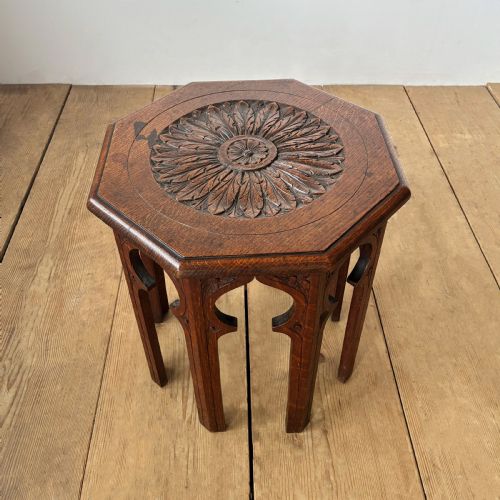


Victorian Moorish Occasional Table
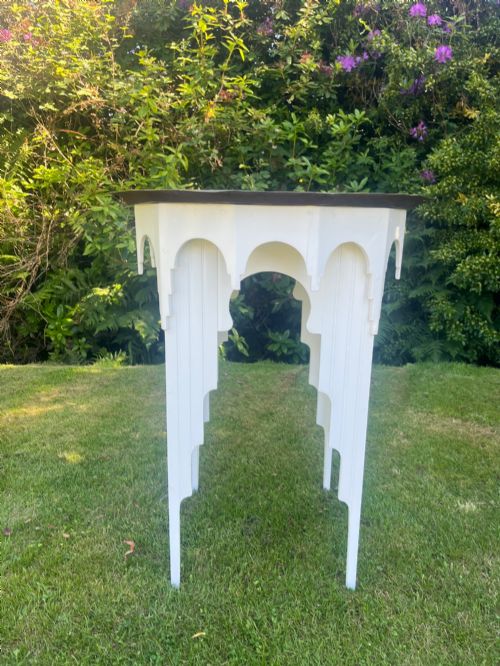
A victorian moorish occasional table brings intricate geometric inlay and dense fretwork directly from late nineteenth-century drawing rooms into modern spaces.
Victorian Moorish Occasional Table
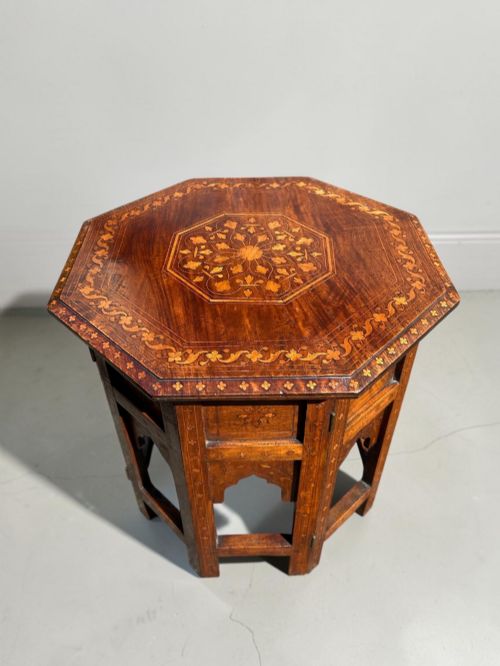
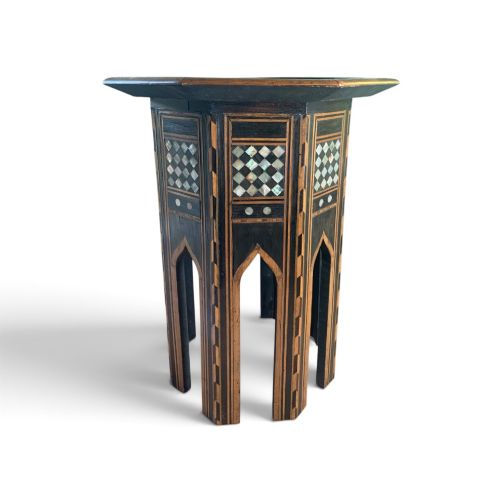
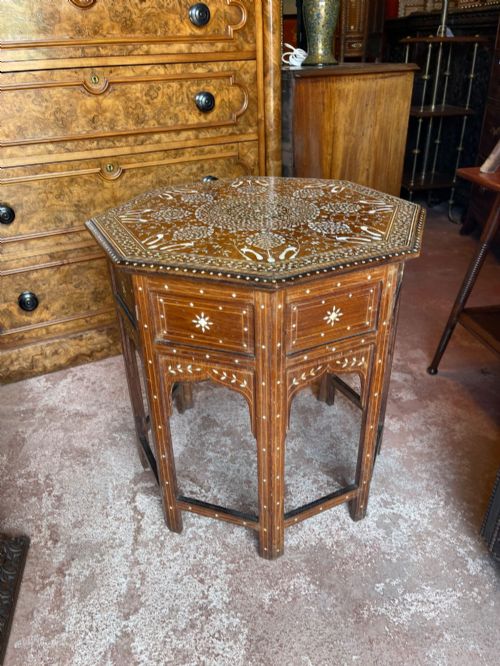
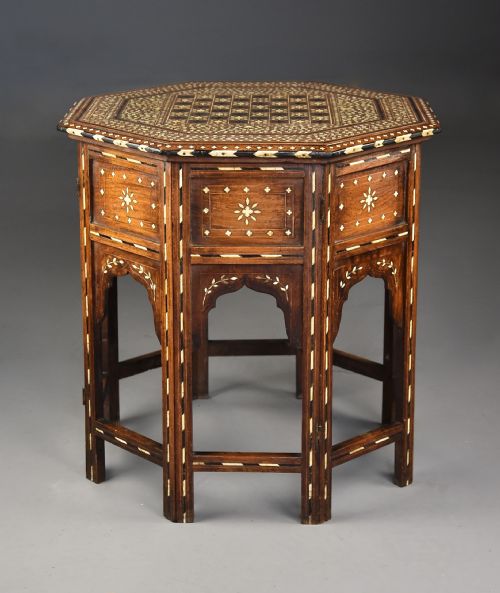
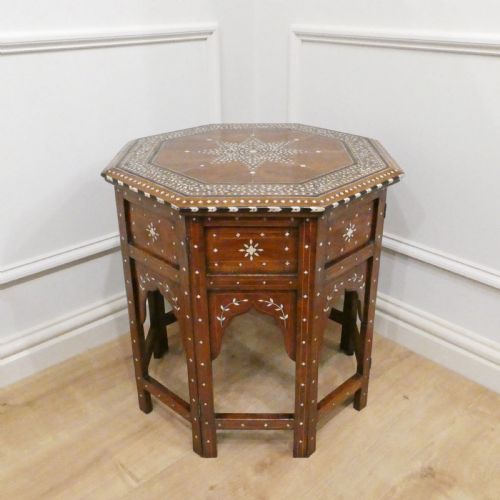
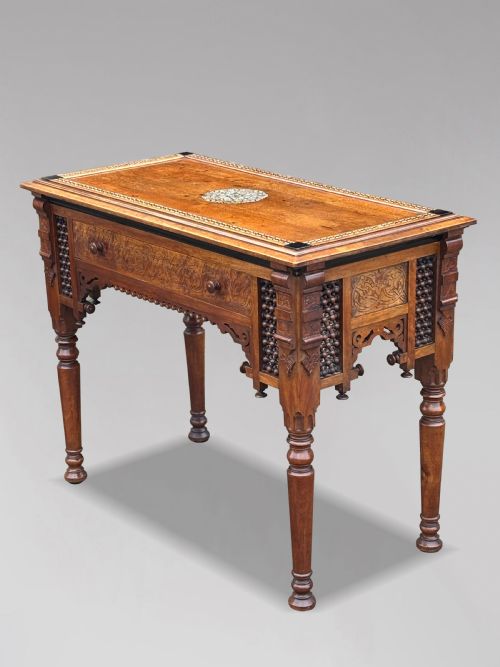
When you search for a victorian moorish occasional table, you encounter distinct octagonal and drop-flap forms designed for domestic display during the late nineteenth century. These pieces reflect the period fascination with Islamic design, often crossing paths with Aesthetic Movement and Anglo-Indian tastes.
The selection here spans pieces originating from workshops in Hoshiarpur and Damascus alongside London retailers like Liberty and Co. Most examples date from the late nineteenth century, functioning primarily as side tables, lamp tables, or centre tables.
Construction and materials
Carved hardwood forms the structural foundation of these pieces, utilising dense timbers such as walnut, rosewood, mahogany, and teak. Ebonised wood also appears among pieces influenced by the Aesthetic Movement.
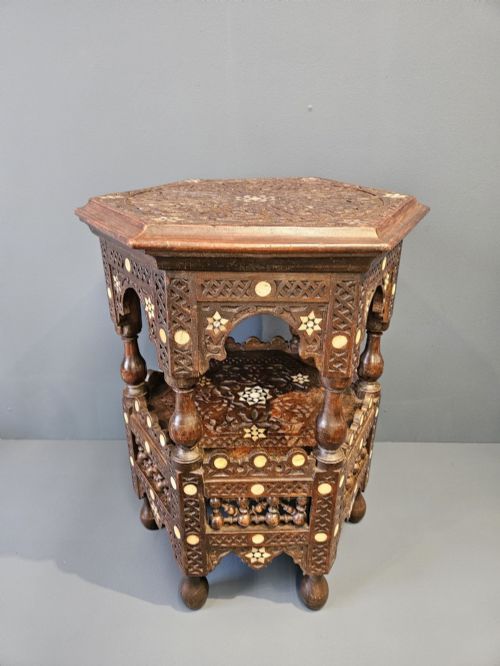
Intricate surface decoration relies on dense hand-carving combined with micro-mosaic inlay work. Artisans pressed bone, mother-of-pearl, and contrasting woods into intricate geometric patterns across the tops and folding panel sides.
The listings here feature traditional materials including teak, rosewood, walnut, bone, and mother-of-pearl across various nineteenth-century styles.
Distinctions in quality
The refinement of the hand-carving and the density of the geometric inlay separate standard examples from superior pieces. Finer items exhibit precise tessellation in the mother-of-pearl and bone elements without significant loss to the intricate fretwork.
Attribution also plays a part, as tables associated with retail houses like Liberty and Co. or specific centres such as Hoshiarpur demonstrate exceptional joinery and design execution compared to unbranded provincial work.
Liberty and Co.
The Victorian Moorish Occasional Table Glossary
- Octagonal
- Having eight sides. This geometric plan dominates the top surfaces and folding bases of many tables from this group.
- Fretwork
- Ornamental design created by cutting patterns through solid wood. This technique produces the delicate, pierced screens characteristic of these tables.
- Micro-mosaic
- The technique of arranging tiny pieces of bone, metal, or shell into intricate geometric patterns. It covers the surfaces of the more elaborate inlaid examples.
- Aesthetic Movement
- A late nineteenth-century design current emphasising visual beauty over narrative content. It influenced the darker ebonised finishes seen on several tables here.
- Drop flaps
- Hinged table leaves that fold down to alter the footprint of the furniture. This mechanism appears on specific occasional tables for versatility.
Victorian Moorish Occasional Table: Frequently Asked Questions
Where were these tables placed originally?
These occasional tables served as decorative surfaces in late nineteenth-century drawing rooms and parlours, often holding lamps or small decorative objects.
Their compact dimensions allowed them to be moved easily around reception rooms to suit changing social layouts.
How do I care for inlaid surfaces?
Dust the intricate carved areas regularly with a soft brush to prevent dirt accumulation in the recesses. Avoid liquid polishes that can loosen delicate bone or mother-of-pearl elements.
Maintain a stable room humidity to prevent the hardwood base from expanding and causing the small inlay pieces to pop out.
Are folding bases original?
Many octagonal tables utilise interlocking folding bases designed to be portable and easily stored when not in use. These clever wooden hinges form an authentic part of the original construction.
Take care when lifting these tables, as the folding panels rely on gravity and slot joints rather than permanent fixings.
How do I distinguish regional styles?
Hoshiarpur pieces typically feature dense overall floral and geometric wood carving combined with subtle inlay. Syrian and Moroccan examples often emphasise contrasting mother-of-pearl and bone mosaic patterns.
British retail interpretations, particularly those associated with Liberty, often blend these Near Eastern motifs with ebonised frames typical of the Aesthetic Movement.