
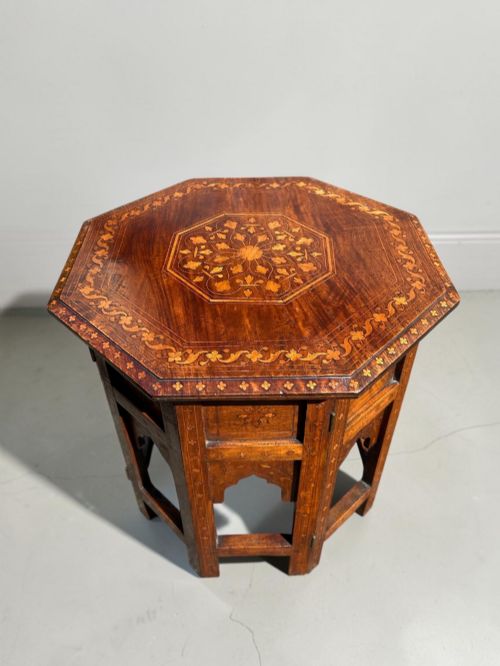
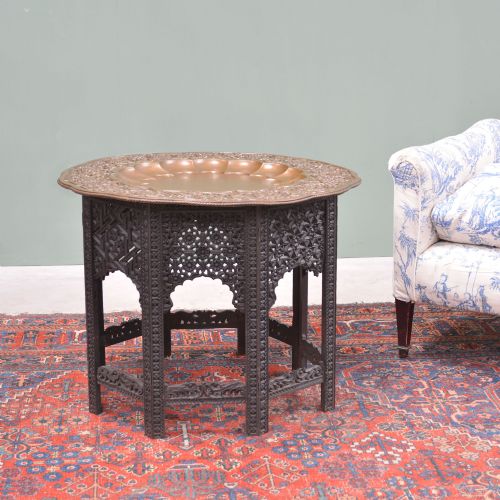
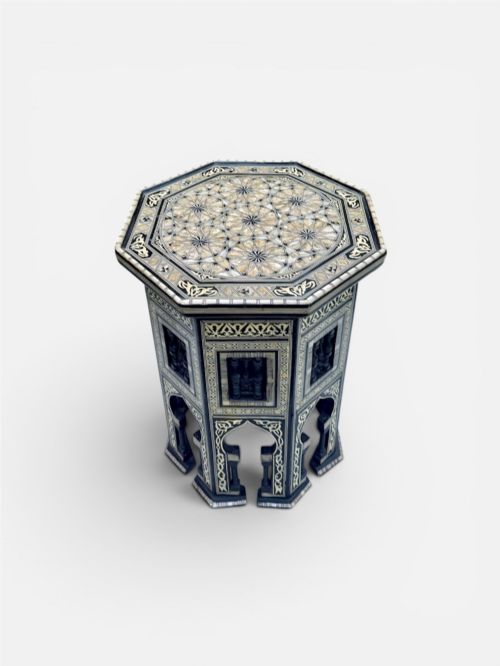
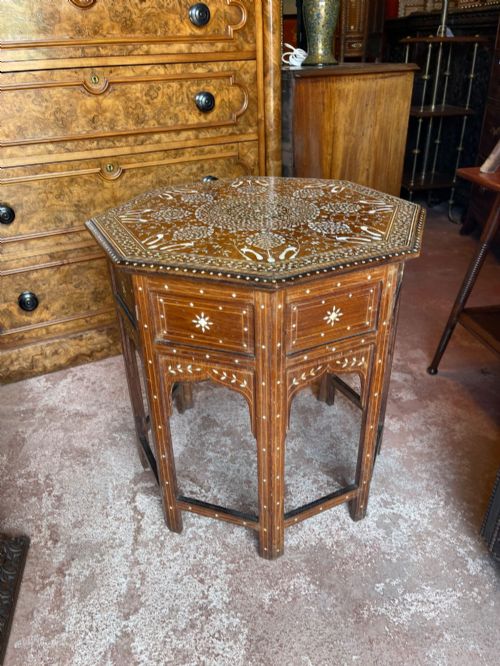


Moorish Carved Side Table
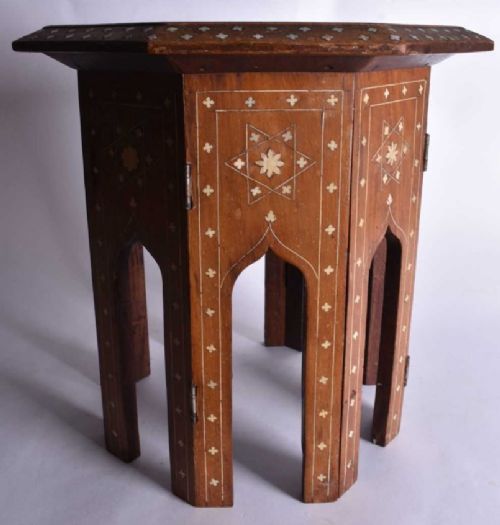
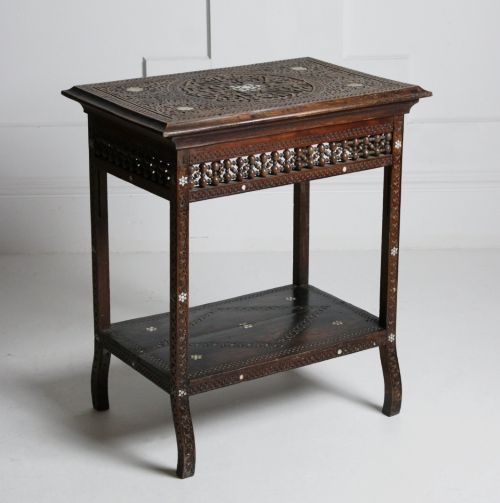
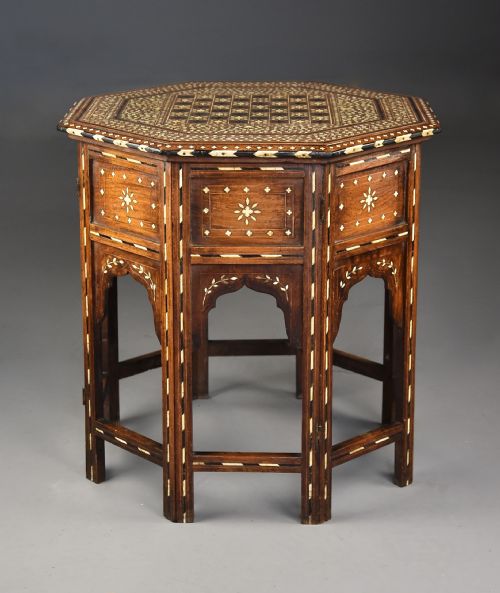
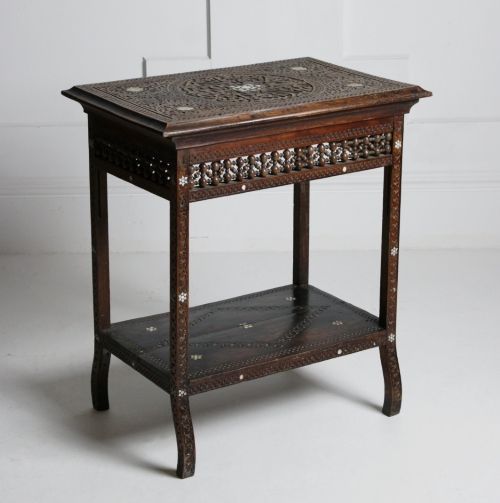
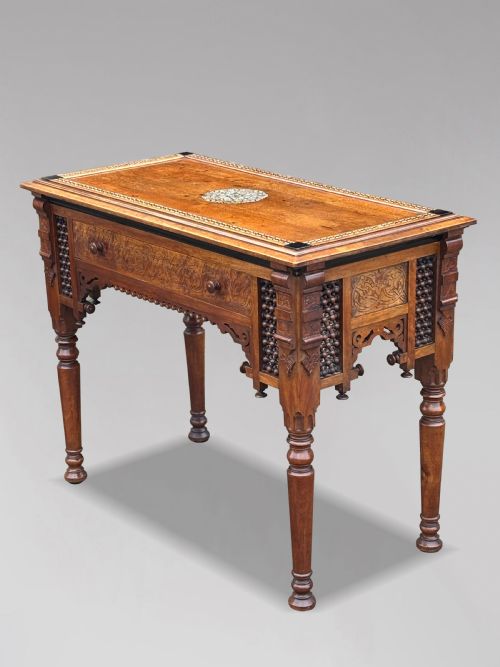
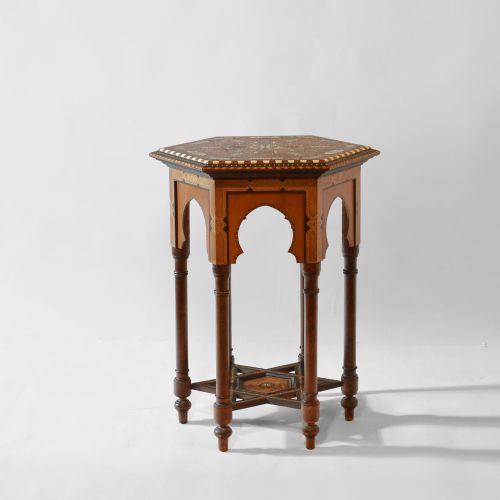
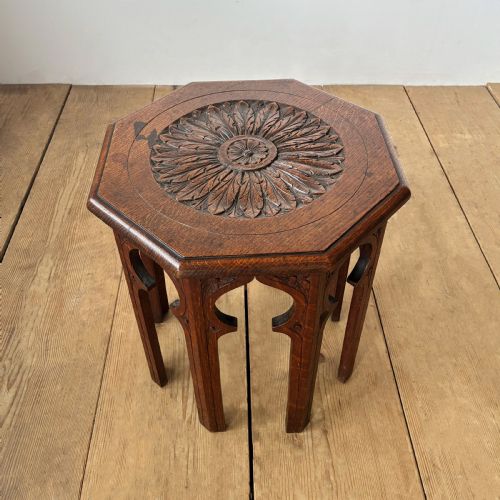
These intricate wooden pieces known as a moorish carved side table bring geometric pattern and rich surface detail to an interior.
Moorish Carved Side Table
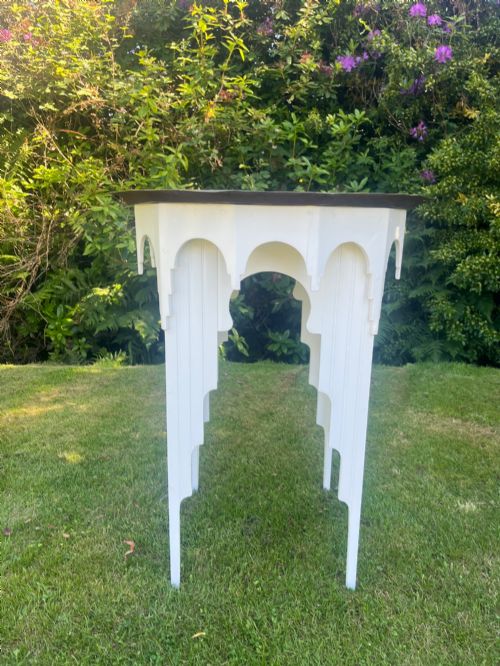
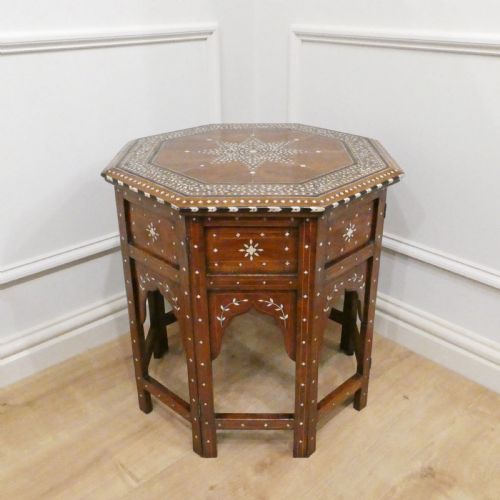
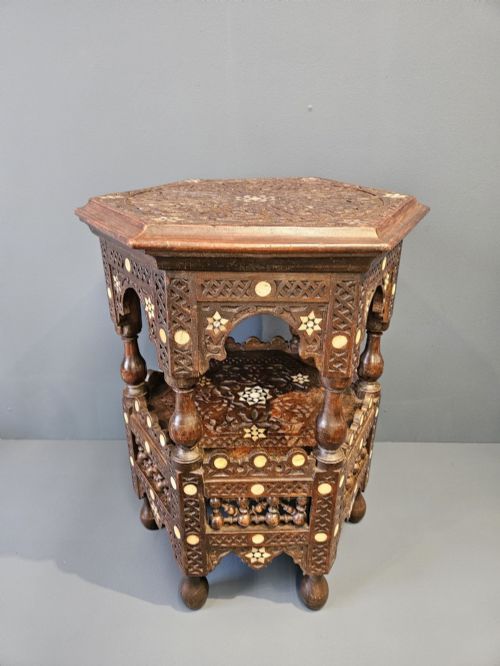
A moorish carved side table typically takes an octagonal or hexagonal form, often designed with folding bases or tiered structures.
The selections span the nineteenth century and early twentieth century, showing influences from Anglo-Indian, Syrian, and Ottoman traditions.
You will frequently encounter occasional tables and coffee tables decorated with distinct regional carving and geometric silhouettes.
Materials and construction
Craftsmen utilised dense woods such as walnut, teak, rosewood, and sandalwood as the structural base for intricate carving.
Surfaces are heavily ornamented with inlaid bone, mother-of-pearl, and brass wire to create elaborate geometric and floral motifs.
Many examples employ complex folding mechanisms alongside pierced fretwork panels assembled without traditional rigid joinery.
Some folding tables arrive with secrets hidden in plain sight, engineered to collapse completely flat like wooden puzzles.
Assessing craftsmanship
Quality rests upon the precision of the geometric inlay and the depth of the hand carving across the wooden surfaces.
Finer examples maintain tight alignment in their bone and mother-of-pearl tessellation, with minimal loss to the delicate wooden fretwork.
The integrity of the folding frame and the selection of cabinet timber distinguish standard production from exceptional pieces.
Liberty & Co·Carlo Bugatti
The Moorish Carved Side Table Glossary
- Octagonal
- Having eight sides. This geometric shape is standard for many tables originating from regional workshops.
- Inlay
- A technique where pieces of contrasting material are inserted into a recessed wooden base. Bone and mother-of-pearl are common mediums.
- Fretwork
- Ornamental design created by piercing wood with a scroll saw or chisel. It forms openwork panels on folding tables.
- Tiered
- Having more than one level or shelf. Certain Syrian examples utilise this format for display purposes.
Moorish Carved Side Table: Frequently Asked Questions
How do I fold these tables?
Many octagonal tables use an interlocking wooden frame that collapses flat when lifted from the top. The hinges operate on simple pivot principles specific to regional construction.
Take care to support the hinges evenly when closing the frame to avoid putting pressure on the intricate fretwork panels.
Where were these pieces made?
The pieces originate from diverse centres including Hoshiarpur in India, Damascus in Syria, and various workshops across North Africa and the Ottoman Empire.
Each region imparted distinct carving styles and material combinations, from sandalwood and bone inlay to heavy walnut frames.
How do I clean mother-of-pearl inlay?
Dust the surface gently with a dry, soft cloth to prevent particulate buildup in the recessed channels around the shell. Avoid liquid cleaners that might seep into the wood.
Moisture can loosen the historic glue holding the delicate bone and pearl pieces within their sockets.
Are these tables sturdy enough for daily use?
Most occasional and side tables function well for holding lamps or decorative objects. Folding variants require level flooring to remain stable.
Avoid placing excessive weight on the outer edges of folding top panels, as the hinged supports are designed for moderate loads.