



Victorian Mirrored Wardrobe
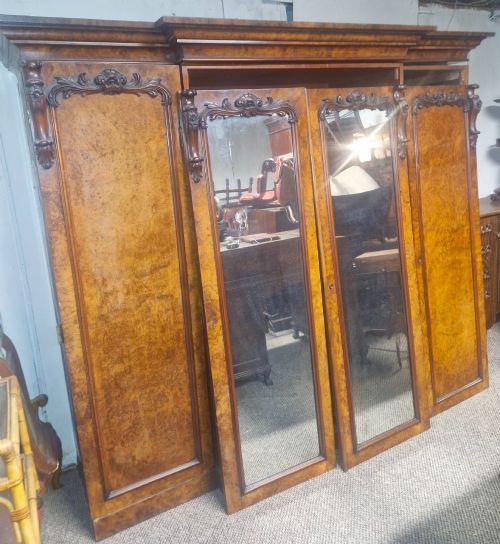
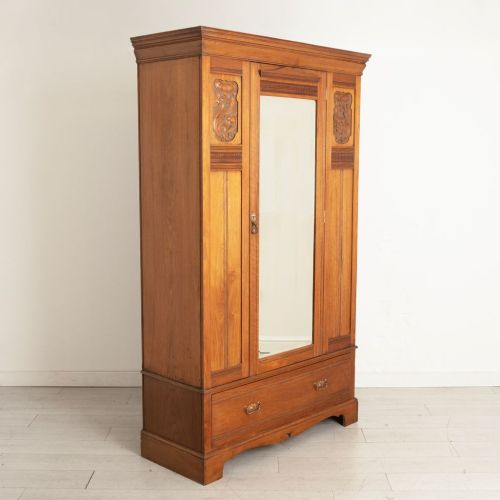
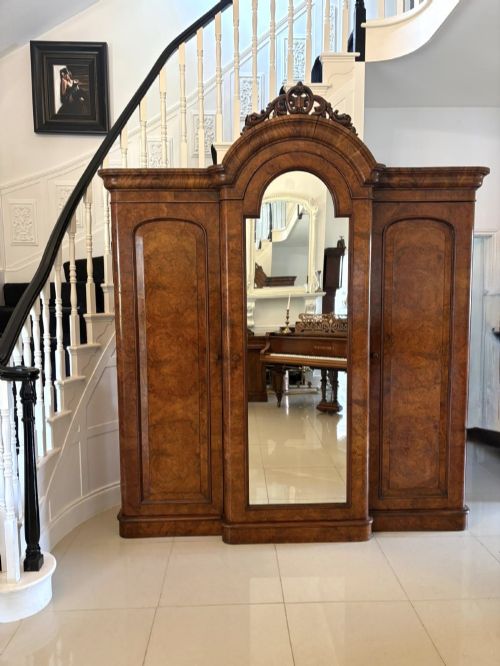
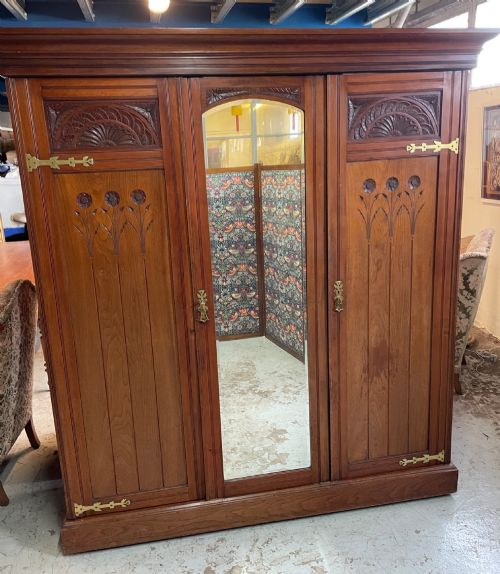
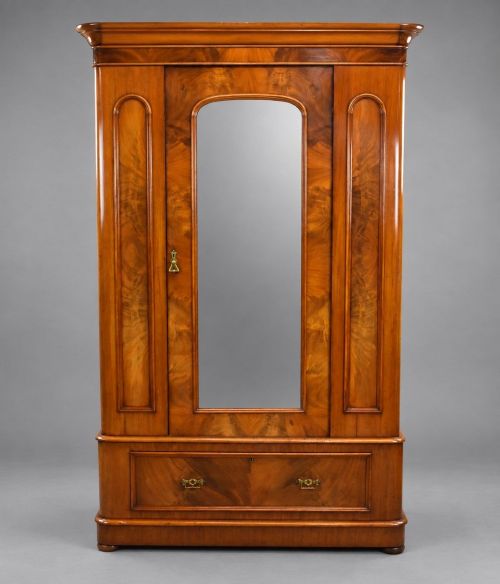
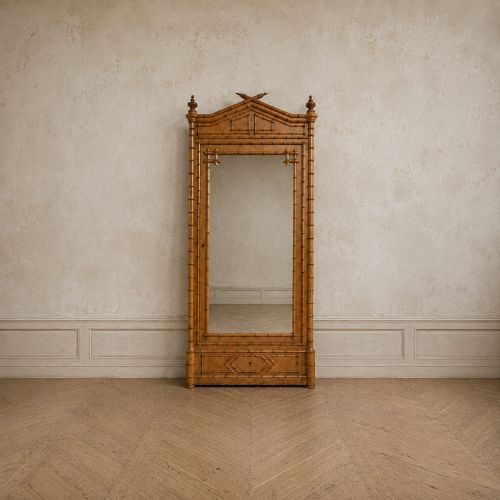
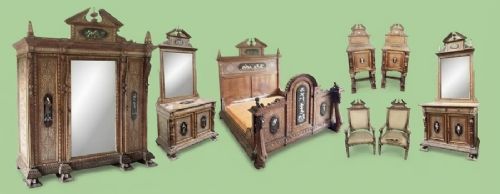
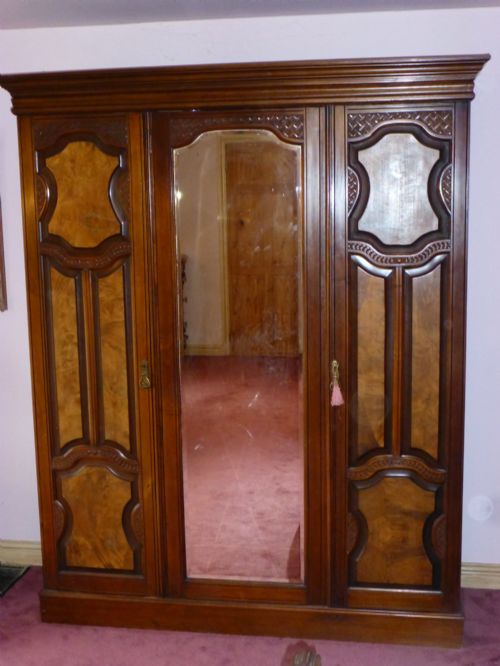
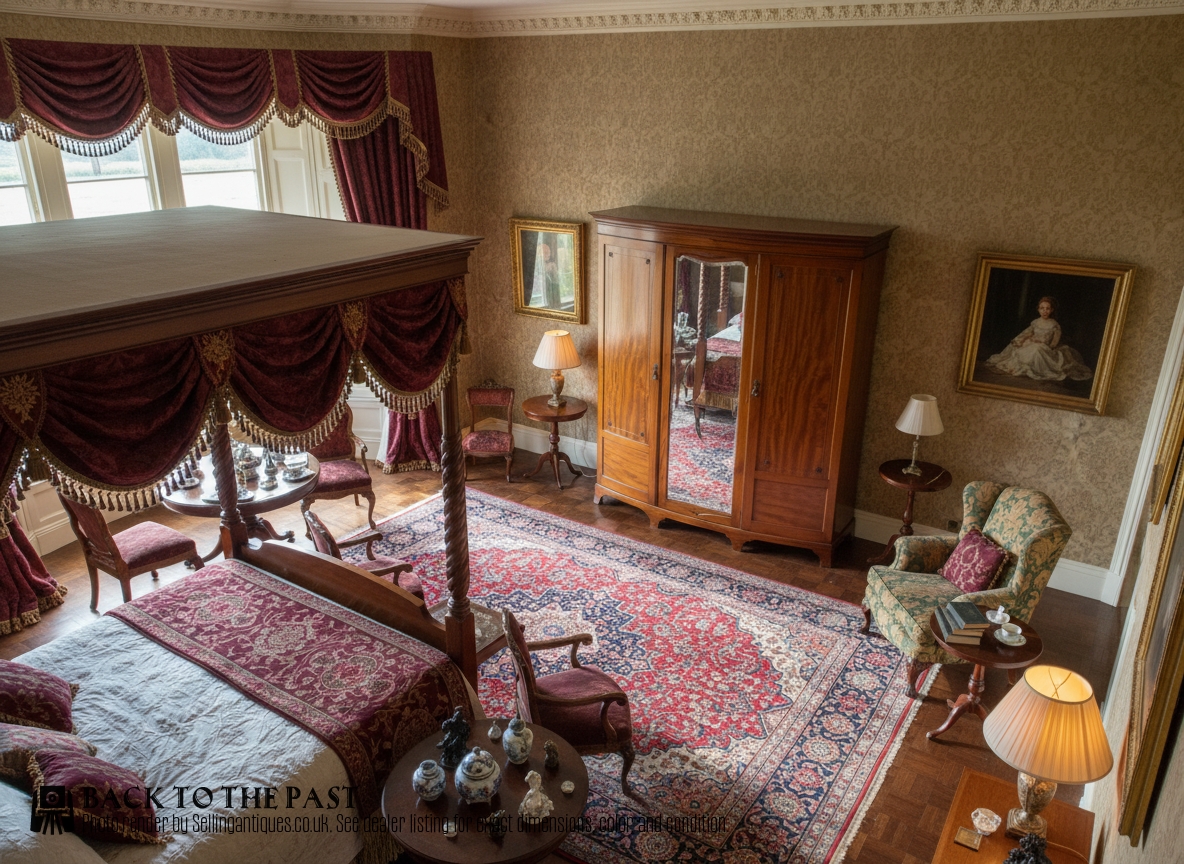
A victorian mirrored wardrobe brings full-length glass and heavy timber presence to a bedroom, offering deep hanging space alongside a panel of period reflection.
Victorian Mirrored Wardrobe
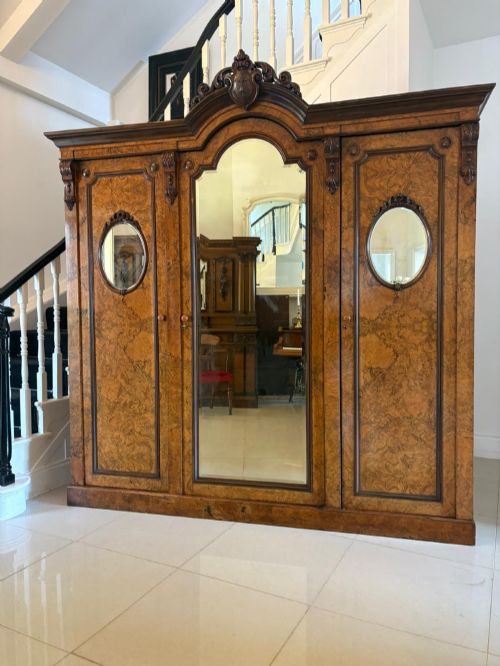
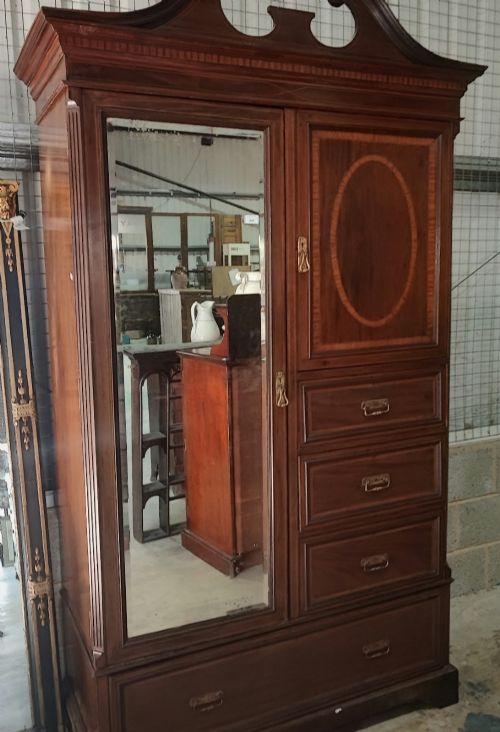
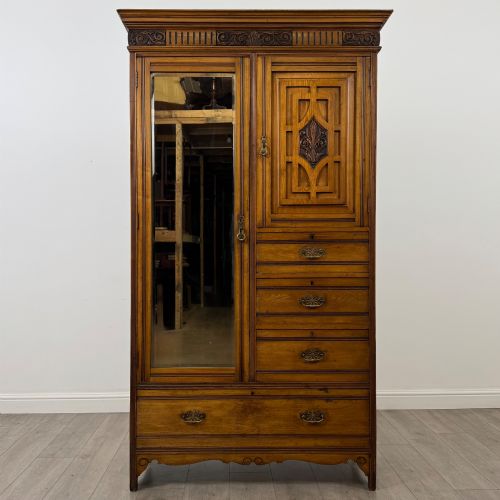
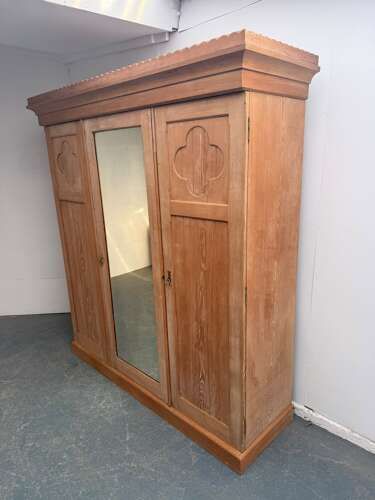
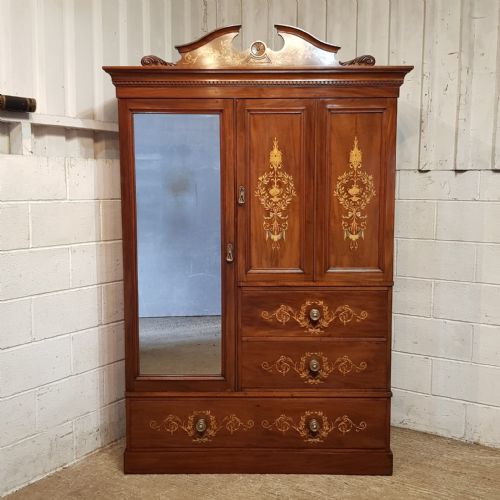
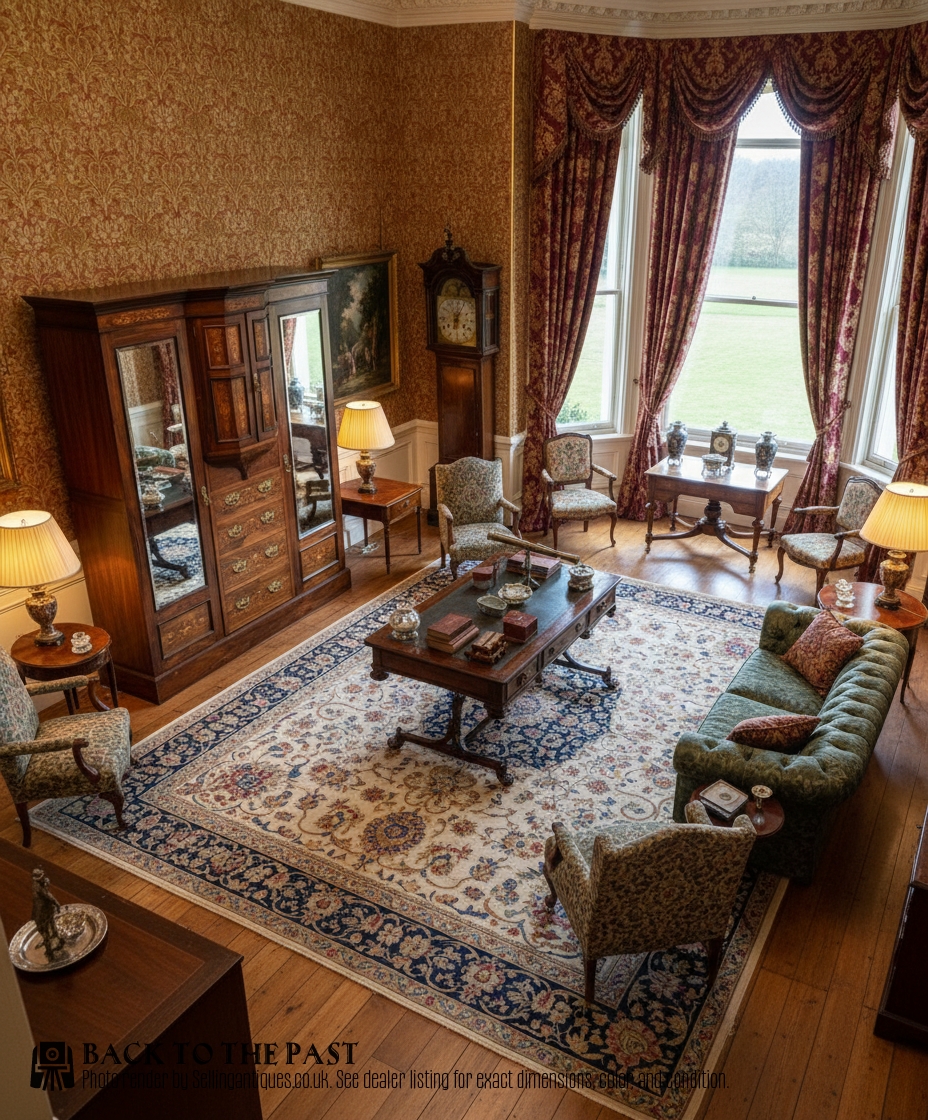
When you search for a victorian mirrored wardrobe, you enter a field dominated by tall architectural timber cases designed to anchor large bedrooms. The single, double, and triple configurations span simple pine country pieces to elaborate walnut and mahogany armoires fitted with central glass doors. Many examples take the form of compactums or combination pieces, integrating drawers, linen slides, and hanging compartments behind matched doors.
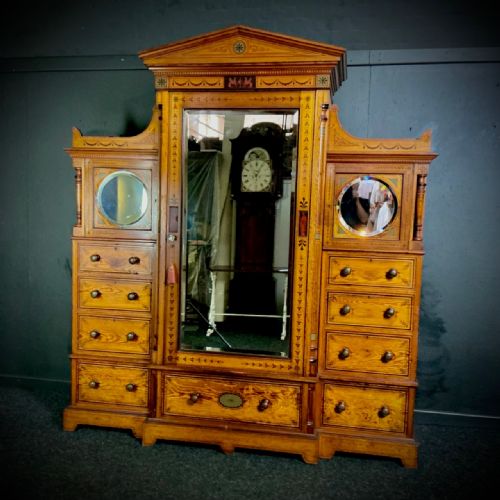
The version you are most likely to meet on this page is a mahogany or walnut double or triple wardrobe featuring a central bevelled glass mirror, often dating from the late nineteenth century. These sturdy constructions balance practical storage with decorative mouldings, cornices, and occasionally inlaid panels or carved foliage. Pieces range from smaller single-door cupboards intended for guest rooms to vast breakfront suites designed for country houses.
Materials and Construction
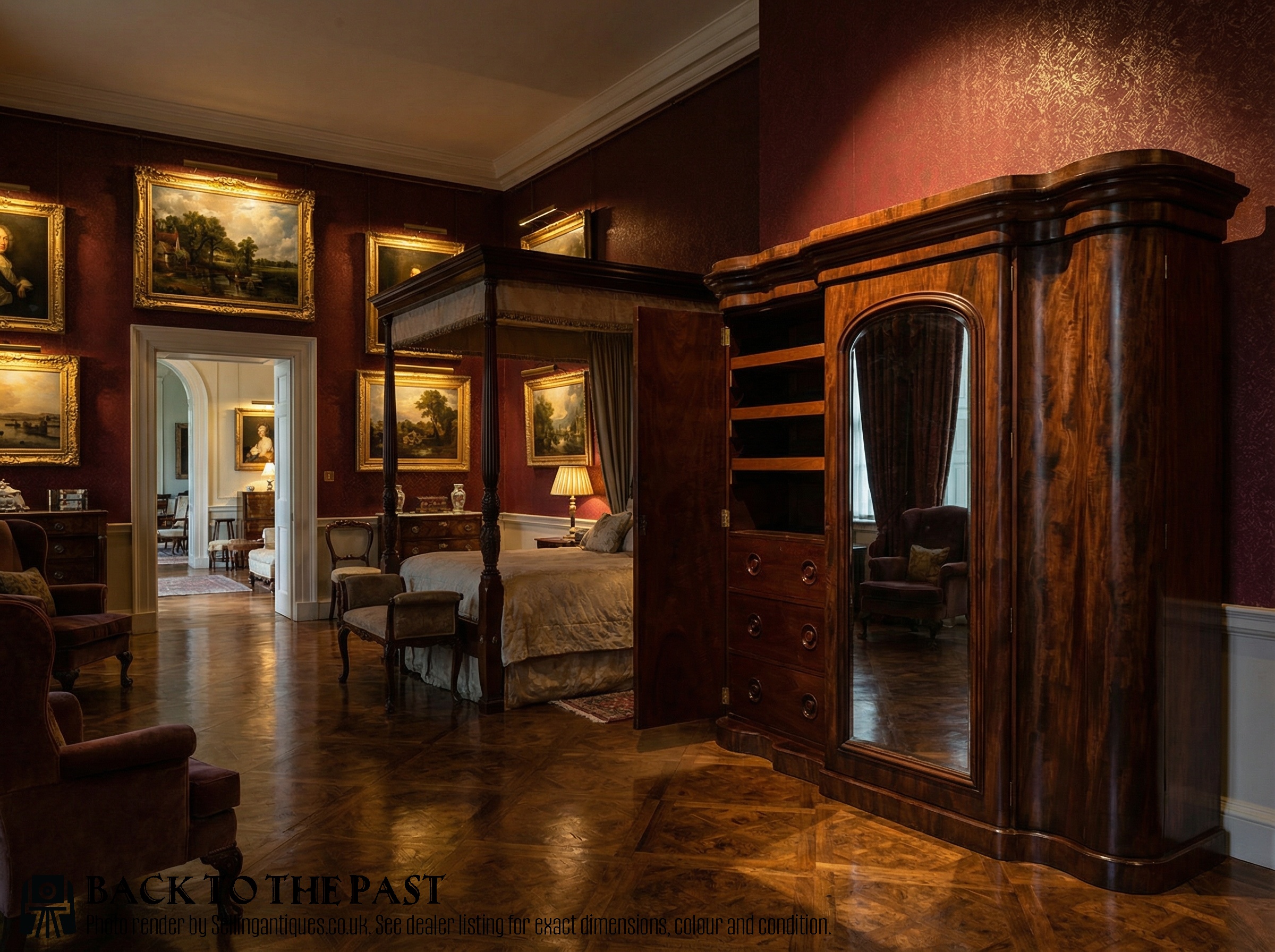
Cabinet makers constructed these large pieces using a solid timber frame of mahogany, walnut, or pine, frequently applying figured veneers such as burr walnut or satinwood to the primary surfaces. Brass hardware secures the doors and internal fittings, while the glass mirrors are set with bevelled edges into heavy panelled frames. Secondary timbers like oak or ash appear in the internal drawer linings and backboards.
Many of the larger triple and compactum wardrobe formats were built to dismantle into modular sections, allowing the heavy carcasses to be transported into upper rooms. Joinery relies on traditional dovetails for drawers and robust tenon joints for the main housing, ensuring the structure supports the weight of large swinging glass doors without sagging.
Victorian Mirrored Wardrobe Retail Price Guide 2026
Typical asking prices for victorian mirrored wardrobe among the pieces listed under this phrase on Sellingantiques today, from the lower quarter to the upper quarter. They describe what is for sale here now, not the wider market.
Listings feature woods spanning mahogany, burr walnut, satinwood, ash, rosewood, and pine across Victorian and Edwardian periods.
Gradations in Execution
The distinction between standard utility storage and exceptional furniture rests upon the choice of timber and the ambition of the internal layout. Pieces by notable cabinet makers display highly figured burr walnut or meticulously matched mahogany grains, paired with sophisticated internal configurations of sliding trays and fitted drawers rather than simple hanging rails.
Carved details and inlay work separate mass-produced workshop items from bespoke commissions. Crisp, hand-carved mouldings, contrasting satinwood stringing, and original brass or cast-iron fittings elevate the architectural presence of the case, whereas plainer pine or late factory variations rely simply on the scale of the timber.
Edwards and Roberts·Holland and Sons·Waring and Gillows
The Victorian Mirrored Wardrobe Glossary
- Compactum
- A multi-compartment wardrobe that combines hanging space with banks of internal drawers, linen slides, and shoe cupboards. This efficient layout makes full use of the internal depth.
- Bevelled glass
- A mirror edge polished at an angle to create a sloping border that catches the light. This finish is typical of better quality nineteenth-century looking glasses.
- Breakfront
- A piece of furniture where the central section projects forward from the flanking wings. This architectural arrangement adds depth and shadow to large triple wardrobes.
- Linen press
- A tall cupboard traditionally used for storing folded textiles on internal sliding trays rather than hanging garments. They frequently feature mirrored doors in later Victorian iterations.
Victorian Mirrored Wardrobe: Frequently Asked Questions
Do these large wardrobes dismantle for moving?
Many of the larger double and triple formats separate into a cornice, base, and flanking sides, allowing them to be carried through standard doorways.
Buyers should verify whether a specific piece uses knock-down bolts or fixed tongue-and-groove construction before attempting transport.
How do I care for the timber finish?
Polished mahogany and walnut surfaces benefit from occasional application of traditional beeswax to nourish the grain and protect against dry atmospheric conditions in modern homes.
Harsh chemical cleaners and direct sunlight should be avoided to prevent fading and damage to the original French polish.
What is the difference between an armoire and a wardrobe?
While both terms describe large cupboards for clothing, traditional armoires often feature wider proportions and deeper internal shelving derived from continental storage traditions.
Nineteenth-century British wardrobes generally focus on vertical hanging space and fitted internal compartments tailored for coats and suits.
Can I replace a damaged mirror plate?
Original glass frequently shows foxing and light speckling, which many collectors value as proof of age and authenticity rather than a defect requiring intervention.
If replacement is necessary, antique-style silvered glass with appropriate thickness can be fitted into the original rebate by a specialist.